Newsletter Subscribe
Enter your email address below and subscribe to our newsletter
Aviation Jobs Guide
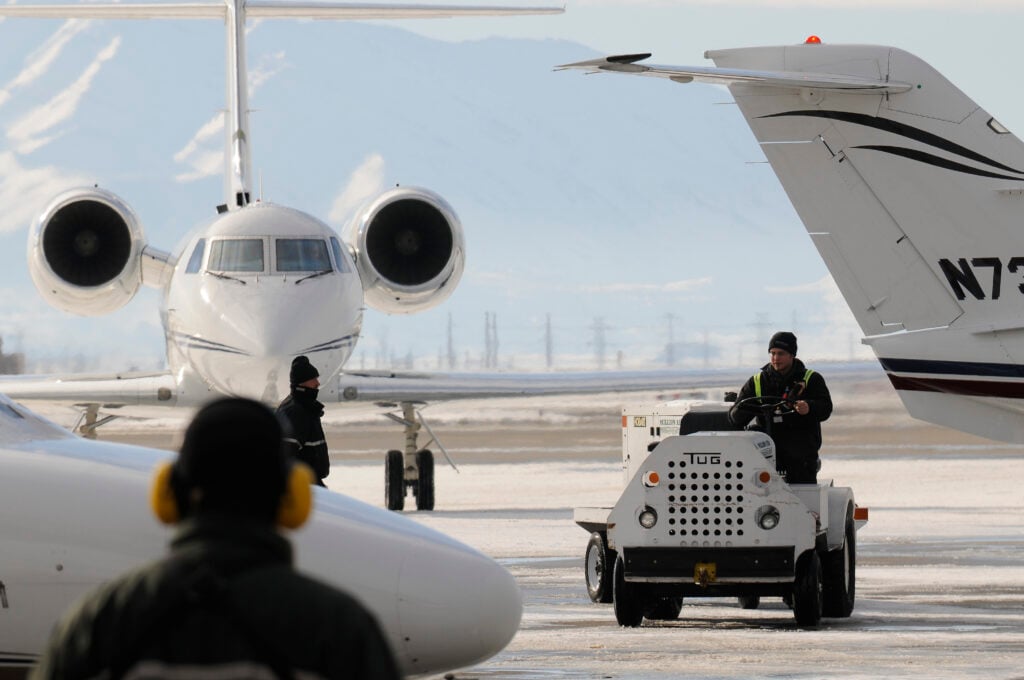
Airports are some of the most complex environments on earth. Thousands of people, dozens of aircraft types, millions of pounds of cargo, and a nonstop flow of passengers all converge in a space where timing, safety, and coordination matter more than anything else. Most travelers never see the machinery behind the scenes. They see the gate agent, the flight attendant, the pilot. They see the airplane. They see the destination.
What they don’t see — what they rarely think about — is the workforce that keeps the airport alive.
Ground Operations & Airside Services is the umbrella term for the men and women who move bags, marshal aircraft, fuel jets, load cargo, push back departures, deice wings, maintain equipment, and keep the ramp safe in every kind of weather. They are the first to arrive and the last to leave. They are the ones who keep the tempo of the airport steady and the aircraft turning on time.
This guide is written for them — and for the people who want to join them.
It is also written for parents, counselors, and anyone trying to understand what these jobs really are. Because the truth is simple: these roles are not “entry‑level labor.” They are aviation. They are the foundation on which every flight depends.
And if you’re considering this field, you deserve a clear, honest, thorough understanding of what the work is, what it demands, and what it can become.
Ground Operations & Airside Services is not a job title. It’s a mission.
It is the coordinated effort to ensure safe, efficient aircraft turnaround and airside movement. Every role in this guide — from ramp agent to loadmaster to GSE technician — contributes to that mission.
When an aircraft lands, the clock starts. Fuel, bags, cargo, catering, cleaning, water, lavatory service, maintenance checks, deicing, pushback — everything must happen in a tight window. Every minute matters. Every action affects the next.
This is why the ramp is often described as a “living ecosystem.” It breathes. It moves. It reacts. And the people working there must do the same.
If you ask anyone who has worked on the ramp for more than a few months what makes the job special, they won’t talk about the pay or the benefits. They’ll talk about the people.
Ramp culture is built on:
This is a workforce that doesn’t complain. They get the job done. They take care of each other. And they carry a quiet pride that only comes from doing hard things well.
There is a particular kind of person who thrives in this environment. They are:
They don’t need a spotlight. They don’t need a title. They need a mission.
And Ground Operations gives them one.
Every flight you’ve ever taken depended on ground ops professionals.
If the bags aren’t loaded correctly, the aircraft can be out of balance. If the fuel load is wrong, the flight can’t depart. If the cargo isn’t secured, it can shift in flight. If the aircraft isn’t deiced, it can’t climb safely. If the tug operator makes a mistake, the aircraft can be damaged. If the marshaller miscommunicates, the aircraft can strike equipment. If the GSE technician misses a defect, a tug can fail during pushback.
The stakes are real. The responsibility is real. The impact is real.
This guide is honest. It doesn’t sugarcoat the lifestyle.
Ground operations is:
But it is also:
For the right person, this is not just a job. It’s a career. It’s a community. It’s a calling.
A&P MECHANICS CAREER GUIDE: 20 Reasons to Choose This Amazing Career Path
This guide fixes that.
It gives you:
It is written in two voices:
Together, they create a guide that is both human and authoritative.
This guide is designed for:
It is also for the men and women already working in ground ops — a recognition of their craft, their culture, and their contribution.
Let me speak to you directly for a moment.
Aviation is full of glamour on the surface — the uniforms, the destinations, the aircraft. But the real work, the real grit, the real heartbeat of this industry lives on the ramp. It lives in the people who show up before sunrise, who work in the heat and the cold, who move the bags and the cargo, who fuel the aircraft, who push back the flights, who keep the airport alive.
If you choose this path, you’re choosing honest work. You’re choosing responsibility. You’re choosing a team that will rely on you — and that you will rely on in return.
You’re choosing a career that can take you anywhere in aviation.
And you’re choosing a place where your work matters every single day.
Welcome to Ground Operations & Airside Services. Let’s begin.
If the terminal is the public face of aviation, the ramp is its heartbeat. It’s where aircraft arrive, unload, reload, refuel, reset, and launch again. It’s where dozens of people, vehicles, and procedures converge in a tightly choreographed dance that repeats hundreds of times a day.
To the untrained eye, the ramp looks chaotic — tugs weaving between aircraft, belt loaders swinging into position, fuel trucks pulling up, marshallers signaling, cargo doors opening, deicing trucks spraying, and crews moving with purpose. But to the people who work here, it’s a system. A rhythm. A flow.
The ramp is alive. It has a pulse. And when you work here, you learn to feel it.
Ground operations is one of the few aviation sectors where the environment is not controlled. You work in:
The ramp doesn’t close for weather unless the airport itself shuts down — and that is rare. Most of the time, you adapt. You layer up. You hydrate. You slow down when needed. You speed up when the window opens.
This is why ramp workers develop a kind of weather resilience that most people never experience. They don’t just endure the elements — they operate in them.
Aircraft engines, APUs, tugs, belt loaders, GPUs, air start units — the ramp is loud. Hearing protection is mandatory, and after a while, you learn to read lips, hand signals, and body language better than most people ever will.
Noise is not a nuisance. It’s part of the environment. You learn to work with it, not against it.
Aircraft taxi in and out. Vehicles move constantly. Crews rotate. Equipment shifts. Deadlines approach. Weather changes. Priorities shift.
The ramp is dynamic. It never sits still.
This is why situational awareness is one of the most important skills in ground operations. You must know where you are, where the aircraft is, where the equipment is, and where your teammates are — at all times.
Every action on the ramp revolves around one central event: the aircraft turn.
A turn is the process of preparing an aircraft for its next flight. It includes:
Each step has its own timing, safety requirements, and dependencies. Some tasks can happen simultaneously; others must wait. The turn is a puzzle — and the ramp crew solves it every time.
Airlines measure performance in minutes. A delay on the ground becomes a delay in the air. A delay in the air becomes a missed connection. A missed connection becomes a customer service issue.
This is why ramp work is fast-paced. Not rushed — fast. There’s a difference.
Rushing leads to mistakes. Speed with discipline leads to efficiency.
The best ramp crews move quickly, but never carelessly. They know when to push and when to pause. They know how to keep the aircraft on schedule without compromising safety.
The ramp is a high‑risk environment. Aircraft engines can generate hurricane‑force winds. Tugs can weigh several tons. Fuel is flammable. Cargo can shift. Equipment can fail. Weather can change instantly.
This is why safety is not a box to check — it’s a mindset.
Every ground ops professional learns:
Safety is not optional. It is the difference between a normal shift and a dangerous one.
Ground operations is not a solo profession. You work in teams — always.
A typical turn involves:
Everyone has a role. Everyone has a responsibility. Everyone depends on everyone else.
This is why communication is essential. This is why trust is essential. This is why discipline is essential.
On the ramp, communication is:
You learn to communicate efficiently because the environment demands it. There is no time for long explanations. There is no room for ambiguity.
Ramp crews bond quickly. Shared hardship does that. Shared responsibility does that. Shared victories do that.
When you work in the heat, the cold, the rain, and the snow — when you push through delays, weather, equipment failures, and tight turns — you build a kind of trust that is rare in other professions.
This is why many ground ops professionals stay in aviation for decades. Not because the work is easy. But because the people are worth it.
Ground operations relies on a wide range of equipment, including:
Each piece of equipment has:
You don’t need prior experience to learn this equipment — employers train you. But you do need the discipline to operate it safely.
You don’t need to be a pilot to understand aircraft, but you do need to know:
This knowledge becomes second nature. You learn it through repetition. You learn it through teamwork. You learn it because the aircraft demands it.
Every airport has its own rhythm. Some are slow and steady. Some are fast and relentless. Some have waves of arrivals and departures. Some run at a constant hum.
But all ramps share one truth:
When the aircraft arrives, everything else stops. When the aircraft departs, everything resets.
This rhythm becomes part of you. You learn to anticipate. You learn to adapt. You learn to move with the flow.
Let me speak to you directly again.
The ramp is not for everyone. It’s loud. It’s hot. It’s cold. It’s fast. It’s physical. But it is also honest. It is real. It is aviation in its purest form.
If you can thrive here, you can thrive anywhere in this industry. Because the ramp teaches you discipline. It teaches you teamwork. It teaches you responsibility. It teaches you to stay calm when the pressure rises. It teaches you to move with purpose and think with clarity.
And it teaches you something else — something rare:
Pride in work that matters.
If you choose this path, you’re choosing a place where your effort is visible, your contribution is essential, and your presence is felt every single day.
Welcome to the airside environment. Let’s go deeper.
Ground Operations & Airside Services is not one job. It is a family of professions — each with its own mission, skill set, physical demands, and career trajectory. Together, these roles form the operational backbone of the airport. This section gives you a full, detailed, professional breakdown of each major role, written for job seekers, parents, counselors, and aviation professionals who want clarity.
Each profile includes:
This is the heart of the guide — the part that shows the true scope and dignity of this workforce.
Ramp agents are responsible for the safe, efficient loading and unloading of baggage, cargo, and equipment. They support nearly every aspect of the aircraft turn and are often the first and last people to interact with the aircraft on the ground.
Ramp agents work outdoors in all weather conditions. The environment is loud, fast, and physically demanding. Shifts often include early mornings, late nights, weekends, and holidays.
You arrive before sunrise. The ramp is quiet for a moment — then the first aircraft taxis in. You marshal it to the gate, chock the wheels, and the turn begins. Bags come off, cargo is sorted, new bags arrive, and the clock is ticking. You work with your team, moving quickly but safely. By the time the aircraft pushes back, you’ve already moved on to the next one.
Ramp agents learn discipline faster than almost anyone else in aviation. If you can master the ramp, you can master any operational role.
Baggage handlers ensure that passenger luggage moves accurately and efficiently through the airport’s sorting system and onto the correct aircraft.
You work in the bag room — the nerve center of airport luggage. Bags come down the belt nonstop. You scan, sort, stack, and load them onto carts. Timing matters. Accuracy matters even more. A single misrouted bag can disrupt a passenger’s entire trip.
Bag room work builds precision. If you can sort bags under pressure, you can handle any logistics role in aviation.
Marshallers guide aircraft into and out of parking positions using standardized hand signals and communication protocols.
You stand on the ramp as the aircraft approaches. You make eye contact with the pilots. Your signals guide them in. You are the final authority on whether the aircraft parks safely. When the turn is complete, you wing-walk the pushback, ensuring the path is clear.
Marshallers carry a unique responsibility: they are the pilot’s eyes on the ground. Precision is everything.
Tug operators move aircraft safely on the ground using pushback tractors and tow bars or towbarless systems.
You receive clearance from the flight deck. You confirm brake release. You begin the pushback, controlling a 100,000–400,000 lb aircraft with precision. You coordinate with the captain, the wing-walkers, and ramp control. When the aircraft is aligned, you disconnect and signal the crew.
Pushback operators are trusted with some of the most expensive equipment in the world. This role builds confidence and leadership.
Fuelers deliver the correct fuel load safely, accurately, and efficiently.
You receive the fuel order from dispatch. You position the truck, ground the aircraft, connect the hose, and begin fueling. You monitor gauges constantly. You verify the final load with the captain. Accuracy is everything.
Fuelers carry one of the highest safety responsibilities on the ramp. Precision and discipline define this role.
Lavatory and water service teams maintain aircraft lavatory systems and potable water supplies.
You pull up to the aircraft, connect the hoses, and service the lavatory system. You refill the potable water tank. You ensure everything is sealed, clean, and ready for passengers.
This role teaches attention to detail and respect for procedure — two traits that carry you far in aviation.
Deicing technicians remove ice, snow, and frost from aircraft surfaces and apply anti-icing fluids to ensure safe takeoff.
Snow is falling. Flights are backing up. You climb into the deicing truck, raise the boom, and begin spraying the aircraft. You coordinate with the captain. You ensure the wings are clean and protected. You are the reason the aircraft can depart safely.
Deicing is one of the most safety‑critical roles in aviation. It demands focus, discipline, and respect for the environment.
Loadmasters ensure that cargo is loaded safely, securely, and in compliance with weight and balance requirements.
You receive the cargo manifest. You calculate the load plan. You supervise the loading. You verify the weight and balance. You sign off with the captain. The aircraft cannot depart without your approval.
Loadmasters carry authority. They are trusted with the aircraft’s stability — a responsibility that builds leadership.
GSE technicians maintain and repair ground support equipment, ensuring that tugs, belt loaders, GPUs, and other machinery operate safely.
A tug won’t start. A belt loader is leaking hydraulic fluid. A GPU is throwing an error code. You diagnose, repair, and return equipment to service. Without you, the ramp stops.
GSE technicians are the unsung heroes of the ramp. Their work keeps the entire operation moving.
Cabin cleaners prepare the aircraft interior for the next flight, ensuring cleanliness, safety, and readiness.
The aircraft arrives. Passengers deplane. You board with your team. You clean quickly but thoroughly. You restock supplies. You reset the cabin. When you finish, the aircraft is ready for the next group of travelers.
Ground Operations & Airside Services is built on one foundation: safety. Everything else — speed, efficiency, teamwork, customer service, on‑time performance — comes second. The ramp is a high‑risk environment, and the people who work here carry responsibilities that directly affect aircraft, passengers, and fellow crew members.
This section gives you a full, professional understanding of the safety culture, compliance requirements, and operational standards that define airside work. It is written for job seekers, parents, counselors, and aviation professionals who want clarity — and for the men and women already working on the ramp who deserve recognition for the discipline they bring to the job every day.
Safety is not a rulebook. It’s not a checklist. It’s not a training module.
Safety is a mindset — a way of thinking, acting, and communicating that becomes second nature. On the ramp, safety is the difference between a normal shift and a dangerous one. It is the difference between a clean turn and an incident. It is the difference between a safe departure and a costly mistake.
Ground ops professionals learn quickly that safety is not optional. It is the culture.
Every ground ops role touches these five core safety domains:
FOD is any object on the ramp that doesn’t belong there — rocks, tools, trash, bolts, luggage tags, ice, even loose clothing. FOD can:
This is why FOD walks are standard before every turn. Ramp workers scan the area, pick up debris, and ensure the aircraft’s path is clear.
Professional Standard: If you see FOD, you pick it up. No exceptions.
Every piece of ground equipment has a safety zone — a defined area where the equipment must not enter unless authorized. These zones prevent:
Equipment operators must know:
Professional Standard: Equipment never touches the aircraft. Ever.
Aircraft engines are powerful enough to:
Ramp workers must know:
Professional Standard: Never walk behind an aircraft with engines running. Never approach an engine until cleared.
Marshalling and pushback are two of the most safety‑critical operations on the ramp. They require:
A single miscommunication can cause:
Professional Standard: If communication is unclear, the operation stops immediately.
Many flights carry hazardous materials — batteries, chemicals, medical supplies, industrial goods. Ramp workers must:
Professional Standard: If something looks wrong, you report it. No exceptions.
Ground operations is governed by a network of regulations, standards, and procedures. These rules exist to protect workers, passengers, aircraft, and the airport environment.
Sets safety standards for:
Sets standards for:
Sets global standards for:
Each airline and airport has its own:
Compliance is not optional. It is part of the job.
Ground ops professionals receive extensive training, including:
Training includes:
This is why ground ops roles are accessible to people with no prior experience — employers train you thoroughly.
Safety culture is not about rules. It’s about behavior.
A strong safety culture means:
A weak safety culture leads to:
This is why airlines invest heavily in safety programs — because the ramp is where risk lives.
Caused by improper positioning or rushing. Prevented by proper standoff distances and slow, controlled movement.
Caused by walking behind running engines. Prevented by awareness and respecting safety zones.
Caused by ice, rain, or clutter. Prevented by FOD walks and proper footwear.
Caused by improper securing. Prevented by nets, straps, and load checks.
Caused by improper hose connection. Prevented by grounding procedures and double-checks.
Caused by poor boom control. Prevented by training and communication.
A true ground ops professional is defined by:
These traits matter more than experience. They matter more than strength. They matter more than speed.
They are the foundation of a safe ramp.
Let me speak to you directly again.
Aviation is unforgiving. It rewards discipline and punishes carelessness. It respects those who respect the environment. It elevates those who take responsibility. It protects those who protect each other.
If you choose this field, you are choosing a profession where your actions matter. You are choosing a place where safety is not a slogan — it is a way of life. You are choosing a team that depends on you, and a mission that requires your best.
And you are choosing a career where professionalism is not defined by a title, but by how you carry yourself on the ramp.
You are part of the safety chain. You are part of the operation. You are part of aviation.
Ground Operations & Airside Services is one of the most flexible, upward‑mobile sectors in aviation. Many people enter the field with no prior experience, yet within a few years they find themselves in leadership roles, specialized technical positions, or entirely new branches of the industry. This section gives you a clear, structured understanding of how careers progress, what opportunities exist, and how ground ops can become a long‑term professional pathway.
Every ground ops career follows one of three broad trajectories:
Each pathway is valid. Each pathway is respected. And each pathway begins with the same foundation: learning the ramp.
This pathway is for people who love hands‑on work, equipment, and the rhythm of the ramp. They become the experts — the people others rely on when things get busy, complicated, or unusual.
These roles build the fundamentals:
After 6–24 months, many workers advance into specialized roles:
These roles require additional training and certification. They also come with higher responsibility and, often, higher pay.
For those who want to deepen their technical expertise:
These positions often lead to long-term stability and specialized knowledge that is valuable across the industry.
Operational mastery builds confidence and credibility. These are the professionals who know the ramp inside and out — and aviation always needs them.
Many ground ops professionals discover they have a talent for leading teams, coordinating operations, and managing the flow of the airport. Leadership roles require:
These roles supervise small teams and ensure procedures are followed.
Supervisors manage multiple crews, handle irregular operations, and coordinate with gate agents, pilots, and station management.
These positions oversee entire departments or stations. They require strong leadership, operational knowledge, and the ability to manage people, budgets, and performance metrics.
Leadership in ground ops is earned, not given. The best leaders are the ones who remember what it feels like to work the ramp — and who never forget the people who keep the airport alive.
Ground operations is one of the best launching pads in aviation. The skills you learn — discipline, teamwork, safety, equipment operation, communication — transfer into many other aviation careers.
These roles move you into the nerve center of airline operations.
These positions require situational awareness and regulatory knowledge — both of which ramp workers excel at.
Corporate aviation values ramp experience because it translates directly into safety and professionalism.
Cargo operations run on precision — a skill learned on the ramp.
With additional training or schooling:
Many AMTs started as ramp agents or GSE operators.
Ground ops is a common starting point for future pilots. It provides:
Many pilots began their careers loading bags or fueling aircraft.
Ground operations is not a dead‑end job. It is a gateway — one of the most flexible and opportunity‑rich entry points in the entire aviation industry.
Advancement varies by airport, airline, and individual performance, but typical timelines look like this:
These timelines are not fixed. Some people advance faster. Some choose to stay in roles they enjoy. The key is consistency, reliability, and a willingness to learn.
Advancement in ground ops is based on:
You don’t need a degree. You don’t need prior experience. You need discipline, consistency, and professionalism.
Ground ops experience builds:
These traits are valuable across the entire industry — and beyond.
Ground operations is one of the most honest, upward‑mobile, and opportunity‑rich sectors in aviation. It rewards discipline. It rewards teamwork. It rewards people who show up, work hard, and take pride in their craft. Whether you want to stay on the ramp, lead teams, or transition into a new branch of aviation, this field gives you the foundation to build a long, stable, meaningful career.
Ground Operations & Airside Services is not just a job category — it’s a lifestyle. It shapes your schedule, your habits, your physical routine, your mindset, and your sense of identity. Some people thrive in this environment. Others struggle. This section gives you a clear, honest understanding of what the lifestyle really looks like, who succeeds here, and how to prepare yourself for the work.
This is not marketing. This is the truth — the kind that helps people make informed decisions.
Airports never sleep. Flights depart early, arrive late, and operate through weekends and holidays. Ground ops schedules reflect that reality.
You can expect:
For many people, this is a benefit — the flexibility allows for:
But it requires discipline. You must manage your sleep, your energy, and your time.
Ground ops is physical work. You will:
You will also work in:
This environment builds resilience. It also demands preparation — proper clothing, hydration, and pacing.
Ground ops requires:
You must stay alert. You must stay disciplined. You must stay aware of your surroundings.
The ramp is not a place for distraction. It’s a place for presence.
Ground ops can be:
You will feel:
This field builds emotional strength — the kind that comes from doing real work that matters.
Certain traits predict success in this field. People who thrive here tend to be:
They like physical work. They enjoy equipment. They prefer movement over sitting.
They communicate well. They support their crew. They understand that the ramp is a team sport.
They follow procedures. They respect safety. They stay consistent.
They don’t panic. They don’t rush. They stay focused when the clock is ticking.
They handle weather changes. They adjust to irregular operations. They stay flexible with schedules.
They show up. They’re on time. They take responsibility.
They want work that matters. They want to see the results of their effort. They want to be part of something bigger.
This field is not for everyone. People who struggle here tend to be:
If heat, cold, or rain are deal-breakers, the ramp will be difficult.
The environment requires constant awareness.
The job is active, repetitive, and physically demanding.
If weekends, holidays, or early mornings are a problem, this lifestyle may not fit.
Equipment is everywhere — tugs, belt loaders, GPUs, deicing trucks.
The ramp depends on reliability. If attendance or punctuality is a challenge, advancement becomes difficult.
Physical fatigue is normal. Your body adapts over time.
Your endurance, strength, and stamina will improve.
The ramp teaches fast. You will pick up skills you never expected.
Everyone does. What matters is how you respond.
Operating equipment, handling aircraft, and managing turns builds self‑trust.
Ground ops workers are respected across aviation — because they earn it.
This field changes people. It builds discipline, resilience, and professionalism.
You don’t need to be an athlete. But you should:
Small habits make a big difference.
Practice:
The ramp rewards clarity.
Expect:
Emotional resilience grows with experience.
You don’t need to be an expert. But understanding:
…will give you a head start.
Plan for:
Your routine will adjust.
Ground ops offers benefits that many careers cannot match:
This lifestyle is not glamorous — but it is meaningful.
Ground operations is a lifestyle built on discipline, teamwork, and resilience. It is not easy work, but it is honest work — the kind that builds character and opens doors across the aviation industry. If you thrive in physical environments, enjoy working with equipment, and want a career with real responsibility, this field will reward you. If you prefer controlled environments, predictable schedules, or low‑pressure tasks, this field may not be the right fit.
The key is knowing yourself — and choosing a path that aligns with your strengths, your goals, and your values.
Ground Operations & Airside Services is one of the most accessible entry points into aviation. Many roles require no prior experience, no degree, and no technical background. Employers train you, certify you, and prepare you for the environment. But “accessible” does not mean “easy.” The hiring process is selective, and employers look for specific traits that predict success on the ramp.
This section gives you a complete, professional roadmap for getting hired — from understanding what employers want, to building a strong resume, to preparing for interviews, to navigating background checks and onboarding.
Ground ops employers hire for behavior first, skills second, and experience third. They know they can train you on equipment, procedures, and aircraft. What they cannot train is reliability, attitude, and discipline.
Here are the traits that matter most:
The ramp depends on people showing up on time, every time. If you’re late, the turn is late. If you’re absent, the team is short‑staffed.
Reliability is the number one hiring factor.
Employers want people who:
A strong safety mindset is more valuable than prior experience.
Ground ops is a team sport. You must communicate, coordinate, and support your crew.
You don’t need to be an athlete, but you must be able to:
Employers want people who:
The ramp is fast-paced. You must stay focused when the clock is ticking.
This includes:
These traits matter more than anything on your resume.
Your resume does not need to be long. It needs to be clear, relevant, and professional.
Examples:
Anything that shows physical capability is valuable.
Examples:
Ground ops is built on teamwork.
Examples:
Employers want people they can trust.
Examples:
Safety experience stands out.
Your resume should include:
No fluff. No filler. No long paragraphs.
Ground ops interviews are straightforward. Employers want to know:
Here are the most common interview questions — and how to answer them effectively.
Keep it simple:
Strong answers include:
Show resilience:
Use a simple structure:
Emphasize:
Employers love this question. Show:
Be honest. Flexibility is a major hiring factor.
To work on the ramp, you must pass:
This is required for the SIDA badge, which grants access to secure airport areas.
Most non-violent offenses do not disqualify you. However, certain crimes — especially those involving violence, security threats, or serious felonies — may prevent SIDA approval.
Employers will explain the process.
Most ground ops roles require:
This is standard across aviation.
Once hired, you will complete:
Training is thorough. Employers want you to succeed — and stay safe.
Say things like:
Employers want people who take the ramp seriously.
Mention:
Employers love people who learn quickly.
Ground ops is built on teamwork.
Getting hired in ground operations is not about having the perfect resume or years of experience. It’s about showing employers that you are reliable, safety‑minded, disciplined, and ready for the lifestyle. If you can demonstrate those traits — in your resume, your interview, and your attitude — you will stand out immediately.
Ground ops employers are not looking for perfection. They are looking for people who show up, work hard, and take pride in their craft.
Ground Operations & Airside Services is one of the most misunderstood, under‑recognized, and essential sectors in aviation. The people who work on the ramp, in the bag room, in the deicing trucks, at the fuel pits, and behind the equipment lines are the reason aircraft move, passengers travel, and airlines function. This guide has shown the full scope of that world — the mission, the roles, the safety culture, the lifestyle, the pathways, and the opportunities.
This final section brings everything together. It offers clarity, encouragement, and direction for anyone considering this field — and respect for those already in it.
Ground operations is not glamorous. It’s not easy. It’s not for everyone.
But it is:
It is a field where your work matters every single day. It is a field where you see the results of your effort immediately. It is a field where you grow — physically, mentally, and professionally.
Most importantly, it is a field where you belong to something bigger than yourself.
Ground operations is not a dead-end job. It is a launchpad.
From here, you can move into:
Every year, thousands of aviation professionals — pilots, dispatchers, AMTs, airport managers — trace their careers back to the ramp.
This field teaches discipline, teamwork, responsibility, and operational awareness. Those traits open doors everywhere.
If you choose this path, carry these truths with you:
Every bag you load, every aircraft you marshal, every hose you connect, every checklist you follow — it all contributes to a safe flight.
Your awareness, your discipline, and your decisions protect people and aircraft.
You will rely on others. Others will rely on you. That bond is real.
This field builds:
Weather, schedules, fatigue, pressure — they will test you. But they will also shape you.
Aviation respects the ramp because aviation knows the ramp.
This field opens doors — more than most people realize.
If you are considering this field, here is what you should know:
You don’t need experience. You don’t need a degree. You don’t need technical knowledge.
You need:
If you bring those traits, aviation will meet you halfway. You will be trained. You will be supported. You will be given responsibility. You will grow.
Ground operations is a career for people who want to work with purpose — people who want to be part of something real.
If a young person in your life is considering ground operations, understand this:
This is not “just a job.” It is a professional pathway.
It teaches:
It provides:
It is one of the most accessible, upward-mobile entry points in aviation.
Support them. Encourage them. Help them see the opportunities.
If you already work in this field, this guide is a recognition of your craft.
You are the reason aircraft move. You are the reason passengers travel. You are the reason the airport stays alive.
Your work is demanding. Your work is essential. Your work is respected.
You carry responsibility that most people never see — and you carry it well.
This guide honors that.
If you choose this path, remember:
Do these things consistently, and you will not only succeed — you will thrive.
Ground operations is not just a job. It is a foundation. It is a community. It is a career. It is a calling.
And if you choose it, you will become part of the workforce that keeps the airport alive.
Ground Operations & Airside Services is one of the most honorable, essential, and opportunity-rich sectors in aviation. It demands discipline, teamwork, and resilience — and it rewards those qualities with growth, stability, and long-term career potential. Whether you are just starting out or already working on the ramp, this field offers a path forward, a sense of purpose, and a place to belong.