Newsletter Subscribe
Enter your email address below and subscribe to our newsletter

Aviation Jobs Guide
The aviation industry continues to expand, and with it, the demand for skilled maintenance professionals. As airlines grow their fleets, corporate operators increase utilization, and MRO facilities scale to meet demand, the role of the aircraft mechanic becomes even more essential. For anyone considering this career path, understanding the A&P Mechanic Salary landscape is a critical part of making an informed decision. This guide provides a comprehensive, data‑driven breakdown of what aircraft mechanics earn across the United States, how pay varies by experience and employer type, and what real‑world factors influence long‑term earnings.
The term A&P Mechanic Salary refers specifically to compensation for FAA‑certified Airframe and Powerplant mechanics. However, Google treats this keyword as part of a broader salary universe that includes Aircraft Mechanic Salary, Aviation Mechanic Salary, A&P Salary, A&P Mechanic Pay, and A&P Mechanic Hourly Pay. This guide incorporates all of these related terms naturally while maintaining a neutral, authoritative tone suitable for a career‑decision query.
The goal is simple: provide a complete, accurate, and realistic picture of what A&P mechanics earn today and what they can expect throughout their careers.
The national average A&P Salary in 2026 is $78,210 per year, based on aggregated data from the Bureau of Labor Statistics, major aviation employers, and industry compensation surveys. This places the profession well above the national median wage and positions it as one of the strongest technical career paths available without requiring a four‑year degree.
The median salary for an A&P is approximately $75,000, meaning half of all mechanics earn more and half earn less. The top 10 percent of earners exceed $105,000, while the bottom 10 percent typically fall between $48,000 and $52,000, often representing entry‑level roles or lower‑paying regions.
Hourly pay is the foundation of most compensation structures in aviation maintenance. The average A&P Mechanic Salary expressed as hourly pay is $34.50 per hour, though this number varies significantly based on employer type, shift, and experience level. Because aviation is a 24/7 industry, overtime and shift differentials play a major role in total earnings, often pushing annual income well above base rates.
Aircraft mechanic salaries reflect a combination of airline, MRO, corporate, manufacturing, and general aviation roles. Each sector has its own pay structure, benefits, and advancement opportunities, which will be explored in detail later in this guide.
Understanding A&P Mechanic Hourly Pay is essential because most mechanics are paid hourly rather than salaried. This structure creates opportunities for significant income growth through overtime, shift premiums, and specialized assignments.
Entry‑level Hourly Pay typically ranges from $22 to $27 per hour, depending on the employer and region. Mid‑career mechanics generally earn $30 to $38 per hour, while senior or lead mechanics often earn $40 to $55 per hour. These numbers form the backbone of the A&P Mechanic Salary structure across the industry.
Overtime is paid at 1.5 times the standard hourly rate, and many mechanics regularly work overtime due to operational needs. It is common for mechanics to earn an additional $10,000 to $25,000 per year from overtime alone, depending on employer type and personal preference.
Shift differentials also influence the salaries. Night shifts often add $2 to $6 per hour, and line maintenance roles frequently include premiums of $3 to $10 per hour. These adjustments can significantly increase total compensation, especially for mechanics who prefer or are assigned to non‑daytime schedules.
Because hourly pay is the foundation of the A&P Mechanic Salary, understanding how overtime and shift differentials work is essential for anyone evaluating the career.
Pay for aircraft mechanics grows steadily with experience, certifications, and employer type. This section outlines how compensation evolves throughout a mechanic’s career.
Most new mechanics once they have their ap mechanic certificate begin with an A&P Mechanic Salary between $48,000 and $58,000. These roles are typically found in general aviation shops, regional airlines, entry‑level MRO positions, and small corporate flight departments.
Starting pay is lower because new mechanics are still developing troubleshooting skills, gaining logbook experience, and building confidence in performing and signing off maintenance tasks. However, the early years offer rapid skill development and exposure to a wide range of aircraft systems.
Once a mechanic has several years of experience, their salary typically increases to $65,000 to $85,000. This stage often includes opportunities for line maintenance, heavy check leadership, avionics troubleshooting, and specialized systems work.
Mechanics at this level may also begin transitioning into higher‑paying sectors such as corporate aviation or major MRO facilities. The A&P Mechanic Salary at this stage reflects increased responsibility, improved efficiency, and greater technical expertise.
Experienced mechanics often earn an A&P Mechanic Salary between $90,000 and $120,000+, particularly in major airlines, high‑end corporate aviation, specialized turbine maintenance, and supervisory roles.
At this stage, mechanics may hold additional certifications such as Inspection Authorization (IA) or type‑specific training for aircraft like Boeing, Airbus, or Gulfstream models. These credentials significantly enhance earning potential and open doors to leadership positions.
The A&P Mechanic Salary at the senior level reflects mastery of complex systems, the ability to troubleshoot efficiently, and the capacity to mentor junior mechanics.
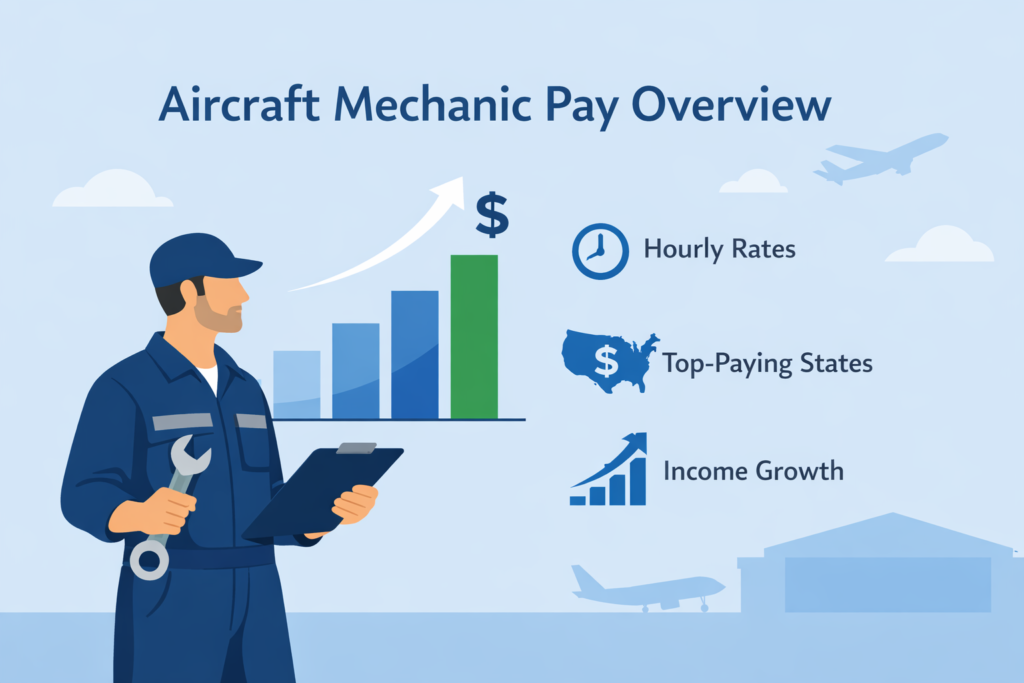
Geography plays a major role in determining pay. States with high cost of living, major aviation hubs, or strong union presence tend to offer higher wages.
California — $92,000 Washington — $89,500 Hawaii — $88,900 Alaska — $87,400 New York — $86,700
These states offer some of the highest income levels due to strong airline presence, union contracts, and higher living costs.
Texas — $78,000 Florida — $74,500 Georgia — $76,200 North Carolina — $73,800 Colorado — $79,100
These states represent a balance between cost of living and demand for aviation maintenance professionals.
Arkansas — $62,000 Mississippi — $61,500 West Virginia — $63,200 Oklahoma — $64,800
Even in lower‑paying states, A&P pay remains competitive compared to regional median wages.
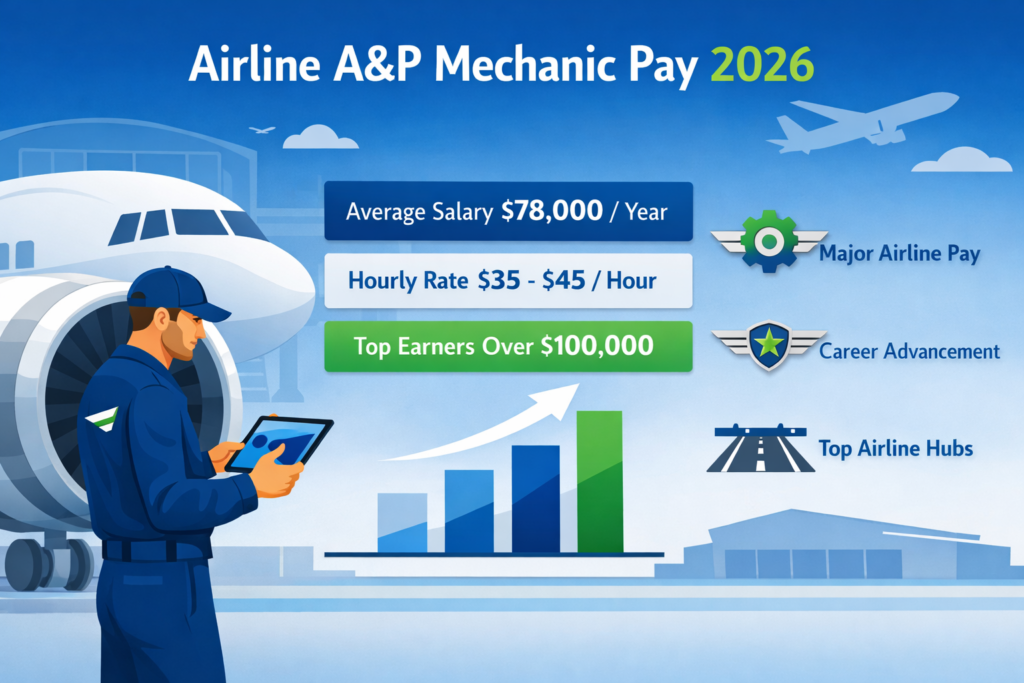
Employer type is one of the most significant factors influencing the A&P Mechanic Salary.
Salary range: $85,000 to $130,000+
Major airlines offer the highest salaries due to union contracts, excellent benefits, overtime availability, and premium pay for line maintenance. These roles often require strong troubleshooting skills and the ability to work efficiently under time pressure.
Salary range: $55,000 to $75,000
Regional airlines offer lower A&P Mechanic Salary levels but provide excellent opportunities for new mechanics to gain experience quickly.
Salary range: $60,000 to $85,000
MRO facilities offer predictable schedules, heavy check experience, and strong overtime potential. The A&P Mechanic Salary in this sector reflects the technical demands of large‑scale inspections and repairs.
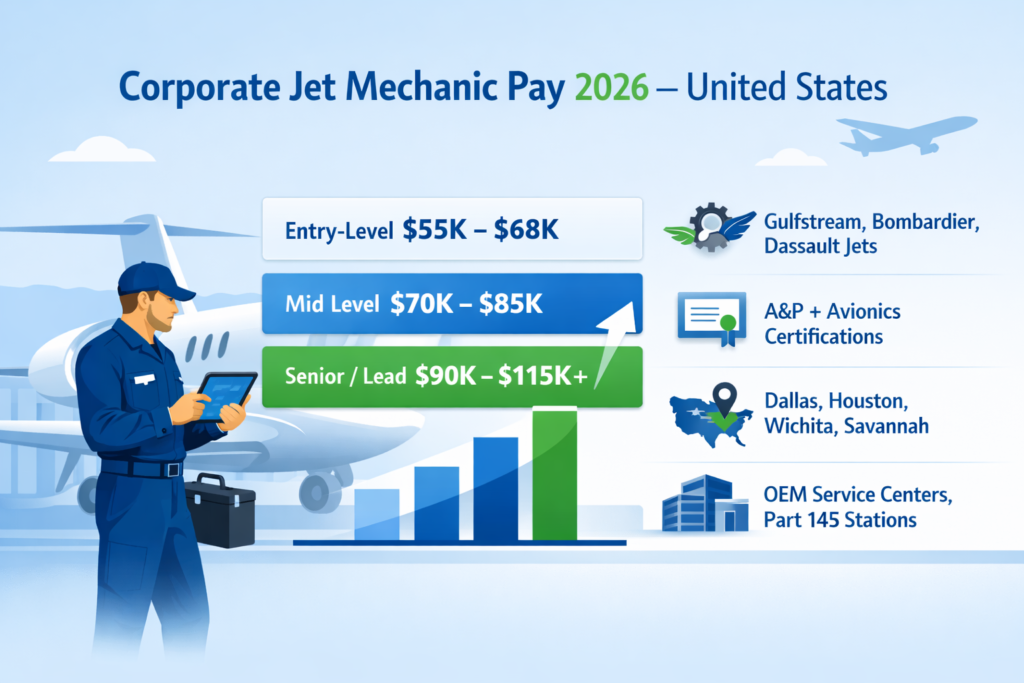
Salary range: $80,000 to $120,000
Corporate aviation offers some of the highest A&P Mechanic Salary levels outside major airlines. These roles require high responsibility, attention to detail, and often on‑call availability.
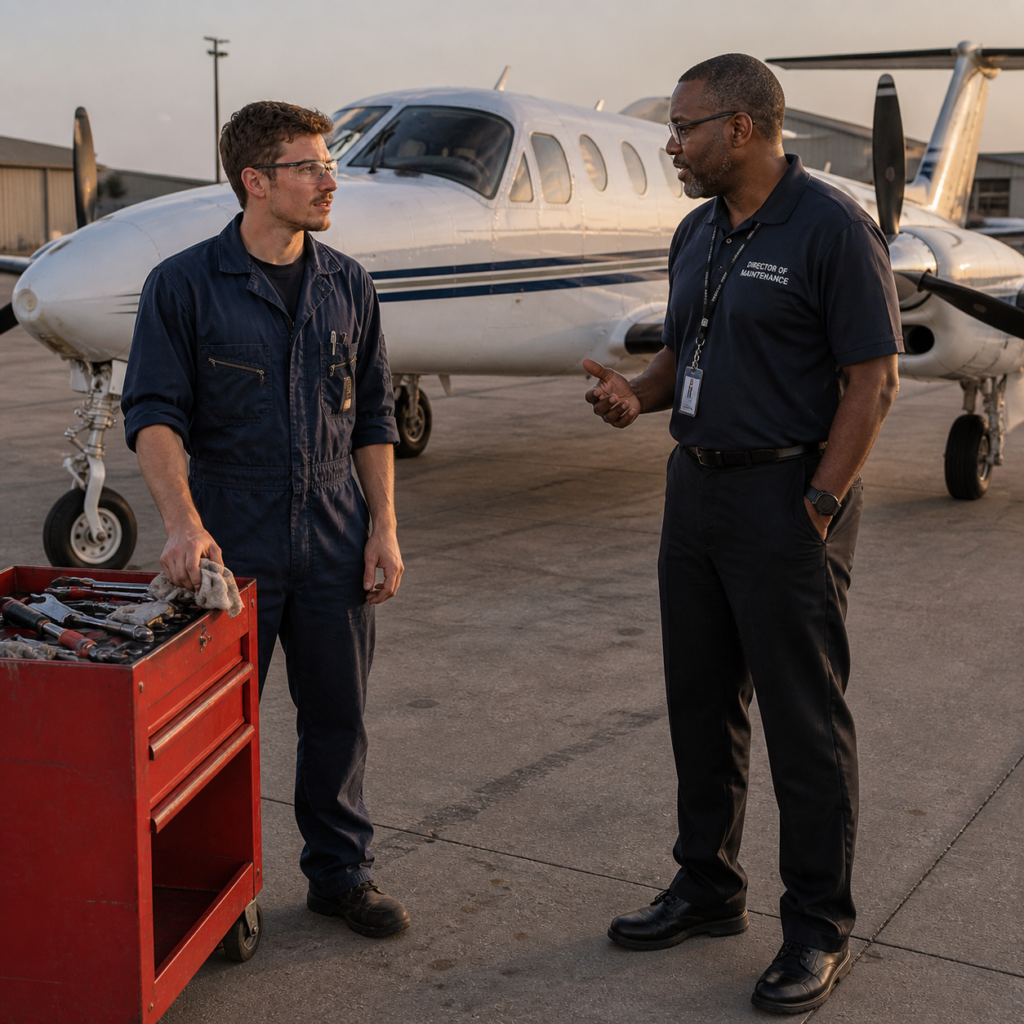
Salary range: $45,000 to $65,000
General aviation offers lower A&P Mechanic Salary levels but provides excellent hands‑on learning opportunities for new mechanics.
The A&P Mechanic Salary follows a predictable growth curve:
Year 1–2: $48,000–$58,000 Year 3–5: $60,000–$75,000 Year 6–10: $75,000–$95,000 Year 10–15: $90,000–$120,000 Year 15+: $100,000–$140,000+
Mechanics who pursue additional certifications or leadership roles often exceed these ranges. The A&P Mechanic Salary reflects both technical skill and the ability to take on greater responsibility.
Several variables influence the A&P Mechanic Salary beyond experience alone.
Location Employer type Certifications Shift type Overtime availability Union vs. non‑union environment Industry demand
Each of these factors contributes to the overall A&P Mechanic Salary and should be considered when evaluating career opportunities.
Mechanics can increase their A&P Mechanic Salary through several proven strategies:
Move to a higher‑paying employer type Earn additional certifications Specialize in high‑demand skills Relocate to a higher‑paying state Take line maintenance roles Work overtime strategically Move into leadership positions
Each of these steps can significantly increase the A&P Mechanic Salary over time.
The A&P Mechanic Salary landscape in 2026 is strong, stable, and full of opportunity. With average pay near $78,000, top earners exceeding $120,000, and clear pathways for advancement, the aircraft mechanic profession remains one of the most reliable and lucrative technical careers in the United States.
Whether you are researching the field, comparing employer types, or planning your next career move, understanding the A&P Mechanic Salary is essential. The data shows that A&P mechanics are in demand, well‑paid, and positioned for long‑term success.
A&P Mechanic Salary FAQ
Aviation Career Guide: Careers in the US market in 2026
Barriers to Entry for an A&P Mechanic Career
Career Path of an A&P Mechanic