Newsletter Subscribe
Enter your email address below and subscribe to our newsletter

Aviation Jobs Guide
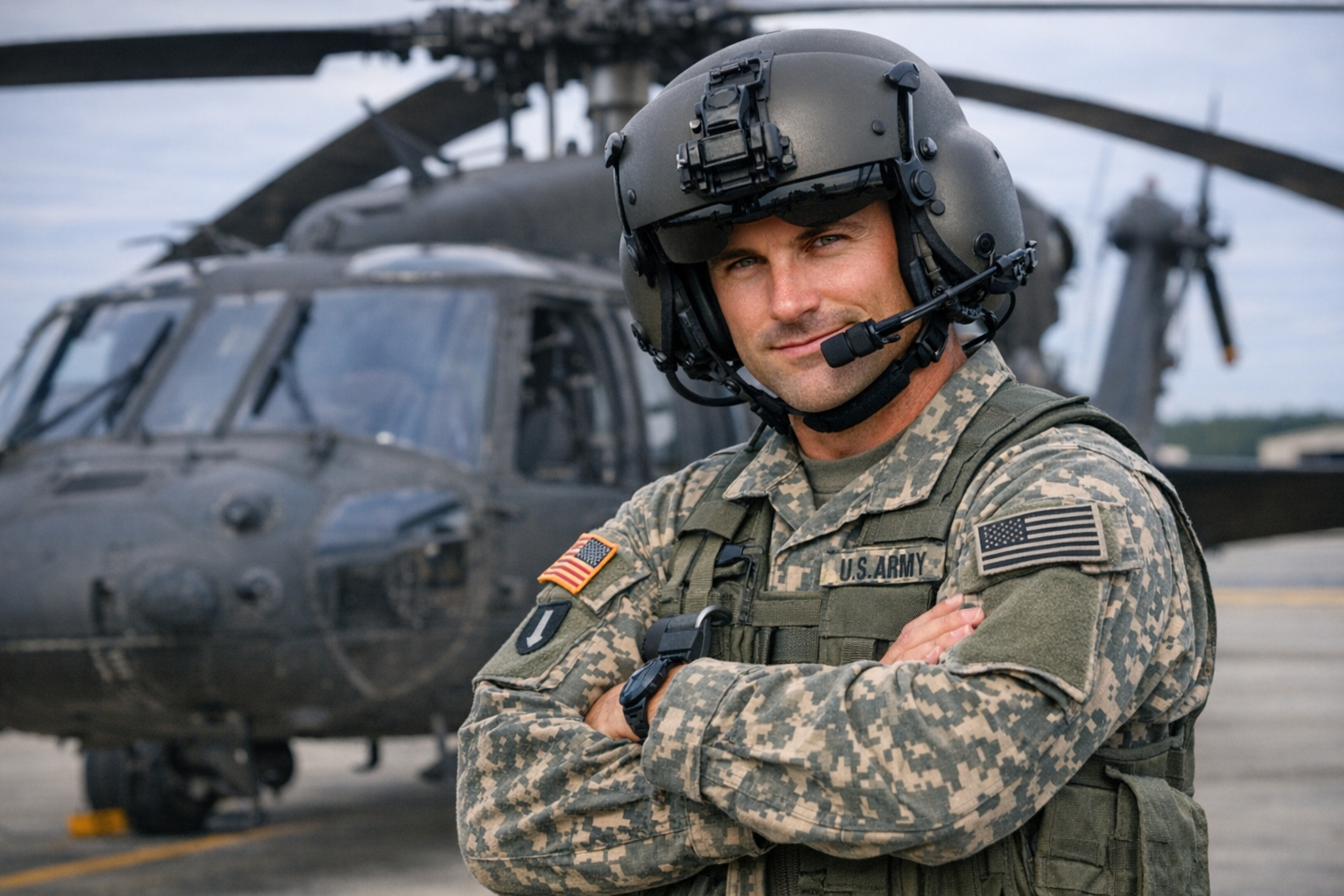
Becoming a US Army Rotary Wing Aviator is one of the most challenging and rewarding paths in the military. The Warrant Officer MOS 153A—Rotary Wing Aviator—is the entry point for future helicopter pilots who will eventually fly aircraft such as the UH‑60 Black Hawk, AH‑64 Apache, CH‑47 Chinook, and UH‑72 Lakota. This guide breaks down the requirements, gatekeepers, training pipeline, intensity, and what to expect from start to finish.
MOS 153A is the Army’s foundational aviation Warrant Officer specialty. Unlike most Warrant Officer fields, 153A requires no prior enlisted MOS experience. It is an “open to all” aviation accession path, meaning civilians, enlisted Soldiers, and even service members from other branches can apply.
The Army uses the Warrant Officer cohort to build long‑term technical experts. As a US Army Rotary Wing Aviator, you become a career pilot responsible for mastering aircraft systems, tactics, and mission execution.
To apply for MOS 153A, candidates must meet the following baseline criteria:
The SIFT is the aviation aptitude test used to determine whether you have the cognitive and spatial skills needed for flight training. It includes:
You may only take the SIFT twice in your lifetime, and the second attempt is final.
This is one of the biggest gatekeepers. The Class 1A physical is more rigorous than standard military medical exams. It includes:
Any disqualifying condition requires a waiver, and waivers are not guaranteed.
The path to becoming a US Army Rotary Wing Aviator includes several key gatekeepers—individuals or boards that determine whether you move forward.
Your first gatekeeper is the Warrant Officer Strength Manager (WOSM). They review your packet, ensure you meet prerequisites, and guide you through the process.
Flight surgeons determine whether you medically qualify for aviation service. Without a Class 1A physical, you cannot proceed.
Applicants must complete a formal interview with a senior commander (O‑5 or above). This interview evaluates:
This is the final gatekeeper. The board reviews your packet, SIFT score, physical, letters of recommendation, and overall competitiveness. Selection rates vary but are often between 40–70% depending on applicant volume.
Once selected, candidates ship to Fort Novosel (formerly Fort Rucker), Alabama—the home of Army Aviation.
Location: Fort Novosel, AL Length: 5–7 weeks
WOCS transforms applicants into Warrant Officers. Training includes:
Graduates earn the rank of WO1 (Warrant Officer 1).
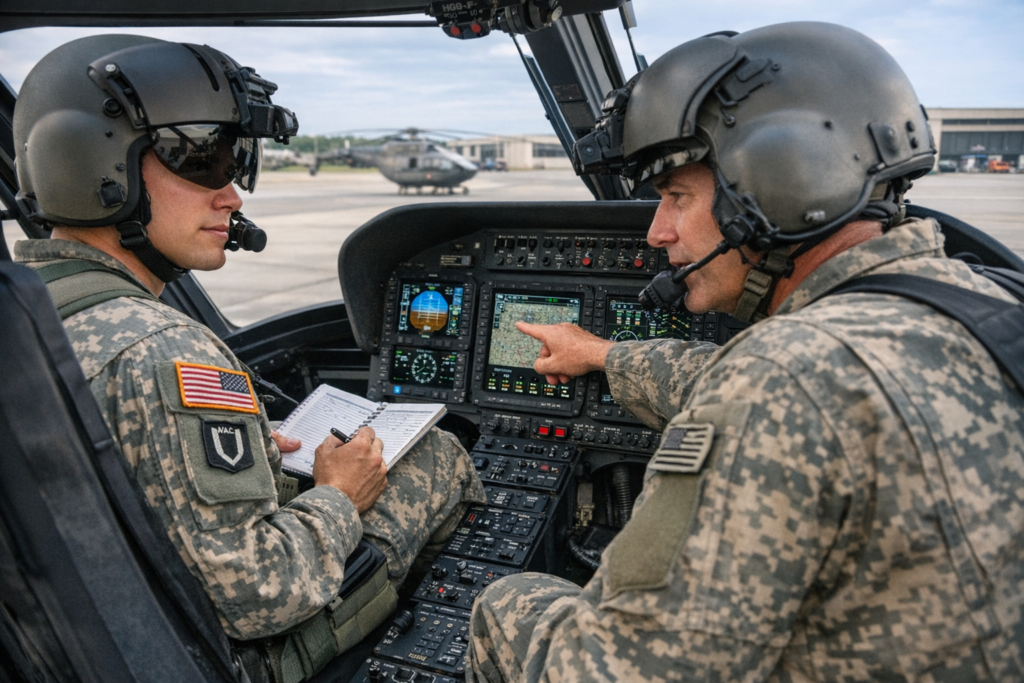
IERW is where you officially begin your journey as a US Army Rotary Wing Aviator.
Location: Fort Novosel, AL Total Length: 12–18 months depending on weather, aircraft availability, and class flow
IERW is divided into several phases.
Length: 4–6 weeks
You learn the fundamentals of flight:
This phase is academically intense and requires disciplined study habits.
Length: 8–10 weeks
You begin hands‑on flight training, learning:
Hovering is notoriously difficult, and this phase is where many students struggle.
Length: 6–8 weeks
You learn to fly using only cockpit instruments—critical for flying in poor weather or low visibility. This phase includes:
Length: 6–8 weeks
This phase introduces tactical flying:
This is where you begin to feel like a true US Army Rotary Wing Aviator.
After BWS, you are assigned to one of the Army’s aircraft platforms:
Assignments are based on:
Flight school is demanding—academically, physically, and mentally.
Students often study 3–5 hours per night. Emergency procedures must be memorized verbatim.
While not as physically punishing as infantry training, you must maintain high fitness standards. Long days in the cockpit can be exhausting.
You are constantly evaluated. Every flight is graded. Every mistake is documented. The pressure is real, but it builds competence and confidence.
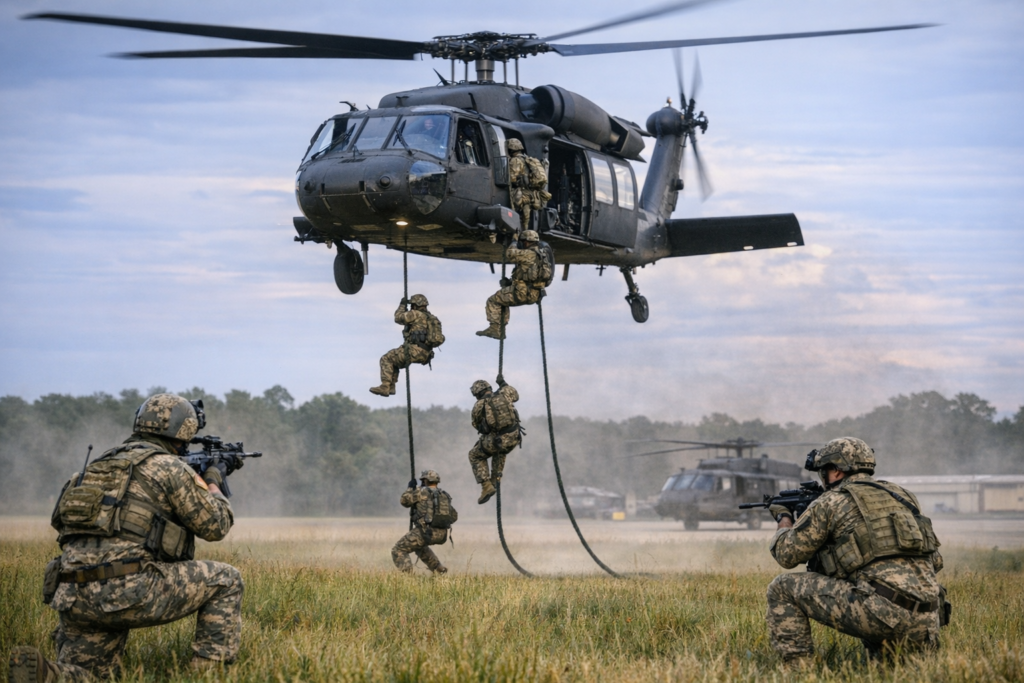
Upon graduation, you receive your Army Aviator Badge and join your operational unit. As a WO1 or CW2, you will:
A career as a US Army Rotary Wing Aviator can last 20+ years, with opportunities to become an instructor pilot, maintenance test pilot, or even a safety officer.
College credits—especially in STEM—boost your competitiveness.
Aim for 55+. Higher scores stand out.
Ideal signers include:
Dress professionally, speak confidently, and articulate why you want to be a US Army Rotary Wing Aviator.
Becoming a US Army Rotary Wing Aviator through MOS 153A is a demanding but achievable goal. The process requires discipline, resilience, and a strong application packet. From meeting the initial requirements to surviving the intensity of flight school, every step shapes you into a capable and trusted Army Aviator. If you are committed, prepared, and motivated, the path to the cockpit is within reach.
Just got out and you’re looking for civilian work? AVIATION EMPLOYMENT NETWORK can help!