Introduction
Airports run on people — not just pilots, dispatchers, and managers, but the thousands of men and women who keep aircraft moving, passengers flowing, and operations running safely every single day. These roles form the backbone of the aviation industry, and almost all of them begin the same way: with entry level jobs.
For many, entry level jobs are the first real step into aviation. It’s the moment you get your badge, step onto the ramp or into the terminal, and become part of the system that moves the world. These jobs don’t require prior aviation experience. They require reliability, curiosity, and a willingness to learn. In return, they offer stability, travel benefits, and a clear pathway into long‑term aviation careers.
This guide was created to give you clarity — not hype, not dramatization, and not the vague descriptions you find on job boards. Instead, you’ll get a practical, honest breakdown of the most common entry‑level airport roles, including what the work actually feels like, what the schedules look like, how much you can expect to earn, and how each job can lead to bigger opportunities.
You’ll learn about entry level jobs such as:
- Airport Ramp Agent — the foundation of ground operations and one of the most direct paths into aviation.
- Passenger Service Agent — the front‑line customer role that keeps the terminal moving.
- Baggage Service Agent — the problem‑solver who handles mishandled bags and customer issues.
- Airport Operations Assistant — the entry point into airfield and terminal operations.
- Fueling Agent, Cabin Cleaner, Retail Associate, Rental Car Agent, and more.
Each chapter will walk you through the responsibilities, lifestyle, training, pay, and career path of a specific role. You’ll see how these jobs connect, how people advance, and how entry level jobs can lead to dispatch, operations, management, or even a flying career.
Whether you’re exploring aviation for the first time, changing industries, or simply looking for a stable job with growth potential, this guide will help you understand where to start — and how to move forward with confidence.
Entry Level Jobs at the Airport:
Airport Ramp Agent — Understanding the Role and How to Apply with Confidence
Among all entry level jobs in aviation, the Airport Ramp Agent position is one of the most accessible, most essential, and most overlooked. It’s the job that keeps aircraft moving, passengers traveling, and airport operations running smoothly. For thousands of people every year, this role becomes the first step into the aviation world — a gateway into operations, dispatch, customer service, or even a flying career.
This chapter gives you a clear, realistic understanding of what ramp agents do, what the lifestyle feels like, what training is required, how much you can expect to earn, and how this role can launch a long‑term aviation career.
Why Ramp Work Is the Foundation of Entry Level Jobs
Airports rely on entry‑level talent to keep the system functioning. Ramp agents are the backbone of ground operations. They handle the physical, technical, and safety‑critical tasks that allow aircraft to depart on time. Unlike many other ENTRY LEVEL JOBS, this role places you directly in the center of airport operations — close to aircraft, close to crews, and close to the action.
If you want to break into entry level jobs at the airport, this is one of the most direct paths.
What Airport Ramp Agents Actually Do
Most people see ramp agents from the terminal window and assume the job is simply loading bags. In reality, the role is far more technical and operationally important.
Aircraft Loading and Unloading
Ramp agents handle:
- Passenger baggage
- Cargo and freight
- Special items (pets, instruments, mobility devices)
This requires:
- Reading load sheets
- Following weight‑and‑balance instructions
- Placing bags in specific compartments
- Communicating with gate agents and operations
Every item has a designated location. Misloading can delay flights or create balance issues.
Operating Ground Support Equipment (GSE)
Ramp agents operate:
- Belt loaders
- Tugs and bag carts
- Air start units
- Lavatory service trucks
- Water service trucks
- De‑icing equipment (in cold climates)
You’ll receive hands‑on training for each piece of equipment. Operating GSE safely around aircraft is a core responsibility.
Aircraft Marshalling
Ramp agents guide aircraft into and out of the gate using standardized hand signals or wands. Marshalling requires:
- Awareness of wingtip clearance
- Coordination with teammates
- Communication with the cockpit
- Understanding ramp markings and safety zones
It’s one of the most respected and visible duties on the ramp.
Pushback Operations
Ramp agents assist with:
- Connecting the tow bar
- Communicating with the flight deck
- Coordinating with ground control
- Safely pushing the aircraft back from the gate
Pushback is a high‑responsibility task performed only after training.
Safety and Ramp Awareness
The ramp is a high‑energy environment with:
- Moving aircraft
- Vehicles
- Jet blast
- Noise
- Weather hazards
Ramp agents must:
- Wear proper PPE
- Follow safety zones
- Maintain situational awareness
- Communicate clearly
- Follow procedures without shortcuts
Safety is the culture of the job.
Physical Requirements
Among entry level jobs, ramp work is one of the most physically demanding — but also one of the most rewarding.
Lifting
You’ll lift bags up to 70 lbs repeatedly. Some bags are oversized or awkward.
Movement
Expect:
- Bending
- Kneeling
- Climbing into cargo holds
- Walking long distances
- Standing for long periods
Weather Exposure
Ramp agents work in:
- Heat
- Cold
- Rain
- Snow
- Wind
Airports don’t stop for weather. You become part of the environment.
Stamina
Turn times are fast. You’ll move quickly, communicate constantly, and stay alert.
If you enjoy entry level jobs that include physical work and being outdoors, this role fits well.
Training & Certifications
One reason this is one of the most accessible entry level jobs is that you don’t need prior aviation experience. Employers provide all required training.
Some Entry Level Jobs Require a SIDA Badge
You’ll complete training to receive your airport security badge. This includes:
- Background check
- Security procedures
- Access rules
Ramp Safety Training
Covers:
- Ramp markings
- Safety zones
- Jet blast hazards
- PPE requirements
- Communication protocols
GSE Training
You’ll learn to operate:
- Belt loaders
- Tugs
- Bag carts
- Service trucks
Training includes hands‑on practice and supervised operation.
Aircraft‑Specific Procedures
You’ll learn:
- Cargo door operations
- Compartment layouts
- Weight‑and‑balance basics
- Pushback procedures
No FAA License Required
Ramp agents do not need FAA certification. All training is employer‑provided.
Pay, Schedules, and Lifestyle
Understanding the lifestyle helps you apply with confidence.
Pay
Typical pay ranges:
- $15–$22/hour at most U.S. airports
- Higher at major hubs or unionized stations
- Shift differentials for nights or early mornings
Many employers offer:
- Travel benefits
- Health insurance
- Retirement plans
- Paid training
Schedules
Airports operate 24/7. Expect:
- Early mornings (4–6 AM)
- Late nights
- Weekends
- Holidays
- Split shifts
Seniority determines preferred schedules over time.
Lifestyle
Ramp work is:
- Physical
- Fast‑paced
- Outdoors
- Team‑oriented
- Procedural
- Safety‑driven
You’ll work with a tight crew. You’ll see aircraft up close every day. You’ll feel the energy of airport operations.
For many people, it becomes a lifestyle they love.
Career Path: Ramp → Operations → Dispatch → Pilot
One of the biggest advantages of choosing ramp work among entry level jobs is the career mobility it creates. Once you’re inside the airport system, doors open.
Ramp → Operations
Ramp agents often move into:
- Operations Assistant
- Operations Coordinator
- Operations Specialist
- Operations Manager
Operations roles involve:
- Flight paperwork
- Crew coordination
- Gate management
- Load planning
- Communication with dispatch
Ramp → Dispatch
A common path is:
- Ramp Agent
- Load Control
- Dispatch Assistant
- FAA Aircraft Dispatcher (after certification)
Dispatchers share operational control with the captain. It’s a respected, high‑responsibility career.
Ramp → Pilot
Many pilots find entry level jobs and start on the ramp because it provides:
- Airport access
- Travel benefits
- Exposure to operations
- A foot in the aviation industry
A typical path:
- Ramp Agent
- Flight School
- CFI
- Regional Airline
- Major Airline
Ramp work builds discipline, situational awareness, and operational understanding — all valuable for pilots.
How to Apply with Confidence
Applying for an Airport Ramp Agent position is simple, but doing it well requires clarity.
1. Apply to the Right Employers
Ramp agents are hired by:
- Airlines (Delta, United, American, Southwest)
- Ground‑handling companies (Swissport, Menzies, Unifi, ABM)
- Airport authorities
Search for job titles like:
- Airport Ramp Agent
- Baggage Handler
- Ground Operations Agent
- Fleet Service Agent
2. Build a Simple, Effective Resume
Focus on:
- Reliability
- Physical work
- Teamwork
- Safety awareness
Examples:
- “Consistently met physical performance requirements in fast‑paced environments.”
- “Followed safety procedures with accuracy.”
- “Worked effectively in team‑based operations.”
3. Prepare for the Interview
Expect questions about:
- Weather tolerance
- Physical ability
- Reliability
- Safety mindset
Show you understand the job’s realities.
4. Demonstrate Reliability
Airports run on schedules. Reliability is the #1 hiring factor.
Mention:
- Punctuality
- Attendance
- Willingness to work early mornings
- Willingness to work weekends
5. Show You Understand the Job
Most applicants fail here. They say: “I like airports.”
Instead say: “I understand ramp work is physical, outdoors, and safety‑critical. I’m ready for that environment.”
That one sentence sets you apart.
Final Thoughts
Among all entry level jobs in aviation, the Airport Ramp Agent role offers the clearest path into the industry. You don’t need experience. You need reliability, physical readiness, and a willingness to work in a fast‑paced, outdoor environment. When you understand the role, the lifestyle, the training, and the career path, you apply with confidence — and confidence gets you hired.
This chapter is your foundation. The rest of this guide will walk you through every other entry‑level airport job so you can choose the path that fits your goals and your future in aviation.
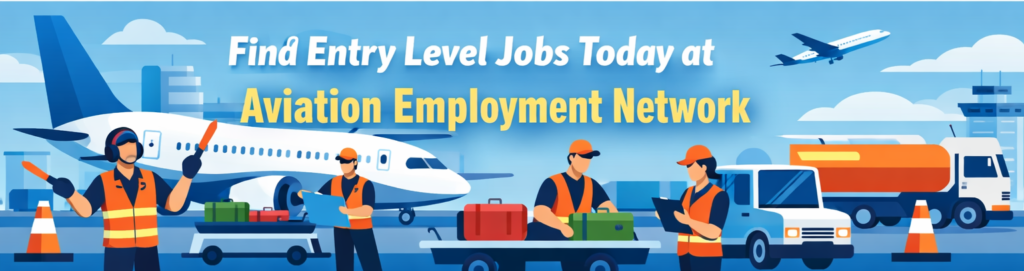
Click here to search entry level jobs at the airport at Aviation Employment Network!
Entry Level Jobs as a Baggage Handler & Ground Services: Keeping the Airport Moving
Among all entry level jobs at the airport, the baggage handler and ground services role is one of the most essential. It’s the job that keeps passengers connected to their belongings, keeps aircraft properly loaded, and keeps the airport operating smoothly behind the scenes. While the Airport Ramp Agent often gets more visibility, baggage handlers form the backbone of the ground operation. Without them, flights don’t depart, bags don’t arrive, and the entire system slows down.
This chapter gives you a clear, realistic understanding of what baggage handlers do, what the work feels like, how shifts operate, what safety procedures matter most, and how this role can grow into leadership or operations positions.
Daily Responsibilities
Baggage handlers work in a fast‑paced, physical environment where timing and accuracy matter. Their responsibilities touch nearly every part of the passenger journey.
Loading and Unloading Baggage
The core of the job involves:
- Moving bags between the terminal and the aircraft
- Loading bags into the correct aircraft compartments
- Unloading arriving bags and delivering them to the carousel
- Handling oversized, fragile, or special‑care items
Accuracy is critical. Bags must be placed in the correct carts, containers, or compartments to ensure they reach the right destination.
Sorting and Routing
Inside the bag room, baggage handlers:
- Sort bags by flight
- Scan and route bags through conveyor systems
- Identify misrouted or late‑checked bags
- Coordinate with gate agents and operations
This part of the job requires attention to detail and quick decision‑making.
Supporting Ground Services
Many baggage handlers also assist with:
- Moving cargo and mail
- Handling priority freight
- Managing transfer bags between flights
- Coordinating with the Airport Ramp Agent team during turnarounds
Ground services work is highly integrated. Every action affects the next step in the aircraft’s timeline.
Customer Interaction (Occasional)
While not a customer‑facing role, baggage handlers may occasionally:
- Assist passengers with oversized items
- Help locate missing bags
- Communicate with baggage service agents
Most of the work, however, happens behind the scenes.
Safety Procedures
Safety is the foundation of all entry level jobs at the airport, and baggage handling is no exception. The environment includes heavy machinery, conveyor belts, moving carts, and aircraft equipment. Strict procedures protect both employees and passengers.
Personal Protective Equipment (PPE)
Baggage handlers must wear:
- High‑visibility vests
- Gloves
- Hearing protection
- Steel‑toe or reinforced footwear
These items reduce injury risk in high‑energy areas.
Equipment Safety
Training covers:
- Safe operation of belt loaders and tugs
- Proper use of bag carts and containers
- Awareness around conveyor systems
- Avoiding pinch points and moving belts
Equipment misuse can cause serious injury, so procedures are non‑negotiable.
Aircraft Safety Zones
Even though baggage handlers may not marshal aircraft, they still work near the ramp and must understand:
- Jet blast hazards
- Propeller and engine safety zones
- Wingtip clearance
- Restricted movement areas
This knowledge overlaps with the Airport Ramp Agent role and prepares baggage handlers for future advancement.
Lifting Techniques
Because the job is physical, handlers are trained to:
- Lift with proper form
- Use team lifts for heavy items
- Avoid twisting under load
- Recognize fatigue and prevent strain
Airports emphasize long‑term physical safety.
Shift Expectations
Airports operate 24/7, and baggage handling reflects that reality. Shifts are designed around flight schedules, peak travel times, and operational needs.
Early Mornings
Many shifts begin between 3:30 AM and 6:00 AM, when the first wave of departures begins. Morning shifts are often the busiest.
Late Nights
Evening and overnight shifts handle:
- Late arrivals
- Delayed flights
- International baggage transfers
- Cargo operations
These shifts may offer higher pay due to differentials.
Weekends and Holidays
Air travel peaks during:
- Holidays
- Summer
- Spring break
- Long weekends
Baggage handlers must be available during these periods.
Part‑Time and Full‑Time Options
Many airports offer:
- Part‑time shifts for students or new workers
- Full‑time shifts with benefits
- Split shifts during peak seasons
Flexibility is common, but reliability is essential.
Union vs. Non‑Union Environments
One of the biggest differences across entry level jobs at the airport is whether the position is unionized. Baggage handling varies widely depending on the employer.
Union Environments
Airlines such as Delta, United, and American often have unionized ground crews. Benefits may include:
- Higher hourly pay
- Stronger job protections
- Clear seniority systems
- Better scheduling rights
- Paid vacation and sick time
- Negotiated raises
Union environments tend to offer more stability and long‑term career potential.
Non‑Union Environments
Ground‑handling companies like Swissport, Menzies, Unifi, and ABM often operate non‑union. These roles may offer:
- Faster hiring processes
- More flexible scheduling
- Easier entry for beginners
- Lower starting pay
- Fewer contractual protections
Non‑union jobs are excellent for getting started quickly, but long‑term growth may require switching employers.
Growth Into Ramp Lead, Supervisor, or Operations
One of the biggest advantages of baggage handling is the clear pathway to advancement. Once you’re inside the airport system, opportunities expand.
Ramp Lead
After gaining experience, baggage handlers can move into ramp lead roles, which include:
- Coordinating teams
- Managing turn times
- Communicating with gate agents
- Overseeing loading accuracy
- Training new employees
This role is often the first step into leadership.
Supervisor
Supervisors manage:
- Entire shifts
- Staffing levels
- Safety compliance
- Performance evaluations
- Operational decisions
Supervisors often come from baggage or ramp backgrounds.
Operations
With experience, baggage handlers can transition into operations roles such as:
- Operations Assistant
- Load Control
- Gate Coordination
- Crew Scheduling Support
Operations is one of the strongest career pathways in aviation and often leads to dispatch or management.
Final Thoughts
Among all ENTRY LEVEL JOBS at the airport, baggage handling and ground services offer one of the clearest paths into aviation. The work is physical, fast‑paced, and essential. You’ll learn safety, teamwork, equipment operation, and airport procedures — skills that transfer directly into ramp lead, supervisor, or operations roles.
If you want a job that gets you inside the airport system quickly, teaches you the fundamentals of ground operations, and opens the door to long‑term aviation careers, baggage handling is one of the smartest places to start.
FIND ENTRY LEVEL JOBS NOW AT AVIATION EMPLOYMENT NETWORK.COM!
Entry Level Jobs In Service
Passenger Service Agent (PSA) – The Face of the Airport
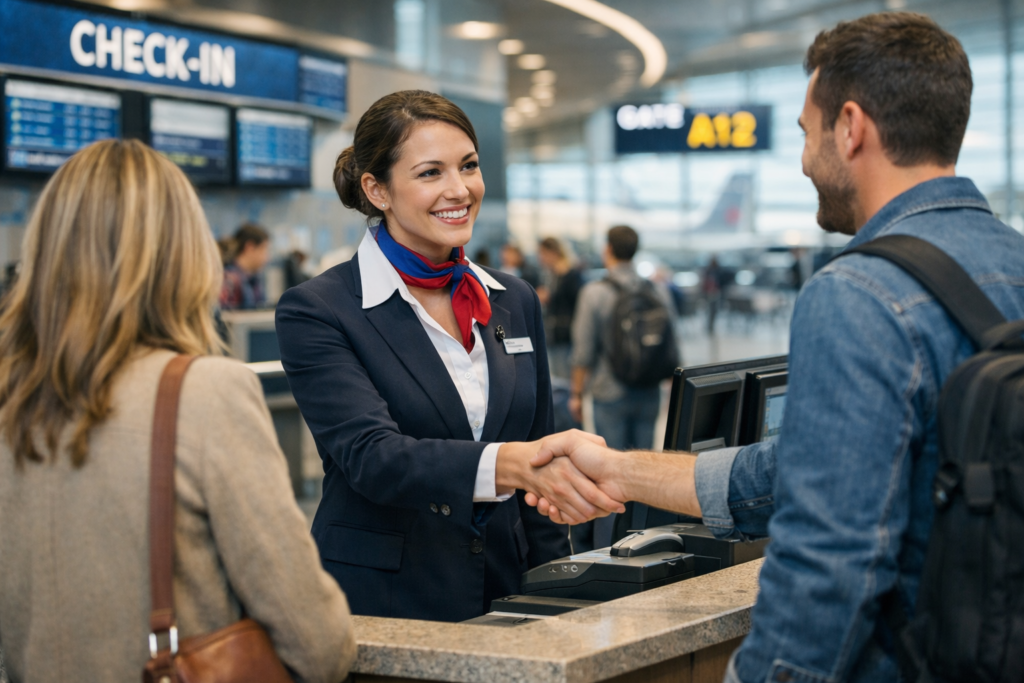
Among all ENTRY LEVEL JOBS at the airport, the Passenger Service Agent (PSA) role is the most visible. These are the people travelers meet first — at the check‑in counter, at the boarding gate, and during the moments when passengers need help the most. If ramp agents keep aircraft moving, PSAs keep passengers moving. They are the human connection between the airline and the traveler, and they shape the passenger experience from the moment someone enters the terminal.
This chapter gives you a clear, realistic understanding of what PSAs do, the skills required, how irregular operations (IROPs) affect the job, what the lifestyle looks like, and how this role can grow into station leadership.
Check‑In, Boarding, and Gate Operations
Passenger Service Agents work across multiple areas of the terminal. Each area has its own pace, responsibilities, and challenges.
Check‑In Counter
At the check‑in counter, PSAs:
- Verify passenger identification
- Check bags and print bag tags
- Issue boarding passes
- Handle seat assignments
- Collect fees for baggage or upgrades
- Assist with special service requests (wheelchairs, unaccompanied minors, pets)
This part of the job requires accuracy, patience, and the ability to explain airline policies clearly.
Boarding Gate
Gate operations are fast‑paced and time‑critical. PSAs:
- Make boarding announcements
- Scan boarding passes
- Coordinate with ramp agents and flight crews
- Handle seat changes and upgrades
- Manage standby lists
- Resolve last‑minute issues before departure
Gate work is where PSAs feel the pressure of on‑time performance. Every minute matters.
Arrival Services
When flights arrive, PSAs may:
- Assist passengers with connections
- Help locate missing bags
- Support wheelchair services
- Direct passengers to customs or baggage claim
This is often the calmest part of the shift, but it still requires attention and professionalism.
Customer Service Skills
Among entry level jobs, the PSA role demands the strongest customer service skills. You are the face of the airline, and passengers rely on you for guidance, reassurance, and solutions.
Communication
PSAs must communicate:
- Clearly
- Professionally
- Calmly
- With empathy
You’ll interact with hundreds of passengers per shift, each with different needs and expectations.
Entry Level Jobs Include Problem‑Solving
Air travel is unpredictable. PSAs must:
- Resolve booking issues
- Handle seat conflicts
- Manage delays and cancellations
- Assist frustrated or anxious passengers
Quick thinking is essential.
Emotional Intelligence
You’ll encounter:
- Nervous flyers
- Families with children
- Elderly passengers
- Business travelers in a hurry
- People experiencing travel stress
Your ability to stay composed and supportive defines your success.
Policy Knowledge
PSAs must understand:
- Airline rules
- TSA requirements
- Baggage policies
- Boarding procedures
- Ticketing systems
You don’t need prior experience — employers train you — but you must be willing to learn.
Irregular Operations (IROPs)
IROPs are the moments when the airport becomes chaotic. Weather delays, mechanical issues, crew shortages, and air traffic control restrictions can disrupt the entire schedule. For PSAs, IROPs are the true test of professionalism.
What Happens During IROPs
During irregular operations, PSAs may need to:
- Rebook passengers
- Issue hotel and meal vouchers
- Coordinate with operations and dispatch
- Make frequent announcements
- Manage long lines at the counter
- Handle emotional or upset passengers
It’s intense, but it’s also where PSAs learn the most.
Staying Calm Under Pressure
The key to handling IROPs is:
- Staying calm
- Communicating clearly
- Showing empathy
- Following procedures
- Working as a team
Passengers remember how you treat them during stressful moments. Your professionalism builds trust.
Support Systems
Airlines provide:
- Supervisors
- Station managers
- Operations teams
- Customer service leads
You’re never alone during IROPs — teamwork is essential.
Pay, Hours, and Stress Factors
Understanding the lifestyle helps you decide whether this ENTRY‑LEVEL JOB fits your goals.
Pay
Typical entry level jobs pay ranges:
- $15–$23/hour depending on airport and employer
- Higher pay at unionized stations
- Shift differentials for nights or early mornings
Many airlines offer:
- Travel benefits
- Health insurance
- Retirement plans
- Paid training
Hours
Airports operate 24/7. Expect:
- Early mornings (4–6 AM)
- Late nights
- Weekends
- Holidays
- Split shifts during peak seasons
Seniority determines preferred schedules over time.
Stress Factors
The PSA role can be stressful due to:
- Passenger emotions
- Tight departure timelines
- IROPs
- Long lines
- Complex ticketing issues
However, many PSAs enjoy the fast pace and human interaction.
Career Path Into Station Management
One of the biggest advantages of the PSA role is the clear pathway to leadership. Once you’re inside the airport system, opportunities expand quickly.
Lead PSA
After gaining experience, you can move into a lead role:
- Supervising check‑in and gate teams
- Managing boarding timelines
- Training new agents
- Handling escalated passenger issues
This is often the first step into management.
Supervisor
Supervisors oversee:
- Entire shifts
- Staffing levels
- Operational performance
- Safety compliance
- Customer service standards
Supervisors often come from PSA backgrounds.
Station Management
With experience, PSAs can advance into:
- Assistant Station Manager
- Station Manager
- Regional Customer Service Manager
Station managers oversee all airport operations for the airline, including ramp, gate, ticketing, and baggage services.
Other Career Paths
PSAs often transition into:
- Operations
- Crew scheduling
- Training departments
- Corporate customer service roles
The PSA role opens doors across the entire aviation industry.
Final Thoughts on the Passenger Service Agent Role
Among all ENTRY LEVEL JOBS at the airport, the Passenger Service Agent role offers the strongest combination of customer interaction, operational responsibility, and career mobility. You become the face of the airline, the person passengers rely on, and the professional who keeps the terminal moving.
If you enjoy helping people, solving problems, and working in a fast‑paced environment, the PSA role is one of the best ways to begin your aviation career — and one of the clearest paths to station management.
Entry Level Jobs in Security
Airport Security Screener (TSA): Protecting the Traveling Public
Among all ENTRY LEVEL JOBS at the airport, few carry as much responsibility as the Transportation Security Administration (TSA) Security Screener. These professionals are the first line of defense in aviation safety — the people who ensure that every passenger, bag, and item entering the secure area of an airport meets federal security standards. Their work protects millions of travelers every day and forms the foundation of public trust in air travel.
This chapter gives you a clear, realistic understanding of what TSA screeners do, how to qualify, what training looks like, what the pay and benefits include, and how this role can lead to supervisory or federal career advancement.
TSA Hiring Requirements
The TSA Security Screener position is a federal job under the Department of Homeland Security (DHS). It’s one of the most structured entry level jobs in aviation, with clear eligibility criteria and a standardized hiring process.
Basic Qualifications
To apply, you must:
- Be a U.S. citizen or national
- Be at least 18 years old
- Possess a high school diploma, GED, or equivalent
- Be able to pass a background investigation and drug screening
- Be able to pass a medical evaluation and color vision test
- Be proficient in English (reading, writing, speaking)
Security Clearance
Because TSA screeners handle sensitive security information, applicants must pass a Security Threat Assessment (STA) and a Criminal History Records Check (CHRC). These ensure that candidates meet federal trustworthiness standards.
Physical Requirements
The job involves standing for long periods, lifting luggage (up to 50 lbs), and operating screening equipment. Applicants must demonstrate physical readiness during the hiring process.
Assessment Process
The hiring process includes:
- Online application through USAJobs.gov
- Computer-Based Test (CBT) assessing English proficiency and object recognition
- Structured interview
- Medical and drug screening
- Background investigation
- Final job offer and training assignment
The process is competitive but transparent. Applicants who meet all requirements and pass the assessments are placed into a hiring pool for available airport positions.
Training Pipeline
Once hired, TSA screeners enter a structured training program designed to ensure consistency and competence across all airports.
Initial Training
New hires attend the TSA Academy at the Federal Law Enforcement Training Center (FLETC) in Glynco, Georgia. Training lasts approximately two weeks and covers:
- TSA mission and values
- Screening procedures
- X-ray image interpretation
- Explosive detection techniques
- Passenger interaction and conflict resolution
- Emergency response protocols
This academy experience combines classroom instruction, simulation labs, and hands-on practice with screening equipment.
On-the-Job Training
After academy graduation, trainees return to their assigned airport for on-the-job training (OJT). Under supervision, they learn:
- Checkpoint operations
- Baggage screening procedures
- Use of explosive trace detection (ETD) equipment
- Communication with law enforcement and airport operations
OJT typically lasts 30–45 days, depending on airport size and complexity.
Certification
Screeners must pass a certification test demonstrating proficiency in all required skills. Certification is renewed periodically through recurrent training and performance evaluations.
Continuous Learning
TSA emphasizes ongoing education. Screeners receive regular updates on new threats, technologies, and procedures. This commitment to continuous improvement keeps the workforce sharp and adaptable.
Pay Scale & Federal Benefits
One of the biggest advantages of TSA employment — and a major reason it’s considered one of the best ENTRY LEVEL JOBS in aviation — is the federal pay and benefits structure.
Pay Scale
TSA screeners are paid under the TSA Core Compensation System, which is similar to the federal General Schedule (GS) but tailored to TSA’s operational needs.
Typical pay ranges:
- $35,000–$55,000 annually depending on location, experience, and shift differentials
- Higher pay at major hubs (e.g., JFK, LAX, DFW) due to locality adjustments
- Overtime and holiday pay available
Benefits
Federal employment includes:
- Health, dental, and vision insurance
- Retirement plan (FERS)
- Thrift Savings Plan (TSP) with government matching
- Paid vacation and sick leave
- Paid federal holidays
- Life insurance
- Tuition assistance and career development programs
Job Stability
TSA positions are federal civil service roles, offering strong job security and consistent pay even during economic downturns. Employees are eligible for annual performance-based raises and step increases.
Work Environment
The TSA work environment is structured, disciplined, and mission-driven. Screeners operate in high-traffic areas under strict federal guidelines.
Checkpoint Operations
At passenger checkpoints, screeners:
- Operate X-ray machines and body scanners
- Verify identification and boarding passes
- Conduct pat-downs and bag inspections
- Respond to alarms and suspicious items
- Maintain communication with supervisors and law enforcement
Every action follows standardized procedures to ensure fairness and safety.
Checked Baggage Screening
In baggage areas, screeners:
- Use explosive detection systems (EDS)
- Inspect flagged bags manually
- Coordinate with airline and ramp personnel
- Document findings and maintain chain-of-custody protocols
Team Structure
Screeners work in teams led by Supervisory Transportation Security Officers (STSOs). Collaboration and communication are essential, especially during peak travel times.
Work Conditions
Expect:
- Standing for long periods
- Rotating shifts (early mornings, nights, weekends, holidays)
- High passenger volumes during holidays and summer travel
- Strict adherence to uniform and conduct standards
While the environment can be demanding, it’s also rewarding — you see the direct impact of your work every day.
Stress Factors
The job involves constant focus and public interaction. Screeners must balance security enforcement with professionalism and empathy. TSA provides stress management resources and employee assistance programs to support staff well-being.
Advancement Into Supervisory or Federal Roles
TSA offers clear career progression, making it one of the most structured ENTRY‑LEVEL JOBS for long-term growth.
Supervisory Roles
After gaining experience, screeners can advance to:
- Lead Transportation Security Officer (LTSO) — oversees checkpoint teams
- Supervisory Transportation Security Officer (STSO) — manages operations and staff
- Assistant Federal Security Director (AFSD) — oversees entire airport security programs
Promotions are based on performance, experience, and leadership ability.
Specialized Roles
Experienced screeners may move into specialized positions such as:
- Behavior Detection Officer (BDO) — identifies suspicious behavior patterns
- Explosives Detection Specialist (EDS) — works with advanced screening technology
- Training Instructor — teaches new hires and conducts recurrent training
These roles deepen expertise and expand career options.
Federal Career Mobility
TSA employment opens doors across the federal government. Many screeners transition into:
- Homeland Security Investigations (HSI)
- Customs and Border Protection (CBP)
- Federal Air Marshal Service (FAMS)
- Transportation Security Specialist (TSS) roles in policy and intelligence
Federal experience and security clearance make TSA employees strong candidates for other DHS and law enforcement careers.
Final Thoughts on the TSA Security Screener Role
Among all entry level jobs at the airport, the TSA Security Screener role stands out for its purpose, structure, and stability. It’s not just a job — it’s a public service position that protects lives and ensures the integrity of air travel. You’ll gain federal training, benefits, and experience that can lead to supervisory, specialized, or broader federal careers.
If you’re dependable, detail-oriented, and motivated by mission-driven work, becoming a TSA Security Screener is one of the most meaningful ways to start your aviation career — and one of the most secure paths to long-term professional growth.
Aircraft Cabin Cleaner & Turn Team: Fast‑Paced Turnaround Work
Airports never sleep. Every flight that lands must be turned around quickly — cleaned, serviced, and prepared for the next departure. That’s where Aircraft Cabin Cleaners and Turn Teams come in. These are the people who make sure passengers board a clean, safe, and ready aircraft. For anyone looking for entry‑level jobs in aviation, this role is one of the most accessible ways to start.
What Cabin Cleaners Actually Do
Cabin cleaners are responsible for resetting the aircraft interior between flights. Their work is fast, physical, and detail‑oriented. Typical duties include:
- Removing trash and debris from seat pockets and floors
- Wiping tray tables, armrests, and windows
- Restocking lavatories and galleys with supplies
- Vacuuming carpets and mopping galley floors
- Sanitizing high‑touch surfaces like seatbelts and overhead bins
On larger aircraft, cleaners work in teams — each person assigned to a zone. The goal is simple: make the cabin look and feel like no one just flew in it. The turnaround window can be as short as 20–40 minutes, so efficiency and teamwork matter more than anything.
Safety and Chemical Handling
Cabin cleaning involves working around specialized chemicals and confined spaces. Safety training is part of every onboarding program. You’ll learn:
- How to handle disinfectants and cleaning agents safely
- Proper use of gloves, masks, and protective gear
- Procedures for avoiding cross‑contamination between flights
- How to identify and report damage or biohazard situations
Airlines and contractors follow strict FAA and OSHA guidelines. You’ll also be trained on ramp safety — how to move around aircraft, avoid jet blast zones, and communicate with ground crews. Safety discipline is what separates aviation cleaning from ordinary janitorial work.
Overnight vs. Daytime Shifts
Cabin cleaning happens around the clock.
- Daytime shifts handle quick turns between flights — short, high‑tempo bursts of activity.
- Overnight shifts perform deep cleans when aircraft stay parked longer. That’s when carpets are shampooed, seat covers replaced, and galleys scrubbed top to bottom.
Overnight work often pays slightly more and suits people who prefer quieter environments. Day shifts are ideal for those who thrive in motion — constant arrivals, departures, and teamwork under pressure.
Pay and Team Structure
This is a true entry‑level job. Most cabin cleaners start between $15–$20 per hour, depending on location and employer. Some positions include shift differentials for nights or weekends. Benefits vary — larger contractors and airlines may offer health coverage, paid time off, and flight privileges after a probation period.
Teams are usually led by a Turn Coordinator or Lead Cleaner, who assigns zones and checks completion before the aircraft is released. You’ll work alongside ramp agents, fuelers, and catering crews — all synchronized to meet the departure deadline. It’s a fast‑moving environment where reliability and communication are everything.
Pathways Into Ramp or Customer Service
Cabin cleaning is often a gateway job. Many people use it to move into other airport roles once they’ve proven their reliability and safety awareness. Common transitions include:
- Ramp Agent: You already understand aircraft layout and turnaround timing — perfect foundation for ramp work.
- Passenger Service Agent: If you prefer customer interaction, your operational experience gives you credibility at the gate.
- Operations Support: Some cleaners move into dispatch or load control after gaining exposure to flight schedules and coordination.
Employers notice workers who show initiative, punctuality, and teamwork. Once you’ve built a record of dependable performance, advancement opportunities open quickly.
Why This Job Matters
Cabin cleaners are the unseen backbone of passenger comfort. Every flight you’ve ever boarded — from a short hop to a transcontinental route — depended on a team that worked behind the scenes to make it ready. It’s not glamorous, but it’s real aviation work: hands‑on, time‑critical, and essential to safety and service.
For anyone exploring entry level jobs at the airport, this role offers immediate access to the industry. You’ll earn a steady paycheck, gain ramp clearance, and learn how the operation truly runs. From there, you can grow into nearly any ground‑based aviation career.
Bottom line: If you’re dependable, detail‑oriented, and comfortable working in a fast‑paced environment, becoming an Aircraft Cabin Cleaner or Turn Team member is one of the most direct ways to start your aviation journey. It’s not just cleaning — it’s the first step toward a career that keeps the world moving.
Entry Level Jobs as a Fueling Agent
The Specialists Behind Every Departure
Air travel looks simple from the terminal windows — passengers board, bags are loaded, and the aircraft pushes back. But behind every departure is a technical process that determines whether the flight can even leave the gate: fueling. Fueling Agents are the specialists who make sure each aircraft receives the exact amount of fuel it needs for its route, weather conditions, and weight. For anyone exploring entry level jobs at the airport, fueling offers one of the most direct paths into aviation operations.
Fueling Procedures
Fueling an aircraft is a precise, regulated process. It’s not like filling up a car. Every aircraft type has specific fuel tank configurations, balance requirements, and fueling ports. As a Fueling Agent, your job is to deliver fuel safely, accurately, and on schedule.
A typical fueling sequence includes:
- Reviewing the fuel order from dispatch or the flight crew
- Verifying the aircraft tail number and confirming fuel type
- Grounding the aircraft and truck to prevent static discharge
- Connecting the fueling hose to the under‑wing or over‑wing port
- Monitoring gauges, pressure, and flow rate throughout the process
- Communicating final fuel numbers to the captain or first officer
Fueling Agents must be comfortable working with numbers. You’ll calculate fuel loads in pounds or gallons, confirm distribution between tanks, and record everything in the fueling log. Even small errors can delay a flight or require additional checks, so accuracy is a core part of the job.
Hazmat Training
Jet fuel is a hazardous material, and anyone who handles it must complete Hazmat training. This is part of your onboarding and includes:
- Understanding fuel properties, vapor hazards, and ignition risks
- Learning proper PPE use, including gloves and flame‑resistant clothing
- Spill response procedures and containment techniques
- Emergency shut‑off systems and fire suppression basics
- Documentation and labeling requirements for fuel trucks and storage tanks
Hazmat training is regulated under DOT and OSHA standards. It’s not complicated, but it is serious. You’ll learn how to protect yourself, your team, and the aircraft during every fueling operation.
Safety Protocols
Fueling Agents work in one of the most safety‑critical environments at the airport. You’re around high‑pressure fuel systems, moving vehicles, active aircraft, and strict time constraints. Safety protocols are non‑negotiable.
Common procedures include:
- Wearing high‑visibility vests and flame‑resistant uniforms
- Using wheel chocks and cones to secure the fueling truck
- Maintaining clear zones around fueling equipment
- Following “no smoking” and “no cell phone” rules near fuel
- Reporting leaks, spills, or equipment issues immediately
- Communicating with ramp agents, maintenance, and flight crews
Fueling Agents also learn ramp safety — how to move around aircraft, avoid jet blast, and stay aware of tug and cart traffic. The job demands focus, but once you learn the rhythm, it becomes second nature.
Pay & Shift Structure
Fueling is a true entry level job, but it pays more than many other airport roles because of the technical responsibilities involved.
Typical pay ranges from $18–$25 per hour, depending on airport size and employer. Some companies offer:
- Shift differentials for nights or early mornings
- Overtime opportunities
- Union benefits
- Health insurance and retirement plans
- Flight privileges after probation
Fueling happens 24/7.
- Day shifts handle most passenger flights and cargo operations.
- Night shifts support maintenance, repositioning, and early‑morning departures.
If you prefer steady, predictable work with clear procedures, fueling is one of the best entry level jobs in aviation.
Career Path Into Operations or Fuel Management
Fueling Agents often move into higher‑level operational roles because the job teaches discipline, communication, and technical accuracy. Once you’ve built experience, you can transition into:
- Fuel Coordinator or Supervisor – managing fueling schedules and teams
- Fuel Quality Technician – testing fuel samples and maintaining storage systems
- Ramp or Operations Specialist – overseeing aircraft movement and turnaround timing
- Load Control or Dispatch Support – working with flight planning and weight/balance
- Airport Operations – coordinating ramp, gate, and safety functions
Fueling gives you credibility. You learn how aircraft operate, how flights are planned, and how ground teams work together. That knowledge opens doors across the airport.
Why Fueling Is a Strong Entry Point
Fueling Agents are essential. Without them, no aircraft leaves the gate. The job is hands‑on, technical, and respected across the operation. It’s ideal for people who:
- Want a stable aviation job with solid pay
- Prefer physical, outdoor work
- Enjoy clear procedures and technical tasks
- Want a path into operations, logistics, or management
- Are looking for entry level jobs that lead to long‑term careers
Fueling isn’t glamorous, but it’s real aviation work — the kind that keeps the industry moving. If you’re dependable, safety‑minded, and comfortable working outdoors, becoming a Fueling Agent is one of the most direct ways to start your
Airport Operations Assistant: Entry Point Into Airport Ops
Among all entry level jobs at the airport, the Airport Operations Assistant role stands out as one of the most dynamic and career‑building positions available. It’s the bridge between the airfield and the administrative side of airport management — a job that combines hands‑on operational work with regulatory oversight and coordination. For those who want to understand how airports truly function, this position offers a front‑row seat to the daily rhythm of aviation.
This chapter explains what Airport Operations Assistants do, how they support airfield inspections and wildlife control, what qualifications are needed, and how this role can lead to becoming an operations specialist or airport manager.
The Role: Entry Level Jobs In Airport Operations
Airports are complex ecosystems. Every runway, taxiway, and terminal must operate safely and efficiently under strict federal regulations. The Airport Operations Assistant helps make that happen. As one of the most structured ENTRY LEVEL JOBS in airport management, this position provides exposure to nearly every aspect of operations — from airfield safety to administrative coordination.
Operations assistants work under the supervision of operations specialists or duty managers. Their job is to ensure compliance with FAA Part 139 requirements, maintain situational awareness across the airfield, and support the daily inspection and reporting processes that keep airports open and safe.
Airfield Inspections Support
One of the most critical responsibilities of an Airport Operations Assistant is supporting airfield inspections. These inspections are required by federal regulation and are performed multiple times per day to ensure the airport remains safe for aircraft operations.
Daily Inspection Duties
Assistants help with:
- Checking runway and taxiway surfaces for debris, cracks, or foreign objects
- Inspecting lighting systems, signage, and pavement markings
- Monitoring for wildlife activity or environmental hazards
- Reporting any irregularities to maintenance or operations management
They often accompany senior operations staff on inspection drives across the airfield, documenting findings and learning how to identify potential hazards.
NOTAM Coordination
Assistants may help issue NOTAMs (Notices to Air Missions) when conditions affect flight operations — such as closed taxiways, lighting outages, or construction zones. Understanding how NOTAMs work is a key skill for anyone pursuing a long‑term career in airport operations.
Runway Condition Reporting
In winter or during adverse weather, assistants help collect data for Runway Condition Assessment Reports (RCARs), ensuring pilots receive accurate braking‑action information. This task teaches precision and accountability — essential traits for future operations specialists.
Wildlife Control Assistance
Wildlife management is a major part of airport safety. Birds, mammals, and other animals can pose serious hazards to aircraft. Airport Operations Assistants often support wildlife control programs under the guidance of certified specialists.
Observation and Reporting
Assistants:
- Conduct wildlife surveys during airfield inspections
- Record species sightings and activity patterns
- Report hazards to the operations or environmental team
Deterrent Techniques
They may assist with:
- Deploying pyrotechnics or noise deterrents
- Coordinating with local wildlife agencies
- Maintaining records for FAA Wildlife Hazard Management Plans
This experience builds awareness of environmental factors that affect aviation safety — a skill that becomes invaluable in higher operations roles.
Administrative + Field Duties
The Airport Operations Assistant role is unique among ENTRY LEVEL JOBS because it blends office work with field operations. You’ll spend part of your day outdoors on the airfield and part indoors handling documentation, communication, and coordination.
Administrative Responsibilities
In the office, assistants:
- Prepare inspection reports and maintenance requests
- Update operations logs and databases
- Communicate with air traffic control, maintenance, and airport tenants
- Assist with scheduling and recordkeeping for compliance audits
Field Responsibilities
On the airfield, assistants:
- Escort contractors and maintenance crews in secure areas
- Monitor construction zones for safety compliance
- Support emergency response drills and incident documentation
- Observe aircraft movement and ensure adherence to airport procedures
This dual exposure — administrative and operational — makes the position one of the most well‑rounded ENTRY‑LEVEL JOBS in aviation.
Requirements: Degree Preferred but Not Mandatory
While some airports prefer candidates with a degree in aviation management, public administration, or a related field, many hire based on experience, reliability, and aptitude. It’s one of the few entry level jobs that welcomes both recent graduates and motivated individuals with strong organizational and communication skills.
Preferred Qualifications
- Associate or bachelor’s degree in aviation, business, or public administration
- Familiarity with FAA regulations (especially Part 139)
- Strong written and verbal communication skills
- Ability to work rotating shifts, weekends, and holidays
- Valid driver’s license and ability to operate vehicles on the airfield
Mandatory Requirements
- U.S. citizenship or legal work authorization
- Background check and drug screening
- Ability to pass airport security clearance (SIDA badge)
- Physical ability to work outdoors in varying weather conditions
Airports value professionalism, attention to detail, and teamwork — qualities that matter more than formal credentials in many cases.
Work Environment
The Airport Operations Assistant works in a dynamic environment that blends structure with unpredictability. No two days are the same.
Indoor and Outdoor Balance
Expect to split time between:
- The operations office (handling reports and coordination)
- The airfield (conducting inspections and monitoring activity)
Shift Structure
Airports operate 24/7. Assistants often work rotating shifts that include:
- Early mornings
- Nights
- Weekends
- Holidays
This schedule ensures continuous coverage and compliance with safety standards.
Team Collaboration
Assistants interact with:
- Operations specialists and duty managers
- Air traffic control
- Maintenance crews
- Airport police and fire departments
- Airline and tenant representatives
The environment is professional, fast‑paced, and safety‑focused — ideal for those who thrive under responsibility.
Path to Operations Specialist or Manager
The Airport Operations Assistant role is designed to be a stepping stone. It’s one of the most strategic entry level jobs for anyone pursuing a long‑term career in airport management.
Advancement to Operations Specialist
After gaining experience, assistants can advance to Operations Specialist, where they take full responsibility for airfield inspections, NOTAM issuance, and emergency coordination. Specialists often serve as shift leads and make operational decisions during irregular events.
Progression to Operations Manager
With additional experience and education, specialists can move into Operations Manager or Duty Manager roles. These positions oversee entire airport operations, manage staff, and coordinate with federal agencies such as the FAA and TSA.
Long‑Term Career Potential
Many airport directors and senior managers began as operations assistants or specialists. The role provides foundational knowledge of airport systems, compliance, and safety — the building blocks of leadership in aviation management.
Final Thoughts
Among all entry level jobs at the airport, the Airport Operations Assistant position offers one of the most balanced blends of fieldwork, administration, and career potential. You’ll learn how airports function, how safety is maintained, and how operations teams coordinate every detail that keeps aircraft moving.
If you’re detail‑oriented, comfortable working outdoors, and eager to build a career in aviation management, this role is your entry point into the world of airport operations — and the first step toward becoming an operations specialist, duty manager, or airport executive. airport career.
Rental Car Associate: The Hidden Gateway Job
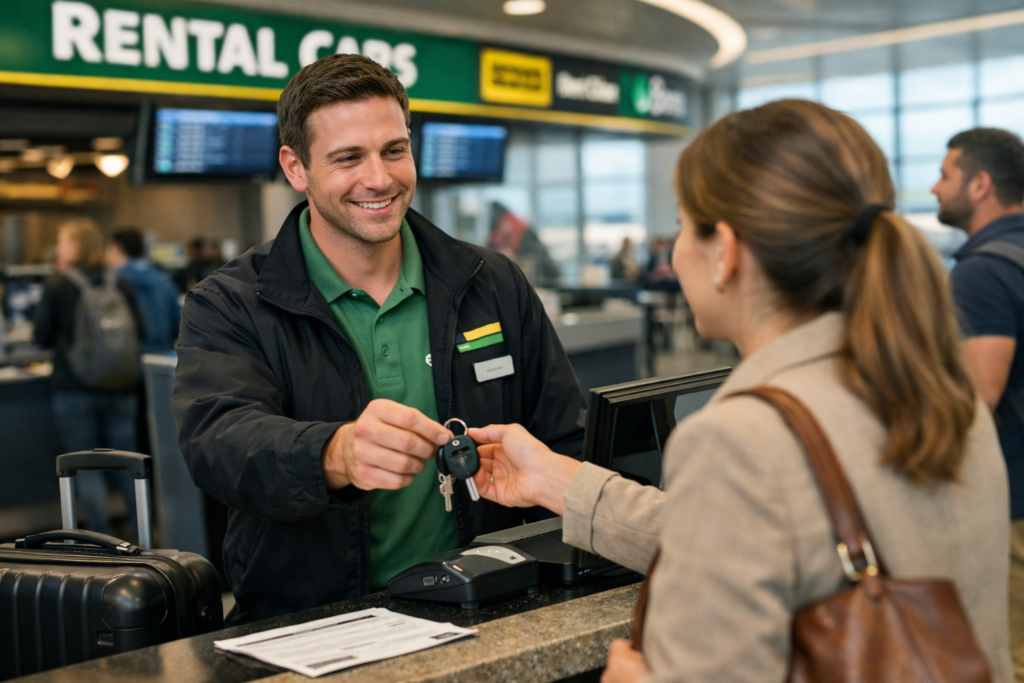
Among all entry level jobs at the airport, the Rental Car Associate role is one of the most overlooked — yet one of the most strategic. Most people think of rental car companies as separate from airport operations, but in reality, they are deeply integrated into the airport ecosystem. Rental car associates work inside terminals, at airport service centers, and in vehicle lots directly connected to passenger flow. Their work supports travelers, airlines, and airport management in ways that make this job a surprisingly powerful entry point into aviation.
This chapter explains why rental car jobs are airport jobs, what the daily responsibilities look like, how customer interaction shapes the role, what driving and vehicle logistics involve, how pay and bonuses work, and how this position can lead to airline customer service or airport management careers.
Why Rental Car Jobs Are Airport Jobs
Rental car companies operate inside airports because they are part of the passenger journey. Travelers land, pick up their bags, and immediately need transportation. This makes rental car operations a critical component of airport flow.
Integrated Into Airport Operations
Rental car associates work:
- At airport rental counters
- In service centers connected to terminals
- In vehicle lots located on airport property
- Alongside airport security, shuttle drivers, and airline staff
Their schedules match airport traffic patterns, and their work directly affects passenger satisfaction.
Part of the Passenger Experience
Airports measure success by how smoothly passengers move through each stage of travel. Rental car associates help:
- Reduce congestion
- Support travelers during delays
- Provide solutions when flights are disrupted
- Maintain customer satisfaction during stressful travel days
This makes rental car work one of the most customer‑centric entry level jobs in the airport environment.
A Gateway Into Aviation
Because rental car associates interact with airline staff, airport operations teams, and customer service departments, the role becomes a natural stepping stone into aviation careers.
Customer Interaction
Customer service is the heart of the Rental Car Associate role. You are often the first person a traveler speaks to after leaving the terminal, and your professionalism shapes their impression of the airport.
Daily Customer Service Duties
Associates:
- Greet customers at the rental counter
- Verify reservations and identification
- Explain rental options, insurance, and upgrades
- Assist with vehicle selection
- Resolve billing questions
- Handle customer complaints or travel‑related stress
This requires patience, empathy, and clear communication — skills that transfer directly into airline customer service roles.
Handling Travel Stress
Travelers may arrive:
- After long flights
- During delays
- With lost baggage
- With family or business pressures
Rental car associates learn to manage emotions, provide reassurance, and offer solutions — the same skills used by gate agents, ticketing agents, and airline supervisors.
Building Professional Confidence
Because customer interaction is constant, associates quickly develop:
- Conflict resolution skills
- Sales and upselling abilities
- Professional communication habits
- Confidence in fast‑paced environments
These traits make rental car associates strong candidates for aviation customer service positions.
Driving & Vehicle Logistics
Beyond customer interaction, rental car associates handle vehicle logistics — a core part of the job that keeps the operation running smoothly.
Vehicle Movement
Associates:
- Move vehicles between lots
- Deliver cars to the terminal
- Transport vehicles for cleaning or maintenance
- Inspect cars for damage or safety issues
This requires attention to detail and comfort driving a variety of vehicles.
Fleet Coordination
Rental car operations depend on:
- Tracking vehicle availability
- Managing reservations
- Coordinating with cleaning crews
- Ensuring cars are fueled and ready
Associates learn how to manage inventory, communicate with teams, and maintain operational flow — skills that align with airport operations and logistics roles.
Safety Awareness
Because driving occurs on airport property, associates must follow:
- Airport traffic rules
- Safety protocols
- Vehicle inspection procedures
This exposure to airport safety culture prepares associates for future roles in airport operations or management.
Pay & Bonuses
Rental car jobs offer competitive pay compared to other entry level jobs at the airport.
Typical Pay Range
Most associates earn:
- $15–$20 per hour at major airports
- Higher pay in large hubs or unionized locations
- Additional compensation for night or weekend shifts
Bonuses & Incentives
Many rental car companies offer:
- Monthly performance bonuses
- Sales commissions for upgrades
- Customer satisfaction incentives
- Referral bonuses
These bonuses can significantly increase earnings, especially for associates who excel in customer service.
Benefits
Depending on the employer, associates may receive:
- Health insurance
- Paid time off
- Retirement plans
- Travel discounts
- Employee rental car benefits
This makes the role financially attractive for beginners entering the airport workforce.
Path Into Airline Customer Service or Airport Management
One of the biggest advantages of rental car work is the career mobility it creates.
Transition to Airline Customer Service
Rental car associates often move into:
- Ticketing agent roles
- Gate agent positions
- Baggage service roles
- Customer service representative jobs
Airlines value:
- Customer service experience
- Conflict resolution skills
- Professional communication
- Familiarity with airport operations
Rental car associates already have these skills.
Path Into Airport Management
With experience, associates can transition into:
- Airport operations assistant roles
- Terminal services positions
- Airport administrative support
- Airport customer experience teams
Because rental car associates work closely with airport staff, they gain insight into airport systems, schedules, and operational flow — knowledge that helps them advance.
Long‑Term Career Potential
Many airport professionals began in rental car roles because the job teaches:
- Customer service
- Logistics
- Safety awareness
- Team coordination
- Problem‑solving
These skills form the foundation of airport management careers.
Final Thoughts
Among all entry level jobs, the Rental Car Associate role is one of the most underrated — yet one of the most strategic. It places you inside the airport ecosystem, teaches customer service and logistics, provides competitive pay, and opens doors to airline customer service and airport management careers.
If you want a job that gets you inside the airport quickly, builds real professional skills, and creates long‑term aviation opportunities, rental car work is one of the smartest ways to begin your journey.
Entry Level Jobs With Airport Retail & Concessions: High‑Volume Customer Roles

Among all entry level jobs at the airport, few are as fast‑paced and people‑focused as working in retail and concessions. These are the shops, restaurants, and kiosks that keep travelers fed, equipped, and comfortable while they wait for flights. From coffee stands and bookstores to duty‑free shops and quick‑service restaurants, airport retail is a world of constant motion — a place where customer service meets logistics, and where every transaction contributes to the airport’s rhythm.
This chapter explores what it’s like to work in airport retail and concessions, the rules that make these jobs unique, how pay and schedules work, and how these roles can lead to management or even airline careers.
Working in Shops, Restaurants, and Kiosks
Airport retail and concessions are among the most visible entry level jobs in aviation. They’re the heartbeat of the terminal — the places travelers visit between check‑in and boarding. Employees in these roles keep operations running smoothly while maintaining a friendly, professional atmosphere.
Retail Associates
Retail associates work in:
- Gift shops
- Bookstores
- Duty‑free stores
- Travel accessory outlets
- Clothing and electronics shops
Their responsibilities include:
- Greeting customers and processing sales
- Restocking shelves and managing inventory
- Handling returns and exchanges
- Maintaining visual displays
- Assisting international travelers with duty‑free purchases
Retail associates learn multitasking, communication, and cultural awareness — skills that translate directly into other airport and airline roles.
Restaurant and Concession Staff
Food service positions include:
- Cashiers
- Baristas
- Line cooks
- Servers
- Shift leads
These employees handle high‑volume customer flow, especially during peak travel hours. They prepare food quickly, maintain cleanliness, and deliver excellent service under pressure. Working in airport food service teaches teamwork, time management, and adaptability — all essential traits for success in aviation.
Kiosk and Specialty Vendors
Kiosk workers sell items like snacks, souvenirs, electronics, or travel essentials. They often operate independently, managing both sales and customer interaction. These roles are ideal ENTRY LEVEL JOBS for people who enjoy autonomy and direct customer engagement.
Airport‑Specific Rules (SIDA and Badging)
Airport retail jobs differ from regular retail because they operate inside secure areas. Employees must follow federal and airport‑specific regulations.
Many Entry Level Jobs Require a SIDA Badge
Most airport retail workers need a Security Identification Display Area (SIDA) badge. This badge grants access to secure zones beyond TSA checkpoints. To obtain it, employees must:
- Pass a background check
- Complete security training
- Follow airport access rules
The SIDA badge is a symbol of trust and professionalism. It also introduces employees to the broader world of airport operations — a valuable experience for anyone pursuing a long‑term aviation career.
Airport Conduct and Compliance
Retail and concession employees must adhere to:
- TSA and airport security protocols
- Uniform and grooming standards
- Restricted‑area behavior rules
- Emergency procedures
These standards create a disciplined, safety‑focused environment. Working under these rules helps employees develop professionalism and attention to detail — qualities that make them stand out among other ENTRY LEVEL JOBS.
Vendor Coordination
Airport retail spaces are often managed by concession companies under contract with airport authorities. Employees learn how to coordinate with airport management, maintenance, and security teams — gaining insight into how airports operate as complex business ecosystems.
Pay, Tips, and Shift Patterns
Airport retail and concession jobs offer competitive pay compared to similar roles outside the airport, largely due to the unique environment and extended hours.
Pay Range
Typical pay for entry level jobsS in airport retail:
- $15–$22 per hour depending on location and employer
- Higher rates at major hubs or unionized operations
- Overtime and holiday pay available
Tips and Incentives
Food service and hospitality roles often include:
- Tips from travelers
- Sales bonuses for upselling or meeting targets
- Performance incentives for customer satisfaction
These extras can significantly boost income, especially during busy travel seasons.
Shift Patterns
Airports operate 24/7, so retail and concession employees work rotating shifts:
- Early mornings (4–6 AM) for breakfast and first departures
- Midday rushes for business travelers
- Late nights for international flights
Weekend and holiday shifts are common, but many employers offer flexible scheduling and shift differentials for overnight work.
Work Environment
Expect:
- Constant customer flow
- Fast‑paced teamwork
- Multicultural interactions
- Strict cleanliness and safety standards
It’s an environment that rewards energy, professionalism, and adaptability — traits that define successful ENTRY LEVEL JOBS in aviation.
Growth Into Supervisor or Store Manager
Airport retail and concessions offer clear advancement opportunities. Many employees start as associates and move into leadership within one to two years.
Entry Level Jobs Supervisor Roles
Supervisors oversee:
- Daily operations
- Staff scheduling
- Inventory control
- Customer service standards
- Cash handling and reporting
They act as the bridge between front‑line employees and management, ensuring smooth operations during peak hours.
Store Manager Positions
Managers handle:
- Hiring and training
- Vendor and airport coordination
- Budgeting and performance metrics
- Compliance with airport regulations
These roles require strong leadership and organizational skills — qualities developed through experience in entry level jobs.
Training and Development
Many airport concession companies offer:
- Leadership training programs
- Customer service certifications
- Management workshops
These programs prepare employees for long‑term careers in retail management or airport operations.
Transition Into Airline Roles
One of the most overlooked advantages of airport retail work is its proximity to airline operations. Employees interact daily with airline staff, ground crews, and airport management — creating natural networking opportunities.
Customer Service Pathway
Retail and concession employees often transition into:
- Airline ticketing or gate agent roles
- Baggage service positions
- Passenger assistance programs
Airlines value candidates with customer service experience, professionalism, and familiarity with airport procedures — all gained through retail work.
Operations and Administration
Employees who develop strong organizational and communication skills can move into:
- Airport administrative support
- Terminal operations coordination
- Concession management for airport authorities
These transitions turn ENTRY LEVEL JOBS into long‑term aviation careers.
Professional Growth
Airport retail teaches:
- Multitasking under pressure
- Cultural awareness
- Team leadership
- Compliance and safety discipline
These skills are transferable across the aviation industry, from customer service to operations management.
Final Thoughts
Among all ENTRY LEVEL JOBS at the airport, retail and concessions offer one of the most energetic and people‑focused environments. You’ll learn customer service, teamwork, and operational discipline while working in a setting that connects you directly to the pulse of air travel. The experience builds confidence, professionalism, and career momentum — whether you advance into store management or transition into airline or airport operations.
If you want a job that combines fast‑paced service, steady pay, and real growth potential, airport retail and concessions are one of the smartest ways to begin your aviation career.
Airline Call Center & Remote Support Roles
Among all ENTRY LEVEL JOBS in aviation, few offer the combination of flexibility, stability, and customer service experience that airline call center and remote support roles provide. These positions form the communication backbone of the airline industry — connecting passengers, travel agents, and airport teams around the world. Whether you work in a physical call center or remotely from home, you become part of the system that keeps travelers informed, flights booked, and operations running smoothly.
This chapter explains what reservation agents do, how remote and on‑site work differ, what pay and benefits look like, and how call center experience can lead to airport or dispatch careers.
Reservation Agent Duties
Airline reservation agents are the voice of the airline. They handle everything from flight bookings to travel disruptions, often serving as the first point of contact for passengers.
Core Responsibilities
Reservation agents:
- Answer inbound calls from passengers and travel agencies
- Book flights, seat assignments, and upgrades
- Process cancellations, changes, and refunds
- Provide information on schedules, fares, and policies
- Assist with special requests (wheelchair service, pets, unaccompanied minors)
- Handle loyalty program inquiries and mileage redemptions
Every call is different — one moment you’re helping a family plan a vacation, the next you’re assisting a business traveler rebook after a delay. This variety makes the job engaging and teaches adaptability, a key skill for all ENTRY LEVEL JOBS in aviation.
Technology and Tools
Agents use specialized airline reservation systems such as Sabre, Amadeus, or Galileo. Training includes learning how to:
- Navigate flight schedules
- Manage ticketing codes
- Apply fare rules
- Communicate effectively through multiple channels (phone, chat, email)
These systems are used across the airline industry, so mastering them opens doors to future airport and operations roles.
Entry Level Jobs Require Customer Service Excellence
Reservation agents must balance empathy and efficiency. They represent the airline’s brand in every interaction, often resolving stressful travel situations. Strong communication and problem‑solving skills are essential — qualities that make these roles some of the most valuable ENTRY LEVEL JOBS for long‑term growth.
Remote vs. On‑Site Work
Airline call center jobs can be performed either in centralized facilities or remotely. Each environment offers unique advantages.
On‑Site Call Centers
Traditional call centers are located near major airports or corporate offices. Working on‑site provides:
- Direct supervision and team support
- In‑person training and mentorship
- Immediate access to management and technical assistance
- A structured environment with clear shift schedules
On‑site roles are ideal for those who prefer face‑to‑face collaboration and a defined workspace.
Remote Support Roles
Many airlines now offer remote call center positions, allowing employees to work from home. Remote agents receive:
- Company‑provided equipment (headset, computer, secure network access)
- Virtual training and onboarding
- Flexible scheduling options
- The ability to work from anywhere with reliable internet
Remote work is especially appealing for people seeking work‑life balance or living far from major airports. It’s one of the fastest‑growing categories of ENTRY LEVEL JOBS in aviation.
Hybrid Models
Some airlines use hybrid systems where agents split time between home and office. This approach combines flexibility with team engagement, offering the best of both worlds.
Pay & Benefits
Airline call center and remote support roles offer competitive pay and strong benefits compared to other ENTRY LEVEL JOBS.
Pay Range
Typical pay:
- $17–$25 per hour depending on airline and location
- Higher rates for bilingual agents or premium support teams
- Overtime and holiday pay available
Bonuses and Incentives
Many airlines offer:
- Performance bonuses for call quality and efficiency
- Sales incentives for upgrades or ancillary services
- Recognition programs for customer satisfaction scores
Benefits
Full‑time employees often receive:
- Health, dental, and vision insurance
- Paid vacation and sick leave
- Retirement plans (401k or pension)
- Travel benefits — discounted or free flights for employees and family
- Tuition assistance and career development programs
These benefits make airline call center work one of the most stable and rewarding ENTRY LEVEL JOBS in the travel industry.
How Call Center Experience Leads to Airport Jobs
Working in an airline call center builds a foundation of knowledge that transfers directly to airport operations and customer service roles.
Understanding Airline Systems
Agents learn:
- Reservation and ticketing processes
- Flight schedules and operational terminology
- Customer service protocols
- Coordination between departments (dispatch, operations, crew scheduling)
This understanding gives call center employees an advantage when applying for airport positions such as gate agent, ticketing agent, or operations assistant.
Customer Service Skills
Call center experience develops:
- Patience and empathy
- Conflict resolution
- Multitasking under pressure
- Professional communication
These skills are essential for airport front‑line roles, where employees interact with passengers face‑to‑face.
Internal Mobility
Airlines often promote from within. Many call center employees transition to:
- Airport customer service
- Flight operations support
- Crew scheduling
- Dispatch coordination
Internal experience and familiarity with company systems make these transitions smooth and efficient.
Career Path Into Customer Service or Dispatch
Airline call center roles are not just jobs — they’re gateways to long‑term aviation careers.
Customer Service Path
After gaining experience, agents can move into:
- Gate or ticketing agent positions
- Baggage service roles
- Passenger assistance programs
- Airport customer experience teams
These positions allow employees to work directly with travelers and apply their communication skills in person.
Dispatch and Operations Path
Agents with strong technical and organizational skills may advance into:
- Operations control centers
- Flight dispatch support
- Crew scheduling departments
- Load planning and coordination
Understanding reservation systems and flight logistics provides a natural transition into these operational roles.
Supervisory and Management Opportunities
With time and performance, agents can become:
- Team leads or supervisors
- Training coordinators
- Call center managers
- Regional customer service managers
Leadership roles offer higher pay, broader responsibility, and the chance to shape the airline’s customer experience strategy.
Final Thoughts on Entry Level Jobs at the Call Center
Among all ENTRY LEVEL JOBS in aviation, airline call center and remote support roles offer one of the most flexible and rewarding ways to start your career. You’ll gain deep knowledge of airline systems, develop professional communication skills, and build a foundation that can lead to airport operations, dispatch, or management.
If you want a job that connects you to the heart of aviation without requiring travel or technical certification, this role is one of the smartest starting points. It’s where communication meets coordination — and where your journey in aviation truly begins.