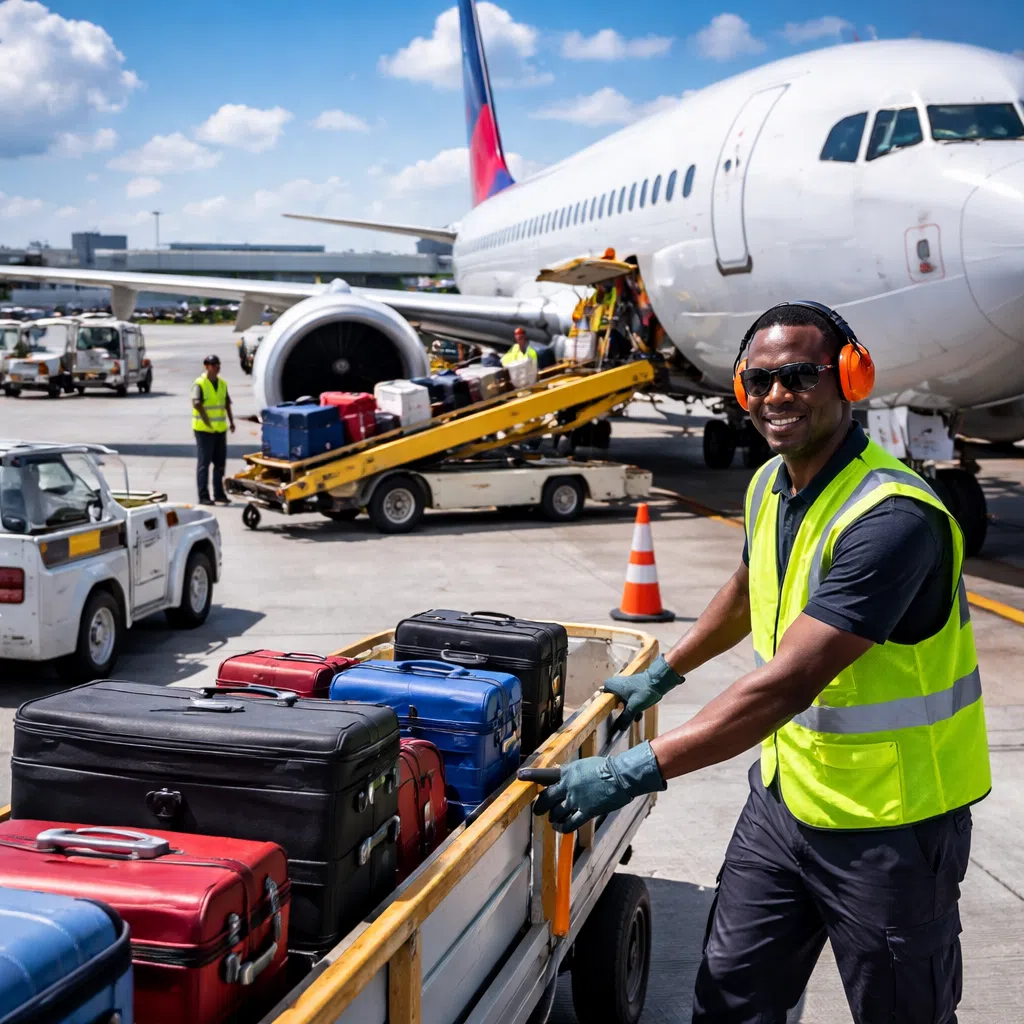
Airport and Ramp Operations Careers
Airport and ramp operations careers form the ground‑based core of aviation. They ensure that every aircraft can arrive, turn around, and depart safely, efficiently, and on schedule. These roles combine safety oversight, time‑critical coordination, and logistical precision, and they influence nearly every moment an aircraft spends on the ground. Discover the opportunities in AIRPORT & RAMP OPERATIONS CAREERS today! If you are considering a future in AIRPORT & RAMP OPERATIONS CAREERS, this is the right time to explore the various roles available.
Airport and Ramp Operations as a Connected System
AIRPORT & RAMP OPERATIONS CAREERS offer a dynamic working environment that is crucial to the aviation industry. Each position plays a vital role in ensuring safe and efficient flight operations.
Those interested in AIRPORT & RAMP OPERATIONS CAREERS should consider the variety of skill sets needed to succeed.
Professionals in AIRPORT & RAMP OPERATIONS CAREERS must stay vigilant and adaptable to changing conditions.
Although airport operations and ramp operations are distinct areas, they function as two halves of the same system. Ramp teams manage the physical handling of aircraft and ground equipment, while airport operations oversee the broader airfield environment and ensure regulatory and safety compliance. Together, they create the conditions that allow aircraft to move predictably and safely through the most time‑compressed phase of flight: the turnaround.
For those pursuing AIRPORT & RAMP OPERATIONS CAREERS, teamwork is essential for seamless operations.
Ramp Operations: The Aircraft’s Ground Choreography

Ramp operations take place on the apron, where aircraft park and prepare for their next flight. This environment demands precise coordination, strict adherence to procedures, and constant situational awareness.
Key responsibilities include:
- Aircraft parking and marshalling — guiding aircraft into position, ensuring wingtip clearance, and maintaining safe separation from other aircraft and vehicles.
- Baggage and cargo handling — loading and unloading, weight and balance considerations, and securing cargo according to airline and regulatory standards.
- Ground servicing — lavatory service, potable water replenishment, cabin cleaning, catering, and galley restocking.
- Fueling operations — coordinating fuel loads, monitoring safety zones, and following detailed fueling protocols.
- Pushback and towing — operating tugs, communicating with flight crews and ground control, and ensuring safe aircraft movement.
- Ramp safety management — controlling vehicle traffic, preventing foreign object debris hazards, and adjusting operations for weather, visibility, and ramp congestion.
Ramp work is a tightly timed sequence where dozens of people and multiple pieces of equipment must operate in harmony. A single delay or safety lapse can affect the entire flight schedule.
Each role within AIRPORT & RAMP OPERATIONS CAREERS contributes significantly to the aviation ecosystem.
Airport Operations: Oversight of the Airfield and Terminal Environment
Airport operations professionals manage the broader operational picture. Their work ensures that the airfield, terminal, and supporting infrastructure remain safe, compliant, and ready for continuous aircraft movement.
Core responsibilities include:
Consideration for safety is paramount in AIRPORT & RAMP OPERATIONS CAREERS that influence daily practices on the ground.
- Runway and taxiway inspections — checking pavement conditions, lighting, signage, markings, wildlife activity, and potential hazards.
- Monitoring and reporting field conditions — issuing NOTAMs, updating runway condition reports, and coordinating snow, ice, or debris removal.
- Incident and emergency response — coordinating with fire services, police, maintenance, and air traffic control during irregular operations or emergencies.
- Gate and terminal coordination — ensuring gates, jet bridges, and passenger flow operate smoothly and adjusting assignments during disruptions.
- Tenant and ATC coordination — working with airlines, ground handlers, maintenance providers, and government agencies to maintain operational continuity.
- Operational decision‑making — determining runway configurations, managing delays, and adjusting procedures during weather or equipment impacts.
Airport operations is the command layer that keeps the airfield functioning as a unified, safe, and efficient system.
Why These Careers Matter
These roles are essential because aircraft only generate revenue in the air. Every minute on the ground must be controlled, safe, and efficient. Airport and ramp operations professionals:
- Reduce delays and congestion across the airport system.
- Maintain safety in one of the most risk‑dense environments in transportation.
- Enable airlines to meet schedules and passenger expectations.
- Ensure compliance with federal regulations and airport standards.
- Coordinate the movement of people, equipment, and aircraft under tight time constraints.
Passengers see the aircraft. Professionals see the orchestration behind it: equipment positioning, crew timing, weather impacts, regulatory requirements, and risk controls all working together in a narrow window.
The airport environment is a complex ecosystem made up of multiple employers, each responsible for a different piece of the ground‑side operation. Understanding who does what is essential for anyone exploring Airport & Ramp Operations Careers, because your employer determines your day‑to‑day work, training, lifestyle, and long‑term career trajectory.
The Airport Ecosystem and How It Shapes Airport & Ramp Operations Careers
Airports are not run by a single company. Instead, they function as multi‑employer hubs where airlines, contractors, airport authorities, and service providers work side by side. When someone searches for “airport jobs,” they’re actually looking across several distinct categories of organizations—each with its own culture, pay structure, advancement path, and operational focus.
This structure is one of the defining features of Airport & Ramp Operations Careers, and it’s a major reason why two people with the same job title can have completely different work experiences.
Major Employer Types in Airport and Ramp Operations
Airlines (Mainline and Regional)
Airlines employ ramp agents, operations agents, gate agents, and station leadership. These roles are tied directly to the airline’s brand and service standards.
Common functions include:
- Aircraft loading and unloading
- Pushback and towing
- Weight and balance coordination
- Gate operations and passenger flow
- Station management and irregular operations response
Airline employment often includes structured seniority systems, union representation, flight benefits, and clear internal mobility into dispatch, crew scheduling, safety, or management.
Ground Handling Companies
If you have a passion for aviation, AIRPORT & RAMP OPERATIONS CAREERS may present many rewarding opportunities.
Ground handlers are contracted by airlines to perform ramp and passenger services. They operate at nearly every major airport and often support multiple carriers.
Embarking on a career in AIRPORT & RAMP OPERATIONS CAREERS means engaging with a multitude of stakeholders.
Typical responsibilities include:
- Ramp services (bags, cargo, marshaling, pushback)
- Passenger services (check‑in, boarding, customer support)
- Cabin cleaning and aircraft servicing
These companies can offer faster promotions, cross‑training across multiple airlines, and exposure to a wide range of operational environments.
Airport Authorities and Municipalities
Airport authorities oversee the airfield, terminal, and regulatory compliance. These roles are central to Airport Operations Careers.
Key responsibilities include:
- Airfield inspections and safety compliance
- Wildlife management and FOD control
- Emergency response and incident command
- Runway/taxiway condition reporting
- Coordination with ATC, airlines, and tenants
These positions often lead toward leadership roles in operations, safety management systems (SMS), emergency management, and airport administration.
FBOs (Fixed Base Operators)
FBOs support corporate aviation, general aviation, and private aircraft. Their work is more service‑oriented and customer‑focused.
Typical duties include:
- Line service (fueling, towing, marshalling)
- Hangar operations
- VIP and crew services
- Ramp safety and facility management
FBO careers can be a strong entry point for those interested in business aviation or technical ground operations.
Cargo Operators and Cargo Handling Companies
Cargo operations run on tight schedules and high‑volume workflows, making them a major employer in ramp operations.
Common responsibilities include:
- Warehouse sorting and freight processing
- ULD (Unit Load Device) building and breakdown
- Aircraft loading and offloading
- Hazardous materials handling
Cargo roles often offer overnight shifts, higher physical demands, and rapid advancement for high performers.
Specialized Service Providers
These companies handle specific operational tasks that support the aircraft turnaround.
Examples include:
- Fueling companies
- Catering and galley service providers
- Lavatory and potable water service teams
- Deicing operations
- Cabin service and cleaning teams
These roles are essential to on‑time performance and safety, and they provide focused career paths in technical operations and safety‑critical services.
GSE (Ground Support Equipment) Maintenance Providers
GSE technicians maintain the equipment that keeps the ramp running.
Typical responsibilities include:
- Repair and inspection of tugs, belt loaders, GPUs, deicers, and fuel trucks
- Preventive maintenance programs
- Fleet management and safety compliance
These careers are ideal for mechanically inclined individuals who want to work in aviation without pursuing an A&P license.
Why Employer Type Matters for Your Airport & Ramp Operations Career
Two people can both “work on the ramp” and have completely different experiences depending on who employs them. Employer type influences:
- Work schedule and shift patterns
- Pay structure and overtime availability
- Union representation and seniority systems
- Training depth and specialization
- Exposure to different aircraft types and operations
- Career mobility within or beyond the airport
For example:
- Airline ramp agents may have slower promotions but strong benefits and long‑term stability.
- Contract ground handlers may advance quickly into lead or supervisor roles.
- Airport authority employees often move into operations leadership, safety, or emergency management.
- FBO employees may transition into corporate aviation or technical line service roles.
Understanding these differences helps job seekers choose the path that aligns with their goals—whether that’s fast advancement, long‑term stability, technical specialization, or a future in airport leadership.
Ramp operations and airport operations are often grouped together under the umbrella of Airport & Ramp Operations Careers, but they are fundamentally different disciplines with different responsibilities, customer bases, and career trajectories. Understanding this distinction is one of the most important steps for anyone trying to enter or advance in the airport environment.
Ramp Operations vs. Airport Operations: The Core Difference
Ramp operations focus on aircraft servicing and movement at the gate or stand, while airport operations focus on airfield safety, regulatory compliance, and airport‑wide operational continuity. Both are essential to the aircraft turnaround, but they operate at different layers of the airport system. Your choice of AIRPORT & RAMP OPERATIONS CAREERS can shape your future in aviation.
Ramp Operations: Aircraft‑Centered, Time‑Critical Work
Ramp operations are the hands‑on, ground‑handling side of Airport & Ramp Operations Careers. These roles directly support the aircraft during the turnaround—the period between arrival and departure when the aircraft is serviced, loaded, and prepared for its next flight.
Ramp‑focused responsibilities include:
- Marshalling and safety zone setup — guiding aircraft into position and establishing a safe operating area.
- Chocking, cone placement, and arrival/departure procedures — securing the aircraft and maintaining safety boundaries.
- Baggage and cargo loading/unloading — managing weight distribution, ULDs, and time‑sensitive cargo.
- Pushback and tug operations — coordinating with flight crews and ground control to safely move aircraft.
- Coordination with flight crew, gate agents, and operations control — ensuring the aircraft is ready on time and all services are completed.
- Servicing tasks — potable water, lavatory service, GPU, air start, cabin supplies, and other ground support functions.
- Turnaround troubleshooting — resolving last‑minute issues such as equipment delays, load changes, or weather impacts.
Ramp operations are highly physical, fast‑paced, and tightly scheduled. They require strong situational awareness, teamwork, and the ability to make quick decisions under pressure.
Airport Operations: Airfield‑Wide Safety and System Management
Safety Vest with Pockets – High visibility Reflective Construction Vest
Airport operations roles sit at the systems level of Airport & Ramp Operations Careers. Instead of focusing on a single aircraft, Airport Ops focuses on the entire airfield and terminal environment, ensuring regulatory compliance, safety, and operational continuity.
Airport Ops responsibilities include:
- Runway and taxiway inspections — checking pavement, lighting, signage, and markings for safety and compliance.
- FOD checks and wildlife hazard management — preventing hazards that could impact aircraft operations.
- Surface condition reporting — assessing snow, ice, rain, and contamination and issuing runway condition codes.
- NOTAM coordination and airfield status updates — communicating closures, hazards, and operational changes.
- Incident response — supporting disabled aircraft, fuel spills, security events, and emergency operations.
- Tenant coordination and construction oversight — managing impacts from maintenance, projects, and airport development.
- Compliance and risk management — maintaining records, inspections, and safety reporting under FAA and airport standards.
Airport operations roles require strong communication skills, regulatory knowledge, and the ability to manage complex, multi‑stakeholder situations.
A Simple Rule of Thumb
A quick way to understand the difference within Airport & Ramp Operations Careers:
- If your “customer” is the aircraft turn, you’re in ramp operations.
- If your “customer” is the airport as a system, you’re in airport operations.
Ramp roles are tactical and aircraft‑focused. Airport Ops roles are strategic and system‑focused.
Career Impact: Two Paths, Both Leading to Leadership
Both fields offer long‑term career potential, but the paths look different:
- Ramp Operations often lead to roles in station management, load control, safety, training, or airline operations centers.
- Airport Operations often lead to roles in operations management, safety management systems (SMS), emergency management, regulatory compliance, or airport administration.
Both can become leadership pipelines, but they develop different skill sets—one grounded in aircraft handling and turnaround execution, the other grounded in airfield oversight and operational governance.
If you’re deciding between these two paths, what kind of work environment are you drawn to—hands‑on aircraft operations or system‑level airport management?
Airport and ramp operations careers matter because they sit at the point where safety, on‑time performance, and customer trust intersect. In the world of Airport & Ramp Operations Careers, the ground environment is where small mistakes can escalate into major operational, financial, and safety consequences. The ramp is one of the most risk‑dense workplaces in transportation—jet engines, propellers, vehicles, tight timelines, weather exposure, and teams with varying experience levels all operating in the same confined space. The best ramp operations teams succeed not because they are fast, but because they are disciplined, procedural, and predictable under pressure.
How Ramp Operations Protect Safety and Reliability
Ramp operations are the last line of defense before an aircraft leaves the gate. Every task—no matter how routine—has safety implications. Strong ramp performance prevents issues that can jeopardize people, aircraft, and the airline’s schedule.
Key risks prevented by high‑quality ramp operations include:
- Aircraft damage — avoiding collisions with belt loaders, tugs, jet bridges, and other equipment that can cause costly delays or ground an aircraft entirely.
- Injuries to personnel — reducing slips, trips, struck‑by incidents, pinch‑point injuries, and hearing damage in a high‑noise, high‑movement environment.
- Foreign Object Debris (FOD) hazards — preventing ingestion into engines, tire punctures, and runway/taxiway contamination.
- Loading errors — ensuring correct bin usage, proper weight distribution, secure cargo, and accurate ULD builds to maintain aircraft balance and safety.
- Dangerous goods mishandling — preventing leaks, fires, or regulatory violations involving hazardous materials.
- Ramp incursions and surface movement hazards — maintaining safe vehicle paths and preventing unauthorized entry into aircraft movement areas.
- Network‑wide delays — avoiding late departures that cascade into missed connections, crew timing issues, and system‑wide disruptions.
These responsibilities make ramp operations a cornerstone of Airport & Ramp Operations Careers, especially for people who excel at executing standards consistently in fast‑moving environments.
Why Airport Operations Matter for System‑Level Safety
While ramp operations protect the aircraft turnaround, airport operations protect the entire airfield system. Airport Ops ensures that runways, taxiways, aprons, and terminal areas remain safe, compliant, and operationally predictable.
Airport operations teams prevent:
- Runway and taxiway hazards through continuous inspections and FOD checks.
- Wildlife strikes by coordinating wildlife hazard management programs.
- Surface condition risks by assessing snow, ice, rain, and contamination and issuing accurate runway condition codes.
- Regulatory gaps through NOTAM management, documentation, and compliance oversight.
- Operational disruptions by coordinating construction, closures, and tenant impacts.
- Escalating emergencies through rapid response to disabled aircraft, fuel spills, and security events.
Airport Ops is the system‑level counterpart to ramp operations—both essential, but each focused on a different layer of airport safety and performance.
Why These Careers Build Customer Trust
Passengers rarely see ramp or airport operations directly, but they feel the results:
- Flights that depart on time
- Baggage that arrives where it should
- Smooth connections
- Safe, predictable travel
- Confidence in the airline and airport
Every safe pushback, every accurate load, every clean runway inspection contributes to the reliability passengers expect. In Airport & Ramp Operations Careers, trust is earned through consistency, precision, and the ability to perform under pressure.
The Type of Person Who Thrives in These Careers
These careers reward individuals who can:
- Follow procedures exactly, even when rushed
- Stay calm during irregular operations
- Communicate clearly in high‑stakes environments
- Maintain situational awareness around moving aircraft and vehicles
- Solve problems quickly without compromising safety
- Work as part of a coordinated team
People who excel in these roles often advance into leadership, safety, training, or operations management because they understand the operational heartbeat of the airport. Those exploring AIRPORT & RAMP OPERATIONS CAREERS should be aware of the diverse paths available.
Understanding the nuances of AIRPORT & RAMP OPERATIONS CAREERS can guide your career trajectory.
In AIRPORT & RAMP OPERATIONS CAREERS, the ability to adapt quickly is crucial to success.
The foundation of AIRPORT & RAMP OPERATIONS CAREERS is built on effective communication and teamwork.
Consider the advantages of pursuing AIRPORT & RAMP OPERATIONS CAREERS for long-term growth.
For those eager to enter the field, AIRPORT & RAMP OPERATIONS CAREERS provide hands-on experience.
Explore the potential of AIRPORT & RAMP OPERATIONS CAREERS to enhance your professional journey.
Core ramp jobs are the entry point into Airport & Ramp Operations Careers, and they’re where most people first learn how the airport actually works. These roles teach the fundamentals of aircraft servicing, safety, teamwork, and time‑critical execution. A conversational way to think about them is this: ramp work is where aviation becomes real. You feel the engines, you see the timelines compress, and you learn how every action on the ground affects the flight that follows.
Ramp Agent / Ramp Crew
This is the job most people picture when they think about Airport & Ramp Operations Careers. It’s the frontline role that keeps aircraft moving.
What you do:
- Unload and load baggage and cargo with speed and accuracy
- Operate belt loaders, bag carts, tugs, and other ground support equipment
- Place chocks and cones to secure the aircraft and define the safety zone
- Assist with aircraft servicing depending on the employer (water, lav, GPU, air start)
- Perform FOD walks and ramp safety checks
- Communicate using radios, hand signals, and headsets
Who thrives: People who enjoy physical work, clear procedures, and being part of a team that has to execute together under time pressure.
Where it leads: Lead ramp agent, trainer, tug/pushback qualification, load coordination support, or transitions into operations roles.
Baggage Handler
Some airports combine this with ramp agent; others split it into a separate role. Either way, it’s a core part of Airport & Ramp Operations Careers because baggage flow directly affects on‑time performance.
Skills you build:
- Safe lifting and ergonomic movement
- Speed with accuracy
- Scanning, tracking, and trace processes
- Chain‑of‑custody discipline for bags and cargo
This role builds the foundation for ramp work, load control, and customer‑facing operations.
Pushback / Tug Operator
In some stations, this is a separate qualification. In others, it’s a dedicated job. Either way, it’s one of the most respected skill sets on the ramp.
What you do:
- Connect a tow bar or operate a towbarless tug
- Coordinate with the headset operator and flight crew
- Manage pushback clearance and maintain a safe operating zone
- Maintain constant awareness of wing walkers, vehicles, and jet blast hazards
Who thrives: Calm, steady operators with strong spatial awareness and a safety‑first mindset. This is a role where precision matters more than speed.
Headset Operator / Wing Walker
These are often qualifications rather than standalone jobs, but they represent a major step up in responsibility.
What you do:
- Direct the pushback choreography with the flight deck
- Confirm doors closed, equipment clear, pins installed/removed, and chocks status
- Coordinate with the ramp team and marshaller
- Stop the operation immediately if anything becomes unsafe
This is where people start to stand out. Composure, communication, and confidence matter.
Ramp Lead / Crew Lead
If ramp agents are the hands of the operation, leads are the conductors. They manage the entire aircraft turn.
What you do:
- Assign roles for the turn (bags, cargo, servicing, pushback)
- Manage sequencing so everything happens in the right order
- Coordinate delays and irregular operations
- Enforce safety standards and PPE compliance
- Verify counts, scans, and closeout handoffs
This is the first major leadership step in Airport & Ramp Operations Careers, and it’s where people learn how to manage both tasks and teams.
Ramp Supervisor / Station Supervisor (Ramp Side)
Supervisors bridge the gap between frontline teams and station leadership. They’re responsible for performance, safety, and operational reliability.
What you do:
- Oversee staffing, training compliance, and performance management
- Participate in incident reporting and investigations
- Execute safety programs and operational standards
- Coordinate with airline station management and vendor partners
- Monitor metrics like on‑time performance, aircraft damage, and injury rates
This is a major rung on the leadership ladder and often leads to station management, safety roles, or operations control positions.
Why These Roles Matter in Airport & Ramp Operations Careers
These jobs aren’t just labor—they’re the operational backbone of the airport. Ramp teams determine whether an aircraft leaves on time, whether bags arrive where they should, and whether the aircraft is safe to push back. They are the first line of defense against damage, delays, and safety incidents. And because the ramp is where aviation becomes tangible, it’s also where many future leaders get their start.
Ground Handling Specialties (Deicing, Load Support, GSE, Cargo, Fueling)
Many of the best-paying and most stable ground careers are “specialty” roles that require additional training and trust.
Deicing Technician
What you do:
- operate deice trucks and booms
- apply fluids per procedures and conditions
- coordinate with flight crew and ramp control
- follow strict safety and environmental rules
Who thrives:
People who like technical work, checklists, winter operations, and high accountability.
Fueling / Refueling Technician (airport fuel provider or FBO)
What you do:
- fuel aircraft per order and limits
- bond/ground procedures, spill prevention
- fuel quality checks
- communication with crew and ops
This role demands maturity and procedural discipline. It can also lead to supervisory positions quickly.
GSE Technician (Ground Support Equipment Mechanic)
What you do:
- maintain tugs, belt loaders, GPUs, air starts, deice trucks
- troubleshoot hydraulic/electrical/mechanical issues
- manage inspections and safety compliance
If you like turning wrenches but want an aviation-adjacent path, GSE is a strong move.
Cargo Agent / Warehouse / ULD Builder
What you do:
- build and break down ULDs
- manage documentation and scanning
- coordinate special cargo (live animals, pharma, hazmat, oversized)
- operate forklifts and loaders (where applicable)
Cargo operations can become a career unto itself, with clear progression to lead, planner, and management roles.
Load Planning Support (varies by employer)
Some stations have roles that support weight and balance processes, especially for cargo or complex operations. Even where centralized, local load coordination is a valuable skillset.
Airport Operations Jobs (Ops Agent to Duty Manager)
If ramp is “aircraft turn execution,” airport operations is “airport system integrity.”
Airport Operations Agent / Operations Specialist
What you do:
- airfield inspections (runways/taxiways/aprons)
- respond to calls: debris, spills, disabled vehicles, lighting issues
- coordinate with ATC, ARFF (fire), maintenance, security
- document conditions and actions
- support NOTAM-related awareness and field status reporting (role dependent)
Who thrives:
People who think in systems, stay calm during incidents, and write clean documentation.
Airport Duty Manager / Operations Supervisor
What you do:
- oversee the operational picture during your shift
- coordinate responses across stakeholders
- manage disruptions: weather, closures, incidents
- support decision-making and communications
This is leadership with real responsibility. Airport authorities often value experience plus professionalism and recordkeeping.
Airfield Maintenance Coordination (sometimes integrated)
Some airports blend ops and maintenance coordination. Others separate it. Either way, it’s a pathway into higher operational leadership.
Safety, compliance, and security roles sit at the center of Airport & Ramp Operations Careers because they protect the people, equipment, and procedures that make the entire airport system work. If ramp and operations teams are the hands and heartbeat of the airport, safety and security roles are the guardrails that keep everything aligned with regulations, standards, and risk‑prevention practices. These jobs attract people who like structure, consistency, and the satisfaction of preventing problems before they happen.
Safety roles that support ground operations
Safety positions in airport and ramp environments focus on preventing injuries, reducing aircraft damage, and ensuring that every procedure is performed the way it was designed. These roles are ideal for people who enjoy analyzing how work is done and helping teams improve their habits and awareness.
Safety Coordinator / Safety Specialist (Ground Operations)
These roles support the safety program for ramp, baggage, and ground service teams. They blend fieldwork, documentation, and coaching.
Focus areas include:
- Conducting ramp safety audits to identify hazards, unsafe behaviors, or equipment issues
- Tracking training compliance to ensure employees stay current on required certifications
- Supporting incident and accident investigations, including interviews and documentation
- Performing root‑cause analysis and helping teams implement corrective actions
- Standardizing procedures and ensuring PPE is used correctly
- Partnering with supervisors and leads to reinforce safe habits during daily operations
These roles are a natural fit for people who like observing work, asking questions, and helping teams improve without being punitive. They also build a strong foundation for future leadership in safety management systems (SMS), quality assurance, or airport operations.
Security and compliance roles across the airport
Security roles are another major branch of Airport & Ramp Operations Careers, especially for people who prefer structured, rules‑driven work. These positions ensure that only authorized individuals access secure areas and that the airport remains compliant with federal and local security programs.
Security Operations / Access Control / Badging Office
Depending on the airport’s structure, these roles may sit within the airport authority, a security contractor, or a dedicated access control department.
Typical responsibilities include:
- Managing and issuing airport ID badges for employees, contractors, and tenants
- Tracking compliance with background checks, fingerprinting, and training requirements
- Monitoring access points and ensuring secure‑area rules are followed
- Coordinating with TSA, airport police, and airport operations on security incidents
- Maintaining records and documentation required for audits and inspections
- Supporting security program updates and policy changes
These roles require attention to detail, strong communication skills, and the ability to enforce rules consistently. They also offer a clear pathway into broader airport administration, operations, or regulatory compliance.
Why these roles matter in Airport & Ramp Operations Careers
Safety and security roles are essential because they protect the airport from the kinds of risks that can shut down operations, damage aircraft, or compromise regulatory standing. They also support the culture of professionalism that keeps ramp and airport operations predictable and safe.
These careers matter because they:
- Reduce injuries and equipment damage
- Ensure compliance with FAA, TSA, and airport authority requirements
- Strengthen operational reliability and on‑time performance
- Build trust with airlines, employees, and passengers
- Support long‑term improvements in training, procedures, and risk management
People who thrive in these roles tend to be observant, steady under pressure, and motivated by prevention rather than reaction.
Communications and coordination roles are the nerve center of Airport & Ramp Operations Careers. If ramp work is the physical execution of the aircraft turn, these roles are the orchestration layer—keeping every team aligned, every milestone visible, and every delay contained before it spreads. They’re ideal for people who love operational tempo but prefer to work through information, timing, and communication rather than physical labor.
Operations Center, Ramp Control, and Turn Control
Different airports and airlines use different titles, but the function is the same: these teams monitor the real‑time status of aircraft turns and coordinate the resources needed to keep the operation moving. Think of them as the “air traffic control” of the ground environment.
These roles sit at the intersection of ramp, gate, maintenance, fueling, catering, and airport operations. They’re constantly absorbing information, prioritizing what matters, and pushing the right message to the right team at the right moment.
What you do
- Track gate events and turn milestones such as arrival, chocks in, bags off, fueling start, catering complete, boarding start, and ready‑to‑push.
- Coordinate resources during irregular operations (IROPS), including gate changes, equipment shortages, weather impacts, and crew timing issues.
- Communicate between teams—gate agents, ramp crews, catering, fueling, maintenance, and operations control—to keep everyone aligned on the turn timeline.
- Triage issues that threaten on‑time departures, escalating quickly when a delay is unavoidable and helping teams recover time when possible.
- Maintain situational awareness across multiple aircraft at once, often juggling several turns in different stages simultaneously.
- Support safety by ensuring ramp closures, equipment hazards, or weather alerts are communicated instantly to the right teams.
This is a role where you’re not lifting bags or driving equipment—you’re managing the flow of information that determines whether the aircraft leaves on time.
Why these roles matter in Airport & Ramp Operations Careers
Airports succeed or fail based on coordination. A single miscommunication can cause a delay, and a single delay can ripple across an entire airline network. Communications roles reduce that risk by creating a shared operational picture for everyone involved in the turn.
These roles matter because they:
- Keep teams synchronized during the most time‑compressed phase of flight
- Reduce preventable delays by catching issues early
- Improve safety by ensuring hazards and changes are communicated instantly
- Support customer experience by protecting on‑time departures
- Strengthen the relationship between airlines, ground handlers, and airport operations
They’re also one of the clearest stepping stones into higher‑level operations roles because they expose you to the full system, not just one part of it.
Who thrives in these roles
These positions reward people who stay calm when the operation gets loud and messy. The best communicators in Airport & Ramp Operations Careers share a few traits:
- They think clearly under pressure.
- They communicate concisely and confidently.
- They can prioritize quickly when multiple issues hit at once.
- They understand the ramp, even if they’re not physically working on it.
- They have a bias for action—waiting rarely solves operational problems.
If you’re the person who naturally steps in to coordinate when things get chaotic, this is where you’ll shine.
Where these roles lead
Communications and coordination roles often become gateways to broader operational leadership. Common next steps include:
- Station operations management
- Airline operations control center (OCC) roles
- Ramp or customer service leadership
- Irregular operations (IROPS) management
- Airport operations specialist roles
- Safety or training leadership
Because these roles touch every part of the operation, they build the systems‑level awareness needed for long‑term advancement.
If you picture yourself in the middle of the action—solving problems, keeping teams aligned, and protecting the schedule—this path fits naturally within Airport & Ramp Operations Careers. Which direction are you leaning toward: coordination roles, safety roles, or frontline ramp leadership?
A Day-in-the-Life: The Aircraft Turn (Gate to Pushback)
Here’s a simplified “turn” sequence. Real operations vary by aircraft type, station design, and employer SOPs.
- Pre-arrival setup: equipment staged, safety zone planned, FOD check
- Arrival: marshalling/parking guidance, chocks, cones, engines spooled down
- Deplane and unload: bags, cargo, special items, wheelchair/priority handling
- Servicing: lav/water, GPU, cabin supplies, fueling as scheduled
- Load: build carts, scan items, load by priority and plan
- Final checks: equipment clear, doors secured, paperwork/closeout complete
- Push: headset communication, wing walkers, clearance, pushback execution
- Post-push: gear returned, FOD check, documentation/metrics capture
The people who move up are the ones who can do two things at once: execute their piece perfectly and see the whole turn.
Skills That Get You Hired (and Promoted)
Non-negotiable skills
- situational awareness (vehicles, wings, hazards, people)
- procedural discipline (do it the same safe way every time)
- communication (short, clear, correct terminology)
- team reliability (show up early, ready, consistent)
- pace control (fast without getting sloppy)
Skills that accelerate promotions
- leadership under pressure (calm, decisive, respectful)
- documentation quality (incident reports, shift notes, logs)
- training mindset (teach new hires correctly; stop bad habits early)
- systems thinking (identify bottlenecks, propose fixes)
- customer focus (your “customer” might be the flight crew, station, or airport)
Requirements for working in Airport & Ramp Operations Careers are more structured than most people expect. Because these jobs involve access‑controlled areas, safety‑sensitive duties, and direct interaction with aircraft, employers and airports follow strict federal and local standards. A big part of succeeding in this field is understanding how these requirements work and why they exist.
Age requirements and why they matter
Most entry‑level airport and ramp roles require you to be 18 years old, especially if the job involves operating ground service equipment, driving on the ramp, or handling baggage and cargo. Some positions—such as certain airfield driving or supervisor roles—may require you to be 21, depending on insurance and vehicle licensing rules.
Age requirements are tied to safety, liability, and the need for employees to legally participate in federally regulated programs.
Background checks for secure‑area access
Anyone working in secure or restricted areas of an airport must pass a background check. This is part of the airport’s compliance with federal security regulations and ensures that only vetted individuals can access aircraft, baggage systems, and airfield areas.
Background checks typically include:
- Verification of identity and work eligibility
- Criminal history checks (scope varies by airport and role)
- Employment verification for certain positions
- Review of any disqualifying offenses under federal aviation rules
These checks are not optional—without clearance, you cannot receive an airport badge, and without a badge, you cannot work in most Airport & Ramp Operations Careers.
Airport ID badge and access control
Every airport has its own badging office and its own training requirements. The process usually includes:
- Submitting identification and employer authorization
- Completing airport‑specific security training
- Passing background checks
- Learning rules for escorting, badge display, and access points
- Understanding penalties for badge misuse or loss
Your badge determines where you can go—ramp areas, baggage rooms, jet bridges, or airfield operations zones. Losing a badge or violating badge rules can result in suspension or termination, which is why badge discipline is taken seriously.
Drug and alcohol testing for safety‑sensitive roles
Many positions in Airport & Ramp Operations Careers fall under federally regulated drug and alcohol programs. This applies to roles that involve:
- Operating ground service equipment
- Handling aircraft servicing tasks
- Working near aircraft movement areas
- Performing safety‑critical functions
Participation typically includes:
- Pre‑employment testing
- Random testing
- Post‑incident or reasonable‑suspicion testing
These programs exist because ramp and airfield environments involve high‑risk equipment, moving aircraft, and strict safety procedures.
Driving qualifications for ramp vehicles
If your job requires driving on the ramp or airfield, employers often review your Motor Vehicle Record (MVR). This helps ensure you can safely operate:
- Belt loaders
- Tugs and tractors
- Baggage carts
- GPUs and air start units
- Deicing trucks
- Other ground support equipment
Airfield driving also requires airport‑specific training on markings, lighting, vehicle routes, and communication protocols.
Training requirements before you touch equipment
No one steps onto the ramp and starts driving equipment on day one. Before operating anything, you must complete:
- Classroom training on safety, procedures, and equipment
- Hands‑on training with a qualified instructor
- Written and practical evaluations
- Recurrency training at regular intervals
Training is standardized because the ramp is a high‑risk environment where predictable behavior prevents injuries and aircraft damage.
Why these requirements vary
Every airport has its own security program, and every employer has its own policies. Requirements can differ based on:
- Airport size and security classification
- Employer type (airline, ground handler, airport authority, FBO)
- Job function (ramp, operations, fueling, cargo, safety)
- Access level needed for the role
Recruiters and hiring managers will always give you the exact requirements for your specific position and airport.
Understanding these requirements helps you prepare for the hiring process and shows employers that you take safety and compliance seriously—qualities that matter in every part of Airport & Ramp Operations Careers.
Training and certifications shape how quickly someone becomes effective in Airport & Ramp Operations Careers, but the path is far more practical than academic. Most ramp and many airport operations roles do not require a college degree. What employers value most is job‑ready competence, a safety‑first mindset, and a record of reliability. The training that matters is the training that helps you work safely, communicate clearly, and operate equipment confidently in a high‑tempo environment.
Training that matters for ramp roles
Ramp work is hands‑on, procedural, and safety‑sensitive. Employers invest heavily in training because the ramp is one of the highest‑risk environments in aviation. The goal is to build predictable, disciplined habits that prevent injuries and aircraft damage.
Core training employers provide
- Ramp safety and procedural training — the foundation of all ramp work, covering aircraft arrival/departure procedures, hazard zones, PPE, and standard operating procedures.
- Ground Support Equipment (GSE) qualification — hands‑on training for belt loaders, tugs, bag carts, GPUs, air start units, and other equipment.
- Radio phraseology and ramp driving procedures — learning how to communicate clearly and drive safely in aircraft movement areas.
- Dangerous goods (DG) awareness — understanding how to identify, handle, and escalate hazardous materials issues.
- FOD prevention and hazard awareness — recognizing risks that can damage aircraft or injure employees.
- First aid/CPR — not always required, but valued because ramp teams are often first on scene during minor incidents.
- OSHA‑style safety fundamentals — building a mindset around hazard recognition, safe lifting, ergonomics, and situational awareness.
This training is what turns a new hire into a safe, predictable ramp team member. Employers care far more about consistency and safety than raw speed.
Training that helps you stand out
While employers provide the essentials, certain skills make you more promotable:
- Strong communication habits — clear radio calls, concise updates, and accurate hand signals.
- Documentation accuracy — especially for load counts, damage reports, and closeout procedures.
- Equipment versatility — the more GSE you’re qualified on, the more valuable you become.
- Professionalism and reliability — showing up on time, following procedures, and staying calm under pressure.
These are the traits that lead to lead agent, trainer, or pushback qualification opportunities.
Training that matters for airport operations roles
Airport operations roles require a different skill set—less physical, more analytical, and more focused on compliance, documentation, and system‑level awareness. While not all roles require formal education, the expectations are higher for communication, reporting, and decision‑making.
Skills and training airport operations teams value
- Strong documentation ability — writing clear inspection logs, incident reports, and NOTAM inputs.
- Familiarity with inspections and reporting — understanding how to evaluate runways, taxiways, lighting, signage, and safety hazards.
- Coordination and communication skills — working with ATC, maintenance, airlines, and emergency responders.
- Incident management temperament — staying composed during fuel spills, disabled aircraft, wildlife strikes, or weather disruptions.
- Emergency management coursework or experience — helpful but not always required; shows readiness for irregular operations.
- Understanding of regulatory frameworks — FAA rules, airport certification manuals, and safety management systems (SMS).
Airport operations roles reward people who can think clearly, write professionally, and communicate across multiple stakeholders.
Why writing and professionalism matter
In Airport & Ramp Operations Careers, especially on the airport operations side, your written work becomes part of the airport’s official record. Inspection logs, incident reports, and safety documentation must be clear, accurate, and professional. Strong writing is often the difference between being seen as “good at the job” and being seen as “ready for leadership.”
Professionalism also matters because airport operations interacts with:
- ATC
- Airport police
- Maintenance teams
- Airline station managers
- Federal inspectors
- Emergency responders
Your ability to communicate clearly and respectfully directly affects operational safety and credibility.
How training shapes long‑term career growth
Training is not just about getting hired—it’s about building a foundation for advancement. Ramp training leads naturally into:
- Lead roles
- Pushback qualification
- Load control
- Safety and training positions
- Operations center or turn control roles
- Airport operations pathways
Airport operations training leads into:
- Operations supervisor
- Safety management systems (SMS) roles
- Emergency management
- Airport administration
- Airfield operations leadership
The more you build your skills early, the more doors open later.
Schedules and working conditions are one of the most defining parts of Airport & Ramp Operations Careers. These jobs don’t follow a traditional office rhythm because airports never really “close.” Aircraft arrive early, depart late, and operate through weekends, holidays, and weather events. Understanding this lifestyle is essential—not to scare you off, but to help you see the real opportunity behind the schedule.
The nature of shift work in airport and ramp operations
Airports run on a 24/7 cycle, and staffing follows the movement of aircraft. That means early mornings, late nights, split shifts, and rotating weekends are normal. For many people, this is a challenge at first, but it also creates flexibility and earning potential that traditional jobs don’t offer.
Most schedules include:
- Early morning shifts that start before sunrise
- Afternoon and evening shifts that run past midnight
- Weekend and holiday rotations
- Overtime opportunities during peak travel seasons or irregular operations
- Shift bids based on seniority, allowing more control over time as you advance
This rhythm becomes second nature once you settle into it, and many long‑term employees appreciate the variety and the ability to avoid the standard Monday–Friday grind.
The reality—and the opportunity
The lifestyle in Airport & Ramp Operations Careers is demanding, but it also opens doors that don’t require flight school, a college degree, or years of specialized training. The tradeoff is simple: you give the airport flexibility, and the airport gives you a career path.
A few truths that matter:
- You can build a stable, long‑term aviation career without becoming a pilot or earning a four‑year degree.
- You can earn overtime during peak seasons, weather events, or irregular operations—sometimes significantly.
- You can move into leadership quickly if you become known as dependable, safety‑focused, and calm under pressure.
- You will work in heat, cold, rain, wind, and sometimes extreme conditions—aircraft don’t stop for weather unless it’s unsafe.
- You’ll stay active, constantly moving, lifting, coordinating, and problem‑solving.
For people who like physical work, clear procedures, and a fast operational tempo, this lifestyle is energizing. For people who need predictable Monday–Friday schedules, it can be a tough fit unless they target specific roles.
Working conditions you should expect
Ramp and airport operations environments are dynamic and sometimes harsh. You’re working around aircraft, vehicles, and equipment in all kinds of weather. That’s part of the job—and part of the appeal for people who don’t want to sit behind a desk.
Typical conditions include:
- Exposure to heat, cold, rain, snow, and wind
- High‑noise environments requiring hearing protection
- Physical activity: lifting, bending, walking long distances
- Tight timelines and quick turnarounds
- Constant coordination with multiple teams
- Safety‑sensitive tasks that require focus and discipline
These conditions build resilience and situational awareness—skills that translate directly into leadership roles later.
Matching the lifestyle to your goals
The schedule and environment in Airport & Ramp Operations Careers aren’t for everyone, but they’re ideal for people who:
- Prefer active work over sitting still
- Enjoy teamwork and clear procedures
- Like the idea of earning overtime
- Want a career path without heavy educational barriers
- Thrive in environments where every minute matters
- Appreciate variety instead of repetitive office routines
If you need a predictable Monday–Friday schedule, you’ll want to choose roles carefully—airport operations, safety, and administrative positions sometimes offer more stability once you gain experience.
The lifestyle is one of the biggest deciding factors for people entering this field. What kind of schedule or work environment are you hoping for as you explore Airport & Ramp Operations Careers?
Pay in Airport & Ramp Operations Careers isn’t random or mysterious. It follows a predictable set of drivers that you can actually influence. Instead of chasing unreliable salary numbers online, it’s far more useful to understand what determines earnings in this field. Once you know the levers, you can make strategic choices that increase your income faster—often without needing a degree or years of experience.
What actually drives pay in airport and ramp operations
Compensation varies widely because airports are multi‑employer ecosystems. The same job title can pay differently depending on who signs the paycheck, where the airport is located, and what qualifications you hold.
Employer type
This is the single biggest factor in Airport & Ramp Operations Careers.
- Airlines often pay more than contractors and may offer union protection, flight benefits, and structured raises.
- Ground handling contractors may start lower but offer faster promotions and cross‑training.
- Airport authorities typically offer strong benefits, stable schedules, and government‑style pay structures.
- FBOs (corporate aviation) vary widely but often reward customer service and technical skill.
Employer type shapes not just pay, but lifestyle, advancement speed, and long‑term earning potential.
Station size and cost of living
Large hubs and high‑cost cities usually pay more because:
- The operation is more complex
- The labor market is more competitive
- The cost of living requires higher wages
Small stations may pay less but offer quicker advancement and broader responsibilities.
Union and seniority structures
Where unions exist, pay is often:
- More predictable
- Tied to seniority
- Protected by contract
- Paired with strong overtime rules
Seniority also affects shift bidding, which can influence your ability to earn differentials or overtime.
Shift differentials
Many employers pay more for:
- Overnight shifts
- Early morning shifts
- Weekends
- Holidays
These differentials can meaningfully increase annual earnings for people willing to work less popular hours.
Overtime availability
Ramp and airport operations experience seasonal peaks, weather disruptions, and irregular operations. These moments create:
- Voluntary overtime
- Mandatory overtime (in some stations)
- Extended shifts during IROPS events
Employees who are reliable and willing to stay late often see significant income boosts.
Special qualifications
This is one of the fastest ways to increase earnings in Airport & Ramp Operations Careers.
Higher‑paying qualifications include:
- Pushback/towbarless tug operation
- Deicing
- Fueling
- Load control or weight and balance
- Air start and GPU operation
- Hazardous materials handling
- GSE operation across multiple equipment types
The more equipment you’re qualified on, the more valuable you become—and the more shifts you can pick up.
Leadership roles
Leadership is another major pay driver.
Roles that increase earnings include:
- Trainer
- Lead ramp agent
- Load coordinator
- Turn coordinator
- Supervisor
- Manager
Leadership roles often come with higher base pay, more predictable schedules, and stronger long‑term career mobility.
How to increase earnings faster
If your goal is to grow income quickly within Airport & Ramp Operations Careers, a few strategies consistently work:
- Pursue specialty qualifications early—pushback, deicing, fueling, and load control are high‑value skills.
- Volunteer for less popular shifts—overnights, early mornings, and weekends often pay more.
- Build a reputation for reliability—supervisors promote the people they can trust during IROPS.
- Cross‑train across multiple equipment types—versatility equals opportunity.
- Move into lead or trainer roles as soon as you’re eligible.
These steps compound quickly, especially in busy stations where staffing is tight and operational tempo is high.
Understanding these pay drivers helps you make informed decisions about where to work, what to train for, and how to position yourself for advancement. As you think about your own path, are you more interested in maximizing earnings quickly or building toward long‑term leadership?
Career Pathways and Advancement Maps
Here are common pathways within Airport & Ramp Operations Careers.
Pathway A: Ramp → Lead → Supervisor → Station Management
- Ramp Agent
- Qualified roles (push, headset, equipment)
- Ramp Lead / Trainer
- Supervisor
- Manager / Station leadership / regional roles
Best for: people who like execution + leading teams.
Pathway B: Ramp → Ops Center / Turn Control → Manager
- Ramp Agent
- Turn coordination support / ops center exposure
- IROPS coordination, resource planning
- Supervisor/Manager
Best for: communicators who like tempo and coordination.
Pathway C: Ramp → Safety → Compliance Leadership
- Ramp role with strong safety performance
- Trainer / safety champion
- Safety coordinator
- Safety management roles
Best for: structured thinkers who care about prevention and standards.
Pathway D: Entry Ops → Airport Ops Specialist → Duty Manager
- Ops agent/specialist
- Broader incident response, documentation mastery
- Duty management
- Airport operations leadership
Best for: systems-minded professionals who stay calm in complex situations.
Pathway E: Ramp → GSE → Technical Leadership
- Ramp exposure (optional)
- GSE technician
- Lead tech / fleet manager
- operations equipment management leadership
Best for: mechanically-inclined people who like troubleshooting.
How to Get Hired Faster: A Practical Playbook
Step 1: Target the right employer category
Apply across:
- airlines (mainline + regional)
- ground handling companies
- airport authority ops openings
- FBO line service roles
- cargo handlers
Don’t “wait for the perfect job.” Get into the ecosystem, then move up.
Step 2: Build a resume that matches ramp reality
Employers want evidence of:
- reliability (attendance, punctuality, shift work tolerance)
- safety mindset (procedures, checklists, PPE environments)
- teamwork under pressure
- equipment operation experience (forklift, warehouse equipment, vehicles)
- customer service (when applicable)
If you’ve worked warehouse, construction, logistics, military, public safety, or manufacturing—translate that experience into procedural execution and safety discipline.
Step 3: Show you understand the environment
In interviews, demonstrate you understand:
- aircraft hazards (blast zones, engine ingestion risks, moving wings/props)
- why FOD matters
- why standard procedures beat “shortcuts”
- why communication is life on the ramp
Interview preparation is one of the most overlooked parts of entering Airport & Ramp Operations Careers, yet it’s where employers quickly see whether you understand the realities of the job: safety, teamwork, procedures, and pressure. Interviews in this field are less about polished corporate answers and more about showing that you can stay calm, follow rules, and make good decisions when the operation gets loud, fast, or unpredictable.
What employers are really testing
Most questions in airport and ramp interviews aim to uncover four things:
- Whether you can work safely in a high‑risk environment
- Whether you can follow procedures even when rushed
- Whether you communicate clearly under pressure
- Whether you can be trusted around aircraft, equipment, and secure areas
Your answers should always reflect those themes.
Common interview questions and how to approach them
These questions appear across airlines, ground handlers, FBOs, and airport authorities. The goal is to show that you understand operational tempo and can stay disciplined.
“Tell me about a time you worked in a fast‑paced environment.”
They want to hear that you can stay organized, communicate clearly, and avoid cutting corners when things speed up.
“How do you handle working in bad weather?”
They’re checking for realism. Ramp work happens in heat, cold, rain, and wind. The best answers acknowledge the challenge but emphasize safety, teamwork, and staying focused.
“Describe a time you followed a strict procedure.”
This is a core competency in Airport & Ramp Operations Careers. Procedures protect aircraft and people. Use an example where you followed steps exactly—even when it was inconvenient.
“What would you do if you saw someone doing something unsafe?”
They want to hear: stop the unsafe action, communicate immediately, and escalate if needed. Safety is non‑negotiable.
“How do you handle conflict on a team?”
Ramp and airport operations rely on teamwork. Show that you stay calm, communicate respectfully, and focus on the task—not the drama.
Scenario‑based questions (ramp‑specific)
Scenario questions are where employers see whether you understand the safety‑first mindset. The best answers follow a predictable pattern: stop the hazard, communicate, then document/escalate.
Scenario 1:
“You’re behind schedule and a teammate suggests skipping a safety step. What do you do?” The correct approach:
- You do not skip the step.
- You stop the unsafe suggestion.
- You communicate the issue to the lead or supervisor.
- You reinforce that safety comes before speed.
This shows maturity and reliability.
Scenario 2:
“A vehicle is approaching the aircraft safety zone during an active turn. What’s your move?” The correct approach:
- Stop the vehicle or stop the turn immediately.
- Signal the team and ensure the zone is clear.
- Resume only when safe.
This demonstrates situational awareness.
Scenario 3:
“You notice possible FOD near an engine intake area. What do you do immediately?” The correct approach:
- Stop the operation.
- Remove the FOD safely.
- Notify the lead if the hazard was significant.
This shows you understand how small hazards become big incidents.
What great answers have in common
Strong candidates in Airport & Ramp Operations Careers consistently show:
- Safety first — you stop unsafe actions immediately.
- Clear communication — you notify the right people quickly.
- Procedural discipline — you follow steps even when rushed.
- Team awareness — you coordinate, not just act alone.
- Calm under pressure — you don’t panic when the operation gets tight.
Employers aren’t looking for perfect phrasing—they’re looking for judgment, reliability, and the ability to think clearly in a safety‑sensitive environment.
How to prepare effectively
A simple way to practice is to take each question and answer using the STAR method (Situation, Task, Action, Result), but always anchor your response in safety, communication, and teamwork. These themes align with what hiring managers value most.
Tools of the Trade: GSE, Radios, Scanners, and Systems
You don’t need to be a “tech person,” but you do need competence with:
- handheld scanners and bag tracking systems
- two-way radios and correct phraseology
- basic mobile apps or station systems
- GSE pre-use checks and defect reporting
- safety equipment (hearing protection, high-vis gear, gloves, eye protection as required)
People who treat equipment checks seriously gain trust fast.
Best-Fit Guide: Which Ground Career Matches Your Temperament?
Use this as a quick self-sorter:
- Ramp Agent: you like physical work, teamwork, and visible results
- Pushback/Headset: you’re calm, precise, and trusted under pressure
- Deicing/Fueling: you prefer procedure-heavy, high-accountability tasks
- Cargo/ULD: you like logistics, building, and controlled processes
- Ops Center/Turn Control: you’re a communicator and problem triager
- Airport Operations: you think in systems, stay calm in incidents, and write clearly
- Safety: you notice patterns, enforce standards, and care about prevention
- GSE: you enjoy troubleshooting, maintenance, and equipment reliability
FAQs: Airport & Ramp Operations Careers
Are airport and ramp jobs “aviation careers” if you don’t fly?
Yes. They are foundational aviation careers with real advancement ladders and leadership roles.
Do I need experience to start?
Many entry roles are designed for new hires. What matters most is reliability, safety mindset, and coachability.
Is this work dangerous?
It can be if people cut corners. The ramp is safe when procedures and situational awareness are non-negotiable.
Can ramp work lead to airport operations roles?
Often, yes—especially if you build a record of professionalism, documentation, and calm decision-making.
What’s the fastest way to advance?
Earn qualifications (equipment, push, deice/fuel where applicable), become a trainer/lead, and maintain a strong safety record.
Are there careers that are less physical?
Yes—ops center coordination, some airport operations roles, safety/compliance, and administrative support paths.

Ramp Agents: The MUSCLE of the Airport
About these T-Shirts:
Lightweight, Classic fit, Double-needle sleeve and bottom hem
Ramp Agent Aviation Industry Ground Staff Airport Jobs. This Tee Shirt is for men and women working as a ground staff in an aviation industry. Cool for a ramp agent proud of their airport jobs.
This ramp agent design is for everyone with aviation careers and part of a ground crew. Cool ramp agent apparel for anyone living the airport life.