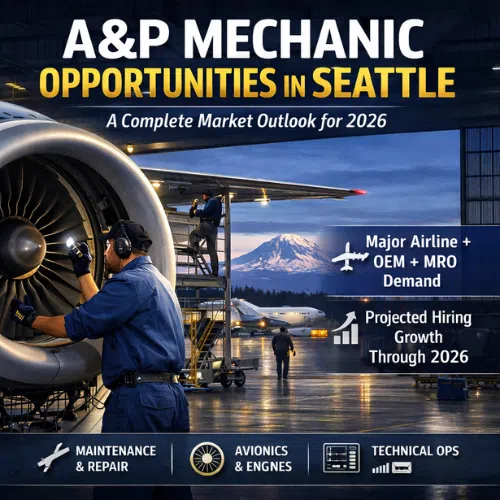
The Complete Guide to Aviation Careers: Paths, Pay, Training, Lifestyle, and How to Choose the Right Future in Flight
The silhouette of a silver tail fin against a rising sun is one of the most romantic images in modern life. It is the image that has launched dreams for generations. It suggests motion, purpose, status, freedom, technical mastery, and a life that somehow rises above the ordinary. For many people, that single image becomes their entire understanding of aviation careers. They imagine the pilot striding through the terminal in uniform. They imagine the flight attendant greeting passengers at the aircraft door. They imagine travel, prestige, and a paycheck connected to the sky.
But that image, powerful as it is, reveals only the surface.
The truth is that aviation careers are not one profession. They are not one culture. They are not one pay scale, one training path, one lifestyle, or one definition of success. Aviation is a dense, high-stakes, interdependent ecosystem. Every departure is supported by a hidden architecture of judgment, regulation, maintenance, logistics, communication, planning, customer service, risk management, and operational discipline. The airplane may be the most visible symbol, but the airplane is only the endpoint of a much larger system of human expertise. If you want to understand aviation careers honestly, you must look beyond the glamour of the terminal and into the machinery of the industry itself.
That is where this guide begins.
This is not a brochure.
It is not hype. It is not a fantasy piece designed to persuade you that every job in the industry is exciting every hour of every day. A real guide to aviation careers should do something more useful. It should show you the operational truth. It should explain how the work feels, how the schedules behave, how the training works, where the pressure lives, what the long-term upside looks like, and which personalities tend to thrive in which environments. It should speak plainly about the tradeoffs. It should help you stop chasing an image and start evaluating fit.
That matters because aviation is filled with people who were attracted to the wrong version of the job. Some entered pilot training because they loved the uniform but hated the lifestyle. Some pursued maintenance because they liked airplanes but did not truly enjoy troubleshooting, documentation, or physical work. Some moved toward flight attendant roles for travel and then discovered that emotional labor and reserve schedules were the real story. Some found that the overlooked paths within aviation careers—dispatch, avionics, airline operations, FBO management, ramp leadership, maintenance planning, or corporate support—offered a much better match for their actual strengths and preferred way of life.
This guide is designed to help you make that distinction.
As you read, remember one central truth: the best path in aviation careers is not the most glamorous one. It is the one whose demands align with who you really are. The aviation industry rewards seriousness. It rewards discipline. It rewards people who can perform under procedural pressure. It rewards people who respect standards and understand that “good enough” is not good enough when machinery, weather, time, money, and human lives intersect. It can be deeply rewarding. It can also be brutally unforgiving of fantasy.
That does not make aviation discouraging. It makes it real.
And reality is what allows good decisions.
Before we go deeper, understand that aviation careers fall into distinct families. Each one operates under different rules.
Major Aviation Career Paths
- Pilot Aviation Careers — airline, corporate, charter, cargo, rotor-wing, and instructional flying,naval flight officer
- Aircraft Maintenance Careers (A&P) — inspection, repair, troubleshooting, and airworthiness certification
- Avionics Careers — aircraft electronics, digital systems, navigation, and communication
- Flight Dispatcher Careers — operational control, route planning, and real-time flight support
- Air Traffic Control Careers — managing aircraft movement and separation
- Flight Attendant Careers — safety, emergency response, and cabin operations
- Ground Operations Careers — ramp, fueling, baggage, and aircraft handling
- Airline Operations & OCC Careers — network management, crew scheduling, recovery planning
- FBO & Business Aviation Support — private aviation services, logistics, and customer-facing roles
- Aerospace & Engineering Careers — designing and building the aircraft themselves
Each of these aviation careers carries a different:
- training pathway
- income trajectory
- lifestyle pattern
- stress profile
- long-term ceiling
Understanding those differences is the foundation of making a good decision.Start Here: Navigating Aviation Careers by CategoryUnderstanding those differences is the foundation of making a good decision.
The goal is not simply to describe aviation careers. The goal is to help you understand them well enough to choose without regret.
Why Aviation Careers Matter More Than Most People Realize
When people think about aviation, they often think only about passenger transportation. That is understandable, but incomplete. The world depends on aviation for much more than leisure travel and business trips. The aviation system supports medical transport, freight and logistics, emergency response, military readiness, disaster recovery, executive mobility, time-sensitive supply chains, public safety missions, remote access, agricultural operations, aerial inspection, tourism, and international trade. A serious conversation about aviation careers must start with the recognition that this industry is woven into modern life far more deeply than most outsiders understand.
Every time a transplant organ is moved quickly across states, every time a cargo network connects a supply chain, every time a wildfire mission launches, every time a private operator helps a company move decision-makers on short notice, every time a regional airline connects a smaller city to the larger economy, the value of aviation careers becomes visible. These roles are not decorative. They are essential.
This is one reason the industry holds such appeal. Aviation careers often place people inside systems that matter. The work is technical. The standards are high. The consequences are real. Many people are drawn to aviation precisely because it feels consequential. You are not merely filing papers in a low-stakes environment. You are contributing to a system where safety, time, cost, public trust, and operational continuity are constantly in play. That creates a kind of seriousness that many people find meaningful.
At the same time, that seriousness demands honesty. Aviation careers are not casual occupations. They are rarely forgiving of laziness, chronic lateness, sloppy communication, poor discipline, or emotional instability in the face of pressure. This is why some people love the industry and others burn out quickly. The very thing that makes aviation meaningful is the same thing that makes it demanding.
The Great Misunderstanding About Aviation Careers
The biggest misunderstanding about aviation careers comes from visibility. The public sees the aircraft, the crew, the passengers, the gate, and the arrival. They see the visible end product. What they do not see is the dense network of support, judgment, and technical labor that makes the visible part possible.
They do not see the line mechanic evaluating a discrepancy in freezing rain before departure. They do not see the dispatcher rerouting a flight around convective weather. They do not see the avionics technician chasing a fault through a wiring schematic. They do not see the load planner balancing payload and center of gravity. They do not see the ramp team working under time pressure around spinning equipment. They do not see the crew scheduler trying to solve legality issues during a weather meltdown. They do not see the FBO line technician towing a multimillion-dollar business jet into a crowded hangar with inches to spare. They do not see the operations control center protecting an entire network from cascading failure.
That invisible labor is the real story of aviation careers.
Because the public sees only the glamorous surfaces, many talented people overlook roles that might actually suit them better than the cockpit or cabin. Some of the most stable, respected, and financially rewarding aviation careers happen on the ground. Some offer strong pay without the hotel life. Some provide technical depth without public-facing stress. Some create management opportunities faster than more visible roles. Some are less cyclical than flying jobs. Some allow people to remain deeply embedded in aviation while living a more predictable family life.
A well-informed person does not simply ask, “Which aviation careers are the most prestigious?” A well-informed person asks, “Which aviation careers actually fit my temperament, strengths, schedule preferences, and long-term goals?”
That is a much more useful question.
To understand aviation careers, imagine a complex watch. Most people see the hands moving. They do not see the springs, gears, bearings, and balance wheel that make the movement possible. Aviation works the same way. The flight itself is visible. The machinery behind it is not.
At the center of the aviation ecosystem is a chain of interdependence. Pilots depend on dispatch, maintenance, ground handling, operations, and training. Maintenance depends on parts, manuals, regulatory clarity, technical leadership, and schedule coordination. Dispatch depends on weather information, aircraft status, crew availability, and operational policy. Ramp teams depend on planning, communication, and safe sequencing. FBOs depend on line service, customer service, logistics, fueling, hospitality, and crew coordination. Cabin crews depend on flight crews, operations, security procedures, and service systems. Each spoke connects to the next.
This matters because the healthiest way to evaluate aviation careers is not by hierarchy, but by function. The industry may attach different levels of public prestige to different jobs, but operationally, the hierarchy of necessity often looks very different. A missed maintenance issue can be just as consequential as a poor cockpit decision. A load error can be just as dangerous as a flight deck miscalculation. A bad dispatch release can set the stage for operational difficulty before the aircraft even pushes back. A sloppy ground handling event can damage expensive equipment and disrupt the day’s entire schedule. Aviation careers are linked by operational consequence, not by image.
Once you see that, the industry opens up.
Instead of chasing a single dream job because it looks impressive, you begin to compare aviation careers based on what the work really asks of you. That is how better career decisions are made.
How to Use This Guide to Aviation Careers
This pillar page is meant to function as a map. You can read it straight through or use it as a reference point while comparing different roles. Either way, the central method is the same. Every time you evaluate one of the major aviation careers, run it through the same set of filters.
1. Barrier to Entry
What does it take to start?
- formal training
- certification
- experience
2. Pay Trajectory
- What does year 1 look like?
- What does year 5 look like?
- What does year 10 look like?
3. Lifestyle
- schedule
- travel
- nights, weekends, holidays
- home stability
4. Stress Type
- technical
- physical
- emotional
- operational
5. Personality Fit
Does the daily rhythm of the job match how you naturally operate?
These five filters will give you more clarity than any salary list ever will.
First, look at the barrier to entry. Does the role require an FAA certificate, formal school, military training, company academy, or mostly on-the-job development? Some aviation careers are gated by highly specific credentials. Others allow entry with less formal schooling but require grit, networking, and practical growth.
Second, look at the pay trajectory. What does the first few years look like? Is there a long, slow ramp? Is there meaningful overtime? Is there a hard ceiling? Is pay strongly tied to seniority? One of the most common mistakes in evaluating aviation careers is focusing only on top-end income while ignoring the first five years.
Third, look at lifestyle. Does the job keep you on the road? Does it mean third shift, reserve schedules, weekends, holidays, or on-call life? Some of the most rewarding aviation careers are rewarding precisely because they demand something that many people are unwilling to give.
Fourth, look at stress type. Not all pressure feels the same. Some aviation careers carry physical stress. Some carry technical stress. Some carry customer-facing emotional stress. Some carry legal or operational responsibility. Some look easier from the outside than they feel on the inside.
Fifth, look at personality fit. The best role is not the role that impresses other people. The best role is the role whose daily rhythm actually suits you.
A note about keyword, glamour, and truth
A lot of online content about aviation careers makes the same mistake: it compresses the industry into a list of jobs and a few salary figures. That is not enough. Real decisions require narrative, context, and realism. You do not just need to know what the role is called. You need to know what it feels like at 3:00 a.m., what it feels like on your fifth holiday worked in a row, what it feels like when a system fails, what it feels like when the weather falls apart, what it feels like to be junior, and what it feels like to grow into mastery.
That is what this guide is built to provide.

The Major Categories of Aviation Careers
The aviation ecosystem contains dozens of roles, but most newcomers can begin by understanding a set of major pillars. These are not the only aviation careers, but they represent the most important families of work for people exploring the industry.
Pilot aviation careers
These include airline, charter, corporate, cargo, public-sector, rotor-wing, instructional, and specialty flying roles. The public knows these best, but the internal diversity is much greater than outsiders realize. Learn more about the piloting profession.
Aircraft maintenance aviation careers
These include A&P mechanics, inspectors, lead technicians, maintenance controllers, planners, and specialists across line and base environments. Learn more about aircraft maintenance careers
Avionics aviation careers
These focus on aircraft electronics, digital systems, flight displays, wiring, communication, navigation, surveillance, and increasingly software-driven architecture. Learn more about avionics careers
Cabin and customer-facing aviation careers
These include flight attendants, FBO customer service representatives, charter service roles, and business aviation hospitality-oriented positions. Learn more about flight attendant and cabin service careers
Operational control aviation careers
These include aircraft dispatchers, airline operations specialists, crew schedulers, recovery coordinators, load planners, and OCC management roles. Learn more about careers in operations and flight dispatch
Ramp and ground support aviation careers
These include ramp agents, baggage professionals, line service technicians, aircraft handlers, and other roles that keep the aircraft moving safely on the ground. Learn more about ground support careers
Management and leadership aviation careers
These include supervisors, duty managers, chief inspectors, directors of maintenance, operations managers, general managers, chief pilots, and executive leaders who emerge from the operational ranks. Learn more about management careers in the aviation industry.
Understanding these families helps you see aviation careers as a landscape rather than a single lane.
The Four Big Variables That Shape Aviation Careers
Before diving into individual paths, it helps to understand the four variables that shape almost every branch of aviation careers.
Money
Compensation in aviation careers can range from modest entry-level wages to extremely strong top-end salaries. But pay is rarely simple. It may depend on seniority, overtime, equipment, market demand, employer type, union structure, and schedule premiums. The smartest question is not “What is the maximum salary?” but “What is the realistic path from year one to year ten?”
Time
Some aviation careers require years of investment before they become attractive financially or lifestyle-wise. Pilot careers are the obvious example, but they are not the only one. Maintenance, dispatch, operations, and management roles also tend to improve significantly with time, competence, and credibility.
Schedule
Many aviation careers involve nights, weekends, holidays, weather events, reserve systems, or on-demand availability. This is one of the most important but least appreciated variables in the entire industry. A role that looks good on paper may be miserable if the schedule clashes with the life you want.
Stress
Stress in aviation careers is not one thing. It can be physical, emotional, technical, or regulatory. Two jobs with similar pay can feel radically different based on the kind of pressure they carry. One person may prefer structured technical problem-solving. Another may prefer movement and public interaction. Understanding your own tolerance matters.
Chapter 1: A&P Mechanic Careers – Guardians of Airworthiness
If there is one category of aviation careers that deserves more public respect than it receives, it is maintenance. The A&P mechanic is one of the foundational professionals in the industry. Airframe and Powerplant technicians are not simply repair workers. They are licensed safety professionals whose judgment, skill, documentation, and standards have direct implications for whether an aircraft is legal and safe to fly.
The industry often refers to maintenance professionals as AMTs, or Aviation Maintenance Technicians, but the A&P certificate remains the most recognizable credential in this realm of aviation careers. It represents authority, discipline, and a very specific kind of responsibility. The pilot may command the aircraft in flight, but the mechanic has often determined whether the aircraft is fit to leave the ground in the first place.
What A&P mechanics actually do in aviation careers
To outsiders, maintenance can look like wrench turning. In reality, A&P work is diagnostic, procedural, technical, and legal. Mechanics inspect airframes, powerplants, systems, structures, components, and associated equipment. They troubleshoot squawks, interpret fault symptoms, follow manufacturer maintenance manuals, comply with regulations, complete inspections, replace worn parts, document all actions, and determine whether the aircraft may be returned to service.
What makes maintenance-centric aviation careers unique is the combination of physical and intellectual work. A good A&P technician is not just physically capable. They are methodical. They know how to read and follow technical data. They understand that documentation is not paperwork for its own sake; it is part of the safety architecture. They know that assumptions are dangerous. They understand that a rushed or casual mindset has no place in aviation.
Line maintenance and base maintenance in aviation careers
Within maintenance-focused aviation careers, one of the biggest distinctions is between line maintenance and base or heavy maintenance.
Line maintenance is the world of operational tempo. The aircraft is flying revenue trips or active missions. Something is reported. The clock is ticking. The next departure matters. The mechanic may be at the gate, on the ramp, or in a fast-moving line station environment. They may be dealing with weather, passenger pressure, crew communication, and tight timelines. It is troubleshooting with real operational stakes.
Base maintenance, by contrast, is deeper and more methodical. Aircraft are brought into a hangar environment for significant inspections, scheduled checks, heavy work packages, structural review, system overhaul, or major component replacement. The pace is still serious, but the nature of the work is less about quick recovery and more about controlled, exhaustive technical execution.
Both are important branches of aviation careers, but they attract slightly different personalities. Some people love the intensity and visible impact of line maintenance. Others prefer the deeper technical immersion of a heavy-check environment.
The certification path for A&P aviation careers
Becoming an A&P mechanic is not casual. The certificate must be earned. This is one of the more structured technical paths in aviation careers, and for good reason.
The most common path is through an FAA-approved Part 147 school. These schools typically take around 18 to 24 months and cover a broad technical curriculum. Students learn piston engines, turbine engines, structures, hydraulics, electricity, sheet metal, inspection practices, systems theory, and maintenance fundamentals. The school route provides structure and a direct pipeline to testing.
Another route exists through documented experience, often gained through military maintenance service or qualifying field work. This path may suit people who are already embedded in aviation environments and have built practical experience over time.
In either case, testing is serious. Candidates face written exams as well as oral and practical examinations. In the oral and practical environment, the examiner is not looking for style points. They are looking for exactness, safe habits, and respect for procedure. That is part of what makes A&P one of the most respected aviation careers in the technical world.
Pay progression in maintenance aviation careers
One reason maintenance remains one of the strongest aviation careers is demand. Aircraft must be maintained. That legal requirement does not disappear because the economy gets soft or public attention shifts elsewhere. Demand varies by sector, but competent A&P mechanics remain highly valuable.
Entry-level pay can vary by region and employer, but in many parts of the market, new A&P technicians can enter in a livable range, especially compared to many other trades or entry-level professional sectors. Over time, pay improves materially through experience, shift differentials, overtime, specialized airframe familiarity, inspection authority, and leadership roles. Many experienced maintenance professionals earn excellent incomes, especially in airline, cargo, and high-end corporate environments.
That does not mean all maintenance aviation careers are easy money. The income often comes paired with nights, physical work, weather, and demanding conditions. But for people who fit the work, the long-term value is substantial.
Lifestyle realities in A&P aviation careers
No guide to aviation careers is honest unless it talks about lifestyle. Maintenance can be demanding on the body and schedule. Entry-level technicians often work nights because that is when many aircraft are available for work. The airline and cargo world never sleeps. Holidays do not matter to the airplane. Weather does not matter to the airplane. Operational demand continues, and maintenance exists within that reality.
The physical side is also real. Many maintenance aviation careers involve kneeling, climbing, lifting, crawling into confined spaces, working in noisy environments, and staying mentally sharp under imperfect conditions. People who want a climate-controlled desk and a predictable Monday-to-Friday schedule should think carefully before moving into line maintenance.
At the same time, maintenance offers a kind of satisfaction that many other aviation careers do not. There is pride in fixing something real. There is pride in the logbook signature. There is pride in watching an aircraft leave because of work you did correctly. For the right person, that is a powerful professional identity.
Who thrives in maintenance aviation careers
The people who do best in maintenance-oriented aviation careers are usually mechanically curious, skeptical, patient, and disciplined. They like figuring things out. They do not panic when a discrepancy is vague. They follow the book. They do not cut corners. They tend to respect the seriousness of the work.
The people who struggle are often those who chase speed over correctness, dislike documentation, resist structure, or underestimate the physical and schedule demands. Aviation maintenance does not reward bravado. It rewards reliability.
Chapter 2: Avionics Careers – The Digital Nervous System of Flight
If the A&P mechanic is the guardian of structural and mechanical integrity, the avionics technician is the specialist responsible for the aircraft’s electronic intelligence. As aircraft have become increasingly digital, avionics has emerged as one of the most important and forward-looking branches of aviation careers.
Modern airplanes and helicopters are not just engines, cables, and metal. They are integrated systems of navigation, communication, surveillance, displays, sensors, processors, buses, and software. The professional who understands, installs, configures, troubleshoots, and maintains those systems occupies a critical place in the ecosystem of aviation careers.
What avionics technicians do in aviation careers
Avionics professionals work with radios, GPS systems, transponders, weather systems, collision-avoidance systems, cockpit displays, autopilot systems, flight management computers, data buses, antenna installations, audio systems, and numerous related components. Some work primarily on the aircraft. Some work in shops. Some focus on installations. Some specialize in troubleshooting and integration. Some move into leadership or technical support roles.
What unites these aviation careers is a digital mindset. A good avionics technician must be comfortable with schematics, continuity, fault isolation, wiring, signal flow, system logic, configuration, and increasingly the intersection between hardware and software. This is not brute-force work. It is careful, logical problem-solving.
A&P versus avionics careers
There is overlap between maintenance and avionics, but the emphasis differs. Traditional maintenance careers often focus on engines, hydraulics, structures, brakes, landing gear, or mechanical systems. Avionics careers live more deeply in information and electronics. If a landing gear issue is caused by leaking hydraulics, that may sit with the mechanical side. If it is caused by a faulty sensor signal or system logic issue, that may sit with avionics.
Many high-value professionals in aviation careers combine both worlds. An A&P with strong avionics expertise becomes extremely useful because they can understand the larger aircraft context while also navigating specialized digital systems.
Bench technicians and installation technicians
Within avionics-focused aviation careers, there is an important distinction between bench work and field installation work.
Bench technicians often work in controlled environments repairing or testing components. They may use specialized electronic test equipment, isolate board-level problems, and work in highly technical lab-like settings.
Installation technicians work directly on the aircraft. They route wire, install equipment, mount antennas, integrate systems, configure avionics suites, and troubleshoot in real-world operational environments. They may work in business aviation upgrade shops, manufacturing environments, completion centers, or maintenance facilities.
These are both serious aviation careers, but they attract different people. The bench side appeals to those who love technical precision in a more controlled environment. The install side appeals to those who want broader aircraft exposure and the visible satisfaction of system integration.
Training paths into avionics aviation careers
Unlike the A&P world, avionics has more than one common entry route. Some enter through military electronics backgrounds. Some attend specialized schools. Some start as A&P mechanics and add avionics expertise. Some build skills through manufacturer training and on-the-job development. Some hold FCC licenses or industry certifications that strengthen credibility.
This flexibility is part of why avionics remains one of the most adaptable aviation careers. It sits at the intersection of aircraft systems and evolving technology. As automation, data integration, and networked systems increase, avionics talent becomes more valuable.
Pay and future resilience in avionics aviation careers
Avionics work often carries a knowledge premium. Entry-level wages may resemble junior technical wages elsewhere, but skilled avionics professionals can become exceptionally valuable, especially in modification centers, OEM environments, business aviation completion work, and advanced troubleshooting roles.
Among all aviation careers, avionics is one of the better long-term bets for people who enjoy technology. The systems are only becoming more sophisticated. The need for professionals who can bridge aviation and electronics is not shrinking.
Personality fit in avionics aviation careers
Patience matters in avionics. If you enjoy detective work, wiring logic, digital systems, and careful troubleshooting, these aviation careers can be deeply satisfying. If you want immediate, obvious fixes and dislike prolonged schematic-based diagnosis, avionics may feel frustrating.
The profession rewards calm, precision, and high frustration tolerance. A single elusive fault can consume hours. The right person enjoys that challenge. The wrong person hates it.
Chapter 3: Pilot Aviation Careers – The Famous Path and the Hard Truth
No category of aviation careers is more visible, more romanticized, or more misunderstood than the pilot path. Pilots occupy a special place in the public imagination. They symbolize command, intelligence, travel, and achievement. In many cases, pilot life really can be meaningful and well-compensated. But it is also one of the most mythologized branches of aviation careers, and that makes honest analysis especially important.
The public image versus the real structure of pilot aviation careers
The public image of the pilot centers on glamour. The real structure centers on training, debt or service, time-building, recurrent evaluation, seniority, medical certification, and lifestyle tradeoffs. To become a professional pilot is to enter one of the more demanding pathways in aviation careers, not simply because the flying is hard, but because the journey to a stable and desirable cockpit seat often takes years.
It is helpful to think of a piloting career as a marathon rather than a jump. The headline salary figures that people hear about usually belong to senior, well-placed professionals who have already survived the low-pay years, the training grind, the time-building phase, and the volatility that comes with aviation cycles.
Fixed-wing and rotor-wing pilot aviation careers
One of the earliest forks in pilots’ aviation career is the difference between airplanes and helicopters. These are not minor variations of the same life. They are distinct professional universes.
Fixed-wing careers tend to lead toward airlines, cargo, charter, corporate aviation, instruction, and a wide array of transport-focused missions. Rotor-wing careers often involve EMS, tourism, utility work, offshore support, law enforcement, public service, and specialized mission environments. The schedules, pay structures, long-term ceilings, and operational cultures can differ significantly.
This is one reason broad conversations about aviation careers are useful. Too many people say they want to be a pilot without understanding which kind of pilot life they actually want.
Military and civilian pipelines into piloting careers
Another major fork involves how you obtain the training. Military pathways remain one of the most respected and comprehensive entries into a pilot’s career, but they come with service commitments, mission requirements, and life constraints that go far beyond the desire to fly. The military route can produce extraordinary aviators, but it is not simply “free flight school.” It is a commitment to service.
The civilian route offers autonomy. You choose the school, the pace, and often the sequence. But civilian pilot training can be expensive. For many people, that means loans, family support, staged progress, or years of careful financial planning. Civilian piloting careers can absolutely work, but the economics must be approached realistically.
Certificates and the long ladder in a pilot’s career
Piloting careers are built through certificates, ratings, and experience. Private pilot is the beginning. Instrument rating expands capability. Commercial certification turns skill into economic opportunity. Multi-engine training broadens access. Instructor certificates often become the bridge to experience. Eventually, for airline work, the ATP certificate enters the picture.
What makes pilots’ aviation careers different from many other professions is that the credential alone is not enough. Hours matter. Experience matters. The industry values proven competence, not just completed coursework.
The time-building gap in pilot aviation careers
In the United States, one of the defining realities of many airline-focused pilot aviation careers has been the time-building gap between training and airline eligibility. A person may complete professional training with a few hundred hours but still need substantial additional time before reaching certain hiring thresholds.
That gap has shaped the culture of pilot aviation careers. Many aspiring pilots spend early years instructing, flying entry-level commercial work, or building time in smaller operations. This can be one of the most financially and emotionally demanding phases of the journey. It is the part the public rarely sees, but it is central to the reality of pilot life.
Major sectors inside pilot aviation careers
The word “pilot” hides many distinct professional worlds.
Airline pilot careers often offer the clearest path to high long-term compensation, but they are heavily shaped by seniority, company cycles, and schedule realities.
Corporate pilot careers can involve excellent equipment, close-knit departments, and strong compensation, but often come with on-call flexibility and elevated service expectations.
Charter pilot careers can provide valuable turbine time and mission variety, but the schedules may be unpredictable and demanding.
Cargo pilot careers can be operationally strong and financially attractive, but they often involve significant night flying and demanding routes.
Instructional pilot careers are critical to the pipeline and can be professionally meaningful, but they usually represent an early-career bridge rather than the final destination for most commercial-minded pilots.
Public-sector and specialty pilot careers include aerial firefighting, law enforcement support, survey, utility, and various mission-specific roles.
Seniority, schedule, and family life in pilot careers
Few elements shape piloting careers more than seniority. At many airlines, your hire date affects your entire work life: aircraft choice, base choice, reserve status, schedule control, vacation access, and overall quality of life. A pilot hired one day before you may have meaningfully better bidding power for years.
This reality defines pilot culture. It is one reason some people in aviation careers speak so intensely about timing and getting hired at the right moment. Seniority is not glamorous, but it governs lifestyle.
The family impact is equally important. Many pilot aviation careers involve nights away, holidays missed, commuting, fatigue management, hotel life, and irregular circadian rhythms. Some people handle that well. Some do not. There is no shame in either answer, but there must be honesty.
Who should and should not pursue pilot aviation careers
The right candidates for pilot aviation careers are people who genuinely love the act of flying and can tolerate a long runway to career stability. They accept recurrent checks. They respect SOPs. They can handle weather, fatigue, delayed gratification, and years of building. They want the work, not just the image.
The wrong candidates are often those who chase pilot aviation careers only for status or imagined income. If the love of flying itself is absent, the early and middle phases of the journey can feel brutally expensive and emotionally flat.
Chapter 4: Flight Attendant Aviation Careers – Safety, Service, and Emotional Discipline
Among public-facing aviation careers, few roles are more misunderstood than the flight attendant. To the casual observer, the job appears centered on hospitality. In reality, flight attendants are trained safety professionals, emergency responders, conflict managers, and cabin leaders operating in a highly constrained environment.
What flight attendants really do in their careers
The true purpose of flight attendant careers is not beverage service. It is safety. Flight attendants verify emergency equipment, enforce compliance, monitor passenger behavior, handle medical situations, respond to turbulence and irregularities, assist with evacuations, and manage the human side of safety inside a pressurized cabin.
This makes flight attendant work one of the most emotionally complex aviation careers. The professional must shift constantly between warmth and authority, service and command, patience and firmness.
Training and qualification in flight attendant careers
Most airline flight attendants undergo intensive company training. This may include evacuation procedures, firefighting, medical response, security awareness, equipment use, compliance standards, and brand-specific procedures. The training surprises many outsiders because of how safety-centered it is.
That is an important correction to the way people discuss aviation careers. Not every safety-critical role wears a headset in the cockpit.
Reserve life and seniority in flight attendant careers
Like pilots, flight attendants often begin at the bottom of a seniority system. New hires may spend long stretches on reserve, subject to short-notice assignments, challenging trips, and limited control over their schedules. Over time, life improves. But the beginning can be difficult.
This is why honest content about aviation careers must address timing and seniority. The profession often gets better with years, not immediately.
Public perception often overestimates early-career pay in flight attendant careers. Compensation can be modest at first, especially given the cost of living in major base cities. Over time, pay improves with step increases, premium trips, and longevity. Travel benefits add real value. Still, the role should be chosen for fit, not fantasy.
Emotional labor in flight attendant careers
Perhaps the most overlooked part of these aviation careers is emotional labor. Flight attendants absorb tension from delays, misconnects, rude passengers, medical issues, policy enforcement, and public frustration. They must stay composed and professional even when passengers do not. That requires resilience.
People who thrive in these aviation careers usually have strong emotional intelligence, adaptability, and the ability to separate a passenger’s behavior from their own identity. People who take conflict personally or need routine may find the work draining.
Chapter 5: Flight Dispatch Careers – Operational Authority on the Ground
Flight dispatch remains one of the least understood but most important branches of aviation careers. In many airline contexts, the dispatcher shares operational control with the captain. That means the dispatcher is not just a planner. They are a safety-critical professional with real authority and real accountability.
What dispatchers do
Dispatchers analyze weather, routes, alternates, aircraft status, performance constraints, fuel needs, NOTAMs, and operational factors before releasing a flight. Once the flight is underway, they monitor its progress and support changes as conditions evolve.
This makes dispatch one of the most intellectually compelling aviation careers for people who love weather, systems thinking, route planning, and decision-making without leaving the ground.
Joint operational control in dispatch aviation careers
What makes dispatch unique within aviation careers is legal standing. The dispatcher is not an administrative helper. In many airline environments, the dispatcher and pilot are jointly responsible for the safety and legality of the operation. That is serious authority.
Training and certification in dispatch careers
FAA dispatcher certification requires approved training, strong academic performance, and successful testing. The curriculum includes meteorology, systems, navigation, regulations, route planning, and operational judgment. It is often described as intellectually comparable to advanced pilot ground training, minus the flight portion.
Among ground-based aviation careers, dispatch stands out because of the level of operational insight and responsibility it provides.
Lifestyle, pay, and long-term value in dispatch aviation careers
Dispatch schedules often involve shift work, nights, weekends, and holiday coverage. But unlike pilots or flight attendants, dispatchers usually sleep in their own beds. That tradeoff matters. Pay varies by employer and scale, but major carrier dispatch roles can become very strong financially. For people who want authority, aviation immersion, and a stable home base, dispatch is one of the best-kept secrets in aviation careers.
Personality fit in dispatch aviation careers
The best dispatchers are calm analysts. They can process information quickly, decide under uncertainty, and remain composed during operational disruption. They like weather, maps, systems, and consequences. They are comfortable carrying responsibility.
People who dislike sustained cognitive load or become paralyzed by too many variables may struggle in dispatch. These aviation careers reward clarity under pressure.
Chapter 6: Airline Operations and OCC Aviation Careers – The Architects of the Network
If dispatch manages individual flights strategically, the Operations Control Center manages the network. OCC and airline operations roles are among the most dynamic and least publicly appreciated aviation careers in the industry.
What the OCC does in aviation careers
The OCC is where information converges. Crew legality, aircraft routing, weather disruptions, maintenance issues, station challenges, passenger impacts, and system recovery all come together in one place. It is a live, continuously moving operational brain.
People in OCC-oriented aviation careers may work in crew scheduling, maintenance control, network recovery, flight following, load planning, dispatch support, operational management, or irregular operations response.
Crew scheduling and legality in airline operations aviation careers
Crew scheduling is one of the hardest hidden jobs in aviation careers. A schedule on paper means nothing if a crew times out, a delay pushes legality, or a reserve pool runs thin. Schedulers must understand rules, contracts, pairings, and real-time operational decision-making.
Network recovery in airline operations careers
When a storm hits a hub, the problem is not just one delayed flight. The problem is system fragility. Recovery specialists in these aviation careers decide which flights to protect, which to cancel, how to reposition assets, and how to minimize the downstream collapse of the network.
Load planning and weight-and-balance career
Load planning is another overlooked branch of aviation careers. Aircraft performance, center of gravity, cargo positioning, and payload balance matter. Errors here are not simple clerical mistakes. They can become safety issues.
Lifestyle and advancement in OCcareers
OCC work is intense, but it offers something many other aviation careers do not: high-level aviation immersion while going home after the shift. The work can lead to strong management progression because it develops system thinking. Many operational leaders build their understanding of the business in rooms like these.
Who thrives in airline operations aviation careers
These aviation careers are ideal for logistical athletes—people who like complexity, urgency, and interdependence. They can track multiple moving parts at once and make decisions in imperfect conditions. People who need calm, closure, and low stimulation often struggle in OCC environments.
Chapter 7: Ramp and Ground Handling Aviation Careers – The Industrial Heartbeat of the Airport
Ramp work sits among the most physically demanding and operationally essential aviation careers. It also tends to be undervalued by people who do not understand how quickly things can go wrong around aircraft on the ground.
What ramp professionals do in aviation careers
Ramp teams unload and load baggage, move cargo, operate support equipment, guide aircraft, assist with pushback processes, and keep turns moving safely. They work in noise, weather, fuel fumes, time pressure, and a highly active equipment environment.
These aviation careers are not glamorous, but they are foundational. Without competent ramp work, the entire system slows or breaks.
The physical reality of airline ramp careers
Ramp work is demanding. The weather is real. The pace is real. The lifting is real. The sensory environment is real. These jobs appeal to people who want movement, team-based work, and proximity to aircraft, but they are not for everyone.
Benefits and progression in ramp careers
Entry-level pay in ramp aviation careers may be lower than in more technical roles, but the benefits can be meaningful, especially travel privileges. Just as important, the ramp can be a launchpad. People start here and move into management, dispatch-adjacent functions, operations, maintenance, or flight training. For some, these are long-term aviation careers. For others, they are entry points with visibility and momentum.
Safety culture in airline ramp careers
The safety culture on the ramp is serious for good reason. Equipment is moving. Engines are running. Clearances are tight. A single lapse can create injury or serious damage. The best ramp professionals treat the environment with respect, not casual confidence.
Who fits ramp aviation careers
People who thrive here are energetic, aware, team-oriented, and physically durable. They like action more than desk work. They often enjoy being part of the visible motion of aviation. People who need comfort, low-noise environments, or low-risk conditions tend to look elsewhere in aviation careers.
Chapter 8: FBO and Business Aviation Support Careers – The Gateway to the Private Side
FBOs occupy a unique place in aviation careers because they blend operations, customer service, logistics, fueling, and access to business aviation. They are often the first serious entry point into the private and corporate side of the industry.
What FBOs do
A Fixed Base Operator supports general aviation and business aviation activity through fueling, towing, aircraft parking, passenger handling, crew support, transportation coordination, and related services. The FBO is part operational base, part concierge hub, part service business.
Line service and customer service FBO careers
Line service professionals marshal aircraft, fuel them, tow them, assist with hangaring, and manage physical aircraft support. Customer service representatives manage the desk, greet passengers and crews, arrange ground transportation, coordinate services, and represent the face of the operation.
Both are real and valuable aviation careers, and both teach transferable skills.
Networking power in FBO aviation careers
One reason FBO work matters so much in aviation careers is exposure. Business aviation is relationship-driven. People working at FBOs interact with pilots, operators, charter managers, owners, executives, and maintenance personnel. Strong professionalism in that environment can create future doors that never appear on a public job board.
Lifestyle and progression in FBO aviation careers
FBO work varies by location and market, but it can lead into management, flight department support, charter coordination, sales, or other business aviation functions. These aviation careers are often overlooked by people who focus only on airlines, but they can be excellent fits for those who like the private side of aviation.
Who thrives in FBO careers
FBO roles favor people who can combine service orientation with operational awareness. They do well with hustle, detail, professionalism, and flexibility. Someone who wants to be close to aircraft but also enjoys polished human interaction may do very well in these aviation careers.
Adjacent and Overlooked Aviation Careers That Matter
A strong pillar page on aviation careers should also acknowledge that the industry contains many roles beyond the obvious ones. Some of these jobs sit adjacent to flight operations. Some are embedded in airport systems, training, planning, safety, compliance, or infrastructure. Some are natural pivots for people already inside aviation.
Airport operations roles focus on the safe, compliant, and coordinated functioning of the airport environment. Safety management roles support reporting culture, procedural improvement, and risk analysis. Training department roles help standardize competence across the operation. Parts, logistics, and planning roles keep maintenance and operations supplied and sequenced. Compliance roles help organizations navigate regulations. Quality assurance, records, and technical publications functions support the accuracy and traceability that the entire system depends on.
These may not be the most glamorous aviation careers, but they are very real. In some cases, they offer better stability and lifestyle than more visible positions. They also reward domain knowledge. Someone who understands the system can often pivot successfully into these adjacent aviation careers over time.
How to Choose Among Aviation Careers Without Chasing the Wrong Dream
Choosing among aviation careers is partly about ambition, but it is just as much about self-knowledge. The industry contains enough paths that almost anyone with the right seriousness can find a place. The harder task is matching yourself to the right spoke.
One useful way to think about possible aviation careers is to test the hidden costs instead of the visible rewards. Do not ask only whether the role sounds exciting. Ask whether you can tolerate its daily realities. Can you handle nights? Can you work weekends for years? Can you absorb public frustration? Can you sit in front of multiple monitors and make time-sensitive decisions? Can you troubleshoot patiently? Can you work physically in rough conditions? Can you live on reserve? Can you manage recurrent checks? Can you function well without routine? Can you accept that your life may be governed by seniority for a long time?
That is the real filter.
People who choose a career carefully usually do so because they are honest about both desire and tolerance. People who choose poorly often chase the visible reward and ignore the recurring cost.
The Personality Match Behind Aviation Careers
A useful lens for evaluating aviation careers is personality fit. This is not about labels. It is about rhythm.
People who enjoy technical depth and solitude may do well in maintenance or avionics. People who like weather, systems, and responsibility may do well in dispatch. People who enjoy movement, travel, and cockpit procedure may do well in flying. People who are emotionally resilient and socially adaptive may do well in cabin or customer-facing work. People who love logistics and complexity may do well in airline operations. People who enjoy action, teamwork, and physical movement may do well on the ramp or in line service.
The point is not that one type of person owns one category of aviation careers. The point is that rhythm matters. The day-to-day feel of the work matters. The more aligned the rhythm is with your natural strengths, the more sustainable the career becomes.
Optionality and Long-Term Resilience in Aviation Careers
Aviation is cyclical. Companies grow and shrink. Hiring booms and hiring freezes come and go. Aircraft types change. Networks change. Private markets change. Personal health changes. One of the smartest long-term strategies in aviation careers is building optionality.
Optionality means stacking skills. A pilot who can teach has optionality. A mechanic with avionics expertise has optionality. An operations specialist who understands multiple desks has optionality. An FBO professional who understands both line service and customer care has optionality. A dispatcher who grows into management has optionality. A maintenance technician who becomes an inspector or planner has optionality.
People who last in aviation careers often understand more than one layer of the system. That understanding protects them when one path narrows or changes.
The Family Question in Aviation Careers
Many discussions of aviation careers focus on training and pay but ignore family impact. That is a mistake. Schedule quality, presence, sleep cycles, reserve demands, travel, and holiday work all matter. There is no single right answer here. Some people love road life. Some can manage irregularity well. Some families adapt beautifully. Others suffer under the strain.
The key is honesty. Do not choose aviation careers based only on who you are today as an individual. Choose with some thought about who you may become as a spouse, parent, caregiver, or long-term partner. The industry can support stable family life in many roles, but not every role creates the same pattern.
The Prestige Trap in Aviation Careers
One of the most damaging mistakes in choosing aviation careers is the prestige trap. Some jobs sound impressive but fit poorly. Some jobs sound ordinary but fit beautifully. Prestige is not irrelevant, but it is overrated. The title that impresses strangers may not be the one that supports your real life.
Some people find that the cockpit is exactly where they belong. Others discover that dispatch, maintenance, airline operations, or business aviation support offers better pay-to-life balance, stronger stability, or more enjoyable daily work. The deeper lesson is that aviation careers should be judged by alignment, not by applause.
A Practical Framework for Comparing Aviation Careers
When you compare aviation careers, run each path through a four-part test.
The first test is the schedule test. Are you willing to live the schedule this career will actually give you, not the schedule you hope to eventually bid into?
The second test is the responsibility test. Are you comfortable being the final authority, the shared authority, the technical authority, or the support authority? Different aviation careers place responsibility in different locations.
The third test is the environment test. Do you want office, hangar, ramp, cabin, cockpit, or operations center life?
The fourth test is the identity test. Would you still want this role if nobody ever thought it sounded cool? If the answer is yes, that is usually a strong sign.
The most useful question
The best question to ask about aviation careers is not “Which one is best?” It is “Which one fits the costs I am willing to pay?”
Conclusion: Choosing the Right Spoke in the Wheel of Aviation Careers
The closer you look at the industry, the more obvious the truth becomes. Aviation careers are not one dream. They are a network of professions that share one ecosystem. Some live in the cockpit. Some live on the ramp. Some live in the hangar, the cabin, the control center, or the front desk of an FBO. Some are public and visible. Some are quiet and invisible. All of them matter.
That is the most important takeaway.
If you approach aviation careers as a glamour contest, you will probably make a poor decision. If you approach them as a system of distinct roles with distinct tradeoffs, you have a much better chance of choosing well. The industry does not need more people chasing the wrong fantasy. It needs more people who understand where they fit, how they work best, and what kind of life they are actually trying to build.
The right path may be the one you first imagined. It may also be one you barely knew existed until you started exploring aviation careers seriously. Either way, clarity is the win.
Aviation can offer purpose, identity, skill, responsibility, and a sense of belonging to something larger than yourself. It can also demand discipline, humility, and sacrifice. The people who flourish in aviation careers are usually the ones who enter with their eyes open. They understand the tradeoffs. They respect the system. They choose their spoke deliberately.
Do that, and aviation stops being a fantasy.
It becomes a future.
FAQ’s
What aviation careers are in highest demand?
Breakdown of demand drivers:
Pilots: Mandatory retirements at 65, fleet growth, and regional airline attrition.
A&P Mechanics: Aging aircraft fleets and a shrinking technical workforce.
Avionics: Rapid shift to digital cockpits, ADS‑B, and next‑gen systems.
ATC: FAA hiring waves to replace controllers lost since COVID.
UAS/Drone: Explosive growth in inspection, mapping, security, and delivery.
Takeaway: If you want stability, aviation is one of the few industries where demand is measurable, predictable, and long‑term.
How long does it take to become a pilot?
Typical timeline:
Private Pilot (PPL): 3–6 months
Instrument Rating: 2–4 months
Commercial Pilot (CPL): 4–6 months
CFI/CFII/MEI: 2–4 months
Airline Transport Pilot (ATP): After 1,500 hours (usually 18–30 months of instructing)
Corporate and charter pathways often hire at 500–1,200 hours, which can shorten the journey.
Bottom line: With discipline and financing, you can go from zero hours to a professional cockpit in under two years.
What are the best non‑flying aviation careers?
Aircraft Maintenance Technician (A&P) — high pay, high demand, global mobility
Avionics Technician — electronics, automation, and digital systems
Aircraft Dispatcher — airline operations, flight planning, weather strategy
Airport Operations — safety, ramp control, inspections, logistics
Air Traffic Control — high responsibility, high compensation
Safety & Compliance — SMS, audits, investigations
Aviation Management — FBOs, airports, airlines, training centers
If you love aviation but not flying, you still have a runway.
How much do aviation careers pay?
Typical salary ranges:
Airline Pilots: $90K–$450K+
Corporate Pilots: $80K–$250K
Cargo Pilots: $120K–$350K
A&P Mechanics: $55K–$120K
Avionics Techs: $60K–$130K
ATC: $80K–$190K
Dispatchers: $55K–$120K
Airport Ops: $45K–$95K
Key truth: Aviation rewards skill, discipline, and seniority. The longer you stay, the better it gets.
What education or training is required for aviation careers?
Examples:
Pilots: FAA certificates (PPL, Instrument, CPL, CFI, ATP)
A&P Mechanics: FAA Part 147 school or 30 months of supervised experience
Avionics: Technical training + manufacturer courses
ATC: FAA Academy + qualifying tests
Dispatch: FAA Aircraft Dispatcher Certificate
Airport Ops: Often a bachelor’s in aviation, business, or management
Degrees help, but FAA credentials are what get you hired.
Is aviation a good career for beginners?
Why beginners thrive:
Clear, structured pathways
Certifications that stack
Predictable progression
High demand for entry‑level roles
No requirement for prior industry experience
If you’re willing to learn, aviation will meet you halfway.
What is the lifestyle like for different aviation careers?
Pilots:
Airlines: schedules, overnights, commuting, seniority‑based control
Corporate: on‑call periods, luxury travel, small teams
Cargo: night flying, long‑haul blocks, high pay
Maintenance:
Shift work, nights/weekends, hands‑on, high responsibility
ATC:
Structured shifts, high focus, strong benefits
Airport Ops:
Fast‑paced, irregular hours, problem‑solving
Truth: Aviation is not a 9–5 world. But for the right person, it’s unmatched.
How do I choose the right aviation career path?
Ask yourself:
Do you want structure or flexibility?
Do you prefer hands‑on or analytical work?
Do you want to travel or stay local?
Do you thrive under pressure?
Do you want a fast path to income or a long path to high income?
Aviation rewards self‑awareness. The right path is the one that matches your temperament, not someone else’s dream.
What are the medical requirements for aviation careers?
Pilots:
First Class Medical: airline pilots
Second Class: commercial pilots
Third Class: private pilots
Covers vision, hearing, cardiovascular health, mental health, medications
ATC:
Strict medical and psychological standards
Maintenance/Dispatch/Airport Ops:
No FAA medical, but employers may require physical capability
Key point: Many conditions that people assume are disqualifying are actually manageable with documentation.
How do I get my first job in aviation?
Best entry points:
Flight instructing
Ramp agent
Line service
Dispatcher
Airport operations intern
A&P apprentice
Avionics trainee
What actually gets you hired:
Showing up consistently
Professionalism
Recommendations
Clean record
Willingness to start anywhere and grow
Aviation is a small world. Your reputation is your résumé.Your first job comes from hours, certifications, networking, and timing.
Best entry points:
Flight instructing
Ramp agent
Line service
Dispatcher
Airport operations intern
A&P apprentice
Avionics trainee
What actually gets you hired:
Showing up consistently
Professionalism
Recommendations
Clean record
Willingness to start anywhere and grow
Aviation is a small world. Your reputation is your résumé.