Airline Careers in 2026: A Complete Guide to Jobs in the Airline Industry
Introduction: Understanding the Ecosystem of Airline Careers
When most people envision airline careers, their minds immediately gravitate toward the flight deck and the passenger cabin. While pilots and flight attendants are undeniably the highly visible faces of the aviation industry, they represent only a fraction of the workforce required to keep the global fleet in the sky. As we survey the landscape of airline careers in 2026, it is essential to recognize that modern airlines are among the most complex operating organizations on earth. They are highly orchestrated logistical, technical, and corporate machines that operate around the clock within a strictly regulated environment.
Successfully launching a single commercial flight requires the seamless, synchronized coordination of hundreds of professionals working behind the scenes. This vast ecosystem offers a diverse array of jobs in the airline industry, catering to a wide spectrum of skills, educational backgrounds, and professional passions. From turning wrenches on next-generation turbine engines to optimizing global route networks using advanced data analytics, the opportunities extend far beyond the cockpit.
Navigating modern airline employment also requires understanding the nuanced difference between direct airline hires and the expansive sector of contracted aviation services. While legacy, major, and regional air carriers directly employ tens of thousands of individuals, a significant portion of the airline ecosystem relies heavily on specialized contractors. Independent Maintenance, Repair, and Overhaul (MRO) facilities, ground handling companies, fixed-base operators (FBOs), and catering vendors operate as distinct entities that are tightly integrated into an airline’s daily operational tempo. Whether you are employed directly by a flagship carrier or by a critical support contractor, you are an integral component of the aviation pipeline.
To help you successfully navigate this dynamic field, this comprehensive guide is structured around the five primary career pathways that drive the modern airline industry:
- Flight Operations: The professionals who safely operate the aircraft, manage in-flight safety, and coordinate routes, including pilots, flight attendants, and aircraft dispatchers.
- Maintenance, Repair, and Engineering: The highly skilled, certificated technicians and engineers responsible for aircraft airworthiness, avionics, safety inspections, and fleet overhaul.
- Airport and Ground Operations: The front-line and ramp personnel who manage passenger services, baggage logistics, aircraft servicing, and critical gate turnarounds.
- Corporate and Airline Management: The business professionals driving corporate strategy and profitability, encompassing network planning, finance, human resources, safety management systems (SMS), and revenue management.
- Aviation Technology and Data: The IT specialists managing the digital infrastructure, cybersecurity, crew scheduling software, and advanced analytics that power modern flight.
Whether you are a seasoned aviation professional seeking a career transition or an enthusiast looking to break into the field, understanding how these interconnected pathways function is your first step toward a rewarding career in aviation.
Pathway 1: Flight Operations Careers
The Flight Operations division is the beating heart of any commercial airline. While the general public often assumes this department consists solely of the men and women flying the aircraft, executing a safe and compliant daily flight schedule requires a tightly integrated team of ground-based and airborne professionals. This pathway encompasses the personnel legally responsible for planning, executing, and monitoring every flight. From the flight deck to the Systems Operations Control (SOC) center, these roles require a relentless commitment to safety, strict adherence to federal regulations, and the ability to make high-stakes, time-sensitive decisions. Flight operations careers are ideal for individuals who thrive in dynamic environments where precision is non-negotiable.
1. Airline Careers as an Airline Pilot
The role of the airline pilot remains the most coveted and highly visible career in the aviation industry. Modern airline operations rely on a two-pilot crew structure, with the Captain and First Officer working in a highly choreographed environment, seated side-by-side facing forward on the flight deck. The Captain acts as the Pilot in Command (PIC) and retains ultimate legal authority and responsibility for the safety of the aircraft, crew, and passengers. The First Officer, or Second in Command (SIC), shares the physical flying duties and actively cross-checks all configurations and communications. Both pilots must master advanced automation, Crew Resource Management (CRM), and Threat and Error Management (TEM) to navigate complex airspace systems.
The airline industry offers several distinct operational environments, each presenting unique career trajectories. Regional airlines typically serve as the entry point into 14 CFR Part 121 operations, flying smaller jets to feed passengers into major hubs. Low-Cost Carriers (LCCs) and Ultra-Low-Cost Carriers (ULCCs) operate heavily utilized fleets focusing on point-to-point domestic and international routes. Legacy and Major carriers represent the pinnacle for many, operating wide-body aircraft on global long-haul routes. Additionally, cargo operations offer highly lucrative careers focused on global logistics rather than passenger service, often involving extensive night flying and international time zones.
Securing a seat on a Part 121 flight deck requires rigorous certification. Candidates must hold an Airline Transport Pilot (ATP) certificate—or a Restricted-ATP (R-ATP) for qualifying university or military graduates—which mandates a minimum of 1,500 hours of total flight time (or applicable reduced minimums). Pilots must also secure a type rating for their specific aircraft and maintain an FAA First-Class Medical Certificate, which requires an electrocardiogram (EKG) and rigorous health standards. Safety is paramount, and candidates undergo intense vetting; however, in compliance with regulatory and hiring standards, thorough reviews of the Pilot Records Database (PRD) and National Driver Register (NDR) are formally completed after a job offer has been made and accepted.
The entire trajectory of an airline pilot’s career is dictated by a single, powerful metric: seniority. Determined strictly by the date of hire, a pilot’s seniority number governs every aspect of their professional life. It dictates their ability to bid for preferred bases, choose specific aircraft equipment, secure desirable monthly flying schedules, and avoid being placed on reserve. Most importantly, seniority determines when a First Officer can upgrade to Captain. A career as an airline pilot is a lifelong commitment to continuous training, recurrent simulator checks, and adapting to the evolving technology of the modern flight deck.
2. Aircraft Dispatcher
Often referred to as the “Captain on the ground,” the Aircraft Dispatcher is one of the most critical yet least visible roles in the airline industry. Under 14 CFR Part 121 regulations, the dispatcher and the Captain share joint operational control and equal legal responsibility for the safety of a flight. A commercial flight cannot legally depart unless both the dispatcher and the PIC agree that the flight can be conducted safely and both sign the dispatch release. If conditions deteriorate en route, the dispatcher possesses the legal authority to declare an emergency, divert the aircraft, or order a ground stop.
The dispatcher’s primary responsibility revolves around meticulous flight planning and continuous flight monitoring. Long before the flight crew arrives at the airport, the dispatcher analyzes complex meteorological data, upper-level wind charts, and terminal forecasts to determine the safest and most efficient routing. They calculate precise fuel requirements—factoring in taxi fuel, en-route burn, required reserves, and alternate airport fuel—while accounting for the aircraft’s structural weight limits and MEL (Minimum Equipment List) deferrals. Once the aircraft is airborne, the dispatcher utilizes satellite tracking and data-link communications to monitor the flight’s progress, issuing reroutes to avoid developing convective weather, turbulence, or sudden air traffic control (ATC) restrictions.
Earning an FAA Aircraft Dispatcher Certificate is a rigorous process on par with obtaining an ATP certificate. Candidates must be at least 23 years old and pass a comprehensive FAA written knowledge test covering advanced meteorology, aircraft systems, navigation, and federal regulations. Following the written exam, candidates must successfully complete an exhaustive oral and practical examination administered by an FAA Designated Examiner, proving their ability to manually dispatch a transport-category aircraft under adverse conditions.
Career progression in dispatch typically begins at a regional airline, where new dispatchers gain vital experience handling high volumes of domestic flights and managing rapid-fire weather scenarios. As they build tenure, dispatchers often transition to major or legacy carriers, handling complex international operations, over-water routes (ETOPS), and long-haul oceanic tracking. Advancement opportunities within the Systems Operations Control (SOC) center include roles such as ATC Coordinator (liaising directly with the FAA Command Center), Chief Dispatcher, or Director of Flight Operations, offering a robust and high-paying career path entirely on the ground.
3. Airline Operations Controller
While aircraft dispatchers focus on the safety and routing of individual flights, the Airline Operations Controller—often titled Duty Manager or Operations Coordinator—maintains a macro-level view of the airline’s entire global network. Stationed at the hub of the Systems Operations Control (SOC) center, ops controllers are the strategic decision-makers responsible for maintaining the integrity of the airline’s published daily schedule. Their primary objective is to balance operational efficiency, passenger connections, and corporate profitability without ever compromising the safety standards maintained by dispatch and flight crews.
The true test of an operations controller occurs during Irregular Operations (IROPs). When the airline’s network is disrupted by severe weather systems, ATC ground stops, mechanical failures, or unexpected airport closures, the ops controller is tasked with triage and recovery. They must make rapid, high-impact decisions: determining which flights to cancel, which to delay, and how to optimally re-route aircraft to minimize systemic cascading delays. If a wide-body jet meant for an international transatlantic route suffers a mechanical issue, the ops controller must orchestrate an aircraft swap, ensuring the replacement airframe has the correct seating configuration, over-water equipment, and fuel capacity for the mission.
This role requires masterful departmental coordination. Ops controllers serve as the central communication nexus, constantly synthesizing data from dispatchers, crew schedulers, maintenance controllers, and station managers. They must weigh the cost of delaying a flight to wait for fifty connecting passengers against the risk of the flight crew timing out under federal regulations or the aircraft losing its departure slot.
Advancement in this fast-paced field typically rewards individuals who can remain calm under extreme pressure while analyzing complex, multi-variable logistical puzzles. Controllers often start as assistant coordinators and work their way up to Shift Managers. Highly experienced ops controllers frequently advance into senior leadership roles, such as Director of the SOC, Director of Network Operations, or Vice President of Operations, where they shape the long-term strategic resiliency of the airline’s route structure.
4. Crew Scheduler
Behind every fully staffed flight is a Crew Scheduler who has successfully solved a massive, constantly shifting human-logistics puzzle. Crew schedulers are responsible for ensuring that every flight operates with a legally qualified, properly rested crew of pilots and flight attendants. Working dynamically within the operations center, they manage both the awarded monthly schedules (lines) and the daily roster of reserve crews. When a crew member calls in sick, or a severe weather delay leaves a crew stranded out of base, the crew scheduler must rapidly identify and assign a replacement to prevent a flight cancellation.
The complexity of crew scheduling stems from strict adherence to federal regulations and complex labor agreements. Schedulers must possess an encyclopedic knowledge of 14 CFR Part 117, the FAA’s stringent flight time and duty period limitations, and rest requirements. They must calculate look-back rest periods, maximum scheduled duty days, and cumulative flight block limits to ensure no crew member legally “times out” in the middle of a trip. Simultaneously, they must navigate the intricate rules of the pilots’ and flight attendants’ Collective Bargaining Agreements (CBAs), which dictate the precise order in which reserve crews can be called, how premium pay is triggered, and grievance protections.
During Irregular Operations (IROPs), the crew scheduler’s job becomes a high-stakes race against the clock. If a flight is diverted, the scheduler must calculate whether the crew has enough duty time remaining to complete the leg once the weather clears. If they do not, the scheduler must find a fresh crew, coordinate hotel accommodations for the displaced crew, and rebuild the subsequent days of their schedules to get them back in position (a process known as crew recovery).
Career advancement in crew scheduling is built on a deep understanding of these regulatory and contractual frameworks. Entry-level schedulers typically start by managing flight attendants or handling reserve assignments. As they gain experience, they transition to pilot scheduling, which involves stricter regulatory limits. Experienced schedulers can advance to long-term Crew Planning (building the monthly bid packets), Shift Supervisors, or management positions overseeing the entire crew resources department.
5. Load Planner
Before an aircraft’s wheels can leave the runway, the flight crew must be absolutely certain that the aircraft’s weight is within structural limits and that its center of gravity (CG) falls within the safe aerodynamic envelope. This critical task is the domain of the Load Planner. Operating either centrally at the airline’s operations center or locally at a hub airport, the load planner meticulously calculates the distribution of weight across the airframe for every departing flight.
The load planner manages a complex inventory of passenger weights, baggage counts, freight, mail, and the precise fuel load requested by the dispatcher. They must strategically distribute this weight across the aircraft’s forward and aft cargo bins to ensure the Mean Aerodynamic Chord (MAC) remains perfectly balanced. An improperly loaded aircraft—too heavy in the tail or too heavy in the nose—can suffer catastrophic control issues during rotation on takeoff or flare on landing. The planner must also ensure that the aircraft does not exceed its Maximum Zero Fuel Weight (MZFW), Maximum Taxi Weight (MTW), or Maximum Takeoff Weight (MTOW) for the specific runway and atmospheric conditions.
Coordination with the flight crew and ramp personnel is a continuous process leading up to departure. The load planner communicates with ramp agents to ensure bags and cargo are loaded exactly as planned. Minutes before pushback, the load planner finalizes the data and transmits the official loadsheet and closeout data directly to the flight deck’s Flight Management Computer (FMC) via the Aircraft Communications Addressing and Reporting System (ACARS). The pilots then use these precise numbers to calculate their V-speeds (takeoff speeds) and engine thrust settings.
Training and qualification for load planners involve extensive, airline-specific indoctrination. Planners must deeply understand the structural limitations of every aircraft type in the airline’s fleet. Furthermore, they receive highly specialized training in the handling and loading of Hazardous Materials (HAZMAT) and dangerous goods, ensuring that incompatible chemical compounds are not loaded in the same cargo compartment. Experienced load planners often advance into centralized load control management, payload optimization, or weight-and-balance engineering roles.
Pathway 2: Cabin and Passenger Service Careers
While flight operations professionals work largely behind the scenes or behind a locked flight deck door, the professionals in Cabin and Passenger Services are the highly visible faces of the airline. This pathway merges the exacting safety standards of commercial aviation with the dynamic challenges of front-line customer service. For the traveling public, these individuals define the airline’s brand and reputation. However, behind the hospitality lies a rigorous regulatory framework. Whether securing a cabin during severe turbulence or managing a complex boarding process during a ground stop, these professionals are trained to maintain order, ensure strict compliance with federal regulations, and act as first responders during any operational irregularity.
6. Flight Attendant
To the average passenger, a flight attendant’s primary duties appear to revolve around beverage service and cabin comfort. In reality, they are highly trained safety professionals whose primary regulatory function is the safe evacuation of an aircraft during an emergency. Federal regulations mandate a specific ratio of flight attendants to passenger seats, underscoring their role as essential crew members, not just in-flight hospitality staff.
In the event of an emergency—whether it is an engine fire, a rapid decompression, or a water ditching—flight attendants must command the cabin, executing memorized procedures to evacuate hundreds of passengers in 90 seconds or less. They are also the airline’s first responders for in-flight medical emergencies, trained in the use of automated external defibrillators (AEDs), supplemental oxygen, and advanced first-aid kits. Furthermore, in the modern aviation security landscape, flight attendants are the last line of defense against unruly passengers or security threats, trained in de-escalation tactics and federal security protocols.
Earning your wings requires surviving a grueling airline training program, which typically lasts between four and eight weeks at a centralized corporate training center. Candidates are drilled extensively on aircraft-specific emergency equipment, ditching procedures in a pool, and smoke-filled cabin simulators. They must pass rigorous FAA-mandated exams with high minimum scores; failure on a single practical exam can result in immediate dismissal from the program. Once on the line, flight attendants undergo annual recurrent training to maintain their qualifications.
Like pilots, a flight attendant’s career is entirely governed by seniority. Newly minted flight attendants spend their first several years on “reserve” schedules, essentially remaining on call to fill in for sick calls or operational disruptions. The regulatory framework shaping these schedules is strict; for example, Operations Specification (OpSpec) A032 is the vital provision used for the adoption of flight crewmember flight time limitation rules to establish flight attendant duty and rest restrictions. As seniority accrues, flight attendants earn the ability to hold “lines” (set schedules), bid for lucrative international trips, and eventually advance to roles such as Purser or Lead Flight Attendant, overseeing the entire cabin crew on wide-body international flights.
7. Customer Service and Gate Agent
The Customer Service and Gate Agent is the critical link between the terminal and the aircraft. These professionals manage the intricate logistics of passenger processing, baggage acceptance, and the boarding sequence. A gate agent’s performance directly impacts one of the airline’s most critical performance metrics: the D0 (D-Zero) on-time departure rate. Delaying a boarding process by even five minutes can cause the aircraft to miss its air traffic control slot, resulting in cascading delays throughout the network.
Gate agents operate complex passenger service systems (PSS) to check in passengers, assign seats, process upgrades, and manage standby lists. A significant portion of their role involves strict regulatory compliance regarding passenger documentation. Particularly on international routes, agents must meticulously verify passports, visas, and health documentation against shifting global entry requirements. Allowing a passenger to board without the proper international documentation can result in massive government fines levied against the airline.
The true mettle of a customer service agent is tested during irregular operations (IROPs). When thunderstorms cancel flights or mechanical issues ground an aircraft, gate agents face hundreds of stranded, often frustrated passengers. They must rapidly rebook itineraries, issue meal and hotel vouchers in compliance with the airline’s contract of carriage and Department of Transportation (DOT) regulations, and clearly communicate shifting departure times.
Employment in this sector varies based on the airport. At major hub airports, gate and ticket counter agents are typically direct employees of the mainline carrier. However, at smaller outstations or regional airports, airlines frequently utilize contracted ground handling companies (such as Piedmont, Envoy, or independent vendors like Swissport). Whether direct or contracted, this role serves as an excellent entry point into the aviation industry, offering opportunities to advance into station management, corporate customer relations, or centralized load planning.
8. Airline Station Manager
The Airline Station Manager acts as the airline’s local “CEO” at a specific airport. They hold the ultimate responsibility for the safety, efficiency, and financial performance of the airline’s daily operation at that location. Whether overseeing a small regional outstation with five flights a day or a bustling concourse at a major international hub, the station manager ensures that the corporate strategy is executed flawlessly on the ground.
A station manager’s oversight extends far beyond the ticket counter. They manage a diverse workforce of customer service agents, ramp personnel, and baggage handlers. In many cases, especially where the airline relies on contractors, the station manager is responsible for vendor oversight. They must audit and manage the performance of third-party ground handlers, aircraft cleaners, caterers, and fueling companies, ensuring these vendors meet the airline’s strict safety standards and contractual service level agreements (SLAs).
Safety and performance are the dual pillars of this role. The station manager conducts regular safety audits on the ramp to ensure compliance with OSHA and FAA regulations, mitigating hazards that could lead to aircraft damage or employee injury. On the performance side, they analyze daily metrics—such as mishandled baggage ratios, wheelchair assistance compliance, and block-time efficiency—identifying operational bottlenecks and implementing continuous improvement strategies.
This role requires a unique blend of aviation operational knowledge, human resources expertise, and business acumen. Station managers frequently interface with the local airport authority (the Department of Aviation), the TSA, and local law enforcement. Successful station managers have a clear career progression pathway, often advancing to become Regional Directors overseeing dozens of airports, or moving into senior leadership roles at the airline’s corporate headquarters in airport customer service (ACS) or corporate real estate.
Pathway 3: Maintenance and Technical Operations Careers
While flight operations and passenger service personnel manage the daily execution of the airline’s schedule, none of those flights can legally or safely depart without the expertise of Maintenance and Technical Operations. This critical pathway forms the backbone of operational reliability and aviation safety. Operating under strict 14 CFR Part 121 and Part 145 regulations, the professionals in this sector are responsible for the continuous airworthiness of complex, multimillion-dollar aircraft fleets. From conducting rapid troubleshooting on the ramp to managing long-term heavy maintenance overhauls, these technical experts are the unsung heroes of the aviation industry, ensuring that every aircraft meets uncompromising federal safety standards before the main cabin door is ever closed.
9. Aircraft Maintenance Technician
The Aircraft Maintenance Technician (AMT) is a highly skilled professional responsible for the inspection, troubleshooting, repair, and overhaul of complex aircraft systems. These certificated mechanics are legally authorized to sign off on maintenance work, effectively certifying that an aircraft is airworthy and safe for return to service. A transport-category aircraft is an intricate assembly of mechanical, hydraulic, pneumatic, and electrical systems; the AMT must possess a deep understanding of each, interpreting technical manuals and engineering schematics to identify wear, diagnose failures, and execute precise repairs.
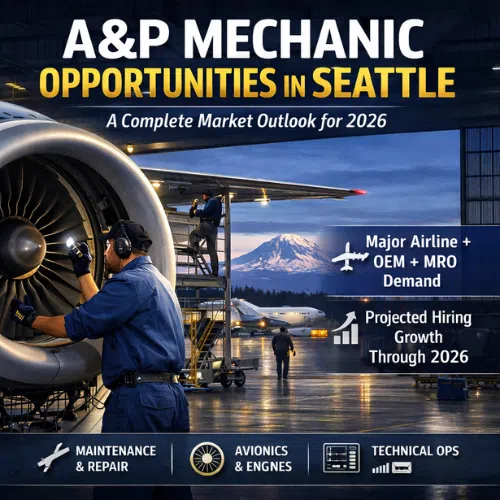
To enter this field, candidates must earn an FAA Airframe and Powerplant (A&P) certificate, the gold standard for aviation mechanics under 14 CFR Part 65. Earning this certification requires passing three comprehensive written knowledge tests (General, Airframe, and Powerplant), followed by a rigorous Oral and Practical examination administered by an FAA Designated Mechanic Examiner (DME). Candidates can meet the eligibility requirements through either 30 months of documented, concurrent practical experience—often gained through military service—or by graduating from an FAA-approved Part 147 Aviation Maintenance Technician School.
The career of an AMT generally diverges into two distinct operational environments: line maintenance and heavy maintenance. Line maintenance technicians work directly on the airport ramp and at the gate, managing daily inspections, servicing, and time-critical “quick turns”. They face immense pressure to troubleshoot and rectify mechanical discrepancies while passengers are boarding, often working outdoors in extreme weather conditions. Conversely, heavy maintenance technicians operate in massive hangars or centralized depot facilities. These mechanics perform extensive, long-term scheduled inspections—such as C-checks and D-checks—which involve the systematic teardown, structural testing, and rebuilding of the airframe and powerplants over several weeks.
Advancement opportunities for AMTs are robust and highly rewarding. Experienced mechanics can earn their Inspection Authorization (IA) or transition into Quality Control (QC) roles, becoming the final authority on critical repairs. For those interested in leadership, technical operations pathways frequently lead to roles such as Lead Technician, Maintenance Shift Supervisor, Base Manager, and ultimately Director of Maintenance (DOM). As long as commercial aircraft take to the skies, the industry will rely heavily on the technical proficiency and uncompromising integrity of the A&P mechanic.
10. Avionics Technician
As modern commercial fleets become increasingly defined by their digital architecture rather than their mechanical linkages, the role of the Avionics Technician has surged in demand and complexity. These specialized professionals maintain, troubleshoot, and repair the advanced electronic, communication, and navigation systems that govern modern flight. While a traditional A&P mechanic might focus on the physical engine components, the avionics technician diagnoses the digital sensors, data buses, and Engine Indicating and Crew Alerting Systems (EICAS) that monitor that engine’s performance.
Troubleshooting modern aircraft requires a sophisticated understanding of digital logic and interconnected networks. An avionics technician must trace faults through complex ARINC data buses, identifying whether a malfunction originates in a Line Replaceable Unit (LRU), a frayed wire harness, or a software glitch in the Flight Management System (FMS). When a flight crew reports an anomaly with the autopilot, weather radar, or collision avoidance system (TCAS), the avionics technician utilizes specialized diagnostic software and precision test equipment to isolate and resolve the discrepancy without delaying the flight.
While an A&P certificate remains highly advantageous and often required by major airlines, avionics technicians typically hold additional, specialized credentials. The Federal Communications Commission (FCC) General Radiotelephone Operator License (GROL) is a critical credential for technicians repairing internal communication and radar systems. Furthermore, industry-recognized certifications, such as the NCATT Aircraft Electronics Technician (AET) certification, validate a technician’s mastery of advanced electrical theory and aerospace integrated systems.
Fleet modernization offers unparalleled career growth for avionics professionals in 2026. As airlines rapidly retrofit legacy fleets and integrate next-generation aircraft, technicians are at the forefront of implementing Controller-Pilot Data Link Communications (CPDLC), advanced satellite communication (SATCOM) arrays, and NextGen airspace navigation equipment. For those who excel in rapidly evolving technological environments, a career in avionics offers a seamless blend of aerospace engineering and advanced IT networking, with opportunities to advance into avionics engineering, flight data analysis, or fleet integration management.
11. Maintenance Controller
The Maintenance Controller acts as the crucial nexus between the flight line, the technical operations department, and the Systems Operations Control (SOC) center. Positioned at the heart of the airline’s daily operation, the controller provides real-time, active-fleet maintenance coordination. When an aircraft in flight experiences a mechanical issue, or a line technician encounters a complex troubleshooting hurdle at an outstation, the maintenance controller provides immediate, high-level technical direction. They are the strategic problem-solvers who interpret engineering data, authorize repair protocols, and manage the logistics of returning grounded aircraft to service safely and expeditiously.
One of the controller’s primary responsibilities is managing mechanical discrepancies and the deferral process. When a component fails, the controller must rapidly consult the aircraft’s approved Minimum Equipment List (MEL) or Configuration Deviation List (CDL) to determine if the aircraft can legally and safely dispatch with the inoperative item. They are the ultimate authority on deferred maintenance items (DMIs), ensuring compliance with strict regulatory timelines under the airline’s specific operations specifications, including the critical OpSpec D095 governing MEL authorization. By coordinating closely with dispatchers and flight crews, the controller balances the demands of the daily flight schedule with uncompromising safety standards.
This role is not an entry-level position; it demands a sophisticated understanding of both technical mechanics and airline operations. Maintenance controllers are invariably seasoned A&P mechanics, typically requiring five or more years of extensive line or heavy maintenance experience. They must possess exceptional analytical skills, an encyclopedic knowledge of general maintenance manuals (GMM), and the ability to remain calm and decisive during high-pressure situations. A controller must seamlessly communicate complex technical constraints to non-technical management, purchasing departments, and flight crews.
Career advancement from the maintenance control desk often leads to the highest levels of technical leadership. Successful controllers frequently transition into roles such as Maintenance Control Supervisor, Manager of Technical Support, or Director of Maintenance. Because this position inherently interfaces with every facet of the airline’s operation—from parts purchasing and logistics to crew scheduling and flight ops—it serves as a premier launching pad for technical operations executives shaping the long-term reliability and airworthiness of the global fleet.
Pathway 4: Safety, Quality, and Regulatory Compliance Careers
Aviation is inherently risk-averse, and the unprecedented safety record of the modern airline industry is not a product of chance; it is the result of meticulously designed systems and the unwavering dedication of safety and compliance professionals. Pathway 4 focuses on the individuals tasked with ensuring that every facet of an airline’s operation adheres to both internal standards and rigorous federal regulations. Moving away from reactive problem-solving, these professionals implement proactive strategies to identify hazards before they manifest into incidents. For analytical thinkers who possess a meticulous eye for detail and a passion for continuous improvement, careers in safety and quality assurance offer a highly influential role in protecting the flying public.
12. Airline Safety Specialist
At the core of a modern airline’s operational philosophy is its Safety Management System (SMS)—a comprehensive, top-down business approach to managing safety risk. The Airline Safety Specialist is the architect, manager, and vital champion of this dynamic framework. Unlike traditional safety roles that might have focused solely on historical compliance, today’s safety specialist operates in a highly predictive and proactive capacity. They are responsible for cultivating a corporate “just culture” where every employee, from the ramp agent to the wide-body captain, is actively empowered and engaged in the continuous improvement of operational safety without fear of reprisal.
A primary responsibility of the safety specialist is robust hazard identification and risk management. This involves analyzing daily operational data across the airline’s network to detect emerging trends that could compromise safety margins. By utilizing advanced safety reporting and data analysis tools, these specialists monitor voluntary and automated programs like Flight Operational Quality Assurance (FOQA) and the Aviation Safety Action Program (ASAP). Through ASAP, frontline employees can self-report inadvertent safety violations, while FOQA downloads terabytes of digital flight data directly from aircraft recorders to monitor flight parameters. The safety specialist synthesizes this vast influx of data, identifying systemic vulnerabilities—such as recurrent unstable approaches at a specific runway or ground handling conflicts during peak hub hours—and develops targeted, data-driven risk mitigation strategies.
When an incident or operational irregularity does occur, the airline safety specialist immediately transitions into a formal investigative role. They are tasked with leading comprehensive internal incident investigations and formulating actionable corrective actions. This process is focused strictly on conducting rigorous root-cause analysis to understand the complex interplay of human factors, environmental conditions, mechanical anomalies, or procedural gaps that led to the event. Safety specialists frequently collaborate with union safety committees, corporate leadership, and federal entities like the National Transportation Safety Board (NTSB) and the FAA. By disseminating their findings and implementing systemic changes, these professionals ensure that the airline continuously learns, adapts, and ultimately elevates its safety standards to prevent future occurrences. Career progression in this field often leads to senior management roles, such as Director of Corporate Safety, guiding the strategic risk philosophy of the entire organization.
13. Quality Assurance and Regulatory Compliance Specialist
While the safety department focuses on identifying and mitigating operational risks, the Quality Assurance (QA) and Regulatory Compliance Specialist ensures that the airline is strictly adhering to the myriad of federal regulations and its own approved operating manuals. Working under 14 CFR Part 121 or Part 135, an airline functions strictly by the book; the QA specialist is the auditor who guarantees that the “book” is consistently followed. This role is fundamental to maintaining the airline’s operating certificate and preventing costly, reputation-damaging regulatory enforcement actions.
The cornerstone of the QA specialist’s daily workflow involves conducting exhaustive internal evaluations and audits. These professionals execute Continuous Analysis and Surveillance System (CASS) audits for maintenance operations and Internal Evaluation Program (IEP) audits for flight operations. They physically inspect outstations, maintenance hangars, dispatch centers, and corporate training facilities to verify that standard operating procedures are being executed exactly as written. This systematic regulatory compliance monitoring ensures that any deviation from the airline’s General Maintenance Manual (GMM) or Flight Operations Manual (FOM) is identified and corrected internally long before it triggers an FAA investigation.
A critical aspect of this oversight involves managing the airline’s complex web of documentation. QA specialists provide stringent manuals, records, and training oversight. They ensure that all pilot and mechanic training records are meticulously maintained, current, and legally compliant. In the modern digital era, this requires expert management of authorized electronic frameworks; for instance, the QA specialist ensures that the airline’s implementation of OpSpec A025—which specifically governs Electronic Record Keeping and Electronic Signatures—is impeccably maintained, audited for accuracy, and completely secure against unauthorized alterations. They verify that every revision to an aircraft manual or training syllabus is accurately distributed and acknowledged by the required personnel.
Finally, the QA and Regulatory Compliance Specialist serves as a primary point of contact for interaction with regulatory authorities. They maintain a continuous, professional dialogue with the airline’s FAA Principal Operations Inspector (POI) and Principal Maintenance Inspector (PMI). Whether seeking approval for a new training program, submitting a manual revision, or responding to a regulatory inquiry, the QA specialist must communicate with precision and authority. For detail-oriented professionals with a deep understanding of aviation law and federal codes, this career offers a highly respected trajectory into roles such as Director of Quality Assurance or Vice President of Regulatory Affairs.
Pathway 5: Commercial, Administrative, and Leadership Careers
Behind every flight departure, line maintenance check, and airport turnaround lies a multi-billion-dollar commercial enterprise. While operational divisions execute the daily schedule safely, the Commercial, Administrative, and Leadership pathway serves as the strategic, analytical, and financial engine that keeps the airline solvent and profitable. Operating within a capital-intensive industry characterized by cyclical volatility and razor-thin profit margins, these professionals steer fleet investments, optimize network profitability, and navigate complex labor and regulatory landscapes. For business-minded professionals, quantitative analysts, and seasoned operators, this pathway offers some of the most intellectually challenging and high-impact careers in global business.
14. Revenue Management Analyst
In commercial aviation, an unsold seat on a departing flight is the ultimate perishable commodity; once the aircraft cabin door closes, that seat’s revenue potential drops instantly to zero. The Revenue Management (RM) Analyst is tasked with solving one of the most complex economic puzzles in business: selling the right seat to the right customer at the right time for the right price. Analysts manage fare structures, booking classes, and ticket inventory across thousands of scheduled flights, ensuring the carrier maximizes overall profitability rather than simply filling seats with low-yield passengers.
The core of an RM analyst’s day-to-day workflow revolves around passenger-demand forecasting. Leveraging sophisticated algorithmic systems, historical booking curves, seasonal trends, macroeconomic indicators, and competitor pricing behavior, analysts forecast demand patterns down to the specific flight leg, day of the week, and time of day. When corporate travel surges on Monday morning routes between major business hubs, analysts restrict discounted inventory. Conversely, for off-peak midweek leisure flights, they open lower-priced buckets to stimulate bookings without diluting revenue on higher-yielding traffic.
Balancing load factor (the percentage of seats filled) with yield (the average fare paid per mile) is the analyst’s ultimate goal. Maximizing Passenger Revenue per Available Seat Mile (PRASM) requires constant micro-adjustments. An analyst must continually evaluate market elasticity, adjust overbooking buffers to mitigate no-show rates without causing costly involuntary denied boardings, and coordinate with the Network Planning and Marketing teams during route expansions or competitive fare sales.
Entering this analytical discipline requires strong quantitative capabilities. Airlines typically seek candidates with undergraduate or advanced degrees in economics, finance, mathematics, operations research, statistics, or industrial engineering. Candidates must be fluent in data manipulation tools—including SQL, Python, R, and platforms like Tableau or Power BI—alongside proprietary revenue management software suites. Beyond technical skills, successful analysts possess sharp commercial instincts, translating vast arrays of raw booking data into actionable commercial pricing strategies that directly impact the airline’s bottom line.
15. Airline Corporate and Executive Leadership
Commercial airlines are intricate corporate entities requiring exceptional leadership across corporate finance, labor relations, fleet strategy, brand marketing, legal affairs, and Safety Management Systems (SMS). Executive leadership teams face constant operational pressure: managing volatile fuel prices, negotiating multi-billion-dollar aircraft purchase agreements with manufacturers, and steering enterprise risk. Every strategic decision—from opening a new international base to restructuring an entire corporate debt portfolio—demands rigorous governance and long-term vision.
A defining characteristic of airline leadership is the viable pathway from front-line technical operations into the executive suite. Aviation is one of the few global industries where C-suite executives and vice presidents frequently begin their careers on the flight deck, at the dispatch desk, or turning wrenches in a maintenance hangar. Key regulatory roles, including the Director of Operations (DO), Chief Pilot, and Director of Maintenance (DOM), legally require deep operational experience and specialized FAA certifications. Professionals who combine early technical proficiency with formal executive training often rise rapidly, serving as the essential bridge between operational crews and the corporate boardroom.
Departmental heads and executive officers bear substantial administrative and strategic responsibilities. Chief Financial Officers (CFOs) and Treasury Directors orchestrate aircraft leasing structures, fuel hedging strategies, and liquidity management. Vice Presidents of Labor Relations navigate high-stakes collective bargaining negotiations under the Railway Labor Act with pilot and flight attendant unions. Meanwhile, Chief Operating Officers (COOs) oversee the daily performance of thousands of distributed employees, ensuring corporate safety standards remain uncompromising across all hubs, outstations, and operational departments.
Reaching executive rank within an airline demands advanced educational credentials paired with extensive leadership experience. Successful leaders often hold an MBA or a Master’s in Aviation Management, complemented by decades of progressive management responsibility. Core competencies include crisis leadership, executive presence, labor-management consensus building, and deep fluency in FAA, DOT, and OSHA regulatory compliance. In an industry vulnerable to macroeconomic shocks and public scrutiny, airline executives must cultivate an unwavering safety culture, build organizational resilience, and inspire a diverse, highly specialized workforce.
How Airline Departments Work Together
A single commercial flight is a highly choreographed event requiring the flawless synchronization of multiple specialized departments. Long before a plane takes off, Commercial Planning dictates the route, deciding where the airline will fly, scheduling the departure times, and setting the pricing strategy to ensure the flight is profitable.
Once the schedule is set, Crew Scheduling takes over, ensuring that legally rested and properly qualified pilots and flight attendants are assigned to the trip. They must constantly adjust for sick calls, weather delays, and strict Federal Aviation Administration (FAA) duty-time limits. Simultaneously, Flight Dispatch creates the flight plan. Dispatchers calculate weight and balance, analyze weather patterns, determine fuel requirements, and map the safest, most efficient route. They share joint legal responsibility for the flight with the captain.
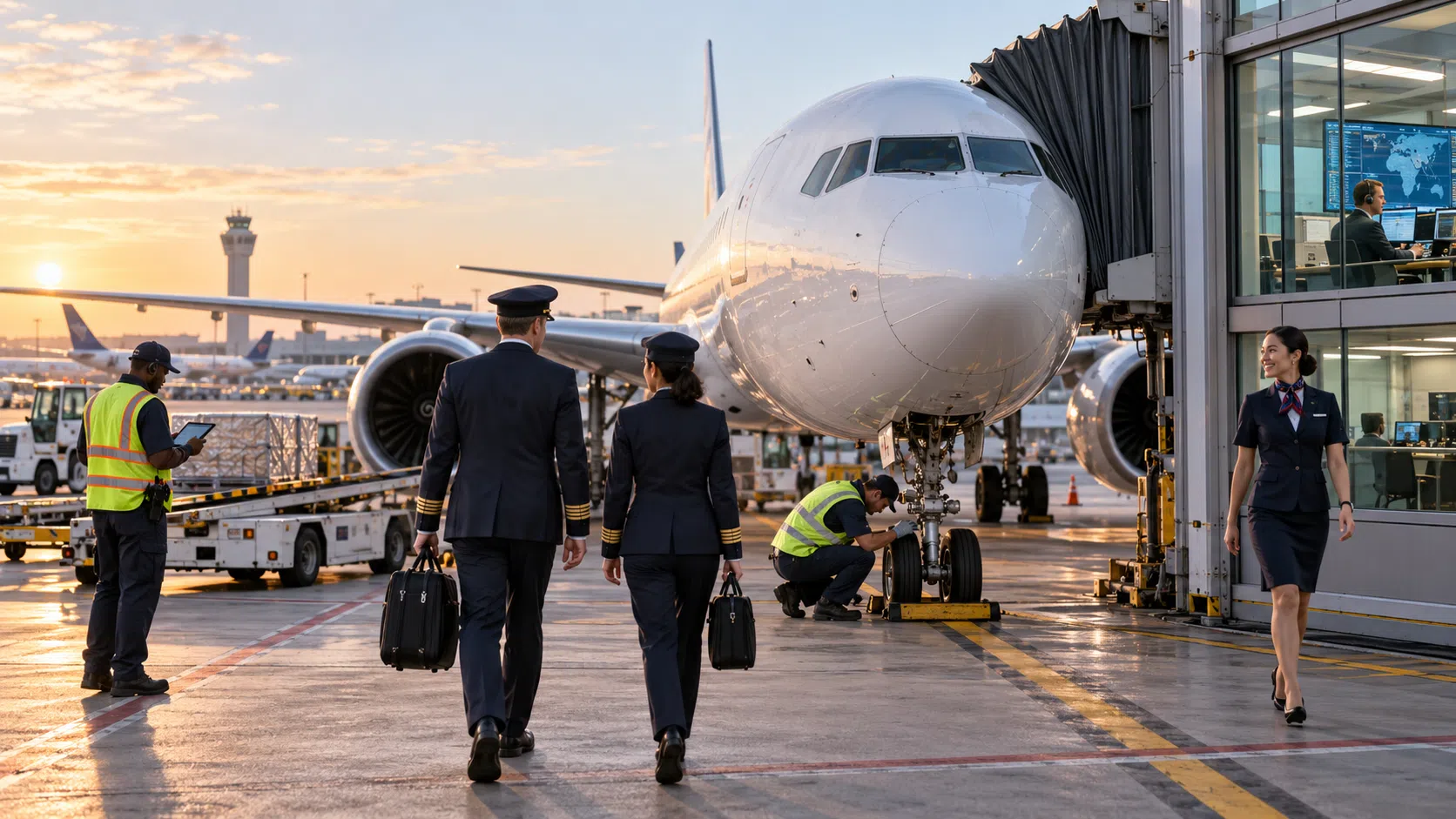
On the ground, Station Operations manages the physical turnaround of the aircraft. This includes ramp agents loading baggage and cargo, fueling operations, and guiding the aircraft to and from the gate. Above wing, Passenger Service (customer service and gate agents) manages the boarding process, checks documentation, and handles passenger re-accommodations during delays. In the cabin, flight attendants execute safety procedures and passenger service duties while coordinating directly with the flight deck.
Behind the scenes, Maintenance plays a critical role. Line mechanics perform pre-flight checks, troubleshoot mechanical discrepancies between flights, and clear the aircraft for departure. If a plane requires a part, maintenance controllers coordinate with supply chain logistics to get the aircraft back in service quickly.
Overarching this entire process is the Safety department. Safety professionals do not just investigate incidents; they proactively monitor data from the aircraft and voluntary employee reports to identify risks before they become accidents. Through safety management systems (SMS), they ensure that every department—from dispatch to the ramp—adheres to standard operating procedures, ensuring the flight pushes back safely and efficiently.
Airline Employment Environments
The aviation industry features several distinct employment environments, each offering different cultures, pay scales, and career trajectories.
Major passenger airlines (such as Delta, United, and American) represent the pinnacle for many aviation professionals. They operate complex global networks using widebody aircraft, offering the highest compensation, the most robust benefits, and long-term career stability. However, gaining employment here is highly competitive and often requires years of prior industry experience.
Regional airlines (like SkyWest or Republic) operate smaller jets under the brand names of the majors (e.g., United Express, Delta Connection). They serve as the primary entry point for pilots, flight attendants, and mechanics looking to build experience. Pay and benefits are generally lower than at the majors, and the operational pace is fast, with crews flying multiple short legs a day.
Low-cost and ultra-low-cost airlines (LCC/ULCC), such as Southwest, Spirit, and Frontier, focus on efficiency. They typically fly a single aircraft type (like the Boeing 737 or Airbus A320), emphasize point-to-point routes rather than hub-and-spoke models, and require rapid aircraft turnarounds. The culture is often highly dynamic, and employees are expected to be adaptable and efficient.
Cargo airlines (like FedEx, UPS, and Atlas Air) operate vastly different schedules. Because package delivery runs overnight, cargo employees—especially pilots, mechanics, and ramp agents—work predominantly late-night and early-morning shifts. Cargo airlines are insulated from passenger travel slumps and often provide exceptional compensation, particularly for pilots.
Charter and supplemental airlines operate outside scheduled networks. They fly sports teams, military personnel, or vacation packages. Employees in this sector must embrace unpredictability, as schedules, destinations, and trip lengths can change with very little notice.
Finally, airline subsidiaries and operating partners include wholly-owned regional carriers or specialized ground handling companies. While owned by a parent group, they maintain separate management, distinct union contracts, and separate seniority lists from the mainline carrier, meaning employees are technically working for a completely different corporate entity.
Airline Employees Versus Contracted Service Providers
A common point of confusion for job seekers is understanding exactly who they will be working for at an airport. Airlines directly employ only a portion of the people working on their flights, heavily relying on third-party contractors for the rest.
Positions commonly staffed directly by airlines include pilots, flight attendants, aircraft dispatchers, maintenance technicians, and corporate staff (such as commercial planners and revenue managers). At an airline’s primary hubs, they will also directly employ gate agents, baggage handlers, and customer service representatives to maintain strict control over their most critical operations.
However, at smaller “out stations” (non-hub airports), functions are frequently assigned to contractors. Rather than employing a staff of ten people for just two flights a day, airlines hire ground handling companies (like Unifi, Swissport, or Menzies) to manage these turns.
Ground handling, fueling, catering, cleaning, and security are the most heavily outsourced sectors. Contracted employees load the bags, pump the jet A fuel, deliver the galley carts, clean the cabins between flights, and manage wheelchair assistance. Security personnel checking badges at employee doors or screening catering carts are almost always employed by private security firms, not the airline.
The differences in benefits, travel privileges, pay, and advancement are stark. Direct airline employees generally receive higher wages, union representation, generous 401(k) matches, comprehensive health insurance, and the industry’s most coveted perk: flight privileges (non-revenue standby travel) on the airline’s global network. Contracted employees typically earn lower hourly wages, experience higher turnover, and receive limited or no flight benefits. Advancement within a contracting company usually means moving to a shift lead or station manager, whereas direct airline employees have pathways into the corporate headquarters or across different airline departments.
How applicants can identify the actual employer comes down to the application portal. If an applicant is on Delta.com or United.com, they are applying for a direct role. If a job board directs them to a third-party site or the uniform in the job description belongs to a ground services company, they will be an employee of the contractor. Job seekers must carefully read the fine print to understand exactly whose logo will be on their paycheck.
Education, Training, and Certification Requirements
The aviation industry is heavily regulated, meaning the barriers to entry vary wildly depending on the role, ranging from high school diplomas to advanced federal licenses.
FAA-certificated careers require the highest level of regulatory compliance. Pilots must earn an Airline Transport Pilot (ATP) certificate, requiring a minimum of 1,500 flight hours, rigorous check-rides, and specialized type ratings for the aircraft they fly. Aviation Maintenance Technicians (AMTs) must hold an Airframe and Powerplant (A&P) license, which requires demonstrating practical, oral, and written competency to the FAA. Aircraft Dispatchers also require a specific FAA license, proving they understand meteorology, navigation, and aircraft systems at a level comparable to a pilot.
Technical and vocational training is the standard pathway for mechanics. Many AMTs attend specialized two-year aviation maintenance schools to prepare for their A&P exams. Similarly, dispatchers attend intensive certification courses lasting several weeks to months.
College-degree expectations have shifted. Historically, a four-year bachelor’s degree was a hard requirement for major airline pilots; today, many airlines have dropped this to a “preferred” qualification to widen the applicant pool, though it remains highly competitive without one. However, for corporate roles—such as revenue management, network planning, safety data analysis, and marketing—bachelor’s and master’s degrees (often in aviation management, business, or engineering) remain standard expectations.
Airline-provided training is mandatory for almost all operational roles, even those without federal licenses. Flight attendants undergo four to eight weeks of unpaid or minimally paid intensive training focusing heavily on emergency evacuations, firefighting, and medical response. Gate and ramp agents receive weeks of classroom and on-the-job training to master ticketing systems, hazardous materials handling, and aircraft weight and balance procedures.
Finally, no employee steps onto the tarmac without passing rigorous background checks, drug testing, security vetting, and work eligibility protocols. The Department of Transportation (DOT) mandates pre-employment and random drug and alcohol testing for safety-sensitive roles. The TSA conducts 10-year criminal history records checks and fingerprinting for airport badge access. Pilots undergo an additional layer of scrutiny through the Pilot Records Database (PRD), which reviews their entire training and employment history to ensure a flawless safety record.
Airline Career Compensation and Benefits
Compensation in the airline industry is highly structured and varies significantly based on the role, experience, and the presence of organized labor.
There are three primary pay structures: hourly, salary, and flight-hour compensation. Ramp agents, customer service representatives, and mechanics are typically paid a standard hourly wage. Corporate, management, and administrative staff receive traditional annual salaries. Pilots and flight attendants, however, are paid based on “flight hours” or “block time”—meaning their pay clock only truly starts when the aircraft door closes and the parking brake is released.
Because flight crews are not paid their primary rate for boarding, delays, or sitting in the airport, their compensation is supplemented by overtime, per diem, bonuses, and premium pay. Per diem is an hourly tax-free allowance paid for every hour a crew member is away from their home base to cover meals and expenses. Premium pay (often 150% to 200% of the standard rate) is awarded for picking up open trips or flying on days off. Many airlines also offer robust profit-sharing bonuses, which can equal weeks or even months of additional pay during highly profitable years.
Health and retirement benefits are generally exceptional for direct employees. Major airlines often provide direct 401(k) contributions (sometimes up to 16% for pilots) without requiring an employee match, alongside comprehensive health, dental, and vision insurance.
The most famous industry perk is travel privileges. Airline employees, their spouses, dependents, and sometimes parents receive free or highly discounted standby travel on their airline and its global partners. While standby travel requires flexibility, it allows employees to see the world at a fraction of the standard cost.
Finally, compensation is heavily influenced by union and nonunion employment. The airline industry is one of the most heavily unionized sectors in the world. Pilots, flight attendants, dispatchers, and mechanics are almost always represented by unions (such as ALPA, AFA, or the Teamsters). A union’s Collective Bargaining Agreement (CBA) dictates exact pay scales, work rules, and grievance procedures. Nonunion employees (like Delta’s flight attendants or corporate staff) rely on the company to set competitive market rates, though these companies often match or exceed union contracts to discourage unionization.
Airline Schedules and Quality of Life
Quality of life in the aviation industry is defined by one absolute rule: seniority. The day you are hired dictates your schedule, your base, and your lifestyle for the rest of your career.
Seniority-based scheduling means the longest-tenured employees get the first choice of everything. They bid for, and receive, the best trips, the most desirable days off, the newest aircraft, and the highest-paying routes. Conversely, junior employees receive whatever is left over.
For junior flight crews, this means living on reserve and on-call assignments. A reserve pilot or flight attendant does not have a set flying schedule. Instead, they have assigned blocks of days where they must be ready to report to the airport within two hours of a phone call from crew scheduling. They cover sick calls, weather disruptions, and irregular operations, making it impossible to plan daily life.
The industry operates 24/7/365, meaning shift work and overnight operations are unavoidable. Mechanics and cargo pilots routinely work the “graveyard” shift, performing heavy maintenance or flying freight while the world sleeps. Ramp and gate agents regularly start their shifts at 3:00 AM to launch the first morning flights.
Because planes do not stop flying on holidays, weekends and holidays are standard workdays. Junior employees will miss Thanksgivings, Christmases, and summer weekends for years before accumulating enough seniority to hold those days off.
Where you live versus where you work also dictates your lifestyle. Airlines assign employees to specific geographical hubs, known as base assignments. If an employee is based in New York but lives in Florida, they will be commuting—flying standby on their own time before and after their actual work trips just to get to work. Commuting adds massive stress and unpaid hours to an employee’s schedule. Relocation to base is the single best way to improve an airline worker’s quality of life, allowing them to sleep in their own bed before reporting for duty.
Building a Long-Term Airline Career
Aviation is an industry that rewards longevity, resilience, and a willingness to continuously learn. Building a successful career requires strategic planning and an understanding of the industry’s unique mobility.
Choosing an entry point is often the biggest hurdle. Many professionals start on the front lines as ramp agents, customer service representatives, or at regional airlines to get their foot in the door. These roles provide invaluable operational knowledge, grant access to internal job boards, and start the employee’s company seniority clock.
Once inside, developing qualifications is vital. A gate agent might utilize company tuition reimbursement to finish a degree in supply chain management. A ramp agent might attend night school to earn their A&P mechanics license. Airlines highly value operational experience and frequently offer pathways to help existing employees upskill.
Because of this, internal transfers are heavily favored. An airline would much rather hire an aircraft dispatcher who already spent three years working as a gate agent learning the company’s culture and software than an outsider. Moving into leadership often follows this same trajectory; front-line supervisors become station managers, who then move to corporate headquarters to oversee network-wide operations.
Unlike many industries, crossing departmental boundaries is common and encouraged. It is not unusual for a flight attendant to earn their commercial pilot licenses and transition to the flight deck, or for a maintenance technician to move into safety data analysis.
Finally, surviving a long-term airline career means preparing for airline industry cycles. Aviation is highly sensitive to the global economy. Fuel spikes, recessions, pandemics, and geopolitical events frequently lead to bankruptcies, mergers, and furloughs. Because everything is seniority-based, a furlough means the most junior employees lose their jobs first. A successful airline professional builds a strong financial safety net, remains adaptable, and understands that while the industry is deeply cyclical, the long-term trajectory for those who weather the storms is incredibly rewarding.
Frequently Asked Questions About Airline Careers
What airline careers are available besides pilot and flight attendant?
The industry relies heavily on ground and operations personnel. Key roles include Aircraft Dispatchers (who share legal responsibility for flights with the captain), Aircraft Maintenance Technicians (AMTs), Crew Schedulers, Gate and Customer Service Agents, Ramp Agents (baggage and ground handling), and Operations Control Center (OCC) managers.
Which airline careers do not require a college degree?
Many highly paid aviation roles do not strictly require a four-year degree. This includes Aircraft Dispatchers, Aircraft Maintenance Technicians, Air Traffic Controllers, Customer Service Agents, and Ramp Agents. Even major airlines have increasingly dropped the strict degree requirement for Commercial Pilots, though it remains highly preferred for competitive applications.
Which airline jobs require FAA certification?
The Federal Aviation Administration mandates specific certificates for personnel directly responsible for the safety of flight operations. This includes:
- Pilots: Commercial Pilot Certificate or Airline Transport Pilot (ATP) Certificate.
- Aircraft Dispatchers: FAA Aircraft Dispatcher Certificate.
- Aircraft Maintenance Technicians: Airframe and Powerplant (A&P) Certificate.
- Air Traffic Controllers: FAA Air Traffic Control Tower Operator Certificate (employed by the FAA or contract towers, rather than airlines).(Note: Flight Attendants also carry an FAA Certificate of Demonstrated Proficiency, but the training is provided in-house by the hiring airline).
What are the best entry-level airline careers?
For those without specialized certifications, Ramp Agents, Customer Service/Gate Agents, and Crew Schedulers are excellent entry points that allow new hires to immediately utilize airline travel benefits and learn the operational flow. For those pursuing a certified track, Regional Airline Dispatcher or Apprentice Maintenance Technician roles provide the foundational experience required to eventually transition to major carriers.
Do airline employees receive free or discounted travel?
Yes. “Non-revenue” or standby travel is a standard industry benefit. Airline employees, along with their eligible dependents (spouses, children, and sometimes parents or designated travel companions), can fly for free or at heavily discounted rates on their own airline, and often jumpseat or fly standby on partner airlines worldwide.
Which airline careers offer the highest salaries?
Captains at major mainline carriers command the highest salaries in the industry. Outside of the cockpit, top-tier Aircraft Dispatchers and experienced Aircraft Maintenance Technicians at major airlines frequently earn well over six figures. Airline executives and operations directors also sit at the top of the pay scale.
Are airline employees represented by unions?
The airline industry is highly unionized. The vast majority of Pilots (ALPA, APA), Flight Attendants (AFA, APFA), Dispatchers (PAFCA, TWU), Aircraft Mechanics (AMFA, TWU), and even Ramp/Gate Agents (IAM, CWA) at major carriers negotiate their pay, benefits, and work rules through collective bargaining agreements.
How does seniority affect an airline career?
Seniority is the ultimate currency in an airline career. Your date of hire determines almost every aspect of your professional life, including your monthly schedule, base location, aircraft assignment, priority for upgrades (e.g., First Officer to Captain), vacation bidding, pay scale, and even your boarding priority when flying standby on your days off.
Which airline jobs are commonly outsourced?
Major airlines frequently outsource heavy aircraft maintenance to third-party MROs (Maintenance, Repair, and Overhaul facilities). Ground operations like aircraft cleaning, wheelchair assistance, and ramp handling at smaller line stations are also commonly contracted out. Additionally, much of the short-haul flying is outsourced to regional airlines operating under a capacity purchase agreement (e.g., SkyWest operating as United Express or Delta Connection).
Can employees transfer between airline departments?
Internal mobility is common and encouraged. An employee can easily transition from a Gate Agent to a Crew Scheduler or a Flight Attendant, provided they pass the required interviews and in-house training. However, moving into highly specialized roles—like Pilot, Dispatcher, or Maintenance Technician—requires the employee to step away or utilize educational leaves of absence to obtain the necessary FAA certificates before transferring.
Conclusion: Choosing Your Airline Career Pathway
The commercial aviation industry operates as a complex ecosystem where every role is critical to the mission. Finding your ideal fit means aligning your natural strengths with the distinct demands of the operation.
If you thrive on technical troubleshooting and hands-on mechanical work, becoming an Aircraft Maintenance Technician (AMT) provides a highly stable, lucrative career. If you prefer analyzing complex weather data, managing logistics, and sharing operational control from a central command center, the Aircraft Dispatcher pathway puts you at the heart of the action without ever leaving the ground.
For those whose primary goal is global mobility and customer interaction, the Flight Attendant route offers an unmatched travel lifestyle. Conversely, entering through Ground Operations or Customer Service allows you to immediately access airline benefits and build seniority without the barrier of expensive, upfront FAA certifications—creating a perfect launchpad for internal advancement. Finally, for those drawn to the ultimate responsibility and the industry’s highest compensation tiers, the professional pilot pathway remains the pinnacle, though it requires the most significant dedication to training and regulatory compliance.
As you map out your future, carefully weigh the upfront qualification requirements against your long-term goals for schedule flexibility, income, and lifestyle. Because airline quality of life is strictly governed by seniority, entering the system early is always advantageous. To take your next step, select one of the individual career guides below for a deep dive into exact FAA requirements, training timelines, and hiring pipelines.
Airline Careers at United Airlines