Newsletter Subscribe
Enter your email address below and subscribe to our newsletter
AVIATION JOBS GUIDE

For most aspiring aviators, the first major question is simple:
“How much does it cost to become a commercial pilot?”
Unfortunately, very few people give a realistic answer.
Flight schools often advertise minimum FAA requirements. Internet forums throw around random numbers with no context. Social media creators sometimes discuss airline careers without explaining the actual financial pipeline required to reach that point.
The reality is this:
The cost to become a commercial pilot depends on far more than FAA minimums.
Training efficiency, consistency, weather, aircraft availability, examiner shortages, fuel prices, instructor quality, and personal preparation all dramatically affect the final number.
Most importantly:
Minimum FAA requirements are not realistic completion numbers for most students.
That single truth alone can change training costs by tens of thousands of dollars.
This article breaks down the realistic 2026 training costs from zero experience through:
This is strictly a training-cost discussion. It does not include airline hiring requirements, ATP certification, or type ratings later in a pilot career.
It also does not include college tuition, which becomes an entirely separate strategic conversation later in this article.
The FAA establishes minimum training requirements.
That does not mean most people finish there.
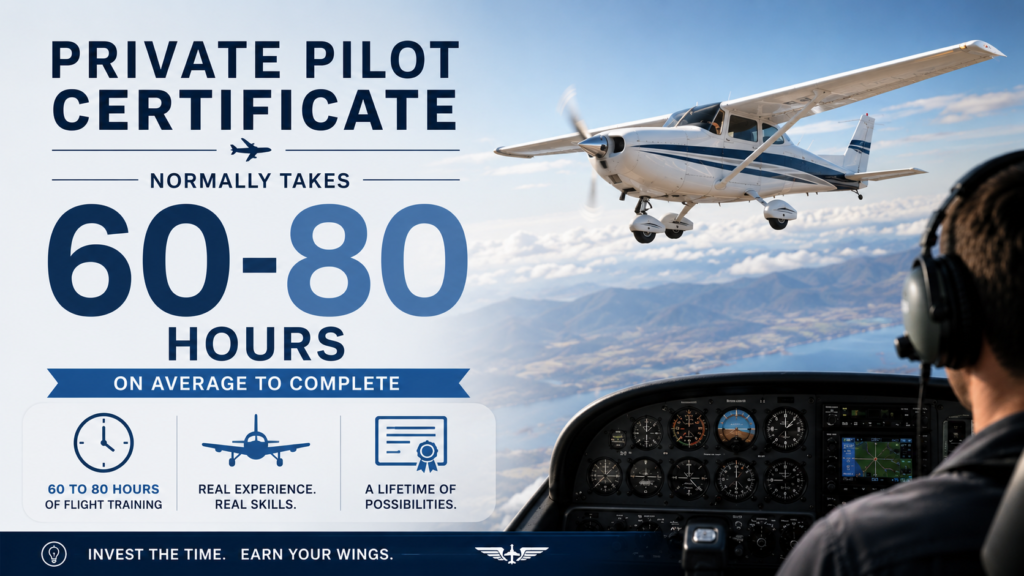
For example, a Private Pilot Certificate under Part 61 requires a minimum of 40 flight hours.
But nationally, many students finish closer to 60–80 hours.
Why?
Because real life interferes with perfect training flow.
Students deal with:
Flying once every two weeks may technically count as training, but financially it is extremely inefficient.
Skill decay becomes expensive.
The students who finish near FAA minimums are usually:
That is not the average experience for most aspiring professional pilots.
And this is where realistic budgeting matters.
A realistic 2026 estimate for the cost to become a commercial pilot through CFI/CFII/MEI is:
| Training Path | Estimated Cost |
|---|---|
| Efficient Local Training | $80,000–$100,000 |
| Lower-Efficiency Local Training | $95,000–$125,000 |
| Accelerated Academy Programs | $95,000–$130,000+ |
These estimates assume:
Could someone theoretically complete training for less?
Yes.
Is that the typical outcome?
No.
The cost to become a commercial pilot rises quickly when training becomes inconsistent or poorly planned.
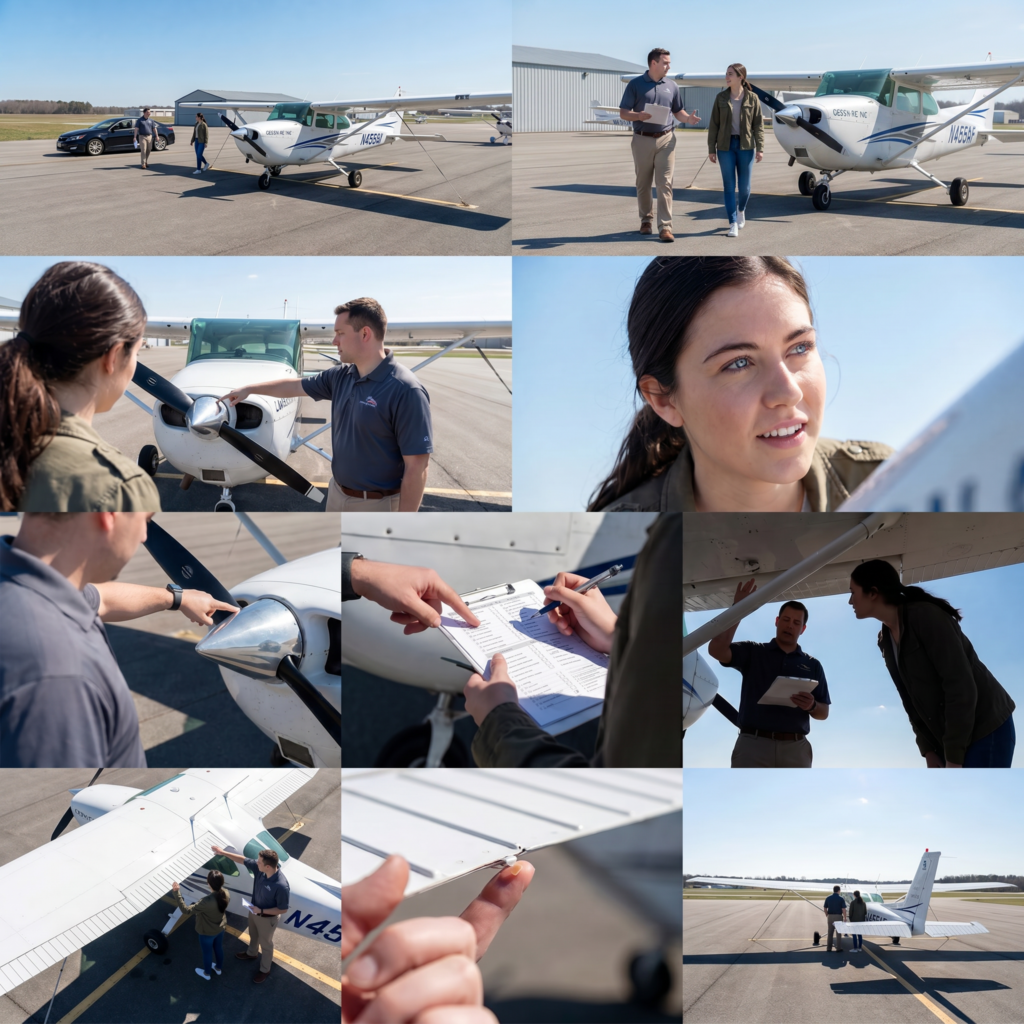
The Private Pilot Certificate is the foundation of all future aviation training.
Students learn:
This phase is also where many people discover whether they truly enjoy aviation as a professional pursuit rather than simply an emotional fascination.
Realistic Flight Hours
| FAA Minimum | Realistic Completion |
|---|---|
| 40 hours | 60–80 hours |
Typical PPL Costs
| Expense | Estimated Cost |
|---|---|
| Aircraft Rental | $12,000–$18,000 |
| Instructor Fees | $4,000–$7,000 |
| Ground School | $300–$700 |
| FAA Written Test | $175 |
| Checkride / Examiner Fee | $800–$1,500 |
| Headset | $400–$1,200 |
| iPad / EFB Setup | $600–$1,500 |
| Charts / Supplies | $200–$500 |
| Renter Insurance | $200–$400 |
Estimated Total
$18,000–$30,000
Many students underestimate how expensive inconsistency becomes during private pilot training.
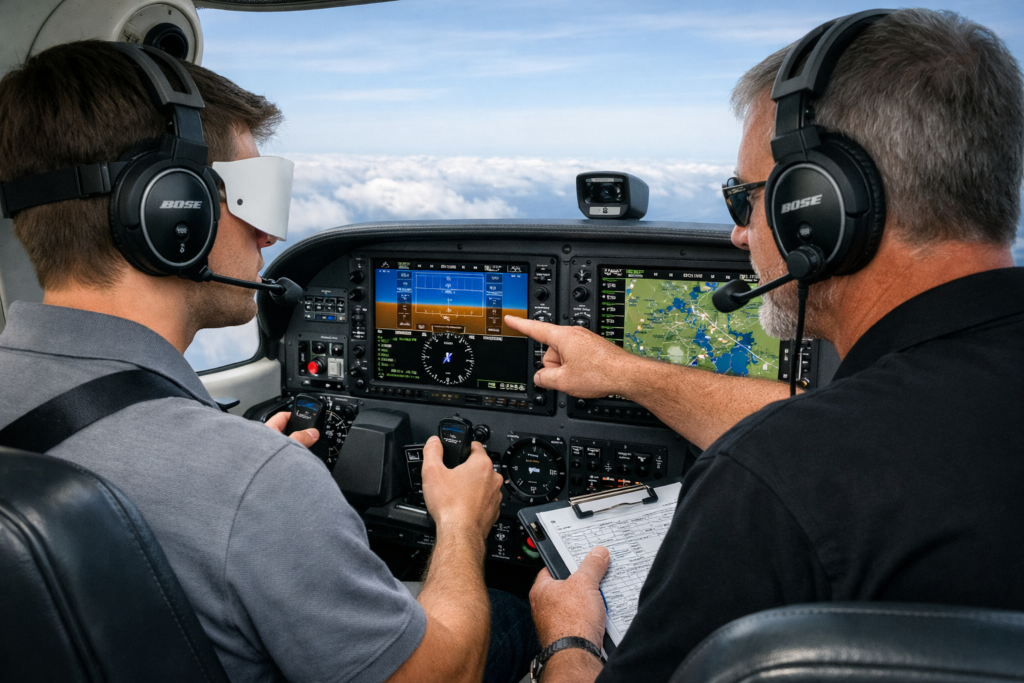
The Instrument Rating transforms flying from visual operation into true national airspace system integration.
Students learn:
This is often where aviation training becomes substantially more technical.
Realistic Flight Hours
| FAA Minimum | Realistic Completion |
|---|---|
| 40 instrument hours | 45–65 hours |
Typical Instrument Costs
| Expense | Estimated Cost |
|---|---|
| Aircraft Rental | $10,000–$16,000 |
| Instructor Fees | $3,000–$6,000 |
| Simulator Time | $1,000–$3,000 |
| Written Test | $175 |
| Checkride Fee | $800–$1,500 |
| IFR Supplies | $200–$500 |
Estimated Total
$15,000–$27,000
This phase often separates casual aviation interest from serious professional commitment.
The commercial pilot license cpl allows pilots to be compensated for qualifying flight operations.
Training emphasizes:
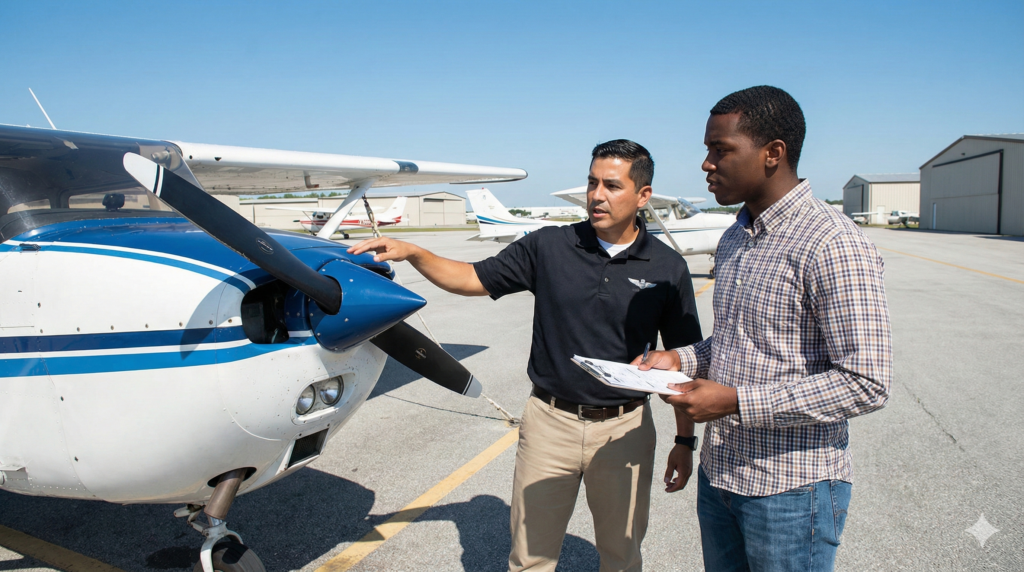
The FAA minimum under Part 61 is 250 total hours.
Very few students complete commercial training exactly at 250 hours.
Realistic Flight Hours
| FAA Minimum | Realistic Completion |
|---|---|
| 250 total hours | 260–320 hours |
Typical Commercial Costs
| Expense | Estimated Cost |
|---|---|
| Time Building | $18,000–$35,000 |
| Instructor Fees | $3,000–$7,000 |
| Complex/TAA Aircraft | $3,000–$8,000 |
| Written Test | $175 |
| Checkride Fee | $800–$1,500 |
Estimated Total
$25,000–$45,000
This is where the cost to become a commercial pilot accelerates significantly because total flight-hour accumulation becomes expensive.
Professional aviation increasingly values multi-engine experience.
Students learn:
Typical Multi Costs
| Expense | Estimated Cost |
|---|---|
| Multi Aircraft Rental | $4,000–$9,000 |
| Instructor Fees | $1,000–$3,000 |
| Checkride Fee | $800–$1,500 |
Estimated Total
$6,000–$13,000
Multi-engine aircraft are substantially more expensive to operate due to fuel burn, maintenance, and insurance costs.
The CFI certificate is commonly considered one of the most demanding checkrides in aviation.
At this stage, pilots must learn not only how to fly professionally, but how to teach.
Training includes:
Typical CFI Costs
| Expense | Estimated Cost |
|---|---|
| Flight Training | $3,000–$8,000 |
| Ground Preparation | $2,000–$5,000 |
| FOI Written | $175 |
| FIA Written | $175 |
| Checkride Fee | $1,200–$2,500 |
Estimated Total
$7,000–$15,000
The CFII and MEI increase employability and time-building opportunities.
Many schools strongly prefer instructors who can teach instrument and multi-engine students.
Typical CFII Costs
| Expense | Estimated Cost |
|---|---|
| Training | $2,000–$5,000 |
| Written Test | $175 |
| Checkride Fee | $800–$1,500 |
Estimated Total
$3,000–$7,000
Typical MEI Costs
| Expense | Estimated Cost |
|---|---|
| Multi Training | $3,000–$7,000 |
| Checkride Fee | $800–$1,500 |
Estimated Total
$4,000–$8,500
One reason the cost to become a commercial pilot surprises families is because many secondary costs are rarely discussed upfront.
These may include:
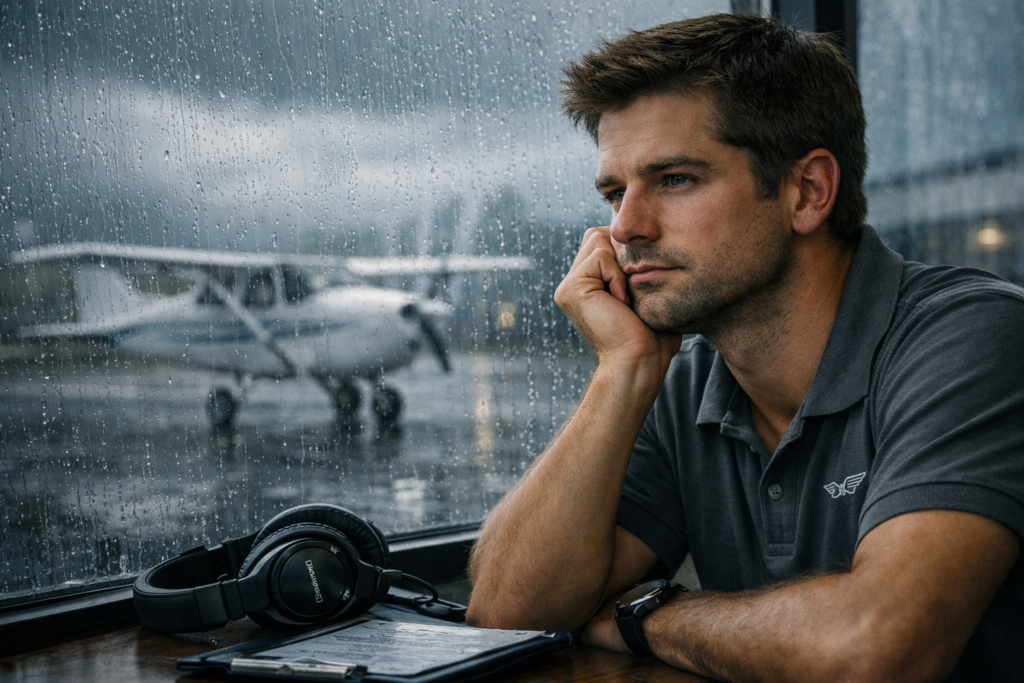
Examiner shortages alone can create major financial inefficiency.
A student waiting weeks for a checkride often requires additional refresher training simply to remain proficient.
There is no universally perfect pathway.
Accelerated academies provide:
But they also create:
Local flight schools may offer:
But they can also create:
The cheapest-looking path is not always the least expensive overall.
Slow training often becomes expensive training.
No.
The costs discussed in this article are flight training costs only.
Many families unintentionally combine two completely separate financial decisions into one massive number:
Those are not automatically the same thing.
Some universities combine both aviation education and flight training into structured programs, including:
These programs may provide:
For some students, that environment is an excellent fit.
But families should also understand the financial reality.
When tuition, housing, fees, and flight training are combined, total costs can sometimes approach or exceed $200,000–$300,000.
That surprises many aspiring pilots entering aviation for the first time.
Especially because the FAA does not require a college degree to become a professional pilot.
This becomes one of the most important long-term strategic conversations in aviation.
Some pilots intentionally pursue aviation degrees.
Others deliberately choose non-aviation degrees while completing flight training separately.
Both approaches have valid advantages.
An aviation degree may provide:
But a non-aviation degree may provide something equally important:
Career resilience.
Aviation is historically cyclical.
Airlines furlough pilots.
Economic downturns happen.
Medical certificates can be lost.
Corporate departments close.
Hiring markets change rapidly.
Because of that reality, many experienced aviation professionals encourage younger pilots to consider degrees that create flexibility outside the cockpit as well.
Examples include:
A non-aviation degree may provide:
That does not mean aviation degrees are a mistake.
Far from it.
But it does mean families should understand they are making two separate strategic decisions:
That conversation alone could easily become an entire separate article.
The cost to become a commercial pilot is substantial.
There is no honest way around that reality.
But misunderstanding the training pipeline often makes it even more expensive.
The students who navigate training most successfully usually:
The goal is not simply to begin flight training.
The goal is to finish professionally, efficiently, and with a clear understanding of the long-term career system you are entering.
But wait there is still one more to go. The ATP. The airline transport pilot certificate. We’ll talk more about that in a future article.
Are you looking for a job as a commercial pilot? Search for jobs now at Aviation Employment Network.
Cost to Become a Commercial Pilot FAQ