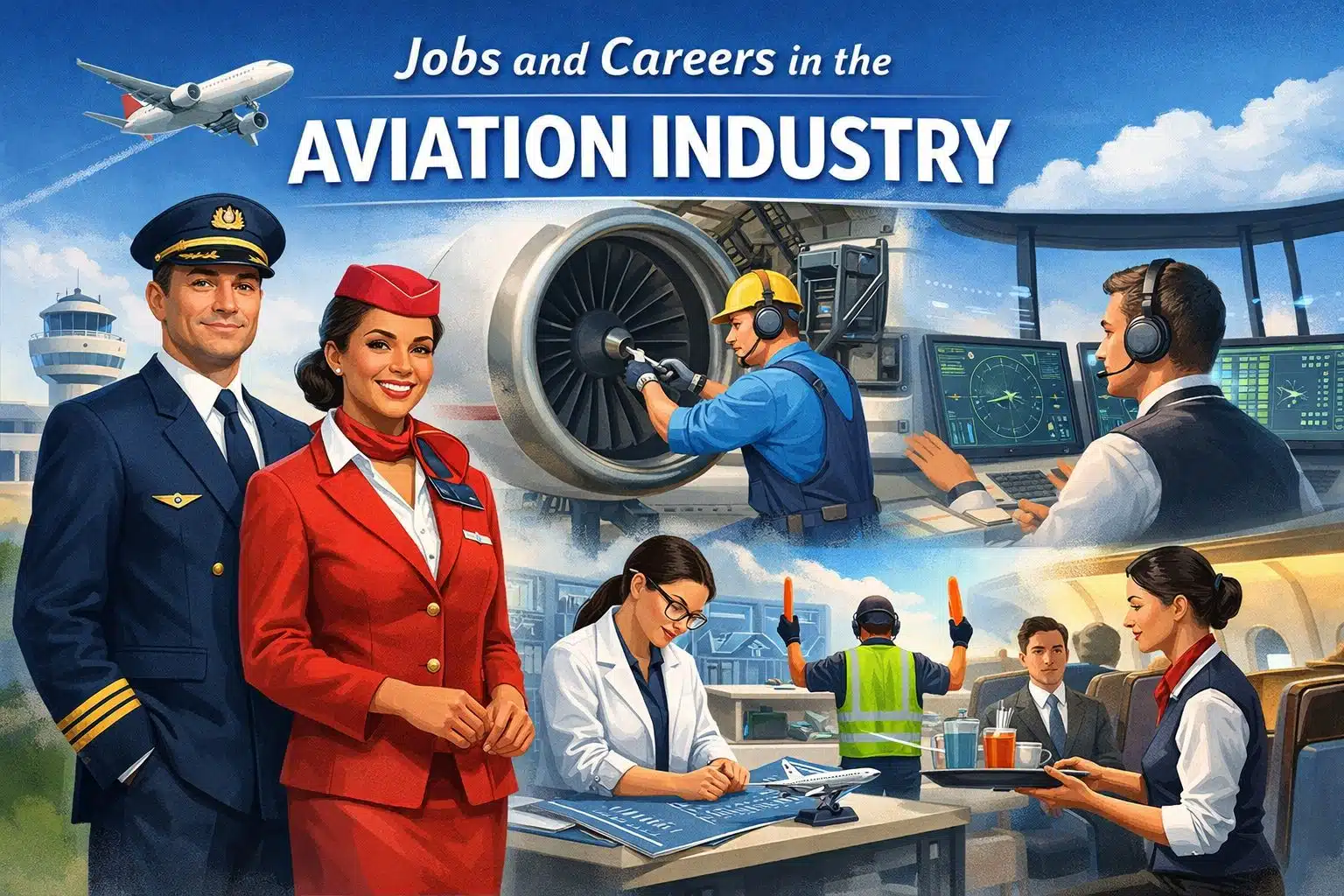
Table of Contents: Introduction to Jobs and Careers in the Aviation Industry
(Jobs and Careers in the Aviation Industry: Scale, Opportunity, and Long-Term Stability)
- Introduction: Why Aviation Careers Matter
1.1 What this guide covers
1.2 Who this guide is for (students, career changers, professionals) - The Scale of the Aviation Industry
2.1 Aviation as a trillion-dollar global ecosystem
2.2 The workforce behind the system
2.3 Emerging sectors reshaping opportunity (drones, electric, AAM) - Global Workforce Demand: The Long-Term Talent Shortage
3.1 Pilot careers demand drivers
3.2 Aircraft maintenance technicians (A&P/AMT) shortage
3.3 Air traffic controller hiring pressure
3.4 Aerospace engineers and technical specialists growth
3.5 Airport operations and safety expansion
3.6 Drone and UAS careers as the fastest-growing segment - Technical vs. Non-Technical Roles in Aviation
4.1 Technical aviation careers (licenses, certifications, safety-critical work)
4.2 Non-technical aviation careers (customer, business, infrastructure)
4.3 How to choose based on strengths and preferences - Airline vs. Corporate vs. Government Aviation Careers
5.1 Airline careers (Part 121): structure, seniority, regulation
5.2 Corporate/business aviation (Part 91 / 135 / 91K): autonomy and variety
5.3 Government/public sector: mission, training, long-term stability - Why Aviation Careers Are Recession-Resilient Over the Long Run
6.1 Global mobility as critical infrastructure
6.2 Predictable retirements and replacement demand
6.3 Fleet growth and emerging markets
6.4 Technology creating new job families
6.5 Why safety-critical roles remain human-led - How the Aviation Industry Is Structured
7.1 Sectors of the aviation ecosystem (overview)
7.2 Airlines (Part 121) and major career families
7.3 Corporate and business aviation (Part 91 / 135 / 91K)
7.4 General Aviation (GA) as the training and entry foundation
7.5 Government and public sector aviation (FAA, TSA, NOAA, etc.)
7.6 Aerospace manufacturing and supply chain
7.7 Defense and space sector crossover
7.8 Airport operations as an ecosystem of its own - Major Career Families Covered in This Guide
8.1 Pilot careers (fixed-wing vs rotor-wing; airline/corporate/charter/government)
8.2 Aircraft maintenance careers (A&P, avionics, structures/composites)
8.3 Flight attendant and cabin crew careers (airline vs corporate)
8.4 Airport and ground operations careers (ramp, ops control, turns)
8.5 Air traffic control careers (FAA pipeline, academy, OJT)
8.6 Aviation management and administrative careers
8.7 Aviation safety and compliance careers (SMS, QA, oversight)
8.8 Aerospace and engineering careers (design, manufacturing, space)
8.9 Aviation technology and emerging careers (UAS, eVTOL, cybersecurity, AI)
8.10 Aviation support and specialty careers (dispatch, coordinator, meteorology, law, insurance) - Aviation Salary Guide: What Different Careers Pay
9.1 Highest paying aviation jobs
9.2 Entry-level aviation salaries
9.3 Pilot vs mechanic pay dynamics
9.4 Airline vs corporate pay differences
9.5 High-quality aviation jobs without a degree - Aviation Training and Education Paths
10.1 Aviation colleges and R-ATP pathways
10.2 Trade schools and technical programs
10.3 Flight schools and pilot training sequence
10.4 Part 147 maintenance schools (A&P)
10.5 GI Bill aviation training options
10.6 Scholarships and funding sources - Aviation Hiring Outlook
11.1 Pilot shortages and downstream effects
11.2 Mechanic and avionics shortages
11.3 Retirement waves across the workforce
11.4 Boeing/Airbus production impact and ripple effects
11.5 Cargo demand cycles and hiring volatility - How to Get Started in Aviation
12.1 Careers in aviation without flying
12.2 Best entry-level aviation jobs to break in
12.3 Changing careers to aviation (transferable skills)
12.4 Military vs civilian pathways
12.5 Fastest routes to employment (Part 107, ramp, FA, apprenticeships) - Jobs and Careers in the Aviation Industry FAQs
13.1 Getting started and choosing a path
13.2 Training, cost, and timeline questions
13.3 Sectors and specialization questions
13.4 Lifestyle, pay, and advancement questions
Introduction to Aviation Careers
Jobs and Careers in the Aviation Industry: Scale, Opportunity, and Long‑Term Stability
Jobs and careers in the aviation industry span one of the most complex and globally connected ecosystems on the planet. Aviation moves people, goods, and economies, and it relies on a massive workforce that blends technical expertise, customer service, engineering, logistics, and safety‑critical operations. For students, career changers, and professionals exploring new opportunities, aviation offers a rare combination of stability, purpose, and long‑term demand.
This guide provides a clear overview of the industry’s scale, workforce needs, major career categories, and why aviation remains one of the most resilient fields worldwide.
The Scale of the Aviation Industry
Understanding the scale of the aviation industry is the first step in understanding the breadth of aviation career opportunities. Aviation is a trillion‑dollar global network that includes:
- Commercial airlines transporting billions of passengers annually
- Air cargo operators moving over one‑third of global trade by value
- Airports functioning as small cities with operations, security, and logistics teams
- Manufacturers like Boeing, Airbus, and hundreds of suppliers
- Corporate and business aviation supporting executives, medical transport, and specialized missions
- Government aviation including military, law enforcement, firefighting, and scientific research
- Emerging sectors such as drones, electric aircraft, and advanced air mobility
Because aviation touches nearly every sector of modern life, jobs and careers in the aviation industry extend far beyond pilots and flight attendants. The industry depends on engineers, technicians, dispatchers, meteorologists, cybersecurity specialists, airport planners, drone operators, and thousands of support roles that keep the system running.
Global Workforce Demand: A Long‑Term Talent Shortage
One of the strongest reasons to explore jobs and careers in the aviation industry is the long‑term global workforce shortage. Retirements, fleet expansion, and regulatory training requirements have created decades of sustained demand across nearly every aviation profession.
Pilot Careers
Airlines, cargo carriers, and corporate operators face ongoing pilot shortages. Retirements and training bottlenecks mean demand will remain high for years.
Aircraft Maintenance Technicians (A&P/AMT)
This is one of the most critical shortages in aviation. Technicians are needed in airlines, MROs, manufacturers, and corporate flight departments worldwide.
Air Traffic Controllers
Governments around the world are struggling to train enough controllers to meet demand. ATC roles offer strong pay, stability, and long‑term career security.
Aerospace Engineers and Technical Specialists
As aircraft become more advanced—electric propulsion, automation, composite materials—the need for engineers continues to grow.
Airport Operations and Safety
Airports are expanding and modernizing, creating demand for operations managers, planners, safety specialists, and emergency response professionals.
Drone and UAS Careers
The fastest‑growing segment of aviation includes drone pilots, UAS technicians, and regulatory specialists supporting agriculture, energy, construction, and public safety.
In short: the global aviation workforce shortage ensures that jobs and careers in the aviation industry will remain in high demand for decades.
Technical vs. Non‑Technical Roles in Aviation
One of the most appealing aspects of aviation is the diversity of roles available. Whether you’re mechanically inclined, customer‑focused, analytical, or creative, there’s a place for you.
Technical Aviation Careers
These roles involve hands‑on or analytical work with aircraft, systems, or operations:
- Pilots (airline, corporate, cargo, helicopter, military)
- Aircraft maintenance technicians (A&P/AMT)
- Avionics specialists
- Aerospace engineers
- Air traffic controllers
- Flight dispatchers
- Meteorologists
- Safety and compliance inspectors
- Drone operators and UAS technicians
Technical roles often require certifications or regulatory licensing, but they also offer some of the highest salaries and strongest job security in the industry.
Non‑Technical Aviation Careers
These roles support the business, customer experience, and operational infrastructure:
- Flight attendants
- Airport customer service
- Airline management and administration
- Human resources and training
- Marketing and communications
- Finance and revenue management
- Airport planning and development
- Logistics and cargo operations
- IT, cybersecurity, and data analytics
Non‑technical roles are essential to the aviation ecosystem and offer strong career growth, especially as airlines and airports modernize their operations.
Airline vs. Corporate vs. Government Aviation Careers
Jobs and careers in the aviation industry fall into three major ecosystems, each with its own culture and opportunities.
Airline Aviation Careers
This includes major airlines, regional carriers, and cargo operators. Careers here are structured, unionized, and highly regulated. Pay and benefits are strong, though schedules can be demanding.
Corporate and Business Aviation Careers
This sector includes private jets, charter companies, and fractional ownership programs. It offers:
- Smaller teams
- More autonomy
- Diverse missions
- High‑touch customer service
- Opportunities to work closely with executives or specialized clients
Corporate aviation is ideal for professionals who value variety and a more personalized work environment.
Government and Public‑Sector Aviation Careers
Government aviation includes:
- Military aviation
- Law enforcement aviation
- Firefighting and rescue
- Border and customs operations
- Scientific and environmental missions
- Space and aerospace agencies
These roles often provide exceptional training, job stability, and a strong sense of mission.
Why Jobs and Careers in the Aviation Industry Are Recession‑Resilient
Aviation is cyclical, but long‑term trends show remarkable resilience. Here’s why aviation careers remain strong even during economic downturns:
1. Global Mobility Is Essential
People and goods must move. Aviation is a foundational part of global infrastructure.
2. Retirements Are Massive and Predictable
Aging workforces in pilot, maintenance, and ATC roles guarantee long‑term hiring needs.
3. Fleet Growth Continues Worldwide
Emerging markets in Asia, Africa, and the Middle East are expanding rapidly.
4. Technology Creates New Career Categories
Drones, automation, electric aircraft, and advanced air mobility are adding entirely new job families.
5. Safety‑Critical Roles Cannot Be Automated Away
Aviation will always require skilled human oversight.
For anyone seeking long‑term career stability, aviation remains one of the most reliable industries in the world.
Explore All Aviation Career Paths Below
If you’re exploring jobs and careers in the aviation industry—whether technical or non‑technical, airline or corporate, civilian or military—there’s a path that fits your skills and goals. Aviation Jobs Guide is designed to help you compare options, understand requirements, and make confident decisions about your future.
How the Aviation Industry Is Structured
Understanding the structure of the aviation ecosystem is the first step to making sense of the thousands of jobs and careers in the aviation industry. Before you look at individual roles—pilots, mechanics, dispatchers, engineers, controllers, or airport staff—it helps to see the larger system they operate within. Aviation isn’t a single industry; it’s a network of interconnected sectors, each with its own regulations, culture, career ladders, and economic drivers.
At the highest level, aviation can be divided into several major sectors. Some are operational, some are technical, and others are governmental or industrial. Together, they form the global infrastructure that moves people, cargo, and technology around the world.
Below is a breakdown of the primary sectors that shape the aviation landscape and create the foundation for all aviation careers.
Sectors of the Aviation Ecosystem
Airlines (Part 121)
The airline sector is the most visible part of the aviation world and the largest generator of jobs and careers in the aviation industry. Part 121 operators include major airlines, regional airlines, and cargo carriers that fly scheduled, large‑scale operations.
Key characteristics:
- Highly structured, seniority‑based career progression
- Large workforces across dozens of departments
- Strict regulatory oversight and standardized procedures
- Global mobility and long‑term job stability
Common career families:
- Airline pilots and first officers
- Flight attendants
- Aircraft maintenance technicians (AMTs)
- Dispatchers and operations controllers
- Customer service and ground operations
- Safety, training, and regulatory compliance
- Corporate, finance, and network planning roles
Airlines are the backbone of commercial transportation, and they employ hundreds of thousands of professionals across technical and non‑technical disciplines.
Corporate aviation is a completely different ecosystem from the airlines. These operators fly private jets for businesses, high‑net‑worth individuals, charter clients, and fractional ownership programs.
Regulatory categories:
- Part 91: Private, non‑commercial operations
- Part 135: On‑demand charter and air taxi services
- Part 91K: Fractional ownership programs (e.g., NetJets, Flexjet)
What makes this sector unique:
- Smaller, tight‑knit teams
- Higher levels of customer service and personalization
- More schedule variability
- Broader responsibilities for pilots and crew
- Opportunities to work with advanced business jets
Career paths include:
- Corporate pilots
- Cabin attendants (corporate flight attendants)
- Maintenance technicians specializing in business aircraft
- Flight department managers
- Charter sales and operations coordinators
Corporate aviation offers some of the most diverse and rewarding jobs and careers in the aviation industry, especially for those who value flexibility and premium service environments.
General Aviation
General Aviation (GA) is the most diverse sector and includes everything that isn’t airline, military, or scheduled commercial service. It’s the foundation of flight training, recreational flying, and many specialized aviation services.
Examples of GA activities:
- Flight schools and pilot training
- Aerial photography and surveying
- Agricultural aviation (crop dusting)
- Banner towing and sightseeing flights
- Personal and recreational flying
- Small charter operators
Career opportunities:
- Flight instructors
- Entry‑level commercial pilots
- A&P mechanics
- Avionics technicians
- Airport line service technicians
- Small‑business aviation entrepreneurs
GA is where many aviation professionals begin their careers, and it remains a vital part of the aviation ecosystem.
Government & Public Sector Aviation
Government aviation includes federal, state, and local agencies that operate aircraft or regulate the industry.
Major players:
- FAA (Federal Aviation Administration)
- NTSB (National Transportation Safety Board)
- TSA (Transportation Security Administration)
- NOAA, DHS, Customs & Border Protection
- State police aviation units
- Firefighting and emergency response aviation
Career paths include:
- Air traffic controllers
- Aviation safety inspectors
- Accident investigators
- Law enforcement pilots
- Firefighting pilots and support crews
- Airport security and regulatory compliance roles
These positions are essential to the safety and efficiency of the national airspace system.
Aerospace Manufacturing
This sector builds the aircraft, engines, avionics, and systems that power the global aviation industry.
Major companies include:
- Boeing
- Airbus
- Gulfstream
- Textron Aviation
- Embraer
- GE Aerospace, Pratt & Whitney, Rolls‑Royce
Career opportunities:
- Aerospace engineers
- Manufacturing technicians
- Quality assurance specialists
- Supply chain and logistics professionals
- Test pilots and flight test engineers
Aerospace manufacturing is a major source of high‑skill, high‑paying jobs and careers in the aviation industry, especially for engineers and technical specialists.
Defense & Space
Defense aviation and space exploration represent some of the most advanced technological work in the world.
Key organizations:
- U.S. military aviation branches
- NASA
- Defense contractors (Lockheed Martin, Northrop Grumman, Raytheon)
- Space companies (SpaceX, Blue Origin)
Career paths include:
- Military pilots and aircrew
- Aerospace engineers
- Satellite and space systems specialists
- UAV/UAS operators
- Intelligence and mission planning roles
This sector drives innovation that often trickles down into civilian aviation.
Airport Operations
Airports are complex ecosystems of their own, supporting millions of passengers and thousands of flights each day.
Core functions:
- Airfield operations
- Terminal management
- Security and safety
- Ground handling and ramp services
- Emergency response
- Retail, concessions, and customer experience
Common careers:
- Airport operations specialists
- Ramp agents and ground service crews
- Airport planners
- Wildlife management teams
- ARFF (Aircraft Rescue and Firefighting) personnel
Airports are where all aviation sectors intersect, making them a major hub for employment.
Pilot Careers
Pilot careers sit at the center of many jobs and careers in the aviation industry, but the profession is far more diverse than most people realize. Pilots fly everything from airliners and business jets to helicopters, cargo aircraft, firefighting tankers, and government or military missions. Understanding the major categories—fixed‑wing vs. rotor‑wing, and the different operating environments—helps future aviators choose the right path before investing time and training dollars.
Fixed‑Wing vs. Rotor‑Wing
Pilot careers begin with a fundamental split between fixed‑wing and rotor‑wing aircraft.
Fixed‑wing pilots fly airplanes—everything from small trainers to wide‑body jets. This path dominates commercial aviation, corporate aviation, cargo operations, and most long‑distance flying. Fixed‑wing careers tend to offer higher long‑term earning potential and more structured progression.
Rotor‑wing pilots fly helicopters for missions that require precision, maneuverability, and vertical lift. These include emergency medical services, offshore oil support, firefighting, law enforcement, and military operations. Helicopter careers often attract people who want hands‑on flying, mission‑driven work, and dynamic environments.
Both paths offer rewarding jobs and careers in the aviation industry, but they require different training pipelines, skill sets, and career expectations.
Airline vs. Corporate vs. Charter vs. Government Flying
Once a pilot chooses fixed‑wing or rotor‑wing, the next decision is the type of operation.
Airline pilots fly scheduled passenger or cargo routes under Part 121. This is the most structured career path, with seniority‑based progression, predictable schedules, and some of the highest salaries in aviation.
Corporate pilots fly business jets for companies, private owners, or fractional programs. These roles emphasize customer service, flexibility, and professionalism. Schedules vary, but the work environment is premium and often global.
Charter pilots operate under Part 135, flying on‑demand missions for passengers or cargo. This sector offers variety, faster upgrades, and opportunities to build experience quickly.
Government pilots fly for agencies such as law enforcement, firefighting, border protection, or environmental research. These roles are mission‑focused and often involve specialized training.
Each environment offers distinct lifestyle considerations, advancement opportunities, and compensation structures.
Training Timelines
Training timelines vary depending on the aircraft type and career goal.
- Fixed‑wing airline path: Most pilots reach employability in 12–24 months, then build time to reach the 1,500‑hour ATP requirement (or 1,000–1,250 hours for R‑ATP programs).
- Corporate/charter path: Similar training timeline, but pilots often build experience through flight instruction or Part 135 operations before moving into jets.
- Rotor‑wing path: Helicopter pilots typically train for 18–30 months, then build hours as instructors or utility pilots before moving into EMS, offshore, or firefighting roles.
Regardless of path, training requires discipline, financial planning, and a long‑term view of career progression.
Salary Ranges
Pilot salaries vary widely across the aviation ecosystem:
- Airline pilots: $60,000–$120,000 in early years; $250,000–$450,000+ at major airlines
- Corporate pilots: $80,000–$200,000 depending on aircraft type and schedule
- Charter pilots: $50,000–$150,000 with rapid growth potential
- Helicopter pilots: $45,000–$120,000, with EMS and offshore roles at the higher end
- Government pilots: $70,000–$150,000 depending on agency and mission
Pilot careers remain among the most respected and well‑compensated jobs and careers in the aviation industry, offering long‑term stability and global mobility.
Aircraft Maintenance Careers
Among all jobs and careers in the aviation industry, aircraft maintenance roles are some of the most essential—and often the most overlooked. Every flight depends on skilled technicians who inspect, repair, troubleshoot, and certify aircraft as safe and airworthy. These careers combine hands‑on mechanical work with advanced technology, offering strong job security, competitive pay, and multiple pathways for specialization.
Aircraft maintenance careers generally fall into four major categories: A&P mechanics, avionics technicians, structures and composites specialists, and the operational divide between line maintenance and heavy maintenance. Together, these roles form the technical backbone of the aviation ecosystem.
A&P Mechanics
A&P mechanics—officially known as Airframe & Powerplant technicians—are the core of aviation maintenance. They are certified by the FAA to work on aircraft structures, engines, and mechanical systems. Their responsibilities include inspections, troubleshooting, component replacement, preventive maintenance, and ensuring compliance with regulatory standards.
A&P mechanics work across airlines, corporate aviation, MRO facilities, repair stations, and general aviation shops. Because their certification is broad, they enjoy some of the most flexible and transferable jobs and careers in the aviation industry. Many later specialize in engines, hydraulics, fuel systems, or specific aircraft types.
Avionics Technicians
As aircraft become more technologically advanced, avionics technicians are in higher demand than ever. These specialists work on navigation systems, communication radios, flight control computers, autopilot systems, sensors, and digital cockpit displays.
Avionics careers appeal to people who enjoy electronics, diagnostics, and problem‑solving. Technicians often work alongside A&P mechanics but focus on the electrical and digital systems that modern aircraft rely on. With the rise of automation, satellite navigation, and next‑generation avionics suites, this field continues to grow rapidly.
Structures & Composites Specialists
Aircraft structures technicians—sometimes called sheet metal mechanics or composites specialists—focus on the physical integrity of the aircraft. They repair and fabricate metal skins, frames, ribs, and composite materials such as carbon fiber.
This specialty is critical in both manufacturing and repair environments. As more aircraft incorporate advanced composite materials, technicians with these skills are becoming increasingly valuable. These roles offer some of the most hands‑on, craftsmanship‑driven jobs and careers in the aviation industry, especially for people who enjoy precision work.
Line Maintenance vs. Heavy Maintenance
Aircraft maintenance careers also differ based on the type of work environment:
Line maintenance occurs at the airport, supporting aircraft between flights. Technicians handle quick‑turn inspections, troubleshooting, minor repairs, and dispatch‑critical tasks. The pace is fast, the work is dynamic, and schedules often include nights and weekends.
Heavy maintenance takes place in large hangars or MRO facilities. This environment involves deep inspections, major repairs, structural work, engine changes, and multi‑week maintenance checks. Heavy maintenance offers a more predictable schedule and a team‑oriented environment.
Both paths are essential, and many technicians move between them as their careers evolve.
Flight Attendant & Cabin Crew Careers
Flight attendants and cabin crew professionals play one of the most visible and customer‑facing roles among all jobs and careers in the aviation industry. While the public often sees the glamour—travel, hotels, and international destinations—the reality is a highly skilled profession built on safety, service, and adaptability. Within this field, two major career paths dominate: airline flight attendants and corporate cabin attendants. Each offers a distinct work environment, training pathway, and lifestyle.
Airline Flight Attendants vs. Corporate Cabin Attendants
Airline flight attendants work for commercial carriers under Part 121 operations. Their primary responsibility is safety: evacuations, emergency procedures, first aid, and regulatory compliance. Customer service is important, but safety always comes first. Airline FAs work on large crews, follow standardized procedures, and operate within a seniority‑based system that influences schedules, destinations, and career progression.
Corporate cabin attendants, by contrast, work in private aviation—Part 91, Part 135, and fractional programs. These roles emphasize premium service, personalization, and discretion. Corporate attendants may plan menus, prepare gourmet meals, manage cabin presentation, and provide a luxury experience tailored to high‑net‑worth passengers or executives. They often work solo on board, which requires confidence, professionalism, and strong decision‑making skills.
Both paths offer rewarding jobs and careers in the aviation industry, but they attract different personalities. Airline roles suit those who enjoy structure and teamwork, while corporate roles appeal to individuals who thrive in high‑end hospitality and independent work environments.
Certification Differences
Airline flight attendants receive their training directly from the carrier. After completing the company’s FAA‑approved program—typically four to eight weeks—they earn a Certificate of Demonstrated Proficiency, which is tied to that airline’s aircraft and procedures. This certification is not transferable; switching airlines requires retraining.
Corporate cabin attendants follow a different model. There is no FAA‑mandated certificate for corporate roles, but most employers expect:
- Emergency and safety training (e.g., FACTS, FlightSafety, or AirCare)
- CPR/AED and medical response qualifications
- Food safety and catering handling
- Service and hospitality training
Because corporate aviation varies widely, training is more customizable and often more intensive in service‑related skills.
Lifestyle Realities
The lifestyle of cabin crew is one of the most defining aspects of these jobs and careers in the aviation industry.
Airline flight attendants experience:
- Irregular schedules, including nights, weekends, and holidays
- Reserve duty early in their careers
- Multi‑day trips and long layovers
- A strong sense of community and crew culture
- Seniority‑based improvements in schedule and destinations
The lifestyle can be demanding, but it offers travel benefits, global exposure, and long‑term stability.
Corporate cabin attendants face a different rhythm:
- On‑call periods and short‑notice trips
- Longer international missions
- High expectations for service and professionalism
- Smaller teams and more autonomy
- Premium travel experiences and upscale accommodations
Corporate aviation offers flexibility and prestige, but it requires adaptability and a polished, service‑driven mindset.
Airport & Ground Operations Careers
Airport and ground operations roles are some of the most essential jobs and careers in the aviation industry, forming the operational backbone that keeps flights moving safely and on time. While pilots and flight attendants represent the visible side of aviation, airport teams manage the complex choreography happening on the ground—aircraft handling, passenger support, logistics, safety, and real‑time decision‑making. These careers offer stability, teamwork, and opportunities for advancement across airlines, airports, and ground‑handling companies.
Ramp Operations
Ramp agents—also known as ground service agents—work on the airside of the airport, handling the physical movement and servicing of aircraft. Their responsibilities include:
- Loading and unloading baggage and cargo
- Marshalling aircraft into and out of gates
- Operating ground service equipment (tugs, belt loaders, de‑icing trucks)
- Performing safety checks around the aircraft
- Handling lavatory, water, and fueling support (depending on the station)
Ramp operations are fast‑paced, physically active, and essential to on‑time performance. These roles are ideal for people who enjoy hands‑on work, teamwork, and being close to the aircraft. Ramp positions also serve as entry points to many other jobs and careers in the aviation industry, including operations, dispatch, and maintenance.
Customer Service
Customer service agents work on the terminal side of the operation, supporting passengers throughout their travel experience. Their duties include:
- Check‑in and ticketing
- Gate operations and boarding
- Rebooking during delays or cancellations
- Baggage service and irregular operations support
- Providing information and resolving passenger issues
Customer service roles require strong communication skills, patience, and the ability to stay calm under pressure. These positions offer clear advancement pathways into supervisory roles, station management, training, and corporate customer experience departments.
Operations Control
Airport operations control—often called station operations, load control, or flight operations—is the nerve center of the airport environment. These professionals coordinate the movement of aircraft, crews, baggage, and resources to ensure safe and efficient operations.
Key responsibilities include:
- Monitoring flight status and gate assignments
- Communicating with pilots, dispatchers, and ramp teams
- Managing weight and balance data
- Coordinating irregular operations and recovery plans
- Ensuring compliance with safety and regulatory requirements
Operations control roles attract individuals who enjoy problem‑solving, situational awareness, and real‑time decision‑making. These positions are among the most strategic jobs and careers in the aviation industry, often leading to dispatch, network operations, or management careers.
Turn Coordination
Turn coordinators—sometimes called lead ramp agents, turn supervisors, or aircraft coordinators—oversee the entire aircraft turnaround process. Their job is to ensure that all ground activities are completed safely, efficiently, and in the correct sequence.
Turn coordinators manage:
- Ramp crew timing and task execution
- Fueling, catering, cleaning, and maintenance access
- Communication with gate agents and flight crews
- Safety zones and equipment placement
- Pushback readiness and departure timing
This role requires leadership, communication, and a deep understanding of airport operations. Turn coordination is a critical stepping stone to supervisory and management positions.
Air Traffic Control Careers
Air traffic control (ATC) is one of the most respected and high‑stakes jobs and careers in the aviation industry, responsible for keeping the National Airspace System safe, efficient, and orderly. Air traffic controllers manage the movement of thousands of aircraft every day, guiding pilots through takeoff, landing, and en‑route phases while preventing conflicts and maintaining separation. This career demands focus, discipline, and rapid decision‑making—but it also offers exceptional compensation, job security, and federal benefits.
FAA Hiring Pipeline
The FAA hiring process is unique among jobs and careers in the aviation industry. Unlike pilots or mechanics, controllers cannot self‑train or attend private schools to earn certification. Instead, all civilian controllers must be hired directly by the FAA through periodic public job announcements.
The pipeline typically includes:
- Meeting eligibility requirements (age, citizenship, education)
- Applying during an FAA hiring window
- Completing the Air Traffic Skills Assessment (ATSA)
- Undergoing medical, psychological, and security screening
- Receiving a tentative offer and facility assignment
- Attending the FAA Academy in Oklahoma City
Because hiring windows are limited and competitive, timing is critical. Applicants must be under age 31 at the time of selection unless they qualify through military ATC experience.
Training at the FAA Academy (OKC)
All new controllers begin their technical training at the FAA Academy in Oklahoma City, a rigorous program that blends classroom instruction, simulation labs, and performance‑based evaluations. Trainees learn airspace rules, phraseology, radar operations, separation standards, and emergency procedures.
Academy training is divided into tracks:
- Tower (non‑radar)
- Terminal radar (TRACON)
- En‑route radar (Center)
Graduation is only the beginning. After OKC, controllers report to their assigned facility for on‑the‑job training (OJT), where they work alongside certified controllers until they demonstrate proficiency. This phase can take 1–3 years depending on facility complexity.
Stress and Compensation
Air traffic control is known for its intensity. Controllers must maintain situational awareness, communicate clearly, and make split‑second decisions in a dynamic environment. The job can be mentally demanding, but the FAA provides structured breaks, strict duty limits, and strong support systems.
The compensation reflects the responsibility:
- Entry‑level trainees: $40,000–$60,000
- Certified Professional Controllers (CPCs): $120,000–$180,000
- High‑level facilities (busy TRACONs and Centers): $180,000–$220,000+
Controllers also receive federal retirement benefits, locality pay, and premium pay for nights, weekends, and holidays. Among all jobs and careers in the aviation industry, ATC consistently ranks as one of the highest‑earning non‑pilot roles.
Career Clusters
To help readers navigate the ATC landscape, the following clusters break down the key pathways and requirements:
How to Become an Air Traffic Controller
A step‑by‑step guide covering eligibility, hiring windows, ATSA testing, medical requirements, and the Academy pipeline.
ATC Salary Guide
A detailed breakdown of pay bands, facility levels, locality adjustments, overtime, and long‑term earning potential.
FAA ATC Hiring Requirements
A clear explanation of age limits, education pathways, security screening, and the difference between off‑the‑street and CTI applicants.
Military ATC Transition to FAA
How prior‑experience controllers can bypass age limits, accelerate training, and receive preferential hiring consideration.
Aviation Management & Administrative Careers
Aviation management and administrative roles represent the strategic, operational, and business backbone of the entire aviation ecosystem. While pilots, mechanics, and controllers keep aircraft moving, aviation managers ensure that organizations run efficiently, profitably, and safely. These positions offer some of the most stable and upwardly mobile jobs and careers in the aviation industry, attracting professionals who enjoy leadership, planning, analytics, and organizational development.
Aviation management careers span airlines, airports, corporate flight departments, MRO facilities, manufacturers, and government agencies. Whether someone is overseeing daily operations, managing budgets, leading teams, or shaping long‑term strategy, these roles influence every part of the aviation system.
The Business Side of Aviation
Aviation is a global business with complex financial, regulatory, and operational demands. Management and administrative professionals work behind the scenes to coordinate resources, optimize performance, and support frontline teams.
Key business‑focused career paths include:
- Airport management: Overseeing terminal operations, airfield safety, concessions, planning, and community relations.
- Airline management: Roles in network planning, crew scheduling, revenue management, customer experience, and station leadership.
- Finance & accounting: Budgeting, forecasting, cost control, and financial analysis for airlines, airports, and aviation service providers.
- Human resources: Recruiting pilots, mechanics, and operational staff; managing training programs; supporting labor relations.
- Safety & compliance: Ensuring adherence to FAA regulations, SMS programs, audits, and risk management.
- Marketing & communications: Brand strategy, digital marketing, loyalty programs, and public relations.
- Procurement & supply chain: Managing aircraft parts, vendor contracts, logistics, and inventory systems.
These roles require a blend of aviation knowledge, business acumen, and strong communication skills. Many professionals enter through entry‑level administrative positions and grow into leadership roles as they gain experience.
Leadership Tracks in Aviation
Leadership development is a major component of aviation management careers. Because aviation is highly regulated and safety‑critical, organizations rely on leaders who understand both operational realities and strategic priorities.
Common leadership tracks include:
- Airport operations leadership: Starting as an operations specialist or coordinator and progressing to supervisor, manager, and eventually airport director.
- Airline station leadership: Beginning in customer service or ramp operations and advancing to station manager or regional director.
- Corporate flight department management: Moving from dispatcher or scheduler roles into flight department manager or director of aviation positions.
- Maintenance & engineering leadership: Transitioning from technician or engineer to supervisor, maintenance manager, or director of maintenance.
- Safety & quality leadership: Growing from analyst or coordinator roles into safety manager, SMS director, or VP of safety.
- Executive leadership: Aviation MBAs, management trainees, and experienced professionals often progress into director, VP, and C‑suite roles across airlines, airports, and aviation companies.
Leadership careers in aviation reward strategic thinking, operational awareness, and the ability to guide teams in a fast‑moving environment. Among all jobs and careers in the aviation industry, management roles offer some of the strongest long‑term earning potential and career stability.
Aviation Safety & Compliance Careers
Aviation safety and compliance roles are among the most mission‑critical jobs and careers in the aviation industry, ensuring that every flight meets the highest standards of safety, reliability, and regulatory integrity. These professionals work behind the scenes to prevent accidents, reduce risk, and maintain the trust of passengers, regulators, and industry partners. As aviation becomes more complex—with advanced technology, global operations, and evolving regulations—the demand for skilled safety and compliance experts continues to grow.
Aviation safety careers span airlines, airports, MRO facilities, manufacturers, corporate flight departments, and government agencies. Whether analyzing data, conducting audits, or implementing safety programs, these roles shape the culture and performance of the entire aviation ecosystem.
Safety Management Systems (SMS)
Safety Management Systems (SMS) form the foundation of modern aviation safety. Required by the FAA and ICAO for airlines, airports, and many service providers, SMS is a proactive, data‑driven approach to identifying hazards and managing risk.
Professionals in SMS roles work on:
- Hazard identification and risk assessment
- Safety reporting programs
- Trend analysis and data monitoring
- Safety training and communication
- Emergency response planning
- Continuous improvement initiatives
SMS specialists often come from operational backgrounds—pilots, mechanics, dispatchers, or airport operations—but the field is increasingly attracting analysts, data scientists, and safety‑focused graduates. These positions offer some of the most influential jobs and careers in the aviation industry, shaping organizational culture and long‑term safety performance.
Quality Assurance (QA) & Auditing
Quality assurance and auditing roles ensure that aviation organizations comply with internal procedures, manufacturer requirements, and regulatory standards. QA professionals conduct inspections, review documentation, and verify that maintenance, operations, and training programs meet strict quality benchmarks.
Key responsibilities include:
- Internal audits and compliance checks
- Monitoring maintenance and operational processes
- Reviewing manuals, procedures, and technical documentation
- Coordinating corrective actions and follow‑up
- Supporting external audits (FAA, IOSA, DoD, etc.)
QA careers are ideal for detail‑oriented individuals who enjoy structured processes, documentation, and continuous improvement. These roles exist across airlines, MROs, repair stations, and manufacturing facilities, offering stable and respected jobs and careers in the aviation industry.
Regulatory Oversight
Regulatory oversight roles exist within government agencies and industry organizations responsible for enforcing aviation standards. In the United States, the FAA employs inspectors, investigators, and certification specialists who oversee airlines, airports, repair stations, and training programs.
Common regulatory career paths include:
- Aviation safety inspectors (operations, maintenance, avionics)
- Accident investigators (NTSB)
- Certification specialists for aircraft, pilots, and facilities
- Airworthiness and compliance officers
- Policy and rulemaking analysts
These positions require deep technical knowledge and strong communication skills. Many professionals transition into regulatory oversight after careers as pilots, mechanics, controllers, or engineers.
Regulatory roles are among the most stable jobs and careers in the aviation industry, offering federal benefits, long‑term career security, and the opportunity to influence national and international aviation standards.
Aerospace & Engineering Careers
Aerospace and engineering roles represent some of the most innovative and future‑focused jobs and careers in the aviation industry. These professionals design, test, and refine the aircraft, engines, systems, and technologies that power global aviation. From commercial airliners and business jets to military aircraft and spacecraft, aerospace engineers shape the machines that define modern flight. As the industry evolves toward cleaner propulsion, advanced materials, automation, and space exploration, engineering careers continue to expand in both scope and opportunity.
Aerospace engineering is a broad field that includes aerodynamics, propulsion, avionics, structures, materials science, systems engineering, and manufacturing. Whether working for major manufacturers, defense contractors, space companies, or research institutions, engineers play a central role in advancing safety, performance, and efficiency across the aviation ecosystem.
Design & Manufacturing Engineering
Design and manufacturing are the heart of aerospace engineering. These roles focus on creating aircraft and components that meet strict performance, safety, and regulatory standards.
Design engineers work on:
- Aerodynamics and airflow
- Structural integrity and load analysis
- Propulsion systems and engine performance
- Avionics architecture and flight control systems
- Cabin design, ergonomics, and environmental systems
- Fuel efficiency, noise reduction, and sustainability
They use advanced modeling tools, simulation software, and wind‑tunnel testing to refine concepts before they ever reach production.
Manufacturing engineers bridge the gap between design and production. They develop the processes, tooling, and workflows that allow aircraft to be built efficiently and consistently. Their responsibilities include:
- Production planning and assembly line optimization
- Composite layup and advanced materials integration
- Quality control and testing procedures
- Supply chain coordination
- Lean manufacturing and continuous improvement
These roles are essential to companies like Boeing, Airbus, Gulfstream, Embraer, GE Aerospace, Pratt & Whitney, and hundreds of suppliers that support the global aviation supply chain.
Together, design and manufacturing engineering careers offer some of the most technically challenging and rewarding jobs and careers in the aviation industry, especially for those who enjoy solving complex problems and working with cutting‑edge technology.
Space Sector Crossover
One of the most exciting trends in aerospace engineering is the growing crossover between aviation and the space sector. As commercial spaceflight expands, engineers are increasingly working on projects that blur the line between atmospheric and orbital flight.
Key areas of crossover include:
- Reusable launch vehicles
- Spacecraft propulsion and thermal protection
- Satellite systems and communications
- Human spaceflight and life‑support systems
- Hypersonic flight research
- Autonomous navigation and guidance systems
Companies like SpaceX, Blue Origin, Sierra Space, and traditional defense contractors are hiring engineers with aviation backgrounds to support missions ranging from low‑Earth orbit operations to lunar exploration.
This crossover creates new pathways for professionals seeking advanced jobs and careers in the aviation industry, especially those interested in pushing the boundaries of what flight can be. Engineers with experience in aerodynamics, materials, propulsion, and systems integration are particularly well‑positioned to transition into space‑related roles.
Aviation Technology & Emerging Careers

The aviation industry is entering a new era defined by automation, electrification, data science, and advanced air mobility. These future‑focused roles represent some of the fastest‑growing jobs and careers in the aviation industry, attracting innovators who want to shape the next generation of flight. From drone operations and eVTOL aircraft to cybersecurity and artificial intelligence, emerging aviation careers blend traditional aviation knowledge with cutting‑edge technology. As the industry evolves, these roles will become central to how people and goods move through the air.
Below are the key clusters driving the future of aviation technology.
Drone Pilot Careers
Uncrewed aircraft systems (UAS) are transforming industries far beyond aviation. Drone pilots now work in:
- Aerial surveying and mapping
- Infrastructure inspection
- Agriculture and crop analysis
- Emergency response and disaster assessment
- Cinematography and media
- Package delivery and logistics
Most commercial drone pilots begin by earning the FAA Part 107 Remote Pilot Certificate, then specialize in a niche. As automation increases, drone operators will shift toward fleet management, mission planning, and data interpretation—creating some of the most accessible and scalable jobs and careers in the aviation industry.
eVTOL Pilot Jobs
Electric Vertical Takeoff and Landing (eVTOL) aircraft are at the center of the advanced air mobility revolution. Companies like Joby, Archer, and Lilium are developing aircraft that blend helicopter flexibility with airplane efficiency.
Early‑stage eVTOL pilot careers will include:
- Test pilots
- Urban air mobility (UAM) route pilots
- Training and standardization instructors
- Safety and operations specialists
As autonomy increases, pilot roles may evolve into supervisory or remote operations positions. eVTOL flying represents one of the most exciting new pathways for pilots seeking innovative jobs and careers in the aviation industry.
Urban Air Mobility Careers
Urban Air Mobility (UAM) is a broader ecosystem that includes aircraft, infrastructure, and digital systems. Careers in this sector span:
- Vertiport operations
- Airspace integration and traffic management
- Charging and energy systems
- Passenger experience and mobility services
- Fleet operations and dispatch
UAM blends aviation, transportation planning, and smart‑city technology. Professionals entering this field will help design the systems that allow eVTOL aircraft to operate safely in dense urban environments.
Aviation Cybersecurity Jobs
As aircraft, airports, and air traffic systems become more connected, cybersecurity has become one of the most critical jobs and careers in the aviation industry. Cybersecurity specialists protect:
- Avionics and flight control systems
- Airline IT networks
- Airport infrastructure
- UAS command‑and‑control links
- Passenger data and digital services
Roles include penetration testers, threat analysts, compliance specialists, and systems security engineers. This field is ideal for professionals with IT or cybersecurity backgrounds who want to transition into aviation.
AI in Aviation Careers
Artificial intelligence is reshaping nearly every corner of aviation. AI‑driven careers include:
- Predictive maintenance and reliability engineering
- Autonomous flight systems
- Air traffic flow optimization
- Passenger service automation
- Safety data analytics
- Crew scheduling and network optimization
AI specialists, data scientists, and machine‑learning engineers are increasingly sought after by airlines, manufacturers, airports, and UAM companies. These roles sit at the intersection of aviation expertise and advanced computing.
Aviation Support & Specialty Careers
Beyond the frontline roles of pilots, mechanics, and controllers, a wide range of specialized professions support the global aviation ecosystem. These positions are essential to safety, efficiency, logistics, and decision‑making, and they offer some of the most unique and rewarding jobs and careers in the aviation industry. From dispatchers and flight coordinators to meteorologists, loadmasters, and aviation‑focused legal and insurance professionals, these careers blend technical expertise with operational insight.
Below are the major specialty clusters shaping the aviation support landscape.
Flight Dispatcher Careers
Flight dispatchers—also known as aircraft dispatchers or flight operations officers—share joint responsibility with the captain for the safety and legality of a flight. They plan routes, calculate fuel requirements, monitor weather, coordinate with ATC, and support crews throughout the flight.
Key responsibilities include:
- Flight planning and performance calculations
- Weather and NOTAM analysis
- Monitoring aircraft during flight
- Coordinating diversions and irregular operations
- Ensuring regulatory compliance
Dispatchers must earn an FAA Aircraft Dispatcher Certificate, which requires rigorous training and testing. These roles offer some of the most strategic non‑flying jobs and careers in the aviation industry, with strong career paths into operations control, management, and airline leadership.
Flight Coordinator Jobs
Flight coordinators support corporate aviation, charter operations, and private flight departments. While dispatchers focus on regulatory flight planning, coordinators manage the logistical and customer‑service side of flight operations.
Typical duties include:
- Scheduling aircraft and crews
- Coordinating catering, ground transportation, and passenger needs
- Managing international handling and permits
- Monitoring trip progress and adjusting plans as needed
Flight coordinator roles require strong communication, multitasking, and customer‑service skills. They are central to the smooth operation of business aviation and offer clear advancement into operations management and flight department leadership.
Loadmaster Careers
Loadmasters are specialists in aircraft loading, weight and balance, and cargo handling—primarily in military, cargo, and humanitarian aviation. They ensure that cargo is secured, balanced, and transported safely.
Core responsibilities include:
- Weight and balance calculations
- Cargo inspection and restraint
- Hazardous materials handling
- Airdrop preparation (military roles)
- Coordination with ground crews and flight crews
Loadmasters play a critical role in mission‑driven aviation and often travel extensively. These positions offer highly specialized jobs and careers in the aviation industry, especially for those interested in logistics and hands‑on operational work.
Meteorologist Jobs in Aviation
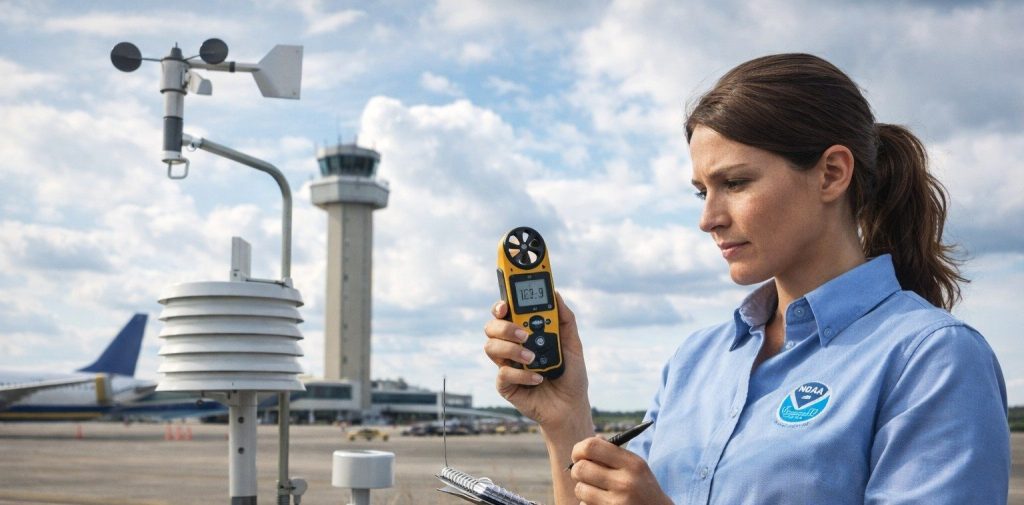
Aviation meteorologists provide the weather intelligence that keeps flights safe and efficient. They work for airlines, airports, government agencies, and private forecasting companies.
Their work includes:
- Producing aviation‑specific forecasts
- Monitoring severe weather and turbulence
- Supporting dispatchers and flight crews
- Advising on route planning and operational decisions
Meteorologists help organizations anticipate risk and optimize performance, making this one of the most analytical and high‑impact jobs and careers in the aviation industry.
Aviation Insurance Careers
Aviation insurance professionals evaluate risk, underwrite policies, and support claims related to aircraft, airports, and aviation businesses. This niche field requires both aviation knowledge and financial expertise.
Roles include:
- Underwriters
- Claims adjusters
- Risk analysts
- Loss‑control specialists
These careers offer strong earning potential and stability, especially for professionals with operational aviation backgrounds.
Aviation Law Careers
Aviation attorneys specialize in regulatory compliance, litigation, contracts, safety, and international aviation law. They work with airlines, manufacturers, airports, insurers, and government agencies.
Common practice areas include:
- FAA regulatory issues
- Accident investigation and liability
- Aircraft transactions and leasing
- Labor and employment law
- International aviation treaties
Aviation law careers sit at the intersection of legal expertise and technical knowledge, offering some of the most intellectually challenging jobs and careers in the aviation industry.
Aviation Salary Guide
Compensation in aviation varies widely depending on role, experience, certifications, and sector. From high‑earning pilot positions to accessible entry‑level jobs, the industry offers a broad spectrum of opportunities for people at every stage of their career. Understanding salary trends is essential for anyone exploring jobs and careers in the aviation industry, especially as demand grows across airlines, airports, maintenance, engineering, and emerging technology sectors. This Aviation Salary Guide highlights the major earning categories and introduces the key clusters you’ll expand into detailed articles.
Highest Paying Aviation Jobs
The highest‑paying roles in aviation typically require advanced training, specialized certifications, or significant operational responsibility. These positions include:
- Major airline captains
- Certified Professional Controllers (CPCs)
- Corporate jet captains (large‑cabin aircraft)
- Aerospace engineers in senior or specialized roles
- Aviation executives and directors
- High‑risk helicopter pilots (EMS, offshore, firefighting)
Top earners in these categories can make well into the six‑figure range, with some airline captains and controllers exceeding $300,000 annually. These roles represent the pinnacle of jobs and careers in the aviation industry, combining expertise, leadership, and long‑term career progression.
Entry‑Level Aviation Salaries
Aviation offers numerous entry‑level pathways that allow newcomers to build experience while earning competitive wages. Common starting points include:
- Ramp agents
- Customer service representatives
- Flight attendants
- Aircraft mechanics in training
- Flight instructors
- Dispatch trainees
- Drone pilots (Part 107)
Entry‑level salaries typically range from $18–$30 per hour, depending on location and employer. Many of these roles offer rapid advancement, overtime opportunities, and clear pathways into higher‑paying positions.
Pilot vs. Mechanic Pay
Pilot and mechanic careers are two of the most recognized jobs and careers in the aviation industry, and both offer strong earning potential—but their pay structures differ.
Pilots often start with lower wages during training and early flight‑time building, then see dramatic increases once they reach regional airlines, corporate aviation, or major carriers. Senior airline captains can earn $250,000–$450,000+.
A&P mechanics begin with more stable entry‑level pay—often $25–$35 per hour—and grow steadily with experience, certifications, and aircraft type ratings. Senior technicians, inspectors, and lead mechanics can earn $80,000–$120,000+.
Both paths offer long‑term stability, but pilots experience steeper earning curves tied to seniority and aircraft type.
Airline vs. Corporate Pay
Compensation varies significantly between airline and corporate aviation roles.
Airline pay is structured, seniority‑based, and often includes:
- Hourly flight pay
- Per diem
- Overtime
- Profit‑sharing
- Strong retirement benefits
Corporate aviation pay is more variable and influenced by aircraft type, schedule expectations, and employer profile. Corporate pilots and cabin attendants often earn higher base salaries, with additional compensation for:
- On‑call availability
- International flying
- Premium service expectations
Both sectors offer competitive earnings, but corporate roles may provide higher pay earlier, while airlines offer long‑term stability and predictable progression.
Aviation Jobs Without a Degree
One of the most appealing aspects of aviation is the number of high‑quality careers that do not require a four‑year degree. These include:
- A&P mechanics
- Flight attendants
- Air traffic controllers (degree optional)
- Aircraft dispatchers
- Drone pilots
- Ramp and operations specialists
- Avionics technicians
- Corporate flight coordinators
Many of these roles offer salaries ranging from $50,000 to over $150,000 with experience, making them some of the most accessible and rewarding jobs and careers in the aviation industry.
Aviation Training & Education Paths
Aviation offers one of the most diverse and flexible training ecosystems of any industry. Whether someone wants to become a pilot, mechanic, dispatcher, engineer, or drone operator, there are multiple pathways—college degrees, trade schools, flight academies, military programs, and scholarship‑supported training. Understanding these options is essential for anyone exploring jobs and careers in the aviation industry, especially as demand grows across airlines, airports, maintenance facilities, and emerging technology sectors. This section outlines the major education and training clusters that help students launch successful aviation careers.
Aviation Colleges
Aviation colleges and universities offer structured degree programs that combine academic coursework with hands‑on training. These institutions often provide:
- Bachelor’s degrees in aviation, aeronautical science, engineering, or management
- Integrated flight training programs
- Access to internships, simulators, and industry partnerships
- Eligibility for the Restricted ATP (R‑ATP) pathway, reducing flight‑hour requirements
Aviation colleges are ideal for students seeking a four‑year degree while building a long‑term career foundation. They also offer strong networking opportunities and clear pathways into professional jobs and careers in the aviation industry.
Trade Schools for Aviation
Trade schools provide focused, career‑ready training for technical aviation roles. These programs emphasize hands‑on learning and accelerated timelines.
Common trade school pathways include:
- Aircraft maintenance (A&P) programs
- Avionics technician training
- Aerospace manufacturing and composites
- Airport operations and safety programs
Trade schools appeal to students who want to enter the workforce quickly without pursuing a traditional degree. Many graduates secure stable, high‑demand roles across airlines, MROs, and manufacturing facilities.
Flight Schools
Flight schools are the primary training pathway for aspiring pilots. These programs range from small local flight schools to large, accelerated academies.
Training typically includes:
- Private Pilot License (PPL)
- Instrument Rating (IR)
- Commercial Pilot License (CPL)
- Multi‑Engine Rating
- Certified Flight Instructor (CFI)
Students can train part‑time or full‑time, depending on their goals. Flight schools offer one of the most direct routes into high‑earning jobs and careers in the aviation industry, especially for those pursuing airline or corporate pilot careers.
Maintenance Schools
Maintenance schools—also known as Part 147 A&P programs—prepare students to become FAA‑certified Airframe & Powerplant mechanics. These programs typically last 18–24 months and include:
- Aircraft systems and powerplant training
- Sheet metal and composites
- Electrical and avionics fundamentals
- Hands‑on lab and shop experience
Graduates are eligible to take the FAA A&P exams and enter a field with strong job security and competitive pay.
GI Bill Aviation Training
Military veterans have access to some of the most generous aviation training benefits in the country. The GI Bill can cover:
- Flight training
- A&P schools
- Aviation degree programs
- UAS/drone training (in approved programs)
- Type ratings and advanced certifications
Veterans often transition quickly into professional aviation roles thanks to their discipline, experience, and financial support.
Scholarships for Aviation Careers
Aviation offers a wide range of scholarships for students pursuing pilot training, maintenance programs, engineering degrees, and more. Scholarships are available through:
- Industry associations (AOPA, EAA, NBAA, WAI)
- Airlines and manufacturers
- Local aviation foundations
- University aviation departments
These programs help reduce training costs and expand access to high‑quality jobs and careers in the aviation industry.
Aviation Hiring Outlook
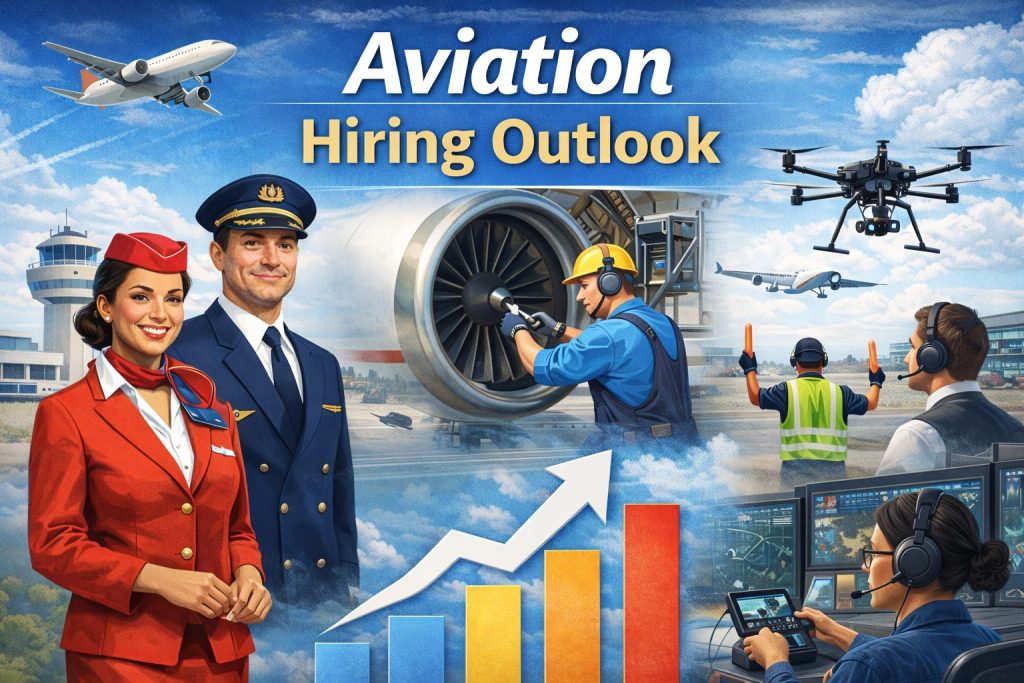
The aviation industry is experiencing one of the most dynamic hiring environments in its history. Demand for skilled professionals continues to rise across airlines, airports, maintenance facilities, manufacturers, and emerging technology sectors. For anyone exploring jobs and careers in the aviation industry, understanding the hiring outlook is essential—because the next decade will be shaped by workforce shortages, retirement waves, production ramp‑ups, and shifting global demand cycles. While the industry is cyclical, the long‑term trend is clear: aviation needs people, and it needs them now.
Pilot Shortages
The pilot shortage remains one of the most significant forces shaping the aviation job market. Several factors contribute to this long‑term deficit:
- Mandatory retirements at age 65
- A multi‑year training pipeline
- High training costs that limit new entrants
- Post‑pandemic hiring surges
- Rapid expansion in cargo, corporate, and regional operations
Major airlines continue to hire aggressively, pulling pilots upward from regionals, corporate aviation, and military pipelines. This creates a cascading effect across the entire ecosystem, making pilot careers one of the most in‑demand categories within jobs and careers in the aviation industry.
Mechanic Shortages
The shortage of A&P mechanics and avionics technicians is equally pressing. With an aging workforce and fewer young people entering technical trades, maintenance organizations face increasing difficulty filling roles.
Key drivers include:
- Retirements outpacing new graduates
- Increased aircraft complexity requiring specialized skills
- Growth in MRO demand as fleets expand
- Competition from other technical industries
Mechanics enjoy strong job security, rising wages, and rapid advancement opportunities—making this one of the most stable and essential career paths in aviation.
Retirement Waves
Across pilots, mechanics, controllers, and engineers, retirement waves are reshaping the workforce. Many professionals who delayed retirement during the pandemic are now exiting simultaneously, accelerating hiring needs. Airlines, airports, and manufacturers are investing heavily in recruitment, training, and retention to fill these gaps.
Boeing/Airbus Production Impact
Aircraft manufacturers are ramping up production to meet global demand for new, fuel‑efficient fleets. Boeing, Airbus, and major suppliers are hiring engineers, technicians, quality inspectors, and manufacturing specialists at scale.
Production increases create ripple effects across:
- Maintenance and repair organizations
- Pilot hiring pipelines
- Airport infrastructure expansion
- Supply chain and logistics roles
As new aircraft enter service, the demand for skilled labor grows across every segment of the industry.
Cargo Demand Cycles
Cargo aviation experiences cyclical demand tied to global trade, e‑commerce, and economic conditions. While cargo hiring can fluctuate, long‑term trends remain strong due to:
- Growth in express shipping
- Expansion of global logistics networks
- Increased reliance on air freight for high‑value goods
Cargo carriers often provide stable, high‑paying jobs and careers in the aviation industry, especially for pilots, mechanics, and loadmasters.
How to Get Started in Aviation
Aviation is one of the few industries where people can enter from almost any background—high school graduates, career changers, military veterans, college students, and professionals from unrelated fields. Whether someone wants to fly, fix, manage, or support aircraft, there are clear pathways into the industry. Understanding these entry points is essential for anyone exploring jobs and careers in the aviation industry, especially as hiring surges across airlines, airports, maintenance facilities, and emerging technology sectors. This section outlines the most accessible ways to begin a career in aviation and introduces the clusters you’ll expand into detailed guides.
Aviation Careers Without Flying
Not everyone who enters aviation wants to become a pilot—and the good news is that the industry offers hundreds of non‑flying roles. Many of these positions require short training programs, on‑the‑job learning, or certifications that can be completed in months rather than years.
Popular non‑flying entry paths include:
- Aircraft maintenance (A&P or avionics)
- Airport operations
- Ramp and ground handling
- Flight dispatch
- Customer service and gate operations
- Drone operations (Part 107)
- Meteorology and forecasting
- Safety, quality, and compliance roles
These careers offer strong job security and advancement opportunities, making them ideal for people who want to enter aviation quickly without committing to flight training.
Best Entry‑Level Jobs and Careers in the Aviation Industry
Aviation is full of entry‑level roles that require minimal experience and provide a direct path into higher‑paying positions. These jobs allow newcomers to build industry knowledge, gain exposure to operations, and develop specialized skills.
Top entry‑level roles include:
- Ramp agent or baggage handler
- Customer service representative
- Cabin crew (flight attendant)
- Line service technician (FBO)
- Flight instructor (for new pilots)
- Aircraft cleaner or cabin service agent
- Operations agent or load planner
These positions often come with travel benefits, overtime opportunities, and clear promotion pathways into dispatch, operations control, maintenance, or management.
Changing Careers to Aviation
Aviation attracts many mid‑career professionals looking for a fresh start. Career changers often bring transferable skills—leadership, customer service, mechanical aptitude, IT experience, or logistics knowledge—that accelerate their transition.
Common transition paths include:
- Corporate professionals moving into airline management
- Technicians from automotive or industrial fields becoming A&P mechanics
- Teachers or educators becoming flight instructors
- IT professionals entering aviation cybersecurity
- Hospitality workers transitioning to cabin crew or corporate flight attendant roles
Because aviation values experience and professionalism, career changers often advance quickly once they enter the industry.
Military vs. Civilian Aviation Careers
Military aviation provides some of the strongest foundations for jobs and careers in the aviation industry. Veterans often transition into:
- Airline or corporate pilot roles
- A&P mechanic positions
- Air traffic control
- Safety, compliance, and operations leadership
- Airport security and emergency response
Civilian pathways, on the other hand, offer more flexibility and allow individuals to choose their own pace, training provider, and career direction. Both routes lead to excellent long‑term opportunities.
Fastest Way to Find Jobs and Careers in the Aviation Industry
For those eager to enter the industry quickly, several pathways offer rapid entry:
- Ramp or customer service roles (start in weeks)
- Part 107 drone certification (completed in days)
- Flight attendant hiring (4–8 weeks of training)
- A&P mechanic apprenticeships (earn while you learn)
- Flight school fast‑track programs (PPL in 3–6 months)
These options allow newcomers to start earning and gaining experience while building toward more advanced roles.
Jobs and Careers in the Aviation Industry FAQ’s
1. What types of jobs and careers in the aviation industry?
The aviation industry includes pilots, aircraft mechanics, flight attendants, dispatchers, air traffic controllers, airport operations staff, aerospace engineers, safety managers, and cargo logistics professionals.
2. What are the highest-paying jobs and careers in the aviation industry?
Major airline captains, corporate jet pilots, aviation executives, aerospace engineers, and senior maintenance directors represent the highest compensation tiers.
3. Do you need a college degree to work in aviation?
Many technical careers rely on FAA certifications rather than degrees, though management and engineering roles often require formal education.
4. How do I start a career in aviation with no experience?
Common entry points include ramp agent jobs, customer service roles, or enrolling in flight or maintenance training programs.
5. Are aviation jobs in demand?
Yes. Pilot retirements, mechanic shortages, and global travel growth continue driving hiring demand.
6. What is the fastest way to get hired in aviation?
Airport ground operations and flight attendant roles typically offer the quickest hiring timelines.
7. What do entry-level aviation jobs pay?
Most entry-level roles range from $30,000 to $50,000 annually, depending on location and employer.
8. What certifications are required for aviation careers?
Pilots, mechanics, and dispatchers require FAA certification specific to their discipline.
9. Is aviation a stable career field?
While cyclical, aviation maintains long-term stability due to global transportation demand.
10. What aviation careers don’t involve flying?
Maintenance, dispatch, safety, engineering, scheduling, and airport management roles do not require flight duties.
11. Can you work in aviation without an FAA license?
Yes. Many operational and administrative roles do not require FAA credentials.
12. What aviation careers are best for career changers?
Pilot training, aircraft maintenance, and dispatch offer structured transition pathways.
13. How long does it take to become a pilot?
Anywhere from 12 months (accelerated) to several years depending on training pace.
14. Are aviation jobs location dependent?
Airport-based roles are, but corporate and charter operations may involve travel rotations.
15. What skills are needed for aviation careers?
Technical knowledge, safety awareness, communication, and regulatory compliance are critical.
16. Is aviation good for veterans?
Yes. Military experience translates well into civilian aviation careers.
17. Airline vs corporate aviation careers—what’s the difference?
Airlines offer seniority-based schedules; corporate aviation offers variety and flexibility.
18. Are remote aviation jobs available?
Some training, scheduling, and consulting roles offer remote work options.
19. What aviation careers involve mechanics and engineering?
A&P mechanics, avionics techs, and aerospace engineers focus on aircraft systems and structures.
20. How do I choose the right aviation career?
Evaluate medical eligibility, finances, lifestyle goals, and training timelines.
Career Path & Training Questions
21. How much does pilot training cost?
Typically $70,000–$120,000 depending on school and aircraft type.
22. How much does A&P mechanic training cost?
Usually $20,000–$50,000 at FAA-approved schools.
23. Can I get financial aid for aviation training?
Yes. Loans, GI Bill benefits, scholarships, and workforce grants are common funding sources.
24. What is the cheapest aviation career to enter?
Ramp work, line service, and customer support roles require minimal upfront cost.
25. Are aviation scholarships available?
Yes. Airlines, associations, and nonprofit foundations offer career scholarships.
26. How competitive are aviation jobs?
Competition varies—entry roles are accessible; pilot and airline jobs are more competitive.
27. Do airlines hire low-time pilots?
Regionals and Part 135 operators frequently hire lower-time pilots.
28. What is a dispatcher career like?
Dispatchers plan flights, monitor weather, and share operational control with captains.
29. How do I become an air traffic controller?
Candidates apply through FAA hiring windows and train at the FAA Academy.
30. What is an avionics technician?
They maintain aircraft electrical and navigation systems.
Industry Sectors & Specializations
31. What jobs exist in corporate aviation?
Pilots, flight attendants, schedulers, maintenance techs, and flight coordinators.
32. What jobs exist in cargo aviation?
Cargo pilots, loadmasters, logistics planners, and warehouse specialists.
33. What is airport operations as a career?
Airport ops manage runways, safety inspections, and regulatory compliance.
34. Are there aviation government jobs?
Yes. FAA, TSA, NASA, and law enforcement aviation units hire civilians.
35. What is aerospace engineering?
Engineers design aircraft, spacecraft, and aviation systems.
36. What are aviation safety careers?
Safety managers oversee SMS programs, audits, and compliance systems.
37. What is a flight operations career?
Roles include dispatch, crew scheduling, and operational control.
38. What jobs exist in helicopter aviation?
EMS pilots, offshore transport pilots, utility pilots, and maintenance crews.
39. Are there agricultural aviation jobs?
Yes. Crop dusting pilots and support crews operate in ag aviation.
40. What is business aviation?
Private and corporate flight departments transporting executives and owners.
Lifestyle, Pay, and Advancement
41. Do aviation jobs require travel?
Many do—especially pilots, mechanics, and corporate crew members.
42. What aviation jobs have the best work-life balance?
Dispatch, airport management, and some maintenance roles offer more stability.
43. Can aviation careers lead to management?
Yes. Many professionals advance into chief pilot, director, or executive roles.
44. What is the retirement outlook for aviation workers?
Large pilot retirement waves are driving hiring demand.
45. Are aviation jobs recession-proof?
They are recession-sensitive but historically rebound strongly.
46. What benefits do aviation employees get?
Travel perks, health insurance, retirement plans, and jumpseat privileges.
47. Is aviation physically demanding?
Maintenance and ramp roles are physically intensive; desk roles less so.
48. What age can you start an aviation career?
Many roles begin at 18; pilot training can start younger.
49. Is there an age limit for pilots?
Airline pilots must retire at age 65 under FAA rules.
50. Is aviation a good long-term career choice?
Yes—strong earnings potential, advancement pathways, and global mobility make aviation attractive long term.


