AVIATION JOBS GUIDE
Airline Pilot Hiring Process Guide for Applicants
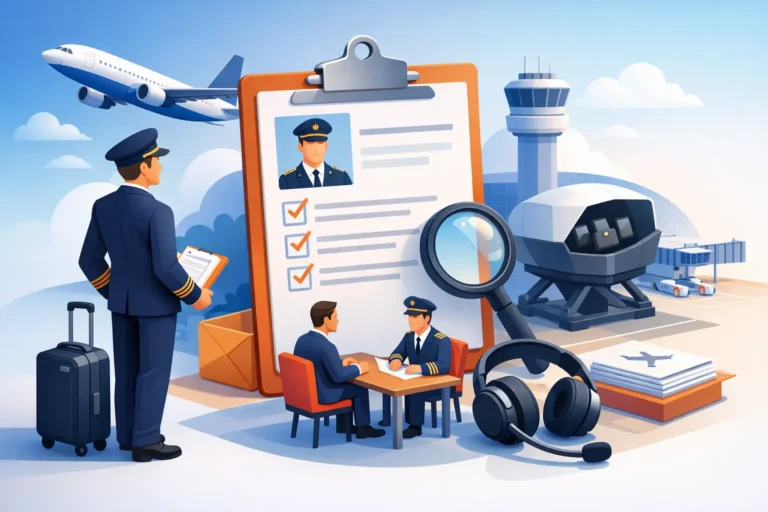
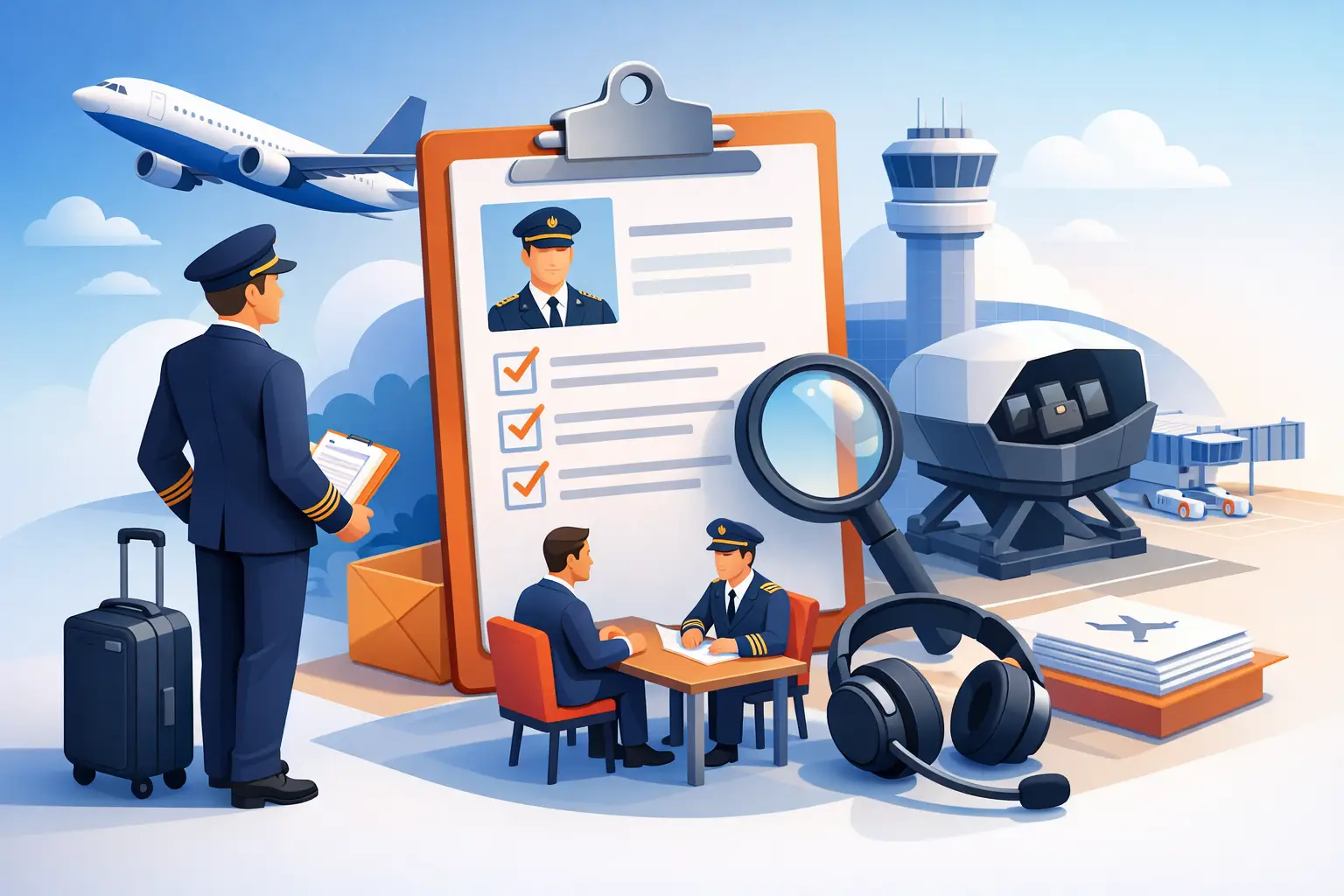
This airline pilot hiring process guide explains applications, interviews, simulator evaluations, records checks, and preparation for airline candidates today.
A pilot application can look straightforward until an airline asks for complete employment history, training records, checkride outcomes, and precise flight-time totals. This airline pilot hiring process guide explains what major US carriers and regional airlines commonly assess, where applicants lose momentum, and how to prepare without guessing.
Hiring standards vary by airline, fleet need, base openings, and the experience level of the applicant. A pilot moving from a regional airline to a major carrier faces a different process than a military aviator, corporate pilot, or new ATP certificate holder seeking a first airline seat. Still, most airline hiring processes follow the same core sequence: application review, screening, interview and technical assessment, simulator evaluation in some cases, background verification, and a conditional job offer followed by training.
Start With the Minimum Qualifications – Then Look Beyond Them
Meeting published minimums makes a pilot eligible to apply. It does not automatically make that pilot competitive. Airlines commonly require an Airline Transport Pilot certificate or eligibility for one, an FAA first-class medical certificate, appropriate legal authorization to work in the United States, and a valid passport. They also review total flight time, multiengine time, turbine time, pilot-in-command time, recency of experience, and educational background.
The 1,500-hour rule remains a major milestone for civilian pilots pursuing an unrestricted ATP certificate, although restricted ATP pathways can apply to qualifying military and aviation university graduates. Regional airlines may hire candidates near the ATP threshold through pathway or cadet programs, while major airlines generally expect deeper experience, especially turbine and leadership experience.
Do not treat flight hours as a single number. An applicant with 2,000 hours earned primarily as a flight instructor can be a strong regional candidate, but may not be as competitive for a major airline as a pilot with substantial turbine PIC experience. That does not make one background better in every case. It reflects how airlines balance immediate operational needs with long-term hiring plans.
Build an Application That Holds Up Under Review
The application is not a formality. Airline recruiting teams use it to identify whether a candidate meets requirements and whether the career record is accurate, organized, and professionally explained. Complete every section carefully, including employment gaps, prior training events, certificates, flight time, and disciplinary history.
Flight-time entries should match your logbook totals and supporting records. If an application asks for turbine PIC, do not include turbine SIC time. If it asks for actual instrument time, use the logged actual amount rather than an estimate. Small discrepancies can become serious when they appear across an application, logbook, résumé, and interview response.
Employment history matters just as much as aviation experience. Airlines commonly require a detailed record covering many years, and background investigators may contact former employers. Account for gaps honestly. A period spent in school, caring for family, working outside aviation, or between flying jobs is usually manageable when it is clearly documented.
Address Training Events Directly
Checkride failures, training repeats, letters of correction, and certificate actions do not automatically end an airline career. What creates concern is inconsistency, incomplete disclosure, or an inability to explain what changed afterward.
Prepare a concise explanation for each event. State what happened, what you learned, and how your performance improved. Avoid blaming an instructor, examiner, company, or weather conditions. Airlines are evaluating accountability as much as technical ability.
What Happens After You Apply
Application review may take weeks or months. Timing depends on fleet growth, retirements, training capacity, and the number of candidates in the pipeline. Some airlines use recruiting events, referrals, talent communities, or pilot pathway programs to identify candidates before a formal interview invitation.
If selected, you may first complete a recruiter screening call. This conversation often confirms qualifications, availability, work authorization, base flexibility, and interest in the airline. Treat it as an interview, not an administrative call. Be ready to explain your flying background, career goals, and why the company is a fit.
Airlines may also request documents before the formal interview. These can include pilot certificates, medical certificate, passport, driving record, college transcripts, military records, logbook pages, and FAA records. Keep current digital copies in an organized folder, but protect personal information and submit documents only through verified airline channels.
The Airline Pilot Interview Process
The interview usually combines behavioral questions with technical and professional discussion. Airlines want evidence that you can operate safely in a crew environment, communicate clearly, follow procedures, and respond constructively when something does not go as planned.
Behavioral questions often focus on conflict, decision-making, fatigue, leadership, mistakes, and cockpit resource management. Use specific examples from flight instructing, charter work, military operations, dispatch coordination, customer service, or another professional setting. A structured response works well: explain the situation, your responsibility, the action you took, and the result.
Technical questions may cover aircraft systems, instrument procedures, weather, FARs, performance, aerodynamics, and operational judgment. The depth depends on the airline and your experience. A regional carrier hiring lower-time pilots may emphasize foundational knowledge and learning ability. A major airline may spend more time on turbine operations, command judgment, and scenario-based decisions.
Study your fundamentals, but do not try to sound rehearsed. If you do not know an answer, say so, explain how you would find the correct information, and avoid inventing a response. Good judgment includes recognizing the limits of your knowledge.
Simulator Evaluations and Scenario Exercises
Not every airline requires a simulator evaluation, but many use one at some stage. The goal is rarely to see whether you can fly a perfect profile in an unfamiliar simulator. Evaluators are watching for instrument scan, aircraft control, checklist discipline, task prioritization, communication, and crew coordination.
Expect an abnormal situation or a high-workload segment. Brief clearly, use available resources, and keep flying the airplane. If paired with another applicant or evaluator, communicate your plan and invite input. A candidate who remains organized after an error often makes a stronger impression than one who flies precisely but becomes silent or defensive.
A simulator prep session can be worthwhile if you have not flown an airline-style profile recently. It is less useful if it turns into memorizing a scripted sequence. Focus on standard instrument procedures, callouts, raw-data flying, and a calm approach to unexpected changes.
Background Checks, Drug Testing, and Records Review
A conditional job offer is followed by extensive verification. Airlines must comply with FAA and Department of Transportation requirements, including drug and alcohol testing and review of relevant employment records. Depending on the position and your history, the process may also involve criminal background checks, driving-record review, fingerprinting, and verification of past employment and education.
Be especially careful with Pilot Records Improvement Act-related records and previous aviation employment. Training events, disciplinary actions, and drug or alcohol program information can be reviewed as allowed by law. Applicants should understand their record before applying and resolve inaccuracies early when possible.
A past issue does not always mean disqualification. The effect depends on the nature of the issue, how recent it was, required disclosure rules, and whether it reflects an ongoing safety or reliability concern. Concealment is generally more damaging than a well-documented past mistake.
Preparing for Airline New-Hire Training
The hiring process does not end when you accept the offer. Once assigned a class date, pilots enter an intensive training period that may include company indoctrination, aircraft systems, procedures training, fixed-base simulation, full-flight simulator sessions, and operating experience.
Before class, refresh your instrument knowledge, airline-style charts, turbine concepts, and study habits. Build a realistic plan for finances, housing, commuting, and family responsibilities during training. New-hire training requires sustained focus, and practical stress outside the training center can affect performance inside it.
Base assignments also deserve attention. A higher hourly rate does not always produce the best early-career outcome if commuting costs, reserve schedules, or cost of living create strain. Ask practical questions about reserve life, domicile options, upgrade timelines, contract provisions, and quality-of-life trade-offs before making a final decision.
A Better Way to Approach the Airline Pilot Hiring Process
The strongest applicants prepare their record long before an interview invitation arrives. They keep accurate logbooks, document employment clearly, maintain professional relationships, protect their medical eligibility, and address setbacks with honesty. They also apply selectively rather than assuming every airline offers the same career path.
Your first airline job can be a launch point, but it should still fit your priorities. Consider the training environment, route structure, bases, advancement potential, and the kind of flying life you want to build. Preparation is not about appearing flawless. It is about showing an airline that you are safe, accountable, trainable, and ready to grow with the operation.