AVIATION JOBS GUIDE
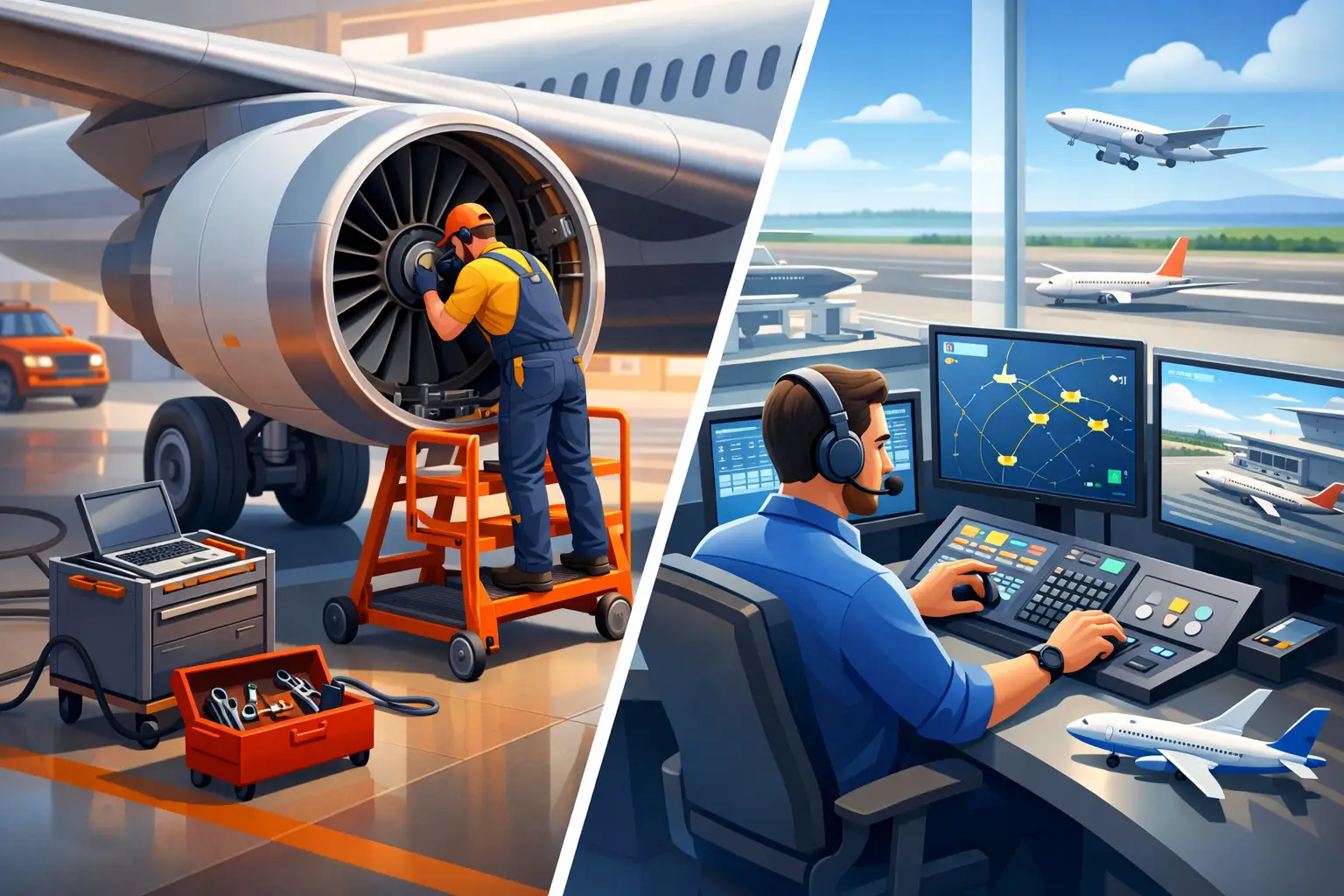
Aircraft Mechanic vs Aircraft Dispatcher Careers
Compare aircraft mechanic vs aircraft dispatcher careers, including duties, training, pay potential, schedules, and the factors that can shape your fit.
An aircraft mechanic vs aircraft dispatcher comparison comes down to a fundamental career question: do you want to keep aircraft airworthy with your hands and technical judgment, or keep flights moving safely through planning and operational decision-making? Both careers are essential to airline operations, both can offer stable paths into aviation, and both require FAA credentials. Their day-to-day work, training route, work environment, and long-term fit are very different.
For someone who enjoys aviation but does not plan to become a pilot, this is not a minor distinction. The better choice is usually the one that fits how you prefer to solve problems under pressure, not simply the job title with the higher starting pay in a particular market.
Aircraft Mechanic vs Aircraft Dispatcher: Core Role Differences
Aircraft mechanics inspect, troubleshoot, repair, and maintain aircraft systems. They may work on airframes, engines, avionics, landing gear, hydraulic systems, electrical components, and cabin-related equipment. Their work helps ensure an aircraft is safe and legally ready to return to service.
In the United States, many airline maintenance technicians hold an FAA Airframe and Powerplant certificate, commonly called an A&P. Some roles also require or strongly prefer inspection authorization, avionics expertise, manufacturer training, or experience on a specific aircraft type. Mechanics use manuals, maintenance records, diagnostic tools, and established procedures to identify and correct discrepancies.
Aircraft dispatchers work on the operational side of airline flying. For Part 121 airline operations, a certificated dispatcher shares operational control responsibilities with the pilot in command. Before departure, the dispatcher typically evaluates weather, aircraft status, routing, fuel needs, airport conditions, NOTAMs, alternates, and other factors that affect a flight. They prepare or authorize the dispatch release and continue monitoring the flight after it departs.
That does not mean a dispatcher simply watches a screen. Irregular operations can change a normal shift quickly. A dispatcher may need to reroute a flight around severe weather, identify a practical diversion airport, account for air traffic flow restrictions, coordinate with maintenance control, and communicate a revised plan to the flight crew. The job is analytical, time-sensitive, and closely tied to the airline’s entire network.
The clearest difference is where the work happens. Mechanics generally work in hangars, maintenance bases, airport ramp areas, or line stations near the aircraft. Dispatchers usually work in an operations center, using flight planning and communication systems to oversee multiple flights.
Training and FAA Certification Paths
The mechanic route is usually longer and more hands-on. To qualify for an A&P certificate, applicants generally need either graduation from an FAA-approved aviation maintenance technician school or enough documented practical experience. The experience requirement is typically 30 months for combined airframe and powerplant ratings, or 18 months for one rating. Candidates must also pass FAA knowledge, oral, and practical exams.
An aviation maintenance program can provide structure, tools, lab work, and preparation for the FAA tests. It can also be a strong option for students who want to enter the field without first finding an employer willing to train them. The trade-off is tuition and the time commitment, which commonly runs around 18 to 24 months for a full A&P program.
Aircraft dispatcher certification is more classroom-focused. An FAA aircraft dispatcher certificate requires applicants to be at least 23 years old, read, speak, write, and understand English, and pass the required knowledge and practical testing. Many candidates complete an FAA-approved dispatcher course, often in several weeks, although program lengths vary. The training covers subjects such as meteorology, navigation, aircraft performance, regulations, flight planning, and emergency procedures.
The dispatcher path can be faster, but it is not necessarily easier. The material is dense, and dispatch candidates need to become comfortable making operational decisions from changing information. A person who dislikes weather analysis, regulations, and sustained computer-based planning may find the role less appealing than its shorter training timeline suggests.
Daily Work and Working Conditions
Mechanics often have a physical workday. They may climb stands, work in tight spaces, lift equipment, use hand tools, and spend time outdoors in heat, cold, rain, or wind. Line maintenance positions can involve quick turn repairs between flights, while heavy maintenance roles may focus on scheduled checks that take place in a hangar over days or weeks.
The work can be highly satisfying for people who want a tangible result. A mechanic can trace a fault, complete a repair according to approved data, document the work, and see the aircraft return to operation. Precision matters because the maintenance record and return-to-service decision carry real responsibility.
Dispatchers face a different kind of pressure. Their work is less physical but can be mentally intense, particularly during widespread storms, airport disruptions, mechanical delays, or staffing constraints. They must prioritize safety while helping the airline make sound operational decisions. The pace often depends on the time of day, season, and scale of the disruption.
Both jobs commonly involve shifts, weekends, holidays, and overnight work. Airlines operate around the clock, and neither path is built around a standard Monday-through-Friday schedule at the entry level. Mechanics may work nights because aircraft are more available for maintenance, while dispatchers may bid for shifts based on seniority and staffing needs.
Pay and Advancement Potential
Pay depends heavily on employer, location, union agreements, experience, overtime, and whether the role is with a major airline, regional airline, repair station, corporate operator, or government contractor. Entry-level compensation should be viewed cautiously because pay scales can change through collective bargaining and hiring demand.
Aircraft mechanics often have strong earnings potential after gaining experience, especially at larger airlines. Overtime, night differentials, specialized qualifications, and work on complex aircraft can significantly affect annual income. A mechanic who develops expertise in avionics, structures, inspections, or a high-demand fleet can create multiple advancement options. Some move into lead technician, inspector, maintenance control, quality assurance, planning, or management roles.
Aircraft dispatchers may begin with lower pay at smaller carriers or regional operations, then see a meaningful increase after moving to a major airline or gaining seniority. At established airlines, experienced dispatchers can earn competitive compensation, particularly when overtime and premium shifts are available. Advancement may include lead dispatcher, supervisor, instructor, operations manager, flight operations support, or network operations roles.
Neither role guarantees the same salary at every employer. A newly certificated dispatcher at a smaller operation may earn less than an experienced mechanic, while a senior dispatcher at a major carrier may out-earn many maintenance positions. Compare actual job postings and labor agreements in the markets where you are willing to live and work rather than relying on one national number.
Which Career Fits Your Strengths?
Choose aircraft maintenance if you enjoy mechanical systems, hands-on troubleshooting, detailed technical procedures, and seeing direct physical evidence of your work. It is also a good fit if you want skills that can transfer across airlines, maintenance repair organizations, business aviation, cargo, manufacturing, and government aviation. The A&P certificate has broad value beyond a single airline dispatch office.
Choose dispatch if you are drawn to weather, route planning, decision-making, and coordinating many moving parts. Dispatch tends to suit people who can stay organized when plans change, communicate clearly, and make disciplined decisions with incomplete information. It can also appeal to those who want an airline operations career without the physical demands of maintenance or the cost and flight-hour requirements of pilot training.
Consider your preferred work setting honestly. If a windowless operations center during a major thunderstorm sounds energizing, dispatch may fit. If you would rather diagnose a hydraulic issue on the ramp or carry out a scheduled engine inspection, maintenance may be the stronger choice. There is no universal winner because the jobs reward different strengths.
Making a Practical Career Decision
Before committing to training, look beyond the certificate. Research employers within commuting distance or in cities where you could realistically relocate. Ask whether they hire entry-level candidates, what shift patterns are typical, whether they offer tuition assistance or apprenticeship options, and how often employees move into better-paying positions.
It is also useful to consider how each career supports your wider aviation goals. An A&P can lead to specialized technical work and can be valuable if you eventually want to own, maintain, or manage aircraft. A dispatcher certificate can open a direct path into airline operations and can build knowledge that is valuable for future roles in flight operations, crew scheduling, or operational leadership.
The right choice is the one you can picture doing well on an ordinary difficult day, not just on an exciting first day in aviation. Choose the environment and problem-solving style that keeps you engaged, then pursue the FAA credential that turns that interest into a durable career.