AVIATION JOBS GUIDE

10 Best Aviation Careers for Long-Term Growth
Compare 10 best aviation careers for long-term growth, from airline pilot and aircraft mechanic to dispatcher, aerospace engineer, and airport manager. Explore training costs, licensing requirements, earning potential, schedules, and advancement opportunities to find an aviation path that matches your skills, financial situation, lifestyle preferences, and career goals.
Aviation is not one career ladder. It is a network of jobs with very different entry costs, schedules, licensing rules, and earning ceilings. The best aviation careers are not automatically the ones closest to the cockpit or airport ramp. They are the roles that fit your strengths, financial situation, preferred lifestyle, and willingness to complete specialized training.
For some people, that means building flight time toward an airline cockpit. For others, it means maintaining aircraft, managing flights from a dispatch center, designing aerospace systems, or directing aircraft safely through crowded airspace. A smart choice starts with an honest comparison, not just a love of airplanes.
What Makes an Aviation Career a Good Choice?
Aviation careers tend to reward people who value structure, technical competence, and steady advancement. However, the trade-offs are real. A role with high long-term pay may require costly training, seniority-based schedules, relocation, medical eligibility, or irregular hours. A faster entry path may offer less income at the beginning but provide valuable experience and a foundation for later moves.
When comparing options, focus on four questions: How long can you invest in training? Do you want shift work, travel, or a more predictable weekday schedule? Are you comfortable with medical and licensing requirements? And do you want your work to be operational, mechanical, analytical, or customer-facing?
10 Best Aviation Careers to Consider
1. Airline Pilot
Airline pilots remain one of the most recognizable and potentially lucrative aviation careers. The work includes operating scheduled flights, managing aircraft systems, coordinating with dispatch and air traffic control, and making safety-focused decisions under changing conditions.
The path is demanding. Most pilots build experience through flight instruction, charter work, cargo operations, or regional airlines before reaching a major airline. Training costs and early-career pay can be challenging, but senior pilots at established airlines can earn strong six-figure incomes. This path fits people who want command responsibility and can accept time away from home, reserve schedules, and a seniority-driven lifestyle.
2. Corporate or Business Aviation Pilot
Corporate pilots fly company executives, private clients, and specialized missions rather than a published airline schedule. The work can involve modern aircraft, international destinations, and a closer working relationship with passengers and flight departments.
Schedules vary dramatically. Some corporate jobs provide predictable rotations, while others require short-notice availability. Compensation can be excellent in well-funded flight departments, but job stability may be tied more closely to one company or client than at a large airline. It is a strong option for pilots who prefer smaller teams and varied flying.
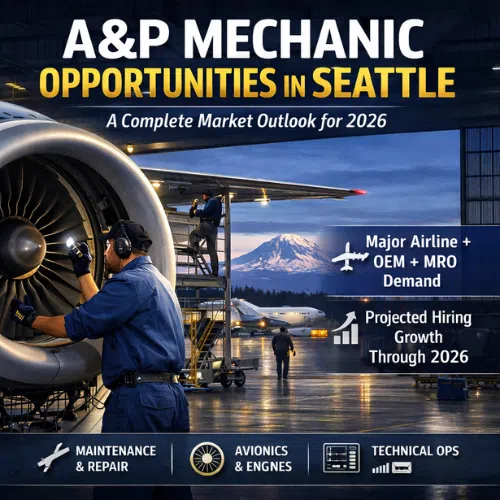
3. Aircraft Mechanic
Aircraft mechanics, often called aviation maintenance technicians or AMTs, inspect, repair, and maintain aircraft to strict safety standards. Many technicians pursue an FAA Airframe and Powerplant certificate, commonly called an A&P, through an approved school, military experience, or qualifying on-the-job training.
This is one of the most practical aviation entry paths because it offers direct access to a technical role without requiring a four-year degree. Airlines, repair stations, manufacturers, and corporate operators all need qualified mechanics. Night shifts, weekends, and physically demanding work are common, but experienced technicians can move into inspection, lead roles, avionics, quality assurance, or maintenance management.
4. Air Traffic Controller
Air traffic controllers coordinate aircraft movement on the ground and in the air, helping maintain safe separation and efficient traffic flow. It is high-concentration work with a demanding selection and training process, but it can offer exceptional pay and benefits.
This career is best for people who stay calm under pressure, process information quickly, and communicate clearly. Federal hiring rules, medical standards, testing, age requirements, and facility assignments can shape the path, so applicants should review current FAA requirements carefully. The schedule often includes rotating shifts, nights, weekends, and holidays.
5. Flight Dispatcher
Flight dispatchers share operational responsibility for airline flights. They analyze weather, aircraft performance, fuel, routing, airport conditions, and regulatory requirements before and during a flight. In an airline operation, dispatchers work closely with pilots and operations control teams.
An FAA aircraft dispatcher certificate is required for many airline dispatcher roles, and training is usually much shorter and less expensive than pilot training. The work is desk-based but far from passive. It suits detail-oriented people who want a central role in flight operations without needing to fly professionally. Airline schedules can still mean shift work, especially early in a career.
6. Aerospace Engineer
Aerospace engineers design, test, and improve aircraft, engines, satellites, and related systems. Common specialties include aerodynamics, propulsion, structures, avionics, software, and flight test. Most positions require at least a bachelor’s degree in aerospace, mechanical, electrical, or a related engineering discipline.
This is a strong route for students who enjoy math, physics, and long-term technical problem-solving. It generally offers a more conventional professional schedule than many airport operations roles, although project deadlines and testing periods can be intense. The trade-off is a longer academic commitment and a job market concentrated around aerospace employers and major manufacturing hubs.
7. Avionics Technician
Avionics technicians install, troubleshoot, and repair the electronic systems that make modern aircraft operate: navigation, communication, autopilot, radar, displays, and electrical components. As aircraft become more digitally complex, this specialty can provide a valuable edge over general maintenance alone.
An A&P certificate is useful in many jobs, but avionics training, manufacturer coursework, and electrical troubleshooting skill can be equally important. This career fits people who prefer diagnostics and electronics over heavy mechanical work. Employers may include airlines, maintenance providers, aircraft manufacturers, and specialized modification shops.
8. Aviation Operations Specialist
Aviation operations specialists support the movement of aircraft, crews, passengers, cargo, and equipment. Depending on the employer, the job may involve coordinating ground handling, tracking flights, arranging services, responding to disruptions, or supporting a corporate flight department.
Entry requirements are often more flexible than for licensed roles, making operations a useful starting point for career changers. The salary ceiling may be lower than pilot or controller compensation unless you advance into management, but operational experience can lead to dispatch, airport management, safety, or corporate aviation roles.
9. Aviation Safety Specialist
Safety specialists investigate risks, analyze operational data, support reporting programs, and help organizations meet safety-management requirements. They may work for airlines, airports, manufacturers, government agencies, or consulting firms.
This career usually becomes more accessible after gaining experience as a pilot, mechanic, dispatcher, controller, or operations professional. It is an excellent long-term option for people who want to influence how an organization prevents incidents rather than work every day on the front line. Strong writing, data analysis, and regulatory knowledge matter as much as aviation experience.
10. Airport Manager
Airport managers oversee the business and operational side of an airport. Their responsibilities can include budgets, tenant relationships, emergency planning, construction projects, regulatory compliance, noise concerns, and coordination with airlines and local agencies.
This path often requires a bachelor’s degree in aviation management, business, public administration, or a related field, plus operational experience. It may be especially appealing to people who want to stay in aviation while building a leadership career with more predictable long-term hours than flight crew positions. Smaller airports can provide early responsibility, while larger airports offer complex management opportunities.
Best Aviation Careers : How Do you Choose?
Start by separating your interest in aviation from the type of work you actually enjoy. If you want hands-on troubleshooting and tangible results, maintenance or avionics may fit better than a desk-based operations job. If you enjoy fast decisions, changing information, and coordinated teamwork, dispatch or air traffic control may be a better match. If you want technical design work and can commit to a degree, aerospace engineering deserves serious consideration.
Then look at the cost of entry. Pilot training can be a major financial investment before it produces reliable income. An A&P program or dispatcher certificate may provide a faster route into paid aviation work. A degree-based path can take longer but may open doors to engineering, management, and technical leadership roles.
Lifestyle should carry equal weight. Airline and corporate pilots travel. Controllers, dispatchers, mechanics, and airport operations professionals commonly work shifts. Engineering and management jobs may offer more regular schedules, but can require relocation to areas with concentrated aerospace employment. There is no universally better arrangement, only a better fit for your priorities.
Build a Path, Not Just a Job Search
Once you identify a target role, map the first two steps rather than trying to plan your entire career at once. For a pilot, that may mean selecting a training program and understanding how you will build flight hours. For maintenance, it may mean comparing FAA-approved schools and local employer demand. For dispatch, it may mean confirming certificate requirements and seeking airline operations exposure.
Also keep adjacent paths in view. A mechanic can move into inspection or maintenance control. A dispatcher can advance into operations leadership. A pilot can eventually move into training, safety, or management. Aviation careers rarely stay static for people who keep their credentials current and build a reputation for sound judgment.
The right choice is the role you can realistically train for, perform well in, and still want to do after the novelty of aviation wears off. Choose that foundation carefully, and the industry gives you room to grow.