Table of Contents
How to Become an Avionics Technician. Becoming an avionics technician in 2026 is one of the smartest moves a student or career‑changer can make in the aviation and aerospace sector. Modern aircraft depend on advanced electronics, digital systems, automation, and data‑driven diagnostics more than ever before. Airlines, corporate flight departments, MROs, and OEMs all need skilled technicians who can install, maintain, troubleshoot, and repair the electronic backbone of today’s fleets. This guide explains How to Become an Avionics Technician in 2026 with a clear, structured pathway from first interest to full certification and employment.
Understanding the Avionics Technician Role
What Avionics Technicians Actually Do
Avionics technicians specialize in the electrical and electronic systems that keep aircraft safe, compliant, and mission‑ready. Their work includes:
- Navigation and communication systems
- Autopilot and flight control electronics
- Weather radar and surveillance systems
- Digital flight decks and glass cockpit components
- Aircraft wiring, sensors, and data buses
- Power distribution and electrical generation systems
In 2026, the role expands even further as aircraft become more software‑driven, more connected, and more reliant on integrated digital systems. Anyone researching How to Become an Avionics Technician in 2026 must understand that this is a high‑skill, high‑responsibility technical career.
Where Avionics Technicians Work
Avionics professionals are employed across multiple aviation sectors:
- Airlines and regional carriers
- Corporate and business aviation
- Part 145 repair stations
- OEMs such as Boeing, Airbus, Gulfstream, and Textron
- Military and defense contractors
- Helicopter operators
- Unmanned aircraft system (UAS) manufacturers
This diversity gives students and career‑changers multiple entry points and long‑term mobility.
Education Requirements for Avionics Technicians
Choosing the Right Training Path
There are three primary routes for those exploring How to Become an Avionics Technician in 2026:
- FAA‑Approved Part 147 Aviation Maintenance Technician School Many Part 147 schools offer dedicated avionics programs or avionics concentrations alongside A&P training.
- Avionics‑Only Technical Programs These programs focus exclusively on electronics, wiring, troubleshooting, and digital systems without requiring full A&P certification.
- Military Training Air Force, Navy, and Army aviation electronics specialties provide some of the strongest avionics training in the world.
What Students Learn
A strong avionics curriculum includes:
- Aircraft electrical theory
- Digital logic and microprocessors
- Navigation and communication systems
- Autopilot and flight control electronics
- Wiring practices and harness fabrication
- Troubleshooting and diagnostic procedures
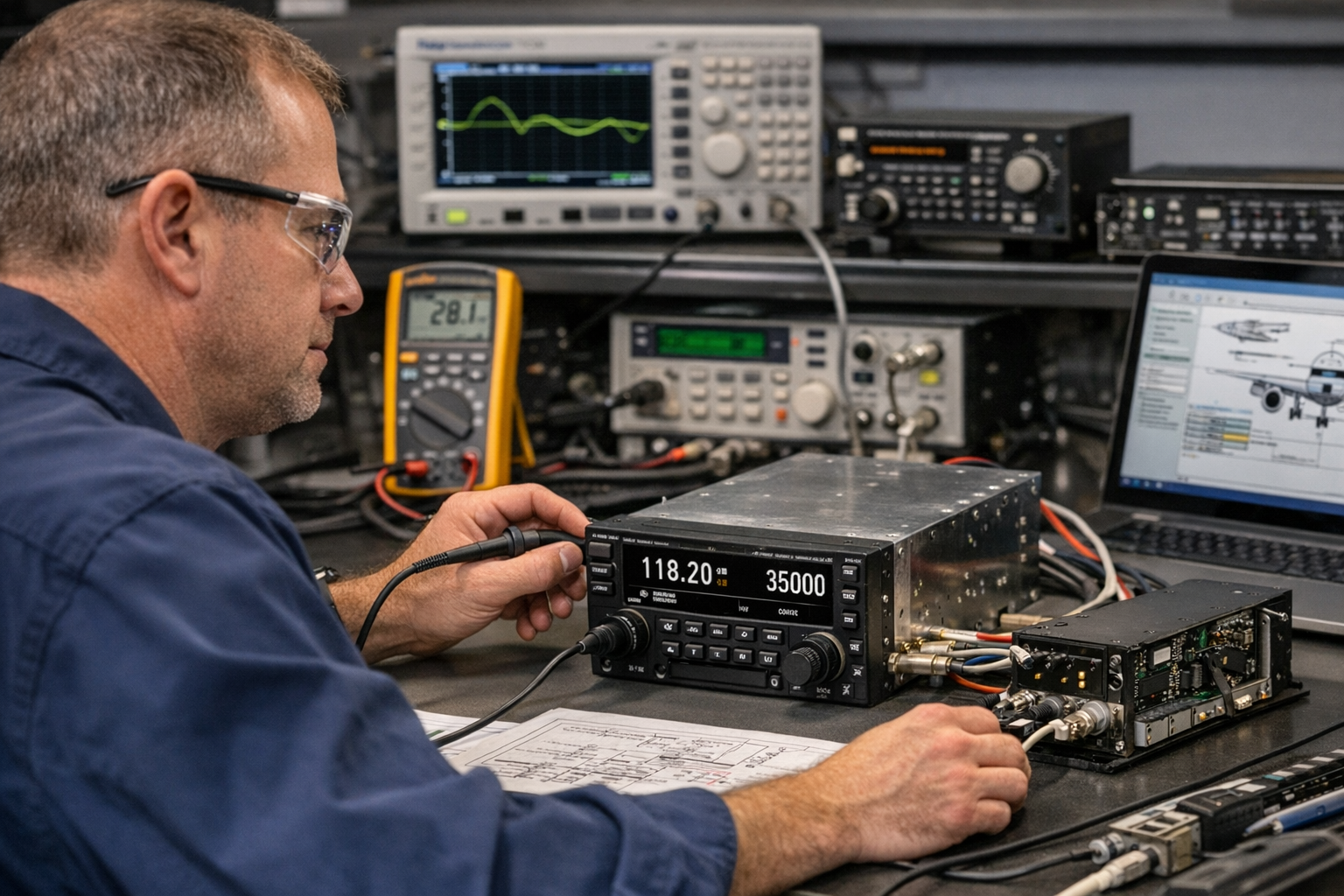
- Use of multimeters, oscilloscopes, and BITE systems
- Software updates and configuration management
Anyone serious about How to Become an Avionics Technician in 2026 should choose a program that blends classroom instruction with extensive hands‑on lab work.
Certifications and Credentials
FAA Certifications
Unlike A&P mechanics, avionics technicians are not required to hold an FAA certificate to work on most systems. However, several credentials significantly increase employability:
- A&P Certificate – Not required, but highly valuable.
- Repairman Certificate – Issued by employers for specific tasks.
- Part 65 Certifications – For certain specialized roles.
Industry Certifications
Employers increasingly look for industry‑recognized avionics credentials:
- NCATT Aircraft Electronics Technician (AET)
- NCATT Radio Communication Systems (RCS)
- NCATT Navigation Systems (NAV)
- FCC General Radiotelephone Operator License (GROL)
For anyone researching How to Become an Avionics Technician in 2026, the AET and GROL are two of the most important credentials to pursue early.
Skills Required for Success
Technical Skills
Avionics technicians must master:
- Electrical theory and circuit analysis
- Digital and analog electronics
- Soldering, crimping, and wiring
- Reading schematics and wiring diagrams
- Troubleshooting complex systems
- Using advanced diagnostic tools
- Software loading and configuration
Soft Skills
Technical ability alone is not enough. Employers also expect:
- Attention to detail
- Clear communication
- Ability to follow procedures
- Strong documentation habits
- Teamwork in high‑stakes environments
- Adaptability to new technologies
Anyone exploring How to Become an Avionics Technician in 2026 should understand that the job blends precision, discipline, and problem‑solving.
The Training Timeline
Step 1: Research Schools and Programs
Students should compare Part 147 schools, avionics‑only programs, and military options. Factors include cost, program length, job placement, and access to modern training equipment.
Step 2: Complete Foundational Coursework
Most programs take 12–24 months. Students learn electrical theory, wiring, troubleshooting, and system‑specific knowledge.
Step 3: Earn Key Certifications
The AET and GROL are often completed during or immediately after training.
Step 4: Gain Hands‑On Experience
Internships, apprenticeships, and entry‑level roles at MROs or OEMs provide real‑world experience.
Step 5: Advance into Specialized Roles
After 2–5 years, technicians can specialize in:
- Avionics installation
- Line maintenance
- Bench repair
- Flight deck modernization
- ADS‑B, WAAS, and NextGen systems
- Corporate avionics support
This progression is central to How to Become an Avionics Technician in 2026 because the field rewards continuous learning.
Salary and Job Outlook in 2026

FIND AVIONICS TECH JOBS! AVIATION EMPLOYMENT NETWORK.
Strong Demand Across the Industry
The aviation industry faces a long‑term shortage of skilled maintenance personnel. Avionics technicians are in especially high demand due to:
- Fleet modernization
- Digital cockpit upgrades
- Increased automation
- Aging workforce retirements
- Growth in corporate and regional aviation
- Expansion of UAS and eVTOL sectors
Salary Expectations
In 2026, avionics technicians typically earn:
- Entry‑Level: $50,000–$65,000
- Mid‑Career: $65,000–$85,000
- Senior/Lead Tech: $85,000–$110,000+
- Corporate/Defense: Often higher
Anyone evaluating How to Become an Avionics Technician in 2026 should recognize that this career offers strong earning potential and long‑term stability.
Career Paths and Advancement
Airline and Regional Carrier Roles
Technicians maintain and troubleshoot avionics systems on large fleets. Work is structured, procedural, and shift‑based.
Corporate and Business Aviation
These technicians support high‑end aircraft with advanced avionics suites. Work is more varied and often higher paid.
Part 145 Repair Stations
These facilities perform installations, upgrades, and major avionics modifications.
OEM and Manufacturing Roles
Technicians support production lines, testing, and integration of new aircraft systems.
Specialized Avionics Careers
After gaining experience, technicians can move into:
- Avionics engineering support
- Quality assurance
- Technical training
- Field service technician roles
- Program management
- UAS and eVTOL electronics
Understanding these pathways is essential for anyone studying How to Become an Avionics Technician in 2026 because the field offers more mobility than most aviation careers.
Tools and Equipment Avionics Technicians Use
Diagnostic and Testing Tools
Technicians rely on:
- Multimeters and megohmmeters
- Oscilloscopes
- Logic analyzers
- BITE (Built‑In Test Equipment) systems
- RF communication testers
- Pitot‑static test sets
Installation and Fabrication Tools
These include:
- Soldering stations
- Wire strippers and crimpers
- Harness fabrication tools
- Connector pinning tools
Anyone learning How to Become an Avionics Technician in 2026 must be comfortable with both precision electronics tools and aircraft‑specific equipment.
The Future of Avionics Careers
Emerging Technologies
Avionics technicians entering the field in 2026 will work with:
- Advanced flight deck automation
- Satellite‑based navigation and communication
- Cybersecurity‑protected avionics networks
- Electric and hybrid propulsion systems
- eVTOL and urban air mobility platforms
- AI‑assisted diagnostics
Why the Career Is Future‑Proof
Aircraft will only become more digital, more connected, and more software‑driven. That means avionics technicians will remain essential for decades.
Anyone researching How to Become an Avionics Technician in 2026 should understand that this is not a fading trade—it is a growing, evolving, and increasingly critical profession.
Final Thoughts
Learning How to Become an Avionics Technician in 2026 is the first step toward a stable, respected, and technically challenging aviation career. With the right training, certifications, and hands‑on experience, students and career‑changers can enter a field that offers strong pay, long‑term demand, and opportunities across airlines, corporate aviation, OEMs, and emerging aerospace sectors.
Related Posts


Have any thoughts?
Share your reaction or leave a quick response — we’d love to hear what you think!
-
 0
0
-
0
-
0
-
0
-
0
-
0