AVIATION JOBS GUIDE
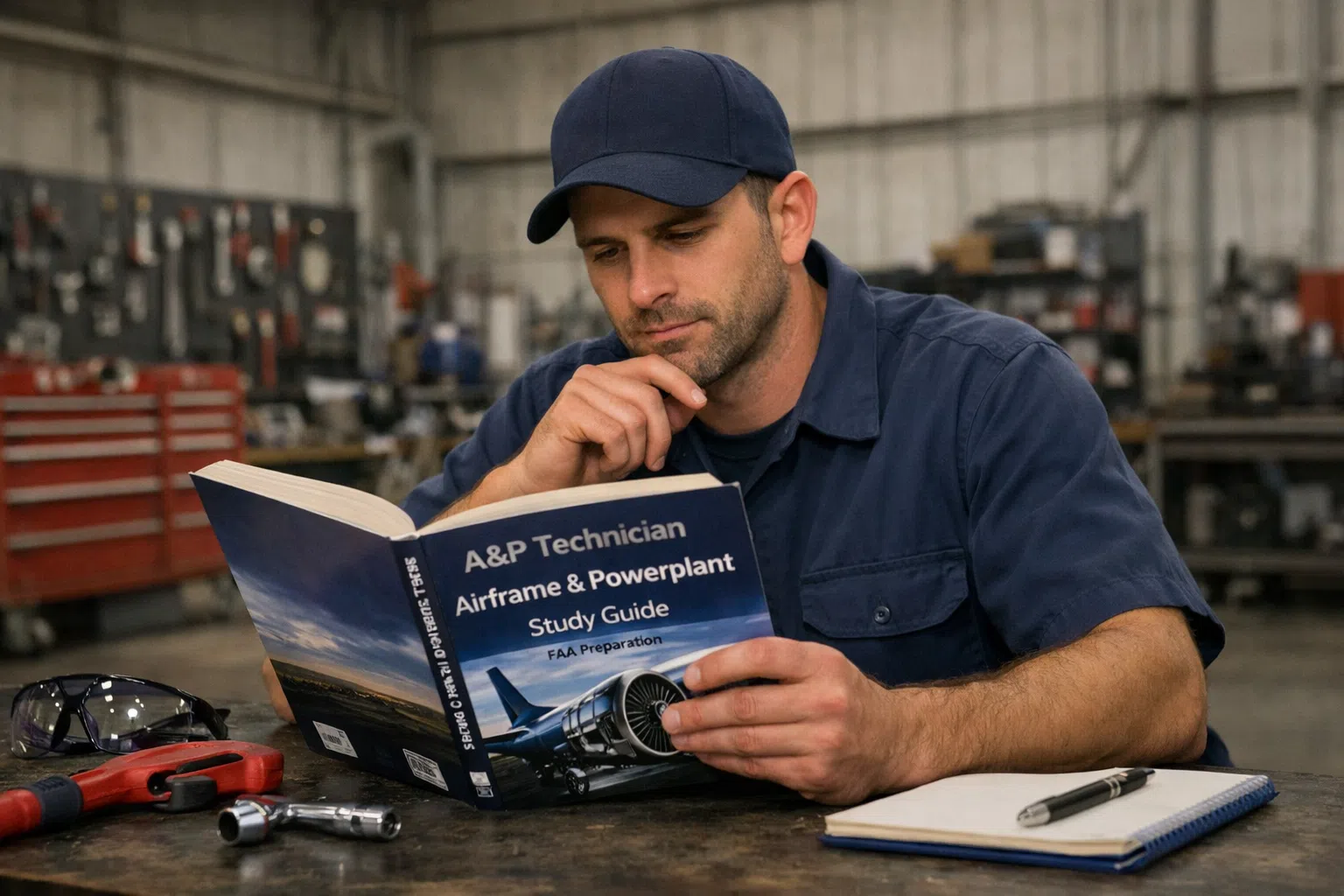
A&P FAA Testing Guide: 5 Tips on How to Pass the Written, Oral, and Practical Exams with No Stress
The A&P FAA Testing Guide is your complete roadmap to earning the FAA Airframe & Powerplant certificate, the credential that allows you to legally inspect, repair, and return aircraft to service. Whether you’re coming from a Part 147 school, military aviation maintenance, or civilian experience, this A&P FAA Testing Guide explains the written exams, oral and practical testing, eligibility requirements, and preparation strategies you need to succeed.
Earning your A&P certificate is a major milestone in an aviation maintenance career. The FAA testing process is straightforward, but it demands discipline, hands‑on skill, and a clear understanding of what the examiner expects. This A&P FAA Testing Guide breaks down each step so you can prepare confidently and pass on your first attempt.
Eligibility Requirements
Before you can begin the testing process outlined in this A&P FAA Testing Guide, you must meet FAA experience or training requirements. You qualify through one of three pathways.
Part 147 Aviation Maintenance Technician School
Most candidates attend an FAA‑approved AMTS program. These schools provide structured training in:
- General subjects
- Airframe systems
- Powerplant systems
Graduates receive authorization to take the written exams immediately, which is the first major step in this A&P FAA Testing Guide.
Military Experience
If you worked in an aviation maintenance MOS or AFSC, you may qualify based on documented experience. You must show:
- 18 months of airframe experience
- 18 months of powerplant experience
- or 30 months combined
Your local FSDO will review your records and issue authorization.
Civilian Experience
If you worked under an A&P or in a repair station, you may qualify with:
- 18 months airframe
- 18 months powerplant
- or 30 months combined
Documentation is required. Once approved, you can begin the testing sequence described in this A&P FAA Testing Guide.
The Three Written Exams
The written portion of the A&P FAA Testing Guide consists of three computer‑based tests administered at PSI testing centers.
General Written Exam
Covers foundational knowledge:
- Electricity
- Physics
- Mathematics
- Materials and processes
- Regulations
- Tools and precision instruments
This exam ensures you understand the fundamentals required for both airframe and powerplant work.
Airframe Written Exam
Focuses on:
- Structures
- Sheet metal
- Composites
- Landing gear
- Electrical systems
- Fire protection
- Inspection procedures
This section of the A&P FAA Testing Guide evaluates your ability to maintain and troubleshoot the physical structure of the aircraft.
Powerplant Written Exam
Covers:
- Reciprocating engines
- Turbine engines
- Ignition systems
- Fuel metering
- Lubrication
- Exhaust
- Engine instruments
You must score 70% or higher on each exam. Scores remain valid for 24 months, giving you time to complete the oral and practical tests.
Oral and Practical Exams (O&P)
Once you pass all three written exams, the next phase of the A&P FAA Testing Guide is the oral and practical portion. This hands‑on exam is administered by a Designated Mechanic Examiner (DME).
General O&P
You may be asked to:
- Read maintenance manuals
- Perform electrical tests
- Identify hardware
- Use precision measuring tools
- Demonstrate safety practices
Airframe O&P
Tasks may include:
- Riveting
- Sheet metal repairs
- Hydraulic servicing
- Landing gear inspection
- Electrical troubleshooting
- Control rigging
Powerplant O&P
You may demonstrate:
- Magneto timing
- Ignition troubleshooting
- Fuel system adjustments
- Turbine engine inspection
- Compression testing
- Engine run‑up procedures
The O&P typically takes 8–16 hours. If you fail a section, you only retake that section—not the entire exam.
How to Prepare for the A&P Tests
Preparation is one of the most important parts of this A&P FAA Testing Guide.
Use FAA‑Approved Study Guides
The most widely used resources include:
- ASA A&P Test Guides
- Jeppesen Manuals
- Gleim Aviation Maintenance Books
Practice With Computer‑Based Test Banks
Written exams pull from standardized question banks. Practice tests help you:
- Learn the question style
- Identify weak areas
- Improve speed
Get Hands‑On Practice
For the O&P, nothing replaces real experience. Practice:
- Riveting
- Electrical troubleshooting
- Engine timing
- Logbook entries
Study Regulations
Part 65, Part 43, and Part 91 are essential. You must know:
- Return‑to‑service requirements
- Maintenance record entries
- Airworthiness standards
Prepare for Scenario‑Based Questions
DMEs often ask:
- “What would you do if…?”
- “How do you verify…?”
- “What manual would you use for…?”
This tests judgment, not memorization.
What Happens After You Pass
Once you complete all steps in this A&P FAA Testing Guide:
- Your DME submits paperwork
- The FAA issues a temporary certificate
- Your permanent A&P certificate arrives by mail
You are now authorized to:
- Inspect aircraft
- Perform maintenance
- Approve aircraft for return to service
- Work independently as a certificated mechanic
This credential opens doors to airlines, MROs, corporate flight departments, manufacturers, and defense contractors.