
If you like aviation but do not need to be in the cockpit, flight dispatch is one of the few careers that puts you directly into airline operations without requiring years of flight training. That is why so many people ask, is flight dispatcher a good career? The honest answer is yes for the right person, but it is not a casual office job and it is not a low-pressure path into aviation.
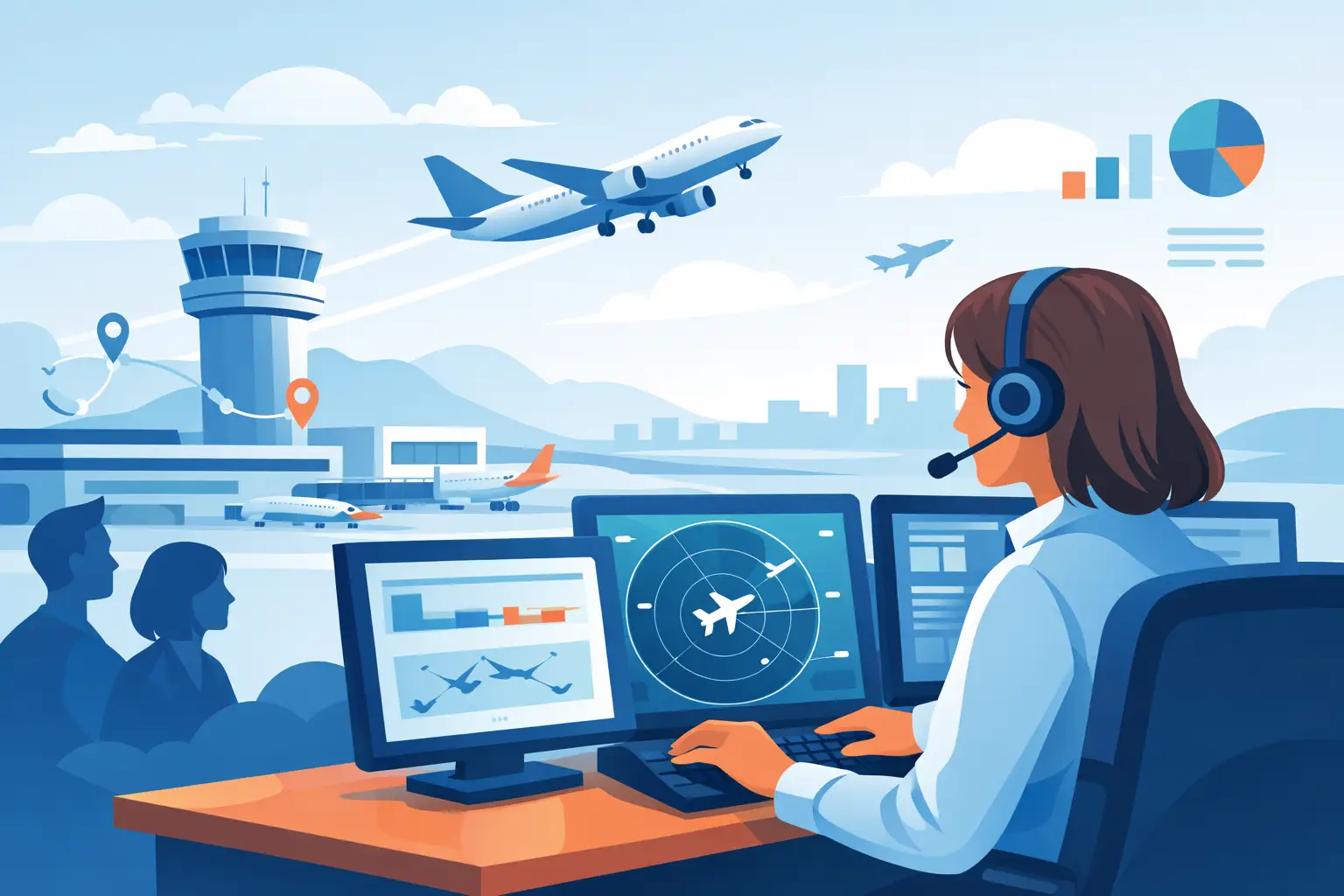
A flight dispatcher works alongside pilots to plan flights, review weather, calculate fuel needs, assess route restrictions, and help manage operational risk. In the airline environment, dispatchers are part of the decision-making chain that keeps flights legal, efficient, and safe. If you want meaningful responsibility, a technical role, and a clear entry path into airline operations, dispatch deserves serious consideration.
Is flight dispatcher a good career for most people?
It can be a very good career, but not for everyone. The biggest advantage is that dispatch offers a direct route into airline operations with far less time and money than becoming an airline pilot. You can build a stable career in aviation, earn a respectable income, and work in a role that carries real operational influence.
The trade-off is that dispatch is demanding in a very specific way. It requires fast decision-making, close attention to detail, comfort with regulations, and the ability to stay calm when weather, delays, maintenance issues, and schedule disruptions start stacking up. Some people find that exciting. Others find it exhausting.
If your idea of a good career includes predictable desk work, standard business hours, and low accountability, dispatch may feel like a poor fit. If you want a structured aviation role with responsibility, teamwork, and upward mobility, it can be an excellent one.
What makes flight dispatch appealing
The strongest selling point is accessibility compared with other aviation careers. In the United States, becoming an FAA aircraft dispatcher generally requires approved training and certification, but the barrier to entry is still much lower than many flying careers. You do not need to spend years building flight hours before becoming employable.
That makes dispatch attractive for career changers, recent graduates, and aviation-minded professionals who want into the airline world without committing to the pilot path. It is also appealing for people who enjoy systems, logistics, and live operations more than hands-on mechanical work.
Another benefit is professional relevance. Dispatchers are not on the edge of the operation. They are in it. They coordinate with pilots, maintenance control, crew scheduling, station teams, and air traffic constraints. For people who want a career that feels connected to real-world outcomes every shift, that matters.
There is also room for progression. Many dispatchers move from regional airlines to major carriers, and that jump can significantly improve pay, benefits, and schedule quality. Some also move into management, operations control, safety, training, or broader airline operations roles.
Salary and long-term earning potential
Compensation is one reason flight dispatch gets attention. Entry-level pay can be modest, especially at smaller operators or regional airlines, so it is important not to assume every dispatch job starts at a high salary. Early in your career, income may be solid but not exceptional, particularly if you are comparing it with top pilot salaries or specialized technical roles.
Where dispatch becomes more compelling is the long-term potential. At larger airlines, experienced dispatchers can earn strong salaries with better benefits, overtime opportunities, and travel privileges. The gap between entry-level and top-tier dispatch compensation can be significant.
That said, pay depends heavily on employer, union environment, location, and seniority. A person evaluating dispatch should think less in terms of one average salary number and more in terms of career trajectory. If you are willing to build experience, start with a smaller carrier, and work toward a major airline, the financial picture looks much stronger.
Training and certification are manageable, but serious
One reason many readers ask whether flight dispatch is a good career is that the path looks shorter than other aviation tracks. That is true, but shorter does not mean easy. Dispatcher training is concentrated and technical. You need to learn weather theory, flight planning, regulations, aircraft performance concepts, and operational procedures.
The FAA dispatcher certificate is not something people coast through. The training is intensive, and the responsibility behind the certificate is real. Airlines are trusting dispatchers to make sound operational decisions that affect safety, legality, fuel use, and schedule reliability.
Still, for someone who wants a defined path into aviation, dispatch is one of the clearer options. There is less ambiguity than many career transitions because the qualification pathway is relatively structured. That clarity is a major advantage for readers who want a practical plan rather than an open-ended career experiment.
The schedule is one of the biggest trade-offs
This is where many career decisions are won or lost. Flight dispatch is usually a shift-based job, and airlines operate around the clock. Nights, weekends, holidays, early mornings, and irregular rotations are common, especially early in your career.
For some people, that schedule is manageable. For others, it wears down quality of life over time. If you have family obligations, want every major holiday off, or strongly prefer a standard Monday through Friday rhythm, dispatch may feel harder than expected.
Seniority often improves schedule options, but that improvement can take time. A realistic career decision means not just asking whether the work sounds interesting, but whether the lifestyle fits your actual priorities.
Stress level and responsibility
Dispatch is not physically dangerous in the way some aviation jobs can be, but mentally it can be intense. You are balancing weather systems, aircraft limitations, alternates, route changes, delays, fuel decisions, and operational disruptions, often under time pressure.
That does not mean every shift is chaos. Much of dispatch work is procedural and methodical. But when irregular operations hit, the pressure rises quickly. Good dispatchers need judgment, discipline, and the ability to communicate clearly when situations become fluid.
This is also one of the reasons the role is respected. Dispatchers are part of the safety structure, not just an administrative support function. If you want meaningful responsibility, that is a positive. If you prefer low-stakes work with minimal consequences for mistakes, it is a warning sign.
Who tends to do well in dispatch
People who succeed in flight dispatch usually have a few things in common. They like aviation enough to care about the details. They are comfortable learning technical material. They can make decisions without freezing up, and they do not fall apart when operations become busy.
It also helps to enjoy teamwork. Dispatch is not a solo career in the pure sense. You are constantly coordinating with other departments, and your value often depends on how clearly and efficiently you communicate.
A good dispatcher often has a mix of analytical thinking and operational awareness. If you like weather, planning, problem-solving, and time-sensitive decision-making, the role can be deeply satisfying. If you dislike ambiguity, pressure, or shift work, the job may feel like a mismatch even if you love airplanes.
Is flight dispatcher a good career compared with other aviation paths?
Compared with becoming a pilot, dispatch is faster and less expensive to enter, but it usually has a lower earning ceiling. Compared with aircraft maintenance, it is less hands-on and more operations-focused. Compared with air traffic control, it may be more accessible for some candidates, though both careers involve high responsibility and stress.
This matters because dispatch is often best understood as a fit question, not a prestige question. It is not better or worse than other aviation careers in a universal sense. It is better for people who want airline operations responsibility without pursuing a cockpit or maintenance route.
That is where career clarity matters. At AviationJobsGuide.com, the smartest career decisions usually come from matching the role to your working style, not chasing whichever aviation title sounds most impressive.
When flight dispatch is a strong career choice
Dispatch is a strong option if you want a clear training path, a technical role in airline operations, and the possibility of building toward a major-carrier position. It also makes sense if you want aviation as a long-term career but do not want the cost or lifestyle of pilot training.
It may be a weaker option if your top priority is a conventional schedule, low-stress work, or the highest possible pay ceiling in aviation. There is a lot to like here, but the trade-offs are real.
The best next step is not to ask whether dispatch is good in the abstract. Ask whether you want responsibility, shift-based operations, technical training, and a career tied closely to airline performance every day. If the answer is yes, flight dispatch may be one of the most practical aviation careers you can pursue.
Have any thoughts?
Share your reaction or leave a quick response — we’d love to hear what you think!
-
 0
0
-
0
-
0
-
0
-
0
-
0