AVIATION JOBS GUIDE

Highest Paying Aviation Jobs and How to Reach Them
Compare the highest paying aviation jobs, typical U.S. earnings, qualifications, and career trade-offs to choose a path that fits your goals over time.
Aviation compensation can look wildly different depending on the seat, certificate, employer, and seniority number behind the job title. The highest paying aviation jobs are rarely quick-entry roles, but the long training path can lead to exceptional earning potential for people willing to build specialized skills and accept the lifestyle trade-offs.
For most candidates, the question is not simply which role pays the most. It is which high-earning path matches your aptitude, budget for training, tolerance for irregular schedules, and preferred day-to-day work. A major airline captain and an aerospace engineering executive may both earn well into six figures, but they arrive there through very different careers.
What Makes an Aviation Job High Paying?
Base salary is only part of the picture. In aviation, total compensation can include overtime, trip pay, per diem, retirement contributions, profit sharing, shift differentials, bonuses, and premiums for specialized qualifications. Seniority also has an unusually large effect in airline, air traffic control, and some unionized maintenance careers.
The figures below are broad U.S. compensation ranges, not guarantees. Pay changes with location, company size, labor agreements, aircraft type, experience, and the health of the aviation market. A new hire may earn far less than a veteran in the same occupation, particularly in flight operations.
1. Major Airline Captain
For pilots, major airline captain is commonly the highest-paying conventional career destination. Experienced captains flying widebody or high-demand narrowbody aircraft for large U.S. airlines can earn roughly $250,000 to more than $400,000 annually in total compensation. In especially productive years, some senior captains may exceed that range through premium flying and contract pay provisions.
The path is demanding. Pilots generally need a commercial pilot certificate, instrument rating, multi-engine experience, an airline transport pilot certificate, and the required flight time to qualify for airline operations. Many build experience as flight instructors, charter pilots, regional airline pilots, or military aviators before reaching a major carrier.
The financial upside is substantial, but seniority controls much of a pilot’s quality of life. Newer pilots may have less control over schedules, bases, vacations, and aircraft assignments. Reserve duty, time away from home, recurrent training, and medical certification are continuing parts of the profession. The top pay typically comes after years of advancement, not immediately after flight school.
Regional Airline Captain as a Stepping Stone
Regional airline captains can also earn strong incomes, often around $100,000 to $200,000 or more depending on the carrier, contract, flying schedule, and retention incentives. It is a viable long-term job for some pilots, though many use it as the bridge to a major airline position.
2. Corporate and Private Jet Captain
Corporate aviation can rival or occasionally surpass airline pay for the right pilot-aircraft-employer combination. Captains flying large-cabin business jets for Fortune 500 flight departments, high-net-worth individuals, or specialized charter operators may earn approximately $180,000 to $300,000-plus. International experience, type ratings, management duties, and a strong safety record can raise the value of a candidate.
This route appeals to pilots who prefer smaller teams, premium aircraft, and less standardized work than scheduled airline flying. Yet the trade-off is unpredictability. A corporate crew may be on call, fly irregular itineraries, and adapt to a principal’s changing plans. Job stability can also be more closely tied to a single company or client than it is at a large airline.
Pilots considering corporate aviation should look beyond the salary figure. Ask about guaranteed days off, on-call expectations, aircraft replacement plans, international travel, training budgets, and whether the role includes management or administrative work.
3. Air Traffic Controller
Air traffic controllers hold one of the strongest salary-to-training-cost positions in aviation. Experienced controllers at busy facilities can earn about $150,000 to more than $220,000, with overtime and differentials potentially increasing total pay. Compensation depends heavily on facility level, locality pay, and progression through training.
Controllers do not need a pilot certificate, but they do need to meet Federal Aviation Administration hiring requirements, pass assessments and medical screening, complete rigorous training, and perform reliably in a high-pressure environment. The work demands sustained concentration, rapid judgment, precise communication, and comfort with rotating shifts.
This career can be especially attractive for candidates who want to work at the center of aviation operations without traveling for a living. It is not an easy alternative to flying, however. Training attrition can be significant, facility assignments may not be fully within your control, and the schedule can include nights, weekends, and holidays.
4. Aerospace Engineering Leaders and Specialized Engineers
Aerospace engineering is one of the highest-paying aviation-adjacent fields for people who prefer technical design and analysis over operational flying. Entry-level engineers typically earn much less than senior leaders, but experienced specialists, principal engineers, engineering managers, and directors working on aircraft, propulsion, avionics, defense, or space programs can earn approximately $160,000 to $250,000 or more. Executive-level roles can go higher.
A bachelor’s degree in aerospace, mechanical, electrical, software, or systems engineering is the usual starting point. Advanced degrees, security clearances, program leadership experience, and expertise in areas such as flight controls, certification, propulsion, or autonomous systems can improve long-term earnings.
Engineering offers more predictable home life than many flight roles, though major program deadlines can be intense. It is also a field where location matters: high-paying opportunities are often concentrated near aerospace manufacturing, defense, research, and space-industry hubs.
5. Aviation Maintenance Management and Inspection
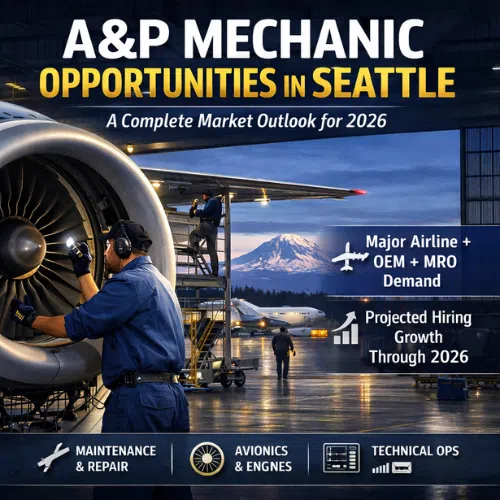
Aviation maintenance technicians build strong careers through technical competence, regulatory knowledge, and credibility earned over time. An A&P mechanic may begin at a more modest salary, but lead technicians, inspectors, maintenance controllers, quality assurance specialists, and maintenance managers can earn roughly $100,000 to $180,000 or more. Pay is often strongest at major airlines, large repair stations, corporate flight departments, and in locations with high demand for qualified technicians.
An Airframe and Powerplant certificate is the foundation for many maintenance careers. Additional aircraft-specific training, inspection authorization, avionics skills, and supervisory experience can make a technician more competitive for higher-paying positions.
Maintenance is a practical option for people who want aviation work without accumulating pilot flight-time costs. The trade-off is physical work, strict documentation standards, shift schedules, and the serious responsibility of returning aircraft to service. For technicians who enjoy troubleshooting and hands-on precision, the advancement path can be both stable and well compensated.
6. Aviation Operations and Airport Leadership
Senior operations professionals can also reach high compensation, especially at major airports, airlines, cargo operators, and large aviation service companies. Roles such as airport director, airline operations director, safety leader, and senior flight operations manager may pay from about $130,000 to $220,000 or more, depending on organization size and responsibility.
These positions are usually not entry points. Many leaders arrive after experience in dispatch, airport operations, safety management, ground handling, military aviation, or airline operations control. A degree in aviation management, business, logistics, or a related discipline can help, but proven operational judgment is often the deciding factor.
For someone who likes solving system-wide problems rather than operating an aircraft or repairing one, this can be a rewarding path. The pressure is real: disruptions, weather events, staffing shortages, and regulatory requirements do not follow a standard office schedule.
How to Choose Among the Highest Paying Aviation Jobs
Start by separating earnings potential from earnings timeline. Airline captain pay may be the headline number, but flight training can require a major upfront investment and the best compensation generally comes after years of seniority. Air traffic control may involve lower personal training costs, but acceptance and completion are competitive. Engineering requires an academic investment, while maintenance can offer a more direct route into paid technical work.
Also consider what you want your workday to feel like. Pilots manage aircraft and crews. Controllers manage traffic flow and separation. Mechanics diagnose and correct technical issues. Engineers design and improve systems. Operations leaders coordinate people, resources, and decisions when conditions change.
Before committing, compare the credential path, likely first-job pay, time to reach mid-career earnings, schedule demands, medical requirements, and geographic flexibility. A role with a slightly lower salary may be the better financial choice if it reduces debt, allows earlier full-time employment, or better fits your personal life.
High pay in aviation is usually earned through responsibility, specialization, and persistence. Choose the route you can realistically complete and continue to enjoy after the novelty of aviation has worn off. That is the path most likely to provide both a strong income and a career worth staying in.