AVIATION JOBS GUIDE
Line Service Technician for a Private FBO
Learn what a Line Service Technician for a Private FBO does, typical pay, qualifications, schedules, and the career paths this ground role can open up.
A private jet can arrive with little notice, need fuel, a tow, cabin services, and a clean, safe ramp before its passengers return. A Line Service Technician for a Private FBO is the person who makes that turnaround happen. It is an entry-level aviation role with serious safety responsibilities, direct exposure to corporate aircraft operations, and a practical path into several aviation careers.
For job seekers who want to work around aircraft without first earning a pilot certificate or mechanic license, line service can be a realistic starting point. The work is physical, weather-dependent, and schedule-driven, but it builds operational judgment that is valuable across the industry.
What a Line Service Technician for a Private FBO Does
An FBO, or fixed-base operator, provides services for general aviation and business aviation customers. At a private FBO, the customer base may include corporate flight departments, charter operators, aircraft owners, and fractional aviation providers. The pace can change quickly based on aircraft movements, weather, and customer requests.
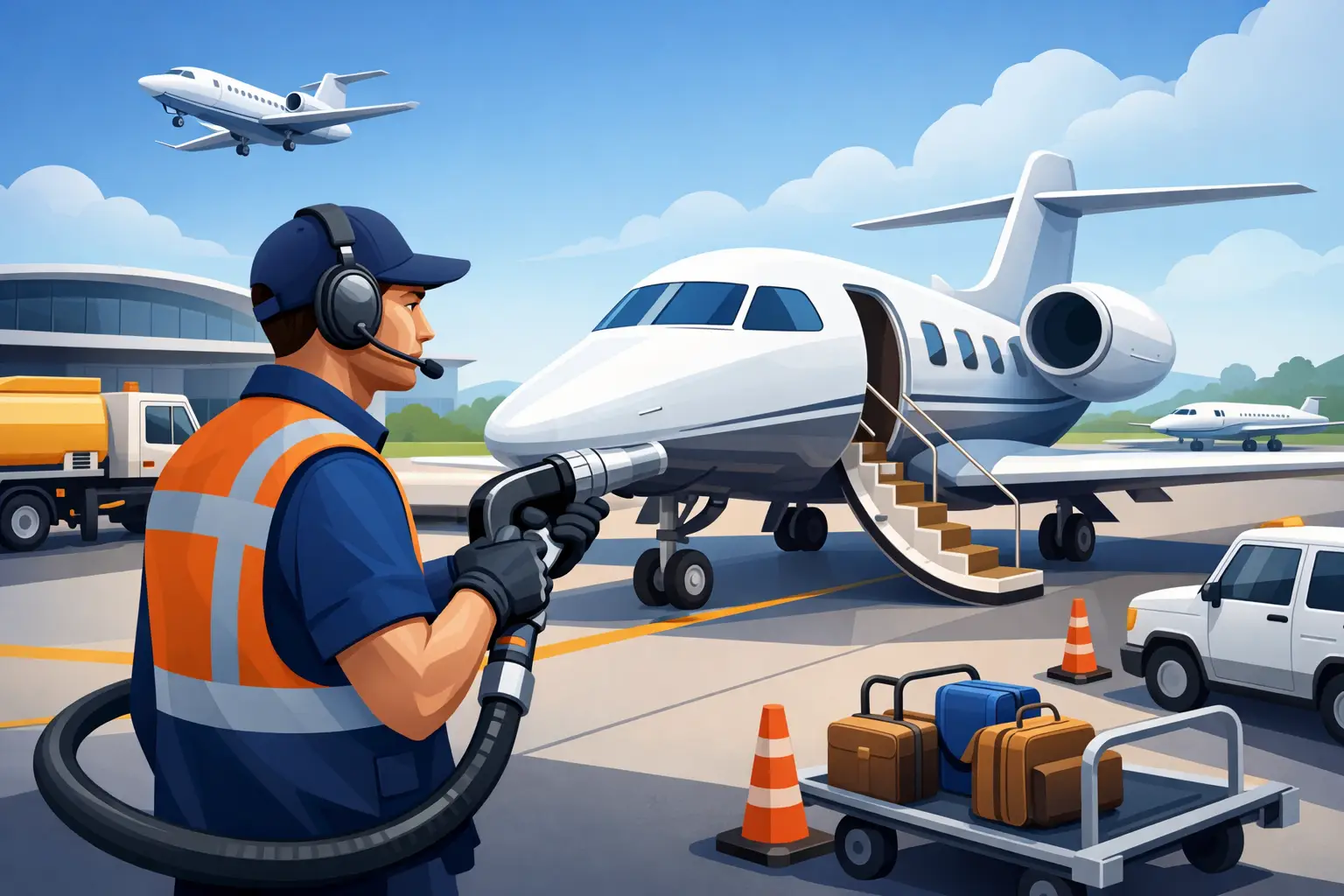
A line service technician typically marshals aircraft into parking positions, installs wheel chocks and safety cones, and helps position aircraft on the ramp. Fueling is often a central duty. That means verifying the correct fuel type and quantity, grounding the aircraft and truck correctly, watching for contamination or spills, and following the FBO’s procedures without shortcuts.
Technicians may also tow aircraft, operate ground power units, arrange baggage handling, service potable water and lavatories, assist with hangar moves, and prepare aircraft for departure. In colder regions, some roles include deicing support. Every task requires attention to ramp safety, propeller and jet-blast hazards, foreign object debris, and expensive aircraft parked close together.
Training and Qualifications to Expect
Most line service positions do not require a college degree, pilot certificate, or FAA airframe and powerplant certificate. Employers commonly hire candidates with a high school diploma or GED, a valid driver’s license, and the ability to pass a background check and drug screening.
New hires receive employer-provided training on fueling procedures, towing, ramp markings, hazardous materials awareness, fire safety, customer service, and equipment operation. Because fueling carries significant risk, companies generally require technicians to demonstrate competence before working independently.
Physical capability matters. Candidates should expect to work outdoors in heat, cold, rain, wind, and occasionally snow. The job can involve lifting baggage and equipment, climbing steps, standing for extended periods, and working early mornings, nights, weekends, and holidays. A clean driving record is especially useful because many positions involve operating fuel trucks, tugs, or company vehicles.
Prior ramp, customer service, trucking, military, automotive, or warehouse experience can help, but it is not always required. Employers often value reliability, safety awareness, and calm communication more than prior aviation knowledge.
Pay and Schedule: The Trade-Offs to Know
Compensation varies substantially by airport size, region, employer, shift, and responsibility level. Entry-level line service technicians may start around $16 to $24 per hour, while experienced technicians, lead line service staff, and employees at busy business-aviation airports may earn more. Shift differentials, overtime, tips in certain service environments, and benefits can also affect total compensation.
Private FBO work can offer a more customer-focused setting than airline ramp work, but it does not necessarily mean an easier schedule. Corporate and charter flights operate around business needs, special events, weather diversions, and passenger preferences. A quiet afternoon can become a demanding shift when several aircraft arrive at once.
Before accepting an offer, ask how the FBO handles overtime, on-call coverage, weather delays, training pay, and promotion opportunities. Those details often matter as much as the starting hourly rate.
Where Line Service Can Lead
Line service is not the same as aircraft maintenance. Technicians perform defined ground-service tasks, while certificated aviation maintenance technicians inspect, repair, and return aircraft to service. Still, working near maintenance teams can help you decide whether pursuing an A&P certificate is the right next step.
Common advancement paths include lead line service technician, line supervisor, ramp manager, fuel quality-control specialist, customer service representative, and FBO operations manager. Some employees move into aircraft dispatch support, flight coordination, charter operations, or corporate flight departments. Others use the experience to strengthen applications for pilot training programs because they have already learned ramp discipline and aircraft handling basics.
The best fit is someone who enjoys hands-on work, can follow procedures exactly, and wants a close view of how business aviation operates. If your long-term goal is to become a pilot, mechanic, dispatcher, or aviation operations professional, a line service role can give you a grounded first look at the standards that keep every flight moving safely.