AVIATION JOBS GUIDE

The Ultimate Guide to Airport Jobs
A career guide to airport jobs explaining entry & expert‑level roles, required skills, hiring expectations, pay ranges, and how to start a career in aviation.

Careers, Salaries, and Requirements
The Airport Ecosystem (Classifications & Ownership)
Have you ever stared out the massive glass windows of a passenger terminal and wondered about all the people buzzing around the tarmac below? You see people driving luggage carts, waving brightly colored wands, and connecting massive fuel hoses to jet engines. Or maybe you have walked past a brightly lit airline ticket counter and thought about who really signs the paychecks for the people standing behind the computers. Welcome to the hidden, fast-paced world of airport jobs.
An airport is not just a building; it is basically a functioning mini-city. It has its own dedicated police force, its own complex road systems, its own restaurants, its own fire department, and its own strict set of rules. If you are looking for a career change or entering the workforce, understanding how this mini-city actually operates is your very first step.
In this comprehensive guide, we are going to explore everything from entry-level positions to the highest paying airport jobs available today. We will also break down the exact airport job requirements you need to get your foot in the door. But before you can decide what specific role is right for your future, you need to deeply understand the environment where you will be working. Let’s dive into the fascinating airport ecosystem.
How are airports classified by size and capabilities in the US?
To fully understand airport jobs, you first need to know that not all airports are created equal. The Federal Aviation Administration (FAA) categorizes all public-use airports in the United States through a massive system called the National Plan of Integrated Airport Systems (NPIAS).
The FAA divides these airports based on the total amount of commercial passenger traffic they see every single year. The FAA uses the specific term “enplanements” to describe passengers who are boarding a commercial flight. The classifications look like this:
- Primary Commercial Service Airports: These are the heavy hitters of the aviation world. To be placed in this category, an airport must have more than 10,000 passenger boardings every single year. The FAA further breaks these giant facilities down into Large Hubs (like Atlanta’s Hartsfield-Jackson or Dallas/Fort Worth International), Medium Hubs, Small Hubs, and Non-Hub primary airports.
- Non-Primary Commercial Service Airports: These smaller facilities handle between 2,500 and 10,000 passengers a year. They have scheduled airline flights, but on a much smaller, regional scale.
- Reliever Airports: These are strategically built near major metropolitan cities to pull smaller, slower aircraft away from crowded commercial hubs, keeping the regional airspace safe and efficient.
- General Aviation Airports: This is actually the largest group of airports in the entire country. They do not have scheduled commercial airline flights. Instead, they handle private planes, corporate business jets, flight training schools, and emergency medical helicopter flights.
This government classification directly impacts airport job requirements. A Large Hub will have strict federal security clearances and massive specialized teams, while a small General Aviation airport might only need a small, cross-trained crew to keep things running smoothly.
What is the difference between a primary commercial airport, a corporate feeder, and a small private airport?
It all comes down to traffic volume, the purpose of the flights, and the amount of money flowing through the gates.
A primary commercial airport is exactly what you think of when you book a flight for a summer vacation. It features massive, multi-level terminals, dozens of different commercial airlines, giant baggage claim carousels, and long TSA security checkpoints. Because they handle thousands—or even millions—of passengers, these hubs offer the widest possible variety of airport jobs. You can find everything from retail cashiers and janitors to some of the highest paying airport jobs like senior Air Traffic Controllers, Airport Directors, and airline pilots.
A corporate feeder (often officially classified as a Reliever Airport) caters almost exclusively to business jets and VIP clients. Think of busy places like Teterboro Airport just outside of New York City or Van Nuys Airport in Los Angeles. You will not find thousands of tourists wearing flip-flops here. Instead, you will find traveling corporate executives, luxury charter flights, and highly trained private jet maintenance crews. The airport job requirements here often focus heavily on high-end, luxury customer service and specialized aircraft mechanics who work on multi-million dollar business jets.
A small private airport (or basic general aviation airport) might just consist of a single paved runway and a small, quiet office building. It primarily serves hobbyist pilots flying small single-engine airplanes, local agricultural crop dusters, and regional flight schools. The staff is minimal. In fact, the person pumping the specialized aviation fuel into the planes might also be the exact same person answering the phones, booking the rental cars, and plowing the snow off the runway in the winter.
Who actually owns the airports in the United States?
You might naturally assume that the federal government or the big commercial airlines own the airports. That is a very common myth. In the United States, almost all commercial airports are actually owned by local or state governments.
Specifically, they are usually owned by a city or a county government. For example, the city of Chicago owns and operates O’Hare International Airport, and the city of Atlanta owns Hartsfield-Jackson. Very few commercial airports in the US are privately owned by corporations, even though privatization is much more common in regions like Europe.
Because local city or county governments own them, the physical property is public land. However, the federal government (through massive agencies like the FAA and the TSA) heavily regulates exactly how these facilities are run, funded, and secured. The FAA provides vital grant money for paving runways, and in return, the airport must follow strict federal rules. This unique ownership structure creates a very interesting environment for airport jobs, constantly blending local city management with strict federal oversight and regulations.
What is an Airport Authority, and how does it function?
While a city might officially own the airport land, the local mayor usually does not want the massive, daily headache of running a 24-hour aviation facility. Enter the Airport Authority.
An Airport Authority is an independent, quasi-governmental body created specifically to manage, develop, and operate an airport (or sometimes a group of regional airports). Think of it like a specialized corporate board of directors. The local government appoints the board members, but the Authority operates somewhat like an independent, self-sustaining business. They manage their own massive budgets, which are funded by parking garage fees, airline terminal rent, and food concessions, rather than relying on local taxpayer dollars to keep the lights on.
Working directly for an Airport Authority is one of the most stable and rewarding airport jobs you can find. It perfectly blends the long-term benefits of public sector employment—like great pension plans, excellent health insurance, and job stability—with the fast-paced, ever-changing, and exciting nature of the global aviation industry.
Who manages the day-to-day operations of an airport?
If the Airport Authority acts as the board of directors, the Airport Director (sometimes called the Chief Executive Officer or Director of Aviation) is the ultimate boss who runs the daily show.
Underneath the Director is a large army of specialized, highly trained managers. There is a Director of Operations who constantly monitors the airfield, making sure the runways are safe, properly painted, and clear of dangerous debris. There is a Director of Security who works hand-in-hand with the local city police department and the federal TSA. There is a Director of Facilities who makes sure the massive terminal lights turn on, the heating and air conditioning works perfectly, and hundreds of public toilets flush properly.
These crucial leadership roles are easily among the highest paying airport jobs available in the local government sector. A large international airport’s CEO can confidently make hundreds of thousands of dollars a year. The dedicated teams they lead handle the actual day-to-day heavy lifting, managing everything from intense winter snow removal operations to emergency airport fire and rescue responses.
Who would the employer actually be for each level of the airport system?
This is exactly where most people get confused when they start searching for airport jobs. If you physically walk into an airport to work every day, who actually signs your bi-weekly paycheck? It depends entirely on your specific role in the ecosystem.
- The Commercial Airlines: If you are a commercial pilot, a flight attendant, a ramp baggage handler, or a customer service ticket agent, your employer is the specific airline itself (for example, Delta Air Lines, Southwest Airlines, or United).
- The Federal Government: If your job is to screen passenger baggage for weapons or safely separate the airplanes moving through the airspace, your employer is the federal government (specifically the TSA, Customs and Border Protection, or the FAA).
- The Airport Authority/City: If you drive a massive snowplow on the runway, perform routine maintenance on the terminal building elevators, or manage the airport’s multi-million dollar budget, you work directly for the airport (the local city or county government).
- Private Contractors & Concessionaires: If you sell hot coffee, pump jet fuel into private airplanes, push passenger wheelchairs, or clean the airplane cabins overnight, you likely work for a private company that leases commercial space at the airport.
Understanding this exact breakdown is absolutely crucial when you are trying to figure out specific airport job requirements, because a federal government job will have drastically different background checks, drug testing policies, and application processes than a job with a private terminal coffee shop.
What is the difference between working directly for the airport jobs versus a business located at the airport?
Working directly for the airport means you are usually classified as a public sector employee. As a city, county, or Airport Authority employee, your ultimate goal is keeping the massive facility running smoothly, safely, and securely for everyone who visits. Your benefits are often tied directly to local government packages, which can mean excellent health insurance, generous paid time off, and strong retirement pension plans.
Working for a business located at the airport (like a major airline, a busy rental car agency, or a retail electronics store) means you are firmly in the private sector. Your main focus is on providing excellent customer service and generating a financial profit for your specific company. While you absolutely must follow all of the airport’s strict federal security rules, your pay rate, your weekly schedule, and your overall airport job requirements are set strictly by your private employer, not the city.
For a practical example, an electrician employed by the airport fixes the glowing lights on the runway. An electrician employed by United Airlines fixes the complex wiring inside the airplanes. Both individuals have incredible airport jobs, but their daily goals, their direct bosses, and their long-term benefits are totally different.
Are airport jobs considered government (public sector) or private sector jobs?
As you might have already guessed by now, the answer to whether these are government or private jobs is: they are both! The entire airport ecosystem relies on a delicate, highly choreographed partnership between the public and private sectors.
Public Sector Jobs at the Airport:
- Federal Government: Air Traffic Controllers, Transportation Security Administration (TSA) Agents, Customs and Border Protection (CBP) Officers, and Federal Air Marshals.
- Local Government: Airport Operations Managers, Airport Police Officers, specialized Aircraft Rescue and Firefighting (ARFF) crews, and Terminal Custodial Staff.
Private Sector Jobs at the Airport:
- The Airlines: Pilots, Flight Attendants, Gate Agents, Aircraft Mechanics, and Dispatchers. (It is worth noting that senior airline pilots and mechanics often hold some of the absolute highest paying airport jobs in the entire private sector).
- The Service Providers: Baggage handlers (if the airline contracts that work out), retail store workers, restaurant chefs and servers, and fueling companies (also known in the industry as Fixed Base Operators or FBOs).
This unique mix of employers is exactly what makes airports so fascinating. Every single day, thousands of public and private employees work side-by-side in the exact same building to get millions of passengers safely off the ground and into the sky.
Who are the 10 largest direct airport employers in the US?
If you want to skip the airlines and work directly for the airport itself (as a public sector employee), you need to look at the massive government authorities that run these aviation mega-cities. While every single commercial airport hires direct staff, the largest employers in the country are the governing bodies that manage the busiest hubs.
If you are hunting for the best public sector airport jobs, these 10 massive Airport Authorities and city departments do the most hiring:
- The Port Authority of New York and New Jersey (PANYNJ): This massive organization is an absolute powerhouse. They do not just run one airport; they operate John F. Kennedy (JFK), LaGuardia (LGA), and Newark Liberty (EWR). Because they manage three of the busiest airports on the planet simultaneously, they employ thousands of direct workers, from airport police officers to facility maintenance crews.
- Los Angeles World Airports (LAWA): As the city department that owns and operates LAX and Van Nuys Airport, LAWA is a massive employer in Southern California. They boast their own massive, dedicated airport police department and offer some of the highest paying airport jobs in the region for civil engineers, operations managers, and environmental planners.
- Chicago Department of Aviation (CDA): The CDA manages both O’Hare (ORD) and Midway (MDW) international airports. Chicago winters are notoriously brutal, meaning the CDA employs massive teams dedicated entirely to snow removal, runway safety, and massive facility upkeep to ensure flights keep moving in freezing weather.
- Dallas/Fort Worth International Airport Board: DFW Airport is physically larger than the entire island of Manhattan. Because of its massive footprint, the semi-independent DFW Airport Board operates like a small country. They hire their own police, fire rescue teams, plumbers, electricians, and corporate executives to keep the sprawling campus running.
- City of Atlanta Department of Aviation: Hartsfield-Jackson Atlanta International (ATL) is consistently ranked as the busiest passenger airport in the entire world. To keep millions of passengers moving smoothly, the city employs a massive army of operations agents, security coordinators, and terminal managers.
- Denver Department of Aviation: Denver International Airport (DEN) is the physically largest airport in the United States by land mass. Covering 33,000 acres, the city department that runs it needs a constant supply of airfield maintenance workers, wildlife biologists (to keep birds away from jets), and operations directors.
- Houston Airport System (HAS): Managing George Bush Intercontinental (IAH), William P. Hobby (HOU), and Ellington Airport, this city department is a massive employer in Texas. Because they act as a massive global gateway to Latin America, their airport job requirements often highly value bilingual candidates for customer-facing and operational roles.
- Miami-Dade Aviation Department (MDAD): Operating Miami International Airport (MIA) and several smaller regional fields, this county department manages the busiest international freight hub in the country. They hire heavily in logistics, cargo operations oversight, and federal security coordination.
- Greater Orlando Aviation Authority (GOAA): Orlando International (MCO) sees a massive, non-stop flow of global tourist traffic heading to theme parks. GOAA functions as a massive, independent employer focused heavily on guest experience, terminal cleanliness, and managing rapid, multi-billion-dollar terminal expansions.
- Clark County Department of Aviation: Running Harry Reid International Airport (LAS) in Las Vegas, this county department operates a facility that truly never sleeps. Because Las Vegas is a 24-hour city, they are constantly hiring round-the-clock operations staff to manage the non-stop flow of tourists and luxury business jets.
Working for any of these 10 massive authorities provides incredible job stability, fantastic government benefits, and excellent retirement plans. However, because these are highly sought-after public sector positions, the airport job requirements usually involve strict civil service exams, panel interviews, and intense background checks. federal security checkpoints, or fly a multi-million dollar jet, there is a massive organization actively hiring right now.
How does working at a giant international hub compare to working at a small county airport?
The daily, lived reality of airport jobs changes dramatically depending on the physical size of the facility you clock into every morning.
The Giant International Hub (e.g., JFK, LAX, O’Hare, DFW): Working at one of these massive facilities is like working inside a high-speed blender. The overall pace is frantic, loud, and incredibly fast. These massive airports operate 24 hours a day, 7 days a week, 365 days a year. Jobs here are highly specialized. If you are an electrician at a mega-hub, you might only work on repairing baggage conveyor belts all year long. The pay is generally much higher, and you will undoubtedly find many of the highest paying airport jobs concentrated heavily in these busy mega-hubs.
However, the daily stress levels are also significantly higher. Just commuting to work—parking your car in a remote employee parking lot, waiting for a crowded employee shuttle bus, passing through strict security badge checks, and walking a mile to your actual work station—can easily add an extra full hour to your long workday before you even clock in.
The Small County Airport (General Aviation): Working at a small regional or county airport is much quieter and far more intimate. You will probably know every single local pilot by their first name. The working environment is relaxed, and the hours are usually much more traditional, with many small airports practically shutting down their operations when the sun goes down.
However, the jobs here are far less specialized. You have to wear many different hats to get the job done. The Airport Manager might also be the exact same person inspecting the runway for stray wildlife, answering the main public phone line, and dealing directly with noise complaints from unhappy neighbors. While the financial pay might be slightly lower than at a massive international airline hub, the excellent quality of life and vastly reduced stress make it a dream location for many long-time aviation professionals.
Ultimately, your choice depends purely on your own personality. Do you naturally thrive on the intense adrenaline of a busy global terminal, or do you strongly prefer the quiet, peaceful hum of a few private planes taking off into the sunset?
Preparing for Takeoff: What Comes Next?
As you can clearly see, the modern airport ecosystem is massive, incredibly complex, and full of fascinating hidden layers. It is a unique world where armed federal agents, local city maintenance workers, and highly trained commercial airline pilots all share the exact same employee lunchrooms.
Now that you fully understand how airports are officially classified, who actually owns the land, and who the major corporate players are, a whole new set of important questions probably comes to mind.
How do you actually go about getting one of these coveted positions? What specific kind of education, licensing, or intensive background checks do you really need? Do you absolutely need a four-year college degree to succeed, or can you start building an amazing career right out of high school? And most importantly for your future, which specific career paths actually lead to making the most money?
You now understand the complex environment, but how do you successfully navigate the actual hiring process?
In Section 2, we are going to completely crack open the vault on exact salaries and specific career paths. We will look very closely at the most popular airport jobs, dig deeply into the exact airport job requirements for both entry-level and advanced management roles, and definitively reveal which careers truly rank as the highest paying airport jobs in the entire global aviation industry.
Stick around. You definitely will not want to miss what is on the radar next.
Finding Jobs & Eligibility Requirements
In Section 1, we unlocked the hidden ecosystem of the airport. You now know exactly who owns the runways, who runs the terminals, and who the biggest employers are. But knowing how a mini-city works is only the first piece of the puzzle. The next logical question is: how do you actually get inside?
Walking through a terminal, you will see doors marked “Authorized Personnel Only” and workers swiping security badges to access the tarmac. It can feel like an exclusive club. How do you get past those locked doors? What does it take to get hired?
In this section, we are going completely behind the scenes. We will break down exactly where to look for open positions and cover the strict airport job requirements you must meet before you ever put on a uniform. Whether you are looking for an entry-level starting point or aiming for the highest paying airport jobs, this section will show you exactly how to get your foot in the door.
How do I find and apply for jobs that work directly for the airport?
Because there are so many different employers operating under one roof, there is no single “help wanted” sign for the entire airport. To find the best airport jobs, you have to know exactly who you want to work for and where they post their openings.
If you want to work directly for the airport itself (meaning the local city, county, or Airport Authority), you need to skip the airline websites. Instead, go directly to the official website of the specific airport (for example, flyLAX.com or dfwairport.com). Scroll all the way to the very bottom of their homepage and look for a link that says “Careers,” “Employment,” or “Airport Authority Jobs.” This will take you to a dedicated government portal where you can apply for jobs like Airport Operations Agent, Airfield Maintenance, or Airport Police.
If you want to work for a commercial airline, you must visit the specific career pages for Delta, American, Southwest, or United. If you want to work for the federal government (like the TSA or Customs), you must create a profile and apply exclusively through USAJOBS.gov. Finally, there are dedicated aviation job boards and employment networks online that gather listings from airlines, repair stations, and corporate flight departments all in one place.
What basic eligibility requirements are needed for an airport job?
Because airports are highly secure federal transportation hubs, the absolute baseline airport job requirements are a bit stricter than what you would find at a typical office or retail store.
To even be considered for the vast majority of airport jobs, you must meet these basic criteria:
- Age: You must be at least 18 years old for almost all roles that require unescorted access to secure areas (like the tarmac or baggage rooms). Some fast-food concession jobs in the main public terminal might hire at 16, but this is rare.
- Legal Status: You must be a United States citizen or have the legal right to work in the United States. You will have to prove this with original documents like a passport, birth certificate, or resident alien card.
- Basic Education: Most entry-level jobs require a high school diploma or a GED.
- Background Check: You must be able to pass a strict criminal history check (we will cover this in heavy detail below).
If you meet these four basic pillars, you are legally eligible to start applying for roles across the aviation ecosystem.
Do I have to have technical training or a college degree to work at an airport?
The short answer is: no, you absolutely do not need a college degree to start working at an airport. However, your education level will dictate how far and how fast you can climb the ladder toward the highest paying airport jobs.
Thousands of airport jobs require zero college education. Roles like baggage handlers, ramp agents, cabin cleaners, wheelchair assistants, and customer service ticket agents provide all the technical training you need on the job. The airline or handling company will teach you exactly how to load the aircraft, use the computer systems, and stay safe on the ramp.
However, if you want to move into upper management or highly technical fields, education becomes critical. To become a Director of Operations or an Airport Manager, you will almost certainly need a four-year bachelor’s degree in Aviation Management, Business, or Public Administration. Technical roles, like fixing jet engines, require specialized trade school training and federal licenses, not necessarily a standard college degree.
Which airport roles are entry-level?
If you are starting from scratch with no aviation experience, there are several fantastic entry-level airport jobs that act as perfect stepping stones into the industry.
- Ramp Agents (Baggage Handlers): This is one of the most common entry points. You will work outside in all weather conditions, loading and unloading luggage, directing airplanes to the gate with glowing wands, and driving tug carts. It is physically demanding but gets you right up close to the aircraft.
- Customer Service Agents: These are the employees standing at the ticket counters and boarding gates. Your job is to check passports, print boarding passes, and help passengers who have missed their flights.
- Cabin Appearance Agents: When a plane lands, a team rushes aboard to clean the bathrooms, vacuum the aisles, and empty the trash before the next group boards. This is a fast-paced, entry-level role crucial for keeping flights on time.
- Fuelers (Line Service Technicians): Working for private companies called Fixed Base Operators (FBOs), you will drive massive fuel trucks and pump jet fuel into both small private planes and massive commercial airliners.
- TSA Transportation Security Officers (TSOs): The TSA frequently hires entry-level screeners. They provide weeks of paid, specialized training to teach you how to read X-ray machines and screen passengers.
Which airport roles require specialized professional credentials?
On the other end of the spectrum, the aviation industry is heavily regulated. Because safety is the ultimate goal, many of the highest paying airport jobs require years of intense training and specialized licenses issued directly by the Federal Aviation Administration (FAA).
- Airline Pilots: To fly a commercial jet, you need an Airline Transport Pilot (ATP) certificate, requiring a minimum of 1,500 hours of flight time, plus specific “type ratings” for the exact jet you are flying.
- Aircraft Mechanics (A&P): You cannot just pop the hood of a Boeing 737 and start turning wrenches. You must hold an Airframe and Powerplant (A&P) license issued by the FAA, which usually requires 18 to 24 months of specialized technical schooling.
- Air Traffic Controllers (ATC): Managing the crowded skies requires intense focus. Controllers usually must attend an FAA-approved collegiate training program or pass through the FAA’s rigorous training academy in Oklahoma.
- Aircraft Dispatchers: These professionals work behind the scenes, planning the exact flight routes, calculating fuel burns, and monitoring weather. They must hold an FAA Dispatcher certificate, which requires passing a massive written and practical exam.
Because of the extreme responsibility attached to these credentials, these licensed professionals easily secure the highest paying airport jobs in the ecosystem.
Do I need prior aviation experience to get hired by an airport?
It is a massive myth that you need to be an “aviation nerd” who has loved airplanes since childhood to get hired. While passion helps, most employers are simply looking for solid, reliable workers with transferable skills.
If you have worked at a busy hotel front desk, an airline will gladly hire you as a Customer Service Gate Agent. The skills of dealing with frustrated guests translate perfectly. If you have worked in a warehouse driving a forklift, a cargo airline like FedEx or a ground handling company will quickly hire you to load heavy freight into the belly of an aircraft. If you have been a police officer or a security guard at a mall, the Airport Authority will value your emergency response experience.
For entry-level airport jobs, employers care much more about your work ethic, your ability to show up on time, and your ability to follow strict safety rules than they do about your prior knowledge of airplanes.
What are the background check and security clearance (SIDA) requirements?
This is the most critical hurdle in the entire hiring process. You can have a perfect resume and nail the interview, but if you cannot pass the federal background check, you cannot work at the airport. Period.
Most airport jobs require you to obtain a SIDA badge. SIDA stands for Security Identification Display Area. The SIDA badge is that hard plastic ID card you see employees wearing on their arms or lanyards. It is your electronic key to the mini-city.
To get a SIDA badge, you must undergo a strict 10-year Criminal History Records Check (CHRC) conducted by the FBI. You will be digitally fingerprinted. The government will look for any “disqualifying criminal offenses.” These include obvious crimes like treason or terrorism, but they also include felony convictions for theft, bribery, weapon charges, or assault within the last ten years.
Understanding SIDA rules is a massive part of the airport job requirements. Once you have this badge, the rules are absolute. For example, unescorted visits to secure cargo ramps or active runways without a valid SIDA badge directly violate federal airport security regulations. You cannot bring your friends to work to show them the planes. If you lose your badge, you cannot enter the airport. If you open a secure door and let someone follow you through without swiping their own badge (called “piggybacking”), you will likely be fired on the spot and face federal fines. The security of the flying public depends entirely on this strict badging system.
Are there physical or medical requirements for airport employment?
Yes, and these requirements are taken just as seriously as the criminal background checks.
The most universal medical requirement involves drug and alcohol testing. The aviation industry is governed by the Department of Transportation (DOT). This means that anyone working in safety-sensitive airport jobs (like mechanics, pilots, fuelers, and ramp agents) is subject to strict federal DOT drug testing. You will be tested before you are hired, and you will be subject to random tests throughout your career. Important note: Even if marijuana is legally permitted in your specific state, it is still federally illegal. Because aviation is federally regulated, testing positive for marijuana will immediately disqualify you from the job.
Physical requirements depend on the role. If you are applying to be a Ramp Agent handling baggage, you will have to pass a physical fitness test proving you can safely lift, bend, and throw 50 to 70 pounds repeatedly over an 8-hour shift. If you are applying for specialized roles like Air Traffic Control or Pilot, you must pass strict FAA medical exams that test your vision, color blindness, hearing, and heart health to ensure you will not have a medical emergency while on duty.
Do airports offer apprenticeship, internship, or trainee programs?
Absolutely. Because the industry needs a constant flow of new, highly trained talent, there are fantastic pathways to learn while you earn.
If you are aiming for management and want one of the highest paying airport jobs running the facility, many medium and large Airport Authorities offer 12-to-24-month paid management internships. You will shadow the Director of Operations, learn how to audit the runways, and understand how the multi-million dollar budget works.
For technical roles, many airlines and independent Part 145 repair stations offer mechanic apprentice programs. They will hire you as an unlicensed helper to clean parts and fetch tools. Over the course of a few years, as you gain hands-on experience under the supervision of a licensed mechanic, they will often help pay for you to take your official FAA tests. Similarly, major airlines are now offering “Cadet Academies,” where they take people with zero flight experience, loan them the money for flight school, and guarantee them a job as a pilot once they finish their training.
What skills are most in-demand for airport operations and management?
If you are looking to skip the entry-level roles and move directly into management, the airport job requirements shift from physical skills to mental agility.
The most in-demand skill in airport operations is crisis management. An airport is a highly dynamic environment. A sudden winter blizzard can ground 500 flights, stranding 10,000 angry passengers in the terminal while snowplows race to clear the runway. Operations managers must be incredibly calm under immense pressure.
You also need elite communication skills. An Airport Duty Manager has to coordinate instantly with local police, the federal TSA, airline station managers, and emergency fire crews over complex radio channels. Finally, a deep understanding of regulatory compliance is vital. Aviation is drowning in federal rulebooks. Managers must constantly read, interpret, and enforce FAA rules to ensure the airport never gets fined or shut down. If you are highly organized, cool under pressure, and love solving massive logistical puzzles, airport management is the career for you.
Preparing for the Next Step: The Paycheck
You now know where to hunt for the jobs. You know you need a clean 10-year criminal background to get your SIDA badge, and you know you have to pass a strict federal drug test. You understand that you can start out tossing bags on the ramp without a college degree, or you can spend years in school to chase the highest paying airport jobs in the control tower or the cockpit.
But knowing the requirements is only half the battle. Before you commit to filling out the applications and getting fingerprinted, you need to know if the financial reward is actually worth the intense effort.
Can you realistically support a family loading luggage? What does an entry-level customer service agent actually make per hour? And when people talk about the most lucrative careers in aviation, just how much money are those executives, controllers, and captains really taking home every year?
In Section 3, we are going to open the payroll books. We will break down exact starting wages for entry-level roles, explore the incredible travel benefits that come with airline jobs, and finally reveal the exact salaries of the highest earners on the airfield.
You know how to get in. Now, let’s see how much it pays.
Salaries, Pensions, and Benefits (The Public Sector Paycheck)
You now know exactly who runs the airport, and you know about the specific roles hired directly by the city and the independent Airport Authorities. You also understand that securing one of these government positions means navigating a maze of federal background checks and strict security rules.
Now, it is time to answer the most important question for your future: what is the actual financial payoff?
When most people research airport jobs, they make a massive mistake. They only look at the base hourly pay rate and compare it to a job at a local retail store or warehouse. Working directly for an Airport Authority is public sector government work. In the government sector, your base salary is only one piece of the puzzle. To truly understand how much you will earn, you have to look at the entire compensation package, including the legendary government pension plans, the premium healthcare, and the massive overtime opportunities.
In this section, we are opening the payroll books. We will break down the exact starting salaries for entry-level workers, explore the massive earning potential of the skilled trades, and reveal the true take-home pay of the highest paying airport jobs in the public sector.
The Public Sector Paycheck: More Than Just an Hourly Rate
Before we look at the exact numbers, you have to understand how government pay scales actually work. If you work for a private company, your raises are usually based on a boss deciding if you did a good job that year. It is highly unpredictable.
If you work directly for an Airport Authority, your pay is almost always structured on a “step scale.” This is a public grid that shows exactly how much money you will make in year one, year two, year five, and year twenty. Every time you hit a work anniversary, you automatically move up a step and get a guaranteed raise. Many of these airport jobs are also protected by strong labor unions. The unions negotiate strict contracts with the city, ensuring that your pay automatically increases every year to keep up with the cost of living and inflation.
Because of this system, working for the airport provides a level of financial stability that is almost impossible to find in the private sector. You always know exactly what your next paycheck will look like.
Entry-Level Salaries: Getting Your Foot in the Door
If you are starting with zero aviation experience and only a high school diploma, the airport offers several fantastic entry-level paths.
For roles like Terminal Custodians, Parking Garage Attendants, and basic Customer Experience Ambassadors, starting salaries usually range from $35,000 to $45,000 a year, depending heavily on the cost of living in your city. (For example, an entry-level worker at San Francisco International Airport will earn significantly more than one at a small regional airport in Ohio).
While $40,000 a year might sound like standard entry-level pay, the benefits change the math completely. A private-sector job paying $40,000 might charge you $300 a month for basic health insurance. The Airport Authority often covers 100% of your health insurance premiums, keeping that extra money directly in your pocket. These roles are the perfect way to satisfy the strict airport job requirements and get your security badge before transferring to a higher-paying department.
Airfield Maintenance and Heavy Equipment Operators
If you enjoy working outside and have experience driving trucks or operating machinery, Airfield Maintenance is an incredibly lucrative career path.
These are the crews painting the runways, mowing the massive grass safety areas, and driving the giant snowplows during winter blizzards. Starting salaries for general airfield maintenance workers typically range from $45,000 to $55,000 a year. However, experienced Heavy Equipment Operators who drive the massive, specialized snow blowers and paving machines can easily earn between $60,000 and $80,000 a year as their base salary.
Because these airport jobs require you to maintain a Commercial Driver’s License (CDL) and pass constant federal drug tests, the city pays a premium to keep you on the payroll. During a severe winter, these workers can effectively double their base salary through emergency overtime pay, which we will discuss in detail shortly.
Skilled Trades: Electricians, Plumbers, and HVAC
Airports are massive consumers of electricity and water. To keep the buildings running, Airport Authorities fiercely compete to hire highly skilled, licensed tradespeople.
If you are a licensed journeyman electrician, plumber, or HVAC technician, working for the airport is often much better than working in residential construction. You never have to drive your personal truck to a customer’s house, and you always work in the same location every single day.
These highly technical roles offer fantastic compensation. Base salaries for skilled trades at major airports generally start between $75,000 and $90,000 a year. Senior electricians who specialize in the complex, high-voltage runway lighting systems can easily earn over $100,000 a year. Because these roles demand strict state licensing on top of the standard federal background checks, they easily rank among the highest paying airport jobs for workers who do not have a four-year college degree.
Public Safety: Airport Police and ARFF Firefighters
The men and women who protect the mini-city are compensated very well for the massive risks they take.
Aircraft Rescue and Firefighting (ARFF): Because ARFF firefighters require intense, specialized federal training to extinguish jet fuel fires, they are paid very competitively. Starting salaries for an airport firefighter typically range from $65,000 to $85,000 a year. Senior firefighters and shift captains can comfortably earn between $100,000 and $130,000 annually.
Airport Police Officers: Sworn law enforcement officers who patrol the terminals and the airfield earn salaries comparable to or better than traditional city police. Depending on the size of the city, an entry-level airport police officer starts between $70,000 and $90,000. Sergeants and Lieutenants managing the security checkpoints easily push past the $120,000 mark.
To earn these salaries, candidates must meet the absolute strictest airport job requirements on the entire airfield, including psychological evaluations, physical agility tests, and flawless background histories.
Airport Operations Specialists and Duty Managers
If your ultimate goal is to run the entire airport one day, you will start in the Operations department.
An entry-level Airport Operations Specialist (the person driving the yellow truck on the runway looking for hazards) typically earns between $55,000 and $75,000 a year. This role usually requires a bachelor’s degree in Aviation Management. It is a fast-paced, highly regulatory role where you constantly monitor FAA compliance.
As you gain experience and get promoted to an Airport Duty Manager or an Operations Supervisor, the pay jumps significantly. These managers are the highest-ranking officials on the property during the night shift or on weekends. They make critical decisions during plane crashes, severe weather, or security breaches. Because of this massive responsibility, Duty Managers generally earn between $90,000 and $130,000 a year.
Corporate and Administrative Salaries
Behind the scenes, the Airport Authority operates exactly like a massive corporate business. These office-based airport jobs offer competitive corporate salaries but come with the incredible added bonus of government pension plans.
- Properties and Lease Managers: The people negotiating the multi-million-dollar contracts with the airlines and restaurants generally earn between $85,000 and $120,000 a year.
- Aviation Public Relations: The spokespeople handling the media and marketing campaigns typically make between $75,000 and $110,000.
- Airport Finance Directors: Managing a billion-dollar airport budget is incredibly complex. Senior finance and accounting managers at large hubs earn anywhere from $110,000 to $160,000 annually.
- Civil Engineers: The engineers designing the new runways and parking garages are in incredibly high demand, easily pulling in $100,000 to $145,000 a year.
Executive Leadership: The Highest Paying Airport Jobs
At the very top of the pyramid sits the executive leadership team. These roles carry the ultimate legal liability for the safety of the flying public. If the FAA finds massive safety violations, these executives are the ones held directly responsible.
Because of the extreme pressure and public visibility, the executive suite holds the absolute highest paying airport jobs in the public sector.
A Deputy Airport Director (the second-in-command) at a medium or large hub will generally earn between $150,000 and $250,000 a year.
The Airport Director (or CEO of the Airport Authority) is one of the highest-paid public officials in any city. At a massive mega-hub like Los Angeles International (LAX), Dallas/Fort Worth (DFW), or Atlanta (ATL), the Airport Director’s base salary easily exceeds $350,000, and with performance bonuses, total compensation frequently pushes past $500,000 a year. To reach this elite level, the airport job requirements demand decades of proven aviation leadership, deep political skills, and a flawless safety record.
The “Hidden Paycheck”: Understanding Government Benefits
If you only look at the base salaries listed above, you are missing half the picture. The real financial power of these direct airport jobs lies in the massive government benefit packages. Human resource experts often refer to these benefits as the “hidden paycheck.”
First, consider healthcare. In the private sector, a family health insurance plan can easily cost an employee $500 to $800 a month out of their own pocket. Many Airport Authorities cover 80% to 100% of these premium costs for their employees. Over a single year, that free healthcare equals an extra $6,000 to $9,000 of untaxed money staying in your bank account.
Second, consider paid time off (PTO). Because government jobs prioritize a healthy work-life balance, it is very common for airport employees to start with three to four weeks of paid vacation, plus 10 to 12 paid federal holidays, plus two weeks of paid sick leave. This massive amount of paid time off is incredibly rare in the fast-paced private sector.
The Power of the Defined Benefit Pension
The absolute greatest financial reward for meeting all the strict airport job requirements and working directly for the Airport Authority is the retirement pension.
In the private sector, most companies offer a 401(k). You put your own money into the stock market, the company matches a tiny percentage, and you just have to hope the stock market doesn’t crash right before you retire. When your 401(k) runs out of money, you are out of luck.
Most direct airport jobs offer a Defined Benefit Pension. This is the holy grail of retirement planning. Under a pension system, when you retire after 20 or 30 years of service, the city guarantees to pay you a massive percentage of your final salary every single month for the rest of your life.
For example, if you retire as an Airport Operations Manager making $100,000 a year, your pension might guarantee you $60,000 a year for the rest of your life, no matter what the stock market does. You cannot outlive a pension. This incredible financial safety net is the primary reason people spend their entire 30-year careers working directly for the airport.
How Mandatory Overtime Can Massively Boost Your Income
If you are willing to work hard and lose some sleep, the base salaries we discussed earlier are just the starting point. Airports are a 24/7, 365-day-a-year operation. They never close for holidays, and they fight hard to stay open during severe weather.
Because of this, overtime pay is a massive factor for hourly airport employees like maintenance crews, electricians, and police officers.
Let’s look at a winter snowstorm. If a blizzard hits Chicago O’Hare, the airport must clear miles of concrete instantly. The heavy equipment operators will often work 16-hour shifts for five days straight. They are paid time-and-a-half (1.5x their normal rate) for anything over 40 hours, and sometimes double-time (2x their normal rate) if they are forced to work on a federal holiday like Christmas or Thanksgiving.
It is incredibly common for a snowplow driver with a base salary of $60,000 to actually take home $90,000 at the end of the year just by racking up massive amounts of winter overtime.
Does the Size of the Airport Change Your Salary?
Absolutely. Just as the airport job requirements change depending on the size of the facility, the paychecks scale drastically based on the airport’s FAA classification.
If you work as an Airport Manager at a small, rural General Aviation airport with just one runway and no commercial airline service, your salary might top out at $65,000 a year. The budget is very small, and the local county simply cannot afford to pay six-figure salaries.
However, if you take that exact same title—Airport Manager—and work at a Large Hub commercial airport, you are suddenly managing a multi-million dollar budget, thousands of employees, and strict federal TSA compliance. That exact same job title will now easily pay $150,000 or more.
If you want the absolute highest paying airport jobs in the public sector, you eventually have to move to the massive international mega-hubs.
Is the Pay Worth the Strict Airport Job Requirements?
When you add it all up—the guaranteed annual step raises, the free premium healthcare, the incredible lifelong pension plan, and the massive overtime opportunities—working directly for the Airport Authority is easily one of the smartest financial moves you can make.
Yes, the airport job requirements are strict. You have to pass intense federal background checks, you must submit to random DOT drug testing, and you are held to a much higher standard of public conduct than a normal civilian. If you make a mistake, you are not just violating a company policy; you are often violating federal law.
But for those who can pass the checks and handle the pressure, these public sector airport jobs offer a level of lifelong financial security that is almost impossible to find anywhere else in the modern economy.
What is Next on the Radar?
We have completely mapped out the public side of the airport. You know how much the city pays the people who pave the runways, run the finances, and manage the massive facility.
But what about the airplanes themselves? What about the people actually loading the bags into the cargo hold, serving the drinks in the cabin, and flying the multi-million-dollar jets through thunderstorms?
While the city owns the building, the commercial airlines generate the massive profits. The private sector side of the airport operates with a completely different set of rules, completely different union contracts, and an entirely different pay scale.
Are airline pilots really making half a million dollars a year? Do flight attendants really get to fly around the world for absolutely free? And how do you get hired by a massive global airline if you have zero prior aviation experience?
In Section 4, we are leaving the public sector behind and stepping onto the actual aircraft. We will explore the massive world of airline employment, break down the exact salaries for pilots, mechanics, and flight attendants, and reveal the incredible travel benefits that make the private sector so intensely competitive.
Keep your seatbelt fastened. We are just getting ready for takeoff.
Airport Jobs: A Day in the Life (Schedule, Environment, and Lifestyle)
In the previous sections, we completely broke down the financial side of working directly for a city or county Airport Authority. You know exactly what the entry-level roles pay, how the massive government pensions work, and exactly which executive positions rank as the highest paying airport jobs in the public sector.
But a great paycheck and a solid pension are only part of the equation. Money does not make your alarm clock any less painful when it rings at 3:00 AM on a snowy Tuesday. Money does not stop the rain when you are repairing a broken taxiway light in the middle of a thunderstorm.
Before you commit to a lifelong career in public service, you need to know what the daily grind actually looks like. What is it really like to work inside this massive, non-stop aviation machine?
In this section, we are diving into the actual lifestyle of direct airport jobs. We will explore the crazy rotating schedules, the physical toll of working on the tarmac, the unique daily stressors, and exactly how much you will actually interact with the airplanes and the passengers. Let’s look at a day in the life of an Airport Authority employee.
What are these roles actually like? (What do they do on a daily basis?)
Because an airport functions exactly like a small city, there is no single “typical” day. Your daily experience depends entirely on which department you get hired into.
If you work in Corporate Administration (like the Finance Department, Properties and Leases, or Public Relations), your day looks very much like a traditional corporate job. You will sit at a desk, attend budget meetings, answer hundreds of emails, and stare at spreadsheets. Even the professionals holding the highest paying airport jobs, like the Airport Director, spend the vast majority of their days inside quiet, air-conditioned conference rooms negotiating with airline executives or meeting with city politicians.
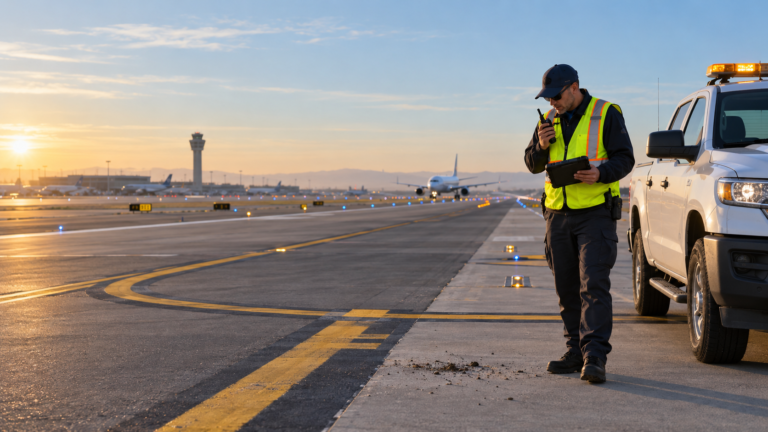
However, if you work in Airport Operations or Airfield Maintenance, your daily basis is completely different. An Airport Operations Specialist will start their day by grabbing a portable aviation radio, jumping into a yellow city truck, and driving directly onto the active runways. Their day is spent hunting for safety hazards, chasing away flocks of birds, coordinating emergency responses with the fire department, and legally shutting down taxiways so maintenance crews can patch cracked concrete. There is no cubicle. Their office is the entire 5,000-acre airfield, and no two days are ever exactly the same.
What is a typical schedule for an airport employee?
If you are looking for a standard, predictable schedule where you are guaranteed to have every weekend off, you must aim for the administrative offices. The HR teams, finance directors, and badging officers generally work a standard Monday-through-Friday schedule.
For everyone else, the schedule is highly dynamic. The airport never, ever closes. Because flights arrive at 2:00 AM and depart at 5:00 AM, the city must have staff on the property 24 hours a day, 7 days a week, 365 days a year.
Because constant coverage is one of the absolute strictest airport job requirements, most operational airport jobs run on rotating shift schedules. A common setup for an Airport Police Officer, an Operations Specialist, or a Duty Manager is a “4-on, 3-off” schedule. You might work four 10-hour shifts in a row, followed by three days off.
Aircraft Rescue and Firefighting (ARFF) crews often work even longer schedules, such as 24 hours on duty at the airport firehouse, followed by 48 hours completely off.
Do airport employees work 9-to-5 or rotating 24/7 shifts?
For the thousands of field employees, 9-to-5 simply does not exist. The airport operates on three primary shifts: Day Shift (typically 6:00 AM to 2:00 PM), Swing Shift (2:00 PM to 10:00 PM), and the dreaded Graveyard or Midnight Shift (10:00 PM to 6:00 AM).
When you are first hired into public sector airport jobs, you will almost certainly be placed on the midnight shift. Why? Because airports run strictly on seniority. The employees who have worked for the city for 20 years get the first choice of schedules, and they always pick the day shifts. As the “new guy,” you get whatever is left over.
Working the midnight shift is a bizarre experience. The massive passenger terminals are practically empty, creating a strange, echoing silence. Meanwhile, out on the runway, it is organized chaos. Because there are no commercial flights landing at 3:00 AM, the midnight shift is when the massive airfield maintenance crews take over. They use this small, dark window of time to repave the runways, repaint the taxiway lines, and replace broken high-voltage electrical lights before the sun comes up and the morning flights begin.
Being adaptable to these crazy hours is one of the most vital, unwritten airport job requirements. You will work on Christmas morning. You will work on Thanksgiving night. You will miss weekend birthday parties because you are scheduled to drive a runway sweeper on a Saturday night.
Which airport roles are primarily outside versus inside?
The physical environment of your job dictates your daily comfort level.
The Inside Roles: If you want to stay in the climate-controlled air conditioning, you should target roles like Terminal Guest Experience Coordinator, Airport Badging Credentialing Officer, Terminal Custodian, or inside HVAC Technician. These employees spend 100% of their shift inside the massive passenger buildings. They never have to worry about a winter blizzard or a massive summer heatwave.
The Outside Roles: If you are applying for Airfield Maintenance, Heavy Equipment Operator, Airport Police, or Airport Operations Specialist, you are going to be outside. These roles require you to be out in the elements for 8 to 12 hours a day. The tarmac is an extreme environment. In the middle of July, the massive expanse of black asphalt acts like a giant frying pan, frequently pushing the ground temperature well over 120 degrees Fahrenheit. In the dead of winter, the wide-open airfield offers absolutely zero protection from freezing, howling winds. If you want one of these field-based airport jobs, you must be mentally and physically prepared to battle the extreme weather every single day.
Are airport jobs physically strenuous?
Yes, many of them are incredibly demanding on your body.
While the Airport Director or the Finance Manager sit comfortably in ergonomic office chairs, the vast majority of the city’s aviation workforce is doing hard manual labor.
Airfield Maintenance workers spend their days lifting massive 50-pound bags of concrete, wrestling with heavy high-voltage electrical cables, and bending over constantly to repair runway lights. During a massive snowstorm, these crews will sit inside a bouncing, vibrating snowplow for 14 hours straight, which is incredibly punishing on the lower back.
Even the Airport Police Officers and ARFF Firefighters must maintain strict physical fitness. They wear heavy tactical gear or thick fire-retardant suits all day long. If an emergency happens in the terminal, an Airport Police Officer might have to sprint a quarter-mile down a crowded concourse carrying 30 pounds of gear. Passing a rigorous physical agility test is one of the absolute hardest airport job requirements for the public safety divisions.
Is working at an airport dangerous?
The short answer is yes. The airfield is an inherently dangerous industrial zone. If you do not pay attention for even one second, the consequences can be fatal.
First, there is the massive noise. Jet engines produce a deafening roar that can cause permanent, lifelong hearing damage in just a few minutes. Wearing strict Personal Protective Equipment (PPE), like heavy-duty ear muffs and high-visibility reflective vests, is mandatory. Refusing to wear your safety gear is the fastest way to get fired from these direct airport jobs.
Second, there is the danger of the aircraft themselves. A massive Boeing 777 has massive blind spots; the pilots simply cannot see a small city pickup truck driving right behind them. Furthermore, the blast of hot air coming out of a jet engine (called “jet blast”) is powerful enough to instantly flip over a full-sized truck or blow a worker hundreds of feet across the concrete.
Finally, there are the industrial hazards. Airfield electricians work with incredibly high-voltage systems that power the runway lights. Fuel spills create massive fire hazards. Because of these intense dangers, safety training makes up a massive portion of the initial airport job requirements. You are taught to keep your head on a swivel at all times.
How much interaction do airport authority employees have with airplanes and passengers?
This is a very common misconception. Because you work at the airport, your friends will constantly assume that you are physically touching the airplanes or dealing with angry travelers whose flights were canceled. In reality, the amount of interaction depends heavily on your specific badge and job title.
Interaction with Airplanes: Direct Airport Authority employees almost never touch the airplanes. Touching the planes, loading the bags, and pumping the fuel is strictly the job of the private airlines and their contractors. If a city operations agent touches an American Airlines jet, they are crossing a massive legal and union boundary. However, Airport Operations Specialists and ARFF Firefighters interact with the planes constantly via two-way radio. An Operations Specialist will talk directly to the pilots to guide them around construction zones, and fire crews will surround an airplane if a pilot reports a mechanical emergency. But physically working on the jet? That is not a city job.
Interaction with Passengers: If you work in Airfield Maintenance (driving the snowplows or painting the runways), you will literally never see a passenger. You are completely separated from the public by miles of secure fencing.
However, if you work as an Airport Police Officer, a Terminal Custodian, or a Guest Experience Coordinator, dealing with passengers is your entire day. You are the frontline face of the city. You will deal with lost children, panicked travelers who cannot find their gates, and, unfortunately, highly aggressive passengers who are furious that a thunderstorm delayed their vacation. De-escalating angry travelers is one of the toughest daily challenges for terminal-based airport jobs.
What is great about working in an airport role? (The Quality of Life)
Despite the crazy hours and the extreme weather, people who get hired into these government airport jobs rarely ever leave. The retention rate is incredibly high, and for good reason.
First, the environment is undeniably exciting. There is a massive sense of pride that comes from standing on a runway, watching a massive international jumbo jet take off safely, and knowing that you made that happen. You are an essential part of the global economy.
Second, there is incredible camaraderie. When a massive winter blizzard hits and you are trapped at the airport working 16-hour shifts alongside the police, the fire department, and the maintenance crews, you form a bond that you simply cannot find in a normal office building. You are in the trenches together, fighting to keep the mini-city alive.
Finally, the long-term quality of life is fantastic. The government benefits mean you never have to stress about paying for your family’s health insurance. The guaranteed annual step-raises take the anxiety out of asking for a promotion. And knowing that a massive, lifelong pension is waiting for you at the end of your career provides a level of deep mental peace that makes the crazy hours completely worth it. Even the highest paying airport jobs in the private sector (like airline executives) often do not get the guaranteed, bulletproof pensions that city workers enjoy.
What sucks about the role? (Common stressors and challenges)
We have to be honest: it is not all sunshine and perfect landings. There are massive stressors that cause some people to quit in their very first year.
The biggest challenge is the loss of your personal schedule. Missing your child’s Christmas morning opening presents because you are mandated to work the 4:00 AM holiday shift is incredibly painful. The rotating shift work also destroys your sleep cycle, leading to constant physical fatigue.
Another massive stressor is the intense federal oversight. Aviation is heavily regulated by the FAA and the TSA. If an Airport Operations Specialist misses a single crack in the runway during their mandated inspection, and a jet tire blows out, the FAA will launch a massive federal investigation. If you leave a secure door propped open for even thirty seconds, the TSA will fine the airport thousands of dollars, and you might lose your job instantly. You are constantly operating under a microscope. Perfection is not just requested; it is one of the absolute strictest airport job requirements.
Finally, if you work inside the terminal, the sheer volume of humanity can be exhausting. When a massive thunderstorm grounds all flights, the terminal fills with tens of thousands of trapped, exhausted, and angry passengers. As a city employee, you will absorb a lot of misdirected anger from people who do not understand that the city does not control the airlines or the weather.
Preparing for the Final Approach
Working directly for an Airport Authority is an incredible lifestyle. It is loud, it is fast-paced, it requires you to work in extreme weather, and it demands absolute perfection to keep the flying public safe. It is not for the faint of heart, but it offers incredible financial rewards, amazing camaraderie, and the ultimate prize of a guaranteed government pension.
You now understand the classifications of the airports. You know the exact job titles that the city and county authorities hire for. You have seen the massive salaries and benefits they offer, and you know exactly what it feels like to work a midnight shift out on the frozen tarmac.
You have all the information. The only thing left to do is actually get the job.
How do you make your resume stand out to a government hiring manager? How do you pass the intense panel interviews for these highly competitive civil service roles? What exactly are the Airport Directors looking for when they review thousands of applications for a single opening?
In Section 5, our final section, we are going to give you the ultimate blueprint for getting hired. We will cover how to perfectly format your government resume, how to answer the toughest aviation interview questions, and how to finally land one of these incredible public sector airport jobs.
Let’s get you ready to pass the final test and earn your badge.
Compensation, Benefits, and Career Future
You now have a complete understanding of the public-sector side of the aviation industry. You know the difference between the airlines and the Airport Authorities, you know exactly what the massive maintenance and operations teams do all day, and you know the physical toll of working a midnight shift on a freezing tarmac.
The final piece of the puzzle is understanding the long-term career trajectory. If you commit to working directly for the city or the Airport Authority, where will you be financially in 10 or 20 years? What happens when new technologies arrive on the runway? And most importantly, how do you move up the ladder from an entry-level position to the executive suite?
In this final section, we are going to look closely at the complete financial picture and the future of these direct airport jobs. We will explore the pay ranges, break down the massive benefits packages, and look at how artificial intelligence might change the strict airport job requirements of the future.
What is the pay range (low to high) for direct airport jobs?
When you are looking at public sector employment, the pay scale is massive because the mini-city requires every type of worker imaginable.
At the entry level (the “low” end of the scale), jobs like Terminal Custodians, Parking Garage Attendants, and basic administrative assistants generally start between $35,000 and $45,000 a year. These roles are critical for getting your foot in the door, passing the initial federal background checks, and securing your city benefits.
In the middle of the scale, you find the skilled trades and mid-level management. Airfield Maintenance Heavy Equipment Operators, licensed Electricians, Airport Police Officers, and mid-level Airport Operations Specialists generally earn between $60,000 and $95,000 a year as their base salary. It is important to remember that for field workers, massive winter overtime can easily push a $70,000 base salary over the $100,000 mark by the end of the year.
At the “high” end of the scale are the executive leadership and specialized corporate roles. Airport Finance Directors, Senior Civil Engineers, and Airport Duty Managers generally earn between $110,000 and $160,000. Finally, at the very peak, the Airport Director (CEO) at a major international hub will earn anywhere from $300,000 to over $500,000 a year. Managing a multi-billion dollar aviation facility holds one of the absolute highest paying airport jobs in local government.
What are the main differentiators for the pay range?
Why does an Operations Manager at one airport make $70,000 while the exact same title at another airport pays $130,000? There are three main factors that dictate the pay scale for these direct airport jobs.
- The FAA Hub Size: This is the biggest factor. Large Hub airports (like JFK, ATL, or DFW) generate billions of dollars in revenue from parking, airline fees, and restaurants. Because they have massive operating budgets, they can afford to pay top-tier salaries to attract the best talent. Small, rural General Aviation airports rely on tiny county budgets, so the pay is naturally much lower.
- Cost of Living (Location): An Airport Electrician in San Francisco or New York City must be paid significantly more just to afford basic housing compared to an electrician working at a regional airport in the Midwest. City governments constantly adjust their pay scales to match the local economy.
- Union Contracts: Many public sector airport workers are protected by powerful labor unions. If an airport has a strong union presence, the union negotiates strict, guaranteed pay raises and higher starting wages. Non-union airports often have lower starting pay because the city dictates the rate without negotiation.
What types of benefits are usually offered to direct airport employees?
The benefits package is the primary reason people spend their entire 30-year careers working directly for the airport. In the human resources world, government benefits are often referred to as the “hidden paycheck” because they are so incredibly valuable.
First, the healthcare is premium. Private companies often charge employees hundreds of dollars a month for terrible health insurance with massive deductibles. City governments and Airport Authorities frequently cover 80% to 100% of the premium costs for excellent, comprehensive medical, dental, and vision insurance for the employee and their entire family. This alone can save a family nearly $10,000 a year.
Second, the time off is fantastic. The government prioritizes work-life balance. It is common for these direct airport jobs to start with three to four weeks of paid vacation, plus 10 to 12 paid federal holidays, plus generous sick leave.
Finally, there is the legendary Defined Benefit Pension. This is the holy grail of retirement. Instead of a risky 401(k) tied to the stock market, a pension guarantees that when you retire, the city will pay you a massive percentage of your final salary every single month for the rest of your life. You cannot outlive a pension, providing ultimate financial peace of mind.
Do airport employees get free flight benefits like airline employees do?
This is the single most common question, and the answer usually breaks people’s hearts: No.
If you work for Delta Air Lines as a baggage handler or a gate agent, you get to fly on Delta planes for free (on standby) all over the world. That is a private sector benefit provided by the airline to its direct employees.
If you work directly for the city or the Airport Authority (as a police officer, an electrician, or an Airport Manager), you do not work for the airline. Therefore, you do not get free flights. You have to buy your vacation tickets full price just like everyone else.
This is the ultimate trade-off in the aviation industry. You have to decide what is more important for your lifestyle. Do you want the free flights and the exciting travel lifestyle of the private sector airlines? Or do you want the massive government pension, the job stability, and the free healthcare that comes with the public sector Airport Authority? You cannot have both.
Are airport jobs typically unionized?
Yes, the vast majority of public sector airport jobs (outside of senior executive management) are heavily unionized.
The heavy equipment operators, electricians, and plumbers often belong to massive national trades unions (like the Teamsters or the IBEW). The Airport Police and ARFF Firefighters belong to specialized police and fire unions. Even the administrative clerks and customer service ambassadors are often represented by large public employee unions.
These unions play a massive role in shaping the airport job requirements and the daily lifestyle. They negotiate the strict “step scale” pay raises, protect employees from being fired without cause, and ensure that the dangerous physical labor on the airfield is heavily regulated for safety. If you are joining the Airport Authority, you should absolutely expect to be part of a union and pay monthly union dues.
What does the future look like for these jobs?
The future is incredibly bright. Unlike many industries that are shrinking, the aviation sector is exploding. Global passenger traffic is expected to double over the next 20 years.
To handle this massive influx of human beings, airports are currently in the middle of a massive, multi-billion-dollar construction boom. They are building new terminals, extending runways, and constructing massive new parking garages. Every time a new terminal opens, the Airport Authority has to hire hundreds of new operations agents, custodians, police officers, and maintenance workers to run it. If you are looking for long-term job security, the airport ecosystem is one of the safest places to build a career.
Furthermore, a massive portion of the current airport workforce is nearing retirement age. As these seasoned veterans retire to collect their pensions, it is creating a massive vacuum for new, young talent to step in. There has literally never been a better time to start a career in aviation management.
Will automation or AI threaten jobs at the airport?
While the aviation industry is growing, it is also rapidly changing. Will artificial intelligence (AI) and robotics eliminate these airport jobs?
For the direct Airport Authority roles, the threat is very low. AI is currently hitting the private sector airlines much harder. For example, airlines are aggressively replacing human ticket agents with automated kiosks and facial recognition boarding gates.
However, you cannot easily automate the massive physical infrastructure of the mini-city. An AI computer program cannot drive a massive snowplow down a runway in the middle of a blinding blizzard. A robot cannot physically repair a high-voltage taxiway light in the pouring rain. A computer cannot perform a complex physical extraction of a passenger during a fire emergency.
While AI will absolutely change the airport job requirements for office workers (like finance directors using AI to predict budgets or security officers using advanced facial recognition software), the massive army of maintenance, operations, and public safety workers are largely protected from automation because their jobs require complex, physical human interaction with the real world.
Is there the possibility of advancing in position within airport management?
Absolutely. In fact, internal promotion is deeply embedded in the culture of government airport jobs. Because the federal regulations (like FAA Part 139) are so incredibly complex, Airport Directors strongly prefer to promote people who already understand the specific rules of their facility.
The classic career path starts in the Operations Department. You might start as a young Airport Operations Specialist driving the yellow truck and inspecting the runways. After five years, you get promoted to an Operations Supervisor. Five years later, you become the Airport Duty Manager, running the entire facility on the night shift. Eventually, you move into the executive suite as the Deputy Director of Operations, which positions you perfectly to become the CEO.
Many of the people currently holding the highest paying airport jobs in the country started 25 years ago picking up trash on the runway or directing traffic in the parking garages.
Do airports pay for continuing education or specialized aviation certifications?
Yes, this is one of the greatest hidden benefits of working for the city. Because the federal FAA rules are constantly changing, the airport needs you to be highly educated.
Almost all major Airport Authorities offer aggressive tuition reimbursement programs. If you are hired as a low-level administrative assistant, the airport will often pay for you to go to college at night to get your Bachelor’s degree in Aviation Management. This is a massive financial advantage over private-sector jobs that refuse to invest in their employees’ long-term education.
They also heavily fund professional certifications. The most prestigious credential in the industry is the A.A.E. (Accredited Airport Executive) designation, issued by the American Association of Airport Executives (AAAE). This requires passing a massive written exam, writing a master’s level thesis on airport management, and passing a brutal oral panel interview. It costs thousands of dollars to complete, but the airport will almost always pay the entire bill because having A.A.E. certified managers on staff makes the airport look fantastic to the FAA.
How do I transition from an entry-level terminal job into airport management?
If you are currently working an entry-level job (like pushing wheelchairs or cleaning the terminal) and want to move into the high-paying management roles, you must execute a specific strategy.
First, you absolutely must maintain a flawless SIDA badge record. If you have security violations, you will never be promoted.
Second, you must network relentlessly. The airport is a massive networking event. If you are a terminal custodian, introduce yourself to the Airport Duty Managers when you see them walking the concourse. Ask them what it takes to get into the Operations department.
Third, take advantage of the tuition reimbursement. The harsh reality of airport job requirements is that you cannot become a Director without a college degree. Use the city’s money to get your Aviation Management degree while you work.
Finally, volunteer for the terrible shifts. When a massive blizzard hits, volunteer to stay for the 16-hour midnight shift to help the operations team coordinate the snow plows. Management notices the people who run toward the chaos. Prove that you can handle the extreme pressure of the aviation environment, get your degree, and you will find yourself running the mini-city in no time.
Airport Jobs FAQ: 10 Questions Job Seekers Ask
What jobs can I do for an airport?
Airport operators hire for airfield and terminal operations, maintenance, electrical systems, facilities, emergency response, airport security administration, finance, IT, planning, and management. At certificated airports, work also includes runway inspections, signs and lights, snow and ice control, wildlife hazard management, and aircraft rescue and firefighting (ARFF). The mix of positions depends on the airport’s size and how it staffs each function.
How do I find jobs working for the airport?
Start with the airport’s official careers page, then identify its employer: it may be a city, county, port, or airport authority. Read each posting carefully. A job located at an airport may be advertised by an airline, contractor, store, or restaurant rather than the airport operator. Denver’s jobs page, for example, distinguishes city airport positions from concessions jobs.
Can I get an airport job with no aviation experience?
Yes, for some positions. Look at the stated qualifications for entry-level operations support, field maintenance, custodial, administrative, or customer-facing airport roles. Relevant experience may come from construction, skilled trades, emergency services, facilities, or other workplaces. Specialized positions can require prior experience, a license, or a certification; an airport field technician posting, for example, describes construction and repair work and requires a CDL.
Do I need a college degree in aviation management?
There is no degree requirement for all airport jobs. Requirements vary by position: a skilled trade may call for trade experience or a license, while a planning or management role may call for a degree and related experience. Choose education around the work you want to do, and check real postings before enrolling in a program. This distinction between operations, trades, and management comes up repeatedly in career discussions.
What does an airport operations officer actually do?
Duties vary, but airport operations personnel help monitor the airfield or terminal, identify hazards, coordinate responses, document conditions, and help the airport meet its operating requirements. At a certificated airport, those requirements span areas such as markings, lighting, runway safety, wildlife hazards, and emergency response. Read the posting to see whether a particular job focuses on the airfield, terminal, security compliance, or several of those areas.
Will I need a background check or airport badge?
Possibly—and the access required by the job matters. A position needing unescorted access to a Security Identification Display Area (SIDA) falls under fingerprint-based criminal history check requirements. Other credentials and checks depend on the position and airport security program. Ask the employer which badge the job requires and what steps must be completed before your start date.
How long does airport hiring and badging take?
There is no reliable airport-wide timeline. Hiring, background checks, badge processing, training, and any required driving authorization can take different amounts of time at different airports. Applicants commonly ask about the wait after an offer; the useful next step is to ask the hiring contact which stage your application has reached and whether anything is still needed from you.
Will I have to work nights, weekends, or holidays?
You may. Airports operate beyond normal office hours, and operations, maintenance, and emergency-response schedules can include overnight shifts, weekends, weather events, or emergency callouts. Some office roles have different schedules. Check the posting’s shift and emergency-duty language before applying; Denver, for example, lists day, swing, and overnight schedules for certain maintenance jobs.
How much do airport jobs pay?
Pay depends heavily on the specific job, employer, location, experience, and shift. An electrician, entry-level field technician, operations officer, and airport manager should not be grouped into one “airport jobs” salary figure. Use the posted range for the position and ask whether overtime, shift differentials, retirement, and other benefits are included. Some airport postings identify shift differentials separately.
What can an entry-level airport job lead to?
A first role can help you learn the airport’s layout, safety procedures, and how its departments work together. From there, possible paths include more specialized operations, maintenance, training, supervision, or management—but advancement depends on openings and the qualifications for the next role. When comparing offers, ask about internal postings, employer-funded training, and the experience needed for the position you ultimately want.