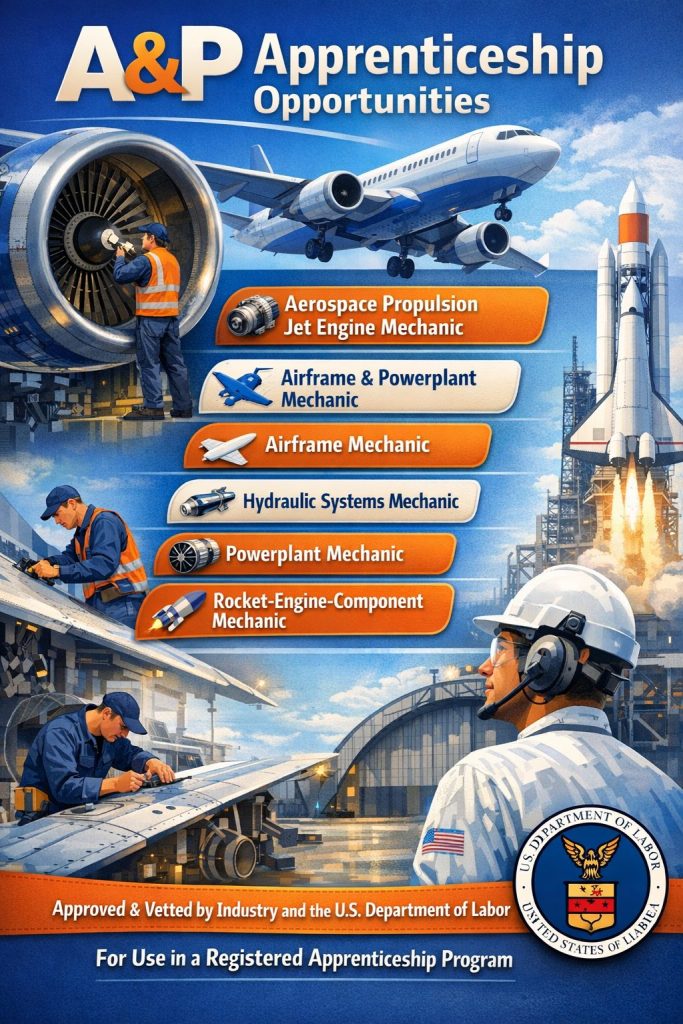
Aircraft Maintenance is one of the most essential, stable, and in‑demand career sectors in aviation. Every aircraft—whether it’s a regional turboprop, a long‑haul airliner, or a corporate jet—depends on skilled technicians who inspect, repair, troubleshoot, and certify its systems. This category brings together all of our guides, salary breakdowns, training pathways, and career insights for aspiring and experienced A&P mechanics, avionics technicians, structures specialists, and maintenance professionals across the industry.
Aircraft maintenance is built on precision, discipline, and regulatory compliance. Technicians work under FAA Part 65 certification standards, following strict procedures to ensure every aircraft meets airworthiness requirements. Whether you’re turning wrenches on the ramp, performing scheduled inspections in a hangar, or troubleshooting complex systems in the field, the work you do directly impacts safety, reliability, and operational readiness.
Training & Certification
Most technicians begin their careers by earning the FAA Airframe & Powerplant (A&P) certificate. This can be achieved through an FAA‑approved Part 147 school or through documented military or civilian experience. Training covers:
- Airframe systems
- Powerplant systems
- Electrical and avionics fundamentals
- Structures and sheet metal
- Regulations and maintenance documentation
After completing training, candidates must pass written, oral, and practical exams to earn their certificate. Many technicians continue to specialize in areas such as avionics, composites, turbine engines, or corporate aircraft systems.
Salary & Job Outlook
Aircraft maintenance offers one of the strongest earning paths in aviation without requiring a college degree. A&P mechanics typically earn:
- Entry‑level: $45,000–$58,000
- Mid‑career: $60,000–$80,000
- Senior / Lead roles: $85,000–$110,000+
- Corporate aviation / high‑skill roles: often higher
Demand for technicians continues to rise due to retirements, fleet growth, and the increasing complexity of modern aircraft. Airlines, MROs, corporate flight departments, manufacturers, and defense contractors are all hiring aggressively.
Career Pathways
Aircraft maintenance offers multiple advancement routes:
- A&P Mechanic — core airframe and powerplant work
- Avionics Technician — electrical, navigation, and communication systems
- Structures Technician — sheet metal, composites, repairs
- Powerplant Specialist — turbine engines, APUs, diagnostics
- Lead Mechanic / Inspector — oversight, quality control, documentation
- Maintenance Controller — troubleshooting and fleet support
- Corporate Aviation Technician — business jet maintenance and dispatch reliability
Technicians can also move into training, management, safety, or regulatory compliance roles.
Why Aircraft Maintenance Matters
Pilots cannot succeed without maintenance. Dispatch cannot succeed without accurate write‑ups. Flight departments cannot succeed without reliable aircraft. Maintenance is the backbone of aviation, and the professionals in this field carry enormous responsibility for safety and operational continuity.
This category is designed to give you clear, practical guidance on every step of the maintenance career journey—from choosing a school to understanding salary progression to exploring specialized roles.
Explore All Aircraft Maintenance Guides
Below you’ll find our complete library of A&P and maintenance‑related articles, including:
- A&P Mechanics Career Guide
- A&P Mechanic Salary
- Barriers to Entry for A&P Careers
- Powerplant Specialist
- Structures Technician
- The Real Value of a Wrench
- Additional training and certification guides
Each article is written to help you make informed decisions, understand the realities of the job, and build a long‑term career in one of aviation’s most essential professions.