AVIATION JOBS GUIDE
8 Aviation Careers Without a Degree That Pay
Explore aviation careers without a degree, from aircraft maintenance to dispatch and flight attendant work, with training, pay, and career options.
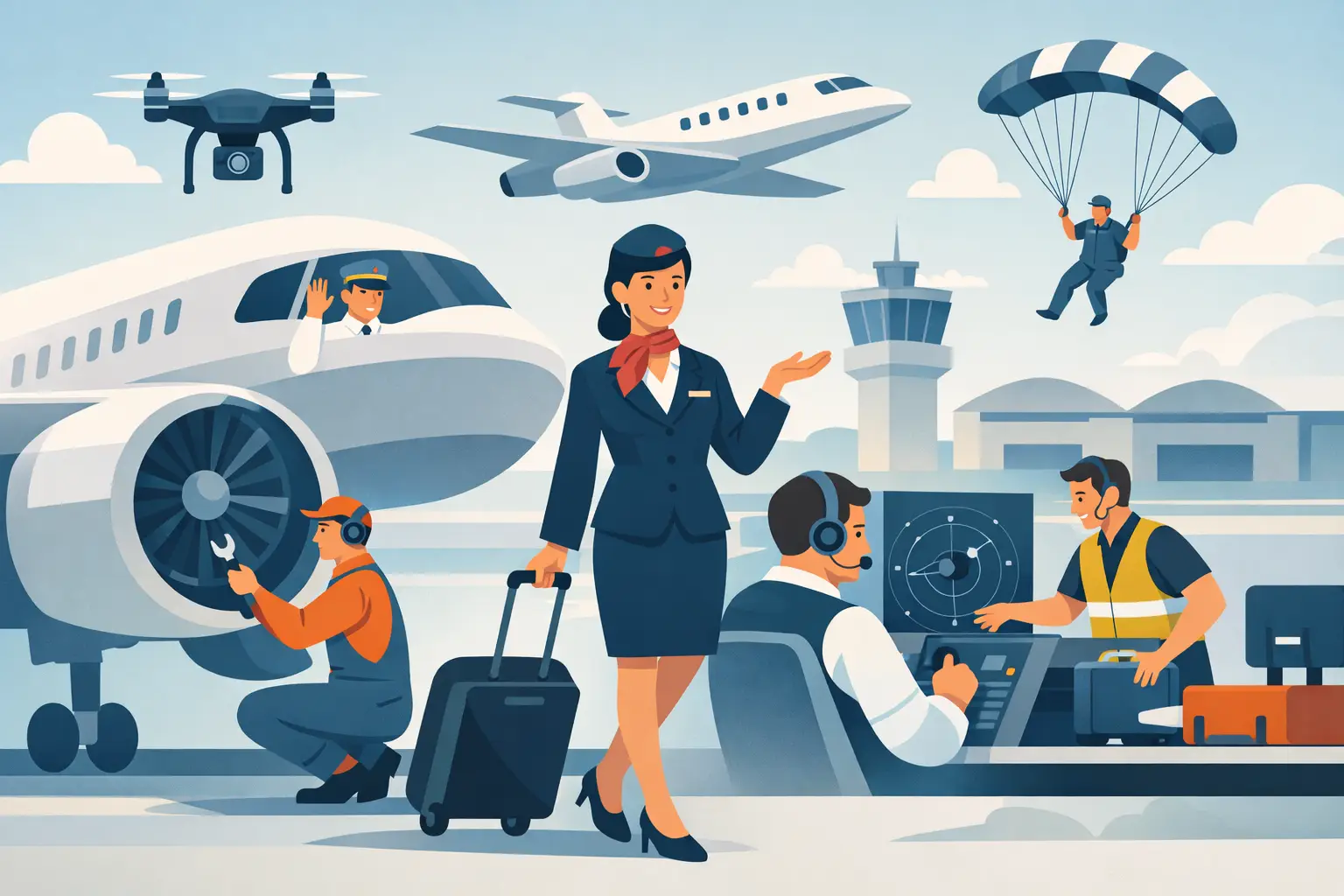
A jet does not leave the gate because one person made it happen. It leaves because ramp teams loaded it, dispatch released it, maintenance signed it off, customer service handled the passengers, and the flight crew operated it. That is why aviation careers without a degree are more varied than many job seekers realize. A four-year college education can help in some aviation paths, but it is not the standard entry requirement for a large share of the industry.
The trade-off is straightforward: skipping a degree does not mean skipping preparation. In aviation, employers often put more weight on FAA certificates, technical training, background checks, safety discipline, shift reliability, and documented experience. The right path depends on whether you want hands-on technical work, customer-facing work, operations responsibility, or a route toward flying.
What a Degree-Free Aviation Path Really Requires
Most entry-level airline, airport, and aviation support jobs require a high school diploma or GED, the ability to pass required screening, and dependable attendance. Jobs performed on the airfield may also require a driver’s license, airport badge eligibility, and the ability to work outdoors or on rotating shifts.
For regulated roles, the credential matters more than a bachelor’s degree. An aircraft mechanic needs FAA certification. A dispatcher needs an FAA aircraft dispatcher certificate. A commercial pilot needs flight certificates, ratings, and a medical certificate. These requirements involve time, testing, and often meaningful out-of-pocket cost, so they should be evaluated as career investments rather than quick shortcuts.
A degree can still be useful later, particularly for management, corporate aviation, safety leadership, or moving into a nontechnical office role. But it is not the only way to build a credible aviation career.
8 Aviation Careers Without a Degree
1. Flight attendant
Flight attendants are responsible for passenger safety, cabin security, emergency procedures, and service. Airlines generally require a high school diploma or GED, a minimum age requirement, and the ability to meet physical, background, and travel eligibility standards. New hires complete airline-provided FAA-required training after being selected.
This role suits people who can stay composed with the public, follow procedures precisely, and handle an unpredictable schedule. Pay varies considerably by airline, seniority, flying hours, and per diem. The lifestyle can be demanding early on because reserve schedules, commuting, weekends, and holidays are common.
2. Ramp agent or baggage handler
Ramp agents work around aircraft, loading baggage and cargo, guiding ground equipment, operating belt loaders, and helping turn flights quickly and safely. It is one of the most direct ways to enter the airline environment without a degree or a long training program.
The work is physical, weather-exposed, and often shift-based. In return, it can provide access to airline benefits, familiarity with airport operations, and opportunities to move into lead, operations, cargo, or maintenance-support roles. For a person who wants an aviation foothold now, ramp work can be a practical starting point.
3. Airport customer service or gate agent
Gate agents, ticket counter agents, and customer service representatives help passengers check in, rebook flights, board aircraft, and resolve disruptions. Employers typically train new hires on reservation systems, boarding processes, security procedures, and airline policies.
Strong communication matters as much as aviation knowledge here. Irregular operations can turn a normal shift into a fast-moving problem-solving exercise, especially during weather events or maintenance delays. It is a good fit for people who want airline exposure without the physical demands of ramp work.
4. Aircraft dispatcher
Aircraft dispatchers share operational responsibility for a flight with the captain. They review weather, fuel, routing, aircraft performance considerations, alternate airports, and operational restrictions before releasing a flight. It is a high-responsibility operations role, not simply a scheduling job.
A bachelor’s degree is not required. However, dispatchers must earn an FAA aircraft dispatcher certificate, typically through an approved training course followed by written, oral, and practical exams. Airline dispatcher jobs can be competitive, and schedules commonly include nights, weekends, and holidays. For candidates who enjoy weather, planning, and real-time decision-making, dispatch can offer a strong long-term career track without a traditional degree.
5. Aircraft mechanic
Aircraft mechanics, often called A&P mechanics, inspect, troubleshoot, repair, and maintain aircraft. The FAA Airframe and Powerplant certificate is the central qualification. Candidates can qualify through an FAA-approved aviation maintenance technician school or by documenting qualifying practical experience before testing.
Maintenance offers a clearer technical career ladder than many entry-level aviation jobs. Earnings can increase with experience, overtime, shift differentials, specialized aircraft knowledge, and work for airlines, cargo operators, business aviation companies, or repair stations. The work requires precision and accountability. A mechanic may be signing off an aircraft system that must perform safely at altitude, so attention to procedure is nonnegotiable.
6. Avionics technician
Avionics technicians focus on aircraft electrical systems, communications, navigation equipment, instruments, and increasingly complex digital systems. Some roles require an A&P certificate, while others may emphasize electronics education, manufacturer training, or experience depending on the employer and work performed.
This path may appeal to people who prefer diagnostics and technology over broader mechanical work. Training can be more specialized, but avionics skills can be valuable as aircraft systems become more sophisticated. Before enrolling in a program, check whether local employers hire entry-level technicians and which credentials they actually request.
7. Commercial pilot
A college degree is not an FAA requirement to become a commercial pilot. The path is based on certificates, ratings, flight experience, and medical eligibility. A typical progression includes private pilot training, instrument rating, commercial pilot certification, and often instructor certificates to build flight time.
The key distinction is between becoming a commercial pilot and being competitive for a specific flying job. Airlines generally require an Airline Transport Pilot certificate or eligibility for one, which means meeting flight-time and training requirements. Hiring preferences can change with the market, and some employers may prefer a degree, but many pilots build successful careers without one. The financial trade-off is significant: flight training can be expensive, and early-career flying jobs may involve relocation or modest pay while you gain experience.
8. Airport operations specialist
Airport operations staff monitor airfield conditions, coordinate responses to incidents, inspect runways and facilities, communicate with airport users, and support compliance with safety procedures. Entry requirements vary by airport. Some positions accept relevant experience, a high school diploma, and a willingness to complete airport-specific training, while others prefer an associate or bachelor’s degree.
This is an important example of why reading individual job postings matters. You may be able to enter through an operations assistant, communications, security, or customer-facing airport role and advance through experience. Larger airports and supervisory positions may set higher education requirements, but a degree is not always necessary for the first step.
How to Choose Among Degree-Free Aviation Careers
Start with the work itself, not just the job title. If you want a credential that can travel with you across employers, maintenance, dispatch, and pilot certificates have clear value. If you need income quickly and want to learn the industry from the inside, ramp, customer service, cargo, or airport operations roles may make more sense.
Also consider schedule honestly. Aviation operates every day of the year. A job with an airline, airport, or cargo carrier may include overnight shifts, early starts, weekends, and holidays, especially until you gain seniority. For some people, that schedule is a deal-breaker. For others, shift differentials, compressed workweeks, or days off during the week are advantages.
Location matters too. Major hubs generally offer more employers and internal mobility, but they may also have higher housing costs and more competition. Maintenance and corporate aviation opportunities can be strong near repair stations, manufacturing centers, and business aviation airports that are not traditional airline hubs.
Build a Practical Entry Plan
Choose one target role before paying for training. Review current job descriptions in your preferred region and write down the recurring requirements: certificates, physical expectations, experience, shift availability, and background standards. This prevents spending money on a program that does not match the work you want.
For FAA-regulated careers, compare approved schools, program length, total costs, testing fees, and graduation outcomes. Ask whether training is full-time, whether tools or exams are included, and how graduates gain their first job experience. A lower tuition price is not automatically the better value if it delays certification or offers limited practical exposure.
For airline and airport entry roles, tailor your resume around reliability, safety awareness, customer service, mechanical aptitude, warehouse experience, logistics, or work in regulated environments. Aviation employers need people who show up prepared, follow process, communicate clearly, and do not cut corners.
The best first move is rarely the flashiest one. Select the aviation role whose training cost, schedule, and advancement path fit your real circumstances, then build the credentials and experience that make your next move easier.