AVIATION JOBS GUIDE
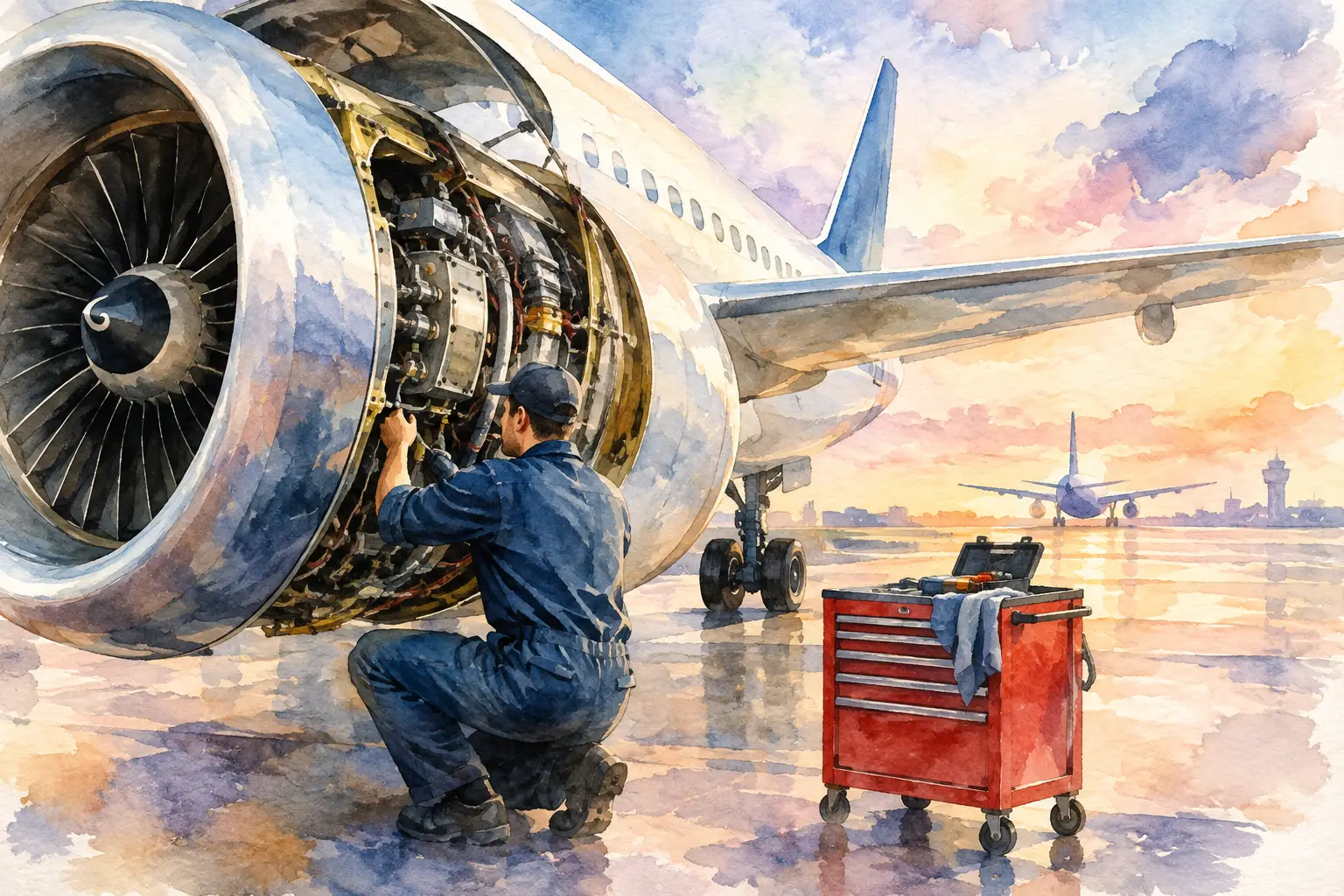
Top Paying Maintenance Specialties in Aviation
Compare top paying maintenance specialties in aviation, from A&P leadership to avionics and inspection, and choose a practical next career move today.
A newly certificated A&P may see several job ads that look similar until the pay, schedule, and aircraft type tell a different story. The top paying maintenance specialties are rarely defined by a single certificate alone. Higher earnings usually follow work that carries greater technical depth, regulatory responsibility, travel demands, leadership accountability, or urgency when an aircraft is grounded.
For aviation mechanics, the most useful question is not simply, “Which job pays the most?” It is, “Which specialty matches my skills and the working conditions I can sustain?” A high-paying AOG role can involve nights and extended travel. A quality leadership position may provide a steadier schedule but require years of documented experience. Understanding those trade-offs makes it easier to plan a maintenance career that is both financially and professionally durable.
What drives pay in aircraft maintenance?
The Federal Aviation Administration airframe and powerplant certificate is the central credential for many maintenance careers, but compensation rises when an employer needs more than routine maintenance capability. Airlines, repair stations, corporate flight departments, manufacturers, and defense contractors all place a premium on people who can solve difficult problems safely and efficiently.
Aircraft complexity matters. Maintaining turbine engines, integrated avionics, composite structures, or large transport-category aircraft generally demands more specialized knowledge than basic piston-aircraft work. Location also matters. Major airline hubs and areas with concentrated business aviation or aerospace activity can offer stronger wages, although housing costs may offset part of that advantage.
Finally, total compensation is often bigger than base pay. Shift differentials, overtime, call-out pay, per diem, travel premiums, bonuses, retirement contributions, and health coverage can materially change what a position is worth. When comparing offers, mechanics should evaluate the full package rather than focusing only on the hourly rate.
Top paying maintenance specialties to consider
Airline maintenance technician and lead mechanic
Major airlines can offer some of the strongest long-term earning potential for A&P mechanics. Pay scales are often structured around seniority, and experienced technicians may earn meaningful overtime, holiday premiums, and shift differentials. Benefits can also be a major advantage over smaller employers.
The highest earnings frequently go to mechanics working overnight lines, heavy checks, engine changes, or high-volume hub operations. Lead mechanics, crew chiefs, and maintenance coordinators may receive additional pay because they direct work, manage documentation, and help return aircraft to service on schedule.
The trade-off is that entry into a major airline is competitive, and new hires may begin on less desirable shifts. Seniority can influence schedules, vacation selection, and job assignments for years. For mechanics who value predictable advancement and are willing to work their way up, airline maintenance remains a strong path.
Avionics technician
Avionics is one of the most valuable technical directions an A&P can pursue. Modern aircraft rely on digital flight decks, navigation systems, autopilots, weather radar, aircraft communication systems, data networks, and increasingly sophisticated diagnostic tools. A technician who can troubleshoot these systems accurately can be hard to replace.
Strong avionics roles exist with airlines, corporate operators, manufacturers, modification centers, and repair stations. Earnings often improve when a mechanic can work independently on complex fault isolation rather than simply remove and replace components.
An A&P certificate is helpful, but employers may also look for formal avionics training, experience reading wiring diagrams, familiarity with specific aircraft platforms, or manufacturer coursework. The work can be detail-heavy and requires patience with documentation and intermittent faults. For mechanically minded people who also enjoy electronics and software-driven systems, that investment can pay off.
Inspection, quality assurance, and IA work
Inspection roles command higher pay because they carry significant responsibility. An inspector confirms that maintenance work, records, parts, and procedures meet applicable requirements before an aircraft returns to service. In repair stations and airline environments, quality assurance professionals also monitor systems that prevent compliance failures from becoming operational problems.
An Inspection Authorization, commonly called an IA, can create additional opportunities in general aviation, especially for annual inspections and return-to-service decisions. To qualify, an A&P mechanic must meet FAA experience requirements, including holding the certificate for at least three years and being actively engaged in maintenance for the required period.
Quality and inspection work is a good fit for detail-oriented mechanics with strong judgment and a solid grasp of regulations. It is not always the highest overtime path, but it can offer a more sustainable route into senior technical responsibility, auditing, or management. The pressure is real: signing off work means being confident that the aircraft and records meet the standard.
Corporate aviation maintenance technician
Business aviation can be especially rewarding for mechanics who develop experience on high-end turbine aircraft. Corporate flight departments value technicians who combine hands-on maintenance ability with polished communication, discretion, and the flexibility to support changing trip schedules.
A corporate maintenance technician may care for a small fleet, coordinate vendors, manage maintenance tracking, travel with an aircraft, and troubleshoot issues away from the home base. That breadth can lead to excellent compensation, particularly in larger flight departments or roles supporting long-range business jets.
The schedule varies widely. Some positions offer a stable weekday routine, while others involve on-call coverage, weekend work, or travel on short notice. Candidates should ask how often technicians travel, whether they are paid for travel time, and how after-hours calls are handled before accepting an offer.
AOG and field service technician
When an aircraft is grounded away from its maintenance base, every hour matters. Aircraft on Ground, or AOG, technicians diagnose and repair urgent problems at airports, customer sites, and remote locations. Because the work demands independence, speed, and a willingness to travel, it can pay substantially more than a comparable shop-based position.
AOG roles are common in business aviation, engine support, component services, and manufacturer field operations. The strongest candidates usually have broad troubleshooting experience, a clean record of safe decision-making, and confidence communicating with customers and operations teams under pressure.
This specialty can be financially attractive because of call-out premiums, overtime, travel pay, and per diem. It can also disrupt personal time. Mechanics considering AOG work should decide whether the premium is worth the unpredictability, particularly if they have family or caregiving responsibilities.
Turbine engine and powerplant specialist
Powerplant experience can become highly valuable when it centers on turbine engines, auxiliary power units, or specialized engine troubleshooting. Employers need mechanics who understand not only scheduled tasks but also performance trends, vibration concerns, borescope findings, and the practical causes behind repeat discrepancies.
Engine shops, MRO facilities, manufacturers, and larger operators can offer strong compensation for this expertise. Mechanics may advance by gaining experience with particular engine families and completing approved training through employers or manufacturers.
The work can be physically demanding and highly procedural. It rewards mechanics who enjoy precision, measurement, and methodical problem-solving. It may be less appealing to someone who prefers the variety of complete aircraft maintenance, but it can provide a clear path toward technical specialization.
Maintenance control and technical operations
Maintenance control is not always a hands-on specialty, but it is a natural advancement option for experienced A&P mechanics. These professionals coordinate maintenance decisions, review discrepancies, work with technicians and flight crews, and help keep aircraft operating within approved procedures and time limits.
At airlines and larger operators, maintenance control roles can pay well because errors can disrupt an entire operation. Success depends on calm decision-making, clear communication, regulatory knowledge, and the ability to evaluate incomplete information quickly. Some mechanics move into this work after years on the line; others prefer to remain hands-on and pursue lead or inspection positions instead.
How to choose the right high-paying path
The best specialty depends on more than salary. Start by identifying the work you naturally do well. If you enjoy electrical troubleshooting, avionics may be the most direct fit. If you are meticulous with records and standards, inspection or quality may suit you. If you want variety and are comfortable with irregular hours, corporate or AOG maintenance may offer faster earning potential.
Then look at the experience employers consistently request. Scan job descriptions for the aircraft, systems, software, and certifications that appear repeatedly. A focused plan – such as gaining turbine time, completing avionics coursework, or building toward an IA – is usually more effective than collecting unrelated credentials.
Also consider where you want your career to lead. A mechanic who wants to become a director of maintenance may benefit from broad corporate experience and maintenance-tracking knowledge. Someone seeking a technical expert role may be better served by avionics, engines, or structures. Neither choice is automatically better; the right move is the one that builds experience employers will continue to value.
Higher pay in aviation maintenance usually follows proof that you can protect safety, solve difficult problems, and take responsibility when the operation is under pressure. Build that reputation one aircraft, one logbook entry, and one well-handled discrepancy at a time.