AVIATION JOBS GUIDE
7 Powerful Reasons to Become an A&P Mechanic and Love Your Career
If you’ve ever looked up at an aircraft and wondered what it takes to keep such a powerful machine safe and airworthy, you’re not alone. Many people are drawn to aviation maintenance because it blends technical skill, problem‑solving, and hands‑on work. Learning how to become an A&P mechanic—a certified Airframe and Powerplant technician—is the gateway to a stable, well‑paid, and highly respected aviation career. This step‑by‑step guide walks you through everything you need to know to get started.
What Is an A&P Mechanic?
An A&P mechanic is a federally certified aviation maintenance technician authorized to inspect, repair, and maintain aircraft. The “A” stands for Airframe, which covers the aircraft’s structure, and the “P” stands for Powerplant, which includes the engine and related systems. With both ratings, you’re qualified to work on nearly every part of an aircraft.
A&P mechanics are essential to aviation safety. They work in airlines, repair stations, manufacturing facilities, and even private hangars. Because the aviation industry continues to grow, demand for skilled mechanics remains strong.
Why Become an A&P Mechanic?
Before diving into how to become an A&P mechanic, it helps to understand why this career is so appealing.
✈️ Strong Job Demand
The aviation industry faces a nationwide shortage of qualified mechanics. This means more job opportunities and long‑term stability.
💰 Competitive Pay
A&P mechanics often earn higher‑than‑average wages, with opportunities for overtime, shift differentials, and advancement.
🛠 Hands‑On, Technical Work
If you enjoy working with tools, solving mechanical problems, and staying active, this career is a great fit.
🌍 Career Flexibility
A&P certification is recognized worldwide, opening doors to travel, specialized roles, and even supervisory positions.
Step-by-Step: How to Become an A&P Mechanic
Below is the complete roadmap for how to become an A&P mechanic, from education to certification.
Step 1: Meet the Basic Eligibility Requirements
Before you begin training, you must meet the FAA’s minimum requirements:
- Be at least 18 years old
- Be able to read, write, and understand English
- Have a high school diploma or equivalent
These requirements ensure you’re prepared for the technical training and FAA exams ahead.
Step 2: Choose Your Training Path
There are two primary ways to qualify for the A&P exams. Understanding these options is crucial when learning how to become an A&P mechanic.
Option 1: Attend an FAA‑Approved AMT School
This is the most common path. Aviation Maintenance Technician (AMT) schools provide structured training that covers:
- Airframe systems
- Powerplant systems
- General aviation maintenance theory
- Hands‑on shop experience
Programs typically last 18–24 months and prepare you directly for the FAA exams.
Option 2: Gain On‑the‑Job Experience
If you prefer a more hands‑on approach, you can work under the supervision of a certified mechanic or repair station. The FAA requires:
- 18 months of experience for Airframe or Powerplant
- 30 months of combined experience for both ratings
This path is ideal for those already working in aviation or the military.
Step 3: Complete Your Required Training or Experience
Whether you choose school or on‑the‑job training, you must complete all required hours and competencies. During this phase, you’ll learn:
- Aircraft structures
- Hydraulics and pneumatics
- Electrical systems
- Turbine and piston engines
- Inspection procedures
- FAA regulations
This is where you build the foundation of your career.
Step 4: Apply for FAA Testing Authorization
Once your training or experience is complete, you must obtain authorization to take the FAA exams. This can come from:
- Your AMT school
- An FAA Flight Standards District Office (FSDO)
You’ll need documentation proving you meet all requirements.
Step 5: Pass the FAA Written Exams
To earn your certification, you must pass three written tests:
- General
- Airframe
- Powerplant
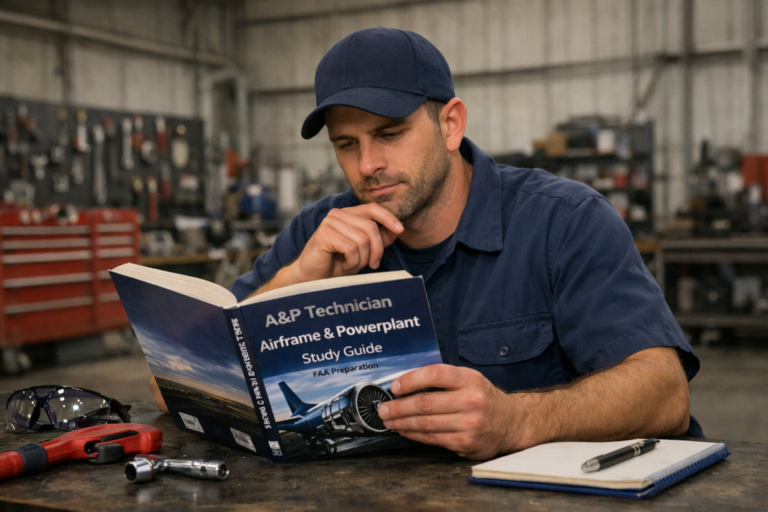
Each exam covers technical knowledge, regulations, and safety procedures. Many students use test prep courses or study guides to prepare.
Step 6: Pass the Oral and Practical Exams
After the written tests, you’ll take the Oral & Practical (O&P) exams with a Designated Mechanic Examiner (DME). These tests evaluate your ability to:
- Perform real maintenance tasks
- Demonstrate proper procedures
- Explain technical concepts
Once you pass, you officially earn your A&P certification.
Step 7: Start Your Career as an A&P Mechanic
With your certificate in hand, you can begin working in a variety of aviation settings:
- Major airlines
- Regional carriers
- Private aviation
- Helicopter operations
- Repair stations
- Aircraft manufacturers
- Military contractors
Your A&P license is your ticket to a wide range of opportunities.
Additional Tips for Becoming an A&P Mechanic
Understanding how to become an A&P mechanic is just the beginning. Here are some tips to help you succeed in the field.
Build Strong Technical Skills
A&P mechanics must be comfortable with:
- Tools and equipment
- Troubleshooting
- Reading technical manuals
- Following FAA regulations
The more hands‑on practice you get, the better.
Stay Organized and Detail‑Oriented
Aircraft maintenance requires precision. Keeping accurate records and following procedures is essential for safety and compliance.
Continue Your Education
Even after certification, you can expand your career by earning:
- Inspection Authorization (IA)
- Specialized manufacturer training
- Avionics certifications
The more skills you have, the more valuable you become.
Network Within the Industry
Join aviation organizations, attend job fairs, and connect with other mechanics. Networking can lead to job opportunities and mentorship.
Final Thoughts
Learning how to become an A&P mechanic is a rewarding journey that leads to a stable, hands‑on, and well‑paid career in aviation. Whether you choose an AMT school or gain experience on the job, the path is clear and achievable. With dedication, training, and FAA certification, you can join the ranks of skilled professionals who keep aircraft flying safely every day.