AVIATION JOBS GUIDE
The Future of Aircraft Maintenance Careers
The future of aircraft maintenance will reshape technician skills, training, and career options. Learn how A&P mechanics can prepare for what comes next.
An aircraft can arrive at the gate on time and still create an urgent maintenance decision. A fault message may point technicians toward a component before a passenger ever notices a problem. That shift captures the future of aircraft maintenance: the work will remain hands-on and safety-critical, but it will increasingly be guided by data, advanced materials, and digital records.
For aspiring aviation maintenance technicians, this is good news with an important condition. Employers will still need people who can inspect, troubleshoot, repair, and certify aircraft. The technicians with the strongest options will be those who build solid mechanical fundamentals and become comfortable working alongside new technology.
The Future of Aircraft Maintenance Is More Predictive
Traditional maintenance has never been just one thing. Some tasks occur on a fixed schedule, such as inspections tied to flight hours or calendar time. Other work is triggered by a reported defect, an inspection finding, or a component failure. These methods will continue, especially because manufacturers and regulators require specific maintenance actions.
What is growing is condition-based and predictive maintenance. Modern aircraft generate operating data through onboard sensors, fault-monitoring systems, and health-management tools. Airlines and maintenance organizations can use that information to spot patterns such as repeated temperature excursions, vibration changes, or declining component performance.
The practical goal is not to predict every failure perfectly. It is to give maintenance teams a better chance to plan work before an issue becomes an aircraft-on-ground event. If a component is showing early signs of trouble, the airline may be able to schedule a replacement during an overnight check rather than canceling a flight later.
That changes the technician’s job in a meaningful way. A mechanic may arrive at a task with a more specific starting point, including fault history, trend data, and digital troubleshooting guidance. But the data does not make the final maintenance judgment by itself. Technicians still need to verify the condition, follow approved procedures, determine whether a fault is real or intermittent, and return the aircraft to service safely.
Why A&P Mechanics Will Still Be Central
Automation is often discussed as though it will remove technical jobs. In aircraft maintenance, the more realistic outcome is a change in how technicians spend their time. Aircraft need qualified people to conduct inspections, perform repairs, interpret maintenance manuals, complete required documentation, and make airworthiness-related decisions within their authority.
For most U.S. aircraft maintenance careers, an FAA Airframe and Powerplant certificate remains a major credential. Employers value the A&P because it demonstrates broad training across aircraft structures, systems, reciprocating engines, turbine engines, and maintenance practices. A technician may later specialize, but a strong foundation makes it easier to move between employers and aircraft types.
Digital diagnostic tools can reduce unnecessary troubleshooting and help crews find information faster. They cannot safely replace the physical work of examining damage, making a repair, checking tolerances, torquing hardware, performing an operational check, or determining whether the completed work meets approved data.
This is especially true as fleets age. Airlines, cargo operators, corporate flight departments, and independent maintenance facilities will continue to support aircraft that range from newer, highly connected models to older aircraft with more limited diagnostic capability. A versatile mechanic must be able to use software when it is available and rely on sound troubleshooting logic when it is not.
New Technology Will Create More Specialized Work
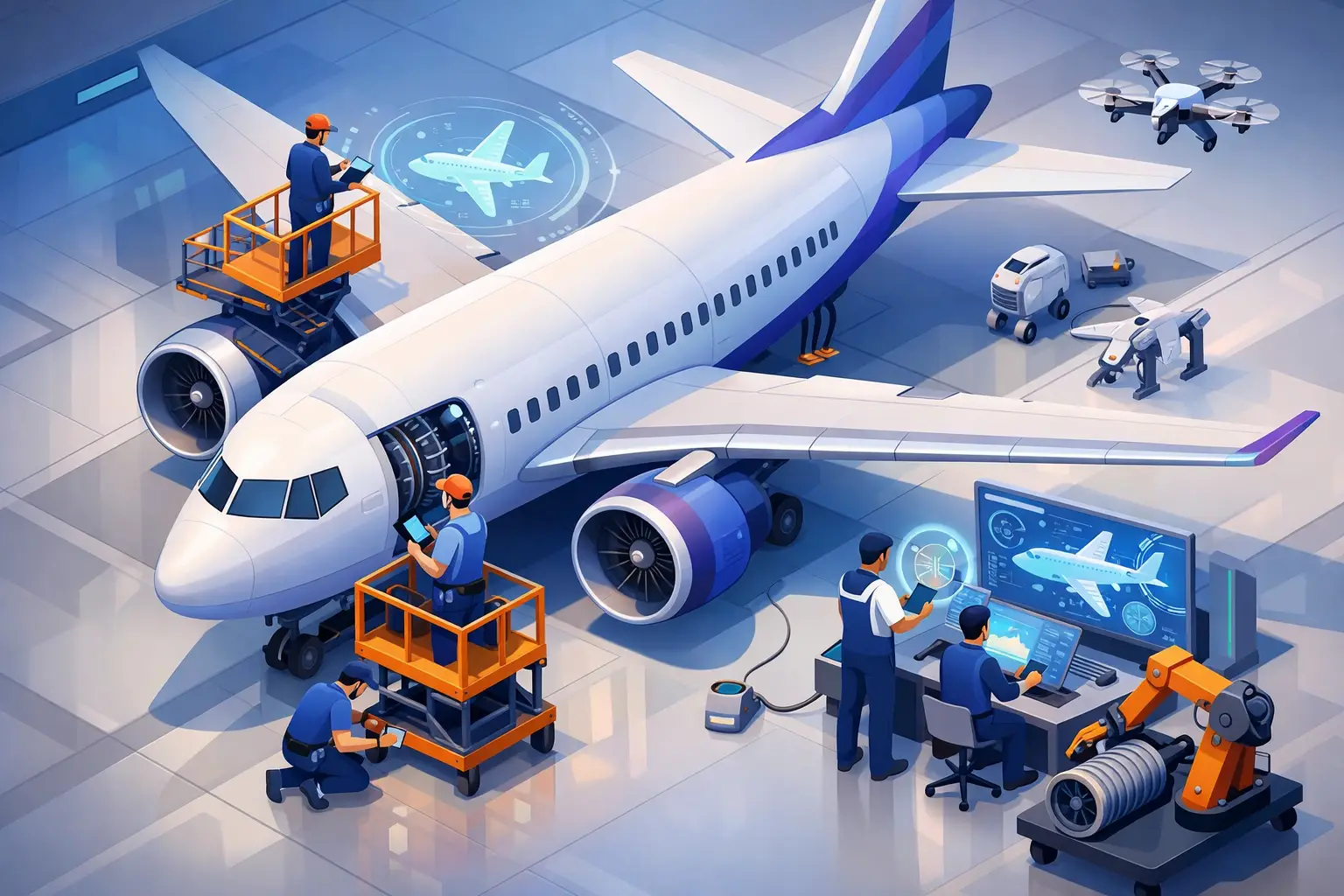
The next generation of maintenance work will not look identical across aviation employers. A major airline operating newer aircraft may invest heavily in reliability analytics, electronic task cards, and centralized maintenance control. A smaller general aviation shop may adopt digital records and better diagnostic equipment while keeping a much more traditional workflow.
Advanced materials are one important source of specialization. Composite structures require different inspection and repair approaches than aluminum skins and conventional metal structures. Technicians working with composites may use nondestructive inspection methods, controlled repair procedures, and specialized materials to identify damage that is not always obvious on the surface.
Electric and hybrid-electric aircraft may also create new maintenance needs, although the pace of adoption will depend on certification progress, fleet growth, and operating economics. High-voltage systems, thermal management, battery health, and electrical safety procedures could become increasingly relevant. These roles are promising, but they should not be treated as a replacement for mainstream A&P opportunities in the near term. Commercial airplanes, business jets, helicopters, and general aviation aircraft will continue to employ large maintenance workforces.
Uncrewed aircraft systems present another path. Maintenance requirements vary widely by operation and aircraft size, but commercial drone work is expanding in areas such as inspection, mapping, public safety, and logistics. Technicians interested in this segment may benefit from knowledge of electronics, avionics, and remote aircraft systems in addition to conventional maintenance experience.
The Skills Employers Will Look For
The future of aircraft maintenance will reward technicians who combine manual capability with disciplined technical thinking. The core skills are familiar: reading maintenance manuals, using tools correctly, understanding aircraft systems, following procedures, and documenting work accurately. Those are not becoming less valuable.
What is changing is the context around them. Electronic logbooks, mobile maintenance applications, digital parts tracking, and aircraft health data require technicians to navigate software confidently. A mechanic does not need to become a data scientist, but should be able to understand what a fault code, trend alert, or digital task card is telling them and recognize its limits.
Communication matters just as much. Maintenance is a team activity involving technicians, inspectors, stores personnel, engineering teams, flight crews, and maintenance control. Clear shift turnover notes and accurate records can prevent a small issue from becoming a major operational problem. As work becomes more data-driven, being able to explain a technical finding in plain language becomes even more useful.
Human factors training will remain essential. Time pressure, fatigue, interruptions, tool control, and assumptions can all contribute to errors. New software does not remove those risks. In some cases, it introduces new ones, such as selecting the wrong task card or relying too heavily on a suggested diagnosis. Employers will value technicians who use technology carefully rather than blindly.
How to Prepare for a Maintenance Career That Is Changing
Start with the credential employers recognize. An FAA-approved Part 147 aviation maintenance technician school can provide a structured path toward eligibility for the A&P tests. Military maintenance experience and qualifying practical experience can also lead to certification routes, depending on the individual’s background and FAA requirements.
As you compare training programs, look beyond the school brochure. Ask what aircraft, engines, avionics trainers, and diagnostic equipment students actually use. Find out whether the program teaches electronic maintenance documentation, composite repair basics, and current troubleshooting methods. A school does not need the newest aircraft in the country to provide strong training, but it should prepare students for the systems and workflow they will encounter at work.
A practical preparation plan includes four priorities:
- Build strong electrical and avionics fundamentals, since modern aircraft depend on integrated electronic systems.
- Learn to read technical manuals carefully and follow approved data without improvising.
- Seek internships, entry-level shop work, or school projects that develop tool discipline and documentation habits.
- Stay open to different first employers, including airlines, MROs, repair stations, corporate aviation, and general aviation shops.
Your first job does not have to define your entire career. Airline line maintenance can offer fast-paced troubleshooting and shift work. Heavy maintenance at an MRO may provide deeper exposure to inspections, structures, and major checks. Corporate aviation can bring variety across aircraft types and closer contact with small maintenance teams. General aviation often offers broad hands-on experience, although pay, schedules, and advancement can differ considerably by location and employer.
A Career Built on Adaptability
The strongest maintenance careers will belong to people who keep learning without losing respect for the fundamentals. New aircraft systems, digital tools, and predictive analytics will change the workflow, but aviation will still depend on careful technicians who understand the machine in front of them and the safety consequences of every signoff.
If you are considering the field, do not wait for the industry to become fully futuristic before getting started. Earn the foundation, develop sound work habits, and choose opportunities that expose you to evolving equipment. That approach gives you a career path with room to grow as aviation changes.